Why a Burmese Rumbles Rather Than Cries in a Car
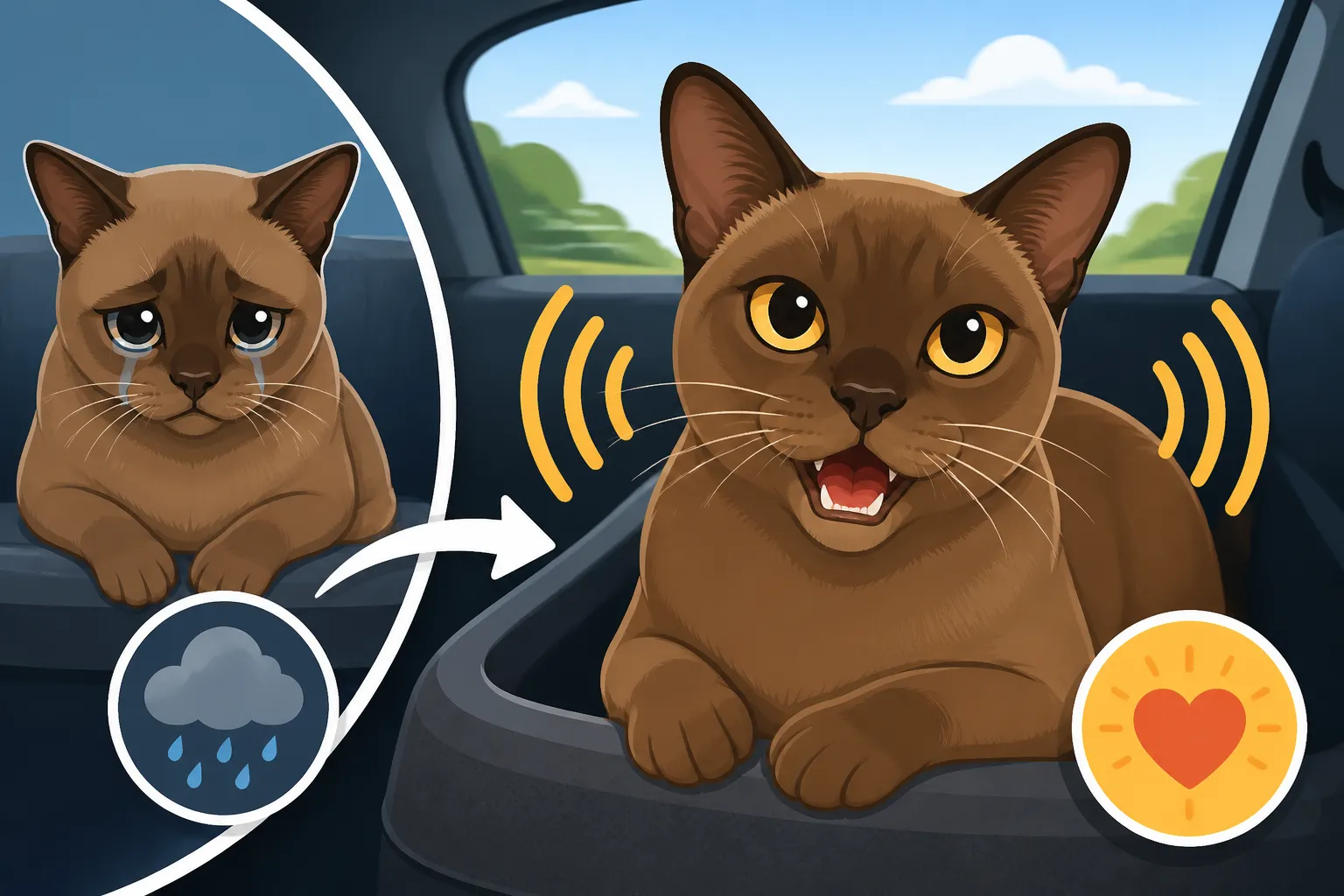
Car travel can be a really nerve-wracking experience for many cats, often resulting in loud, distressed meows that echo through the vehicle and tug at your heartstrings. However, if you're a Burmese owner, you might have noticed something quite different: instead of piercing cries, your beloved furball often lets out a deep, rumbling sound. This isn't just a quirky habit; it's deeply rooted in the Burmese breed's unique vocalizations and their intensely affectionate nature, and understanding it can help you make car rides smoother for everyone.
Understanding the Burmese's Unique Voice
When we talk about cat sounds, most people immediately think of a "meow." But Burmese cats, those gorgeous, velvet-coated companions, often defy these stereotypes, especially when it comes to expressing themselves in new or slightly unsettling situations like a car ride. Their vocal repertoire is truly one-of-a-kind.
The Signature "Rasping Rumble"
The most distinctive sound a Burmese makes isn't a clear "meow" or a plaintive "mew." It's often described as a "rasp," a "gurgle," or a "rumble." Imagine a purr that's been amplified and given a slightly husky, almost growl-like quality, but without any aggression. It emanates from deep within their chest, a vibratory sound that resonates. This The Rasping Rumble a Burmese Uses Instead of a Meow is their primary mode of communication with their humans, a far cry from the high-pitched wails some other breeds are known for. It’s a sound that communicates contentment, curiosity, mild complaint, or even a request for attention, all without the sharp edge of a full-blown cry. When you hear this in the car, it's typically their way of saying, "Hey, I'm here, I notice things, and I'm letting you know I'm still present."
Why It's Not a Typical Meow
So, why the rumble instead of the standard feline cry? It boils down to genetics and breed-specific traits. While all cats can technically meow, the Burmese, like their close relatives the Siamese (though the Siamese tends to be much louder and more insistent), possess a vocal structure that lends itself to these deeper, throatier sounds. It's less about a single, distinct note and more about a continuous, modulated flow of sound. Think of it as a constant commentary on their environment and emotional state. A regular meow might be a short burst of sound to grab attention, but the Burmese rumble is more like an ongoing dialogue, a lower frequency vibration that's less startling and perhaps, in their mind, more effective at keeping you engaged and aware of their presence. Why a Burmese Rumbles Where a Siamese Would Yell delves deeper into the comparison of their vocal styles.
Decoding the Different Rumbles
Just like a human voice can convey a spectrum of emotions through tone and volume, so too can a Burmese's rumble. A soft, continuous rumble from the carrier might indicate mild curiosity or a general awareness of their surroundings, perhaps a little concern but not outright panic. It's their way of keeping tabs on you and the situation. A slightly louder, more insistent rumble, perhaps punctuated by an exploratory nose nudge against the carrier bars, might be a direct request for attention, a "Hey, are we there yet?" or "Pet me!" Conversely, a sharp, almost choked rumble, accompanied by tense body language, could signal genuine distress or discomfort, perhaps motion sickness or acute fear. Learning to differentiate these nuances takes time and close observation, but it's key to understanding what your Burmese is trying to tell you from their cozy travel box. What a Burmese Is Asking For When It Rumbles can offer more insights into interpreting their vocal cues.
The Burmese Personality and Travel
The unique vocalizations of the Burmese are only one piece of the puzzle. Their inherent personality traits play a massive role in how they handle situations like car travel. These cats are renowned for their extraordinary affection and intelligence, qualities that significantly shape their responses to new experiences.
Their Need for Connection on the Go
Burmese cats are famously known as "Velcro cats" or "dog-like" felines because of their intense devotion to their human companions. The Burmese Is the Velcro Cat of the Cat Fancy isn't just a catchy phrase; it perfectly encapsulates their desire for constant proximity and interaction. This deep attachment means that even in the unfamiliar, rattling environment of a car, the presence and voice of their human can be an immense source of comfort. Instead of panicking and crying out for escape, a Burmese might rumble to maintain that connection, to reassure themselves that you are still there, still a part of their world. They are trying to communicate their presence and solicit reassurance from you. They often find comfort in physical closeness, even if it's just knowing you're within earshot. This need for connection is paramount for them.
Natural Curiosity vs. The Unfamiliar
While deeply attached to their people, Burmese cats also possess a keen intelligence and a certain level of curiosity. They're not generally timid recluses; they're often quite outgoing and interested in what's happening around them. This curious nature can work in their favor during car travel. Rather than seeing the car as purely a threat, some Burmese might view the changing scenery and new sounds as an intriguing, albeit slightly overwhelming, sensory experience. Their rumbles can be a running commentary on these observations. However, this curiosity has its limits. Too much novelty, too many sudden movements, or a particularly bumpy ride can quickly shift curiosity into apprehension. It’s a delicate balance, and their rumble often reflects where they are on that spectrum – from mild interest to "this is a bit much."
Trust and Comfort in a Moving World
The Burmese cat's trusting nature is another critical factor. They generally trust their humans implicitly, and this trust extends to situations where they might otherwise feel vulnerable. If they associate car rides (even vet visits) with your calm presence and eventual return home, they're more likely to express mild discomfort through their characteristic rumble rather than full-blown panic. They're relying on you to keep them safe. This reliance means that if you're stressed, they're likely to pick up on it, amplifying their own anxiety. Conversely, a calm, reassuring demeanor from you can do wonders. They are looking to you for cues, and your steady presence, even just your voice, anchors them in a world that's literally moving beneath their paws. Why a Burmese Settles Anywhere You Are highlights their incredible adaptability when they have their human nearby.
Making Car Journeys Comfortable for Your Burmese
While your Burmese might not wail like other cats, making car journeys as stress-free as possible is still incredibly important. Their unique vocalizations and temperament mean a slightly different approach might be beneficial.
Choosing the Right Travel Carrier
A comfortable, secure carrier is non-negotiable for car travel. For a Burmese, who are surprisingly solid and muscular despite their sleek appearance, you'll want something sturdy and roomy enough for them to stand, turn around, and lie down comfortably. Hard-sided carriers are generally safer in a car as they offer more protection. Look for one with good ventilation. You can find excellent options on Amazon, ranging from basic plastic crates to more elaborate soft-sided carriers for shorter trips. Crucially, the carrier shouldn't just be for vet visits; it should be a familiar, positive space. Leave it out in the house with a soft blanket inside, perhaps with some treats or catnip. This makes the carrier less of a 'trap' and more of a safe den. Making the Carrier Somewhere a Burmese Sleeps explains how to turn it into a comforting spot.
Prepping for the Journey: Scent and Routine
Cats rely heavily on scent, and familiar smells are incredibly calming. Before a trip, place a blanket or towel from home that smells like you and your Burmese into the carrier. You could also spray a feline calming pheromone, like Feliway, inside the carrier about 15-20 minutes before placing your cat inside. Maintain a calm, consistent routine on travel day. Avoid rushing or creating a frantic atmosphere, as your Burmese will pick up on your stress. Some owners find that a short play session before travel can help burn off excess energy, followed by a light meal (or no meal if they are prone to motion sickness).
During the Ride: Reassurance and Observation
Once in the car, secure the carrier so it doesn't slide around. Many cats prefer to have the carrier partially covered with a blanket to reduce visual overstimulation, but still allowing for airflow. Play soft, calming music or simply engage in quiet conversation. Your voice, even if it's just you humming or talking to yourself, can be incredibly reassuring for your Burmese. Observe their body language carefully. A continuous, even rumble, perhaps with blinking eyes and a relaxed posture, usually indicates they're coping well. If the rumble becomes more urgent, accompanied by pacing, panting, or tense muscles, it's a sign of increased stress. Pull over if safe to do so, offer gentle reassurance, and reassess the situation. Never let your Burmese out of the carrier in a moving vehicle. Consider travel bowls for water if the journey is long; you can find convenient, spill-proof designs on Amazon.
Recognizing Stress vs. Normal Vocalization
While the Burmese rumble is typical, it's vital to differentiate between their characteristic communication and genuine signs of distress. Even the most affectionate and adaptable Burmese can experience anxiety or discomfort during car travel.
Beyond the Rumble: Body Language Clues
A rumble alone isn't always the full story. Pay close attention to your Burmese's body language, as this often speaks volumes. A cat that's merely curious or mildly concerned might have ears pointed forward or slightly to the side, wide but not dilated pupils, and a tail held in a natural position (not tucked or bristly). They might be observing their surroundings. In contrast, a truly stressed Burmese will often show a range of more obvious signs, even if their vocalization remains a rumble rather than a scream. These include:
- Dilated pupils: Their eyes might look very wide and dark.
- Flattened ears: Ears pinned back against their head.
- Rapid breathing or panting: Without having exerted themselves.
- Drooling: A common sign of nausea or severe stress.
- Tucked tail: Held tightly against their body.
- Crouched posture: Trying to make themselves smaller.
- Excessive grooming or shedding: A stress response.
- Hiding their face: Trying to bury themselves in a corner of the carrier.
If you observe these signs, your Burmese is signaling that they are not comfortable, regardless of the sound they are making.
When the Vocalization Changes Tone
While a Burmese generally rumbles, the quality of that rumble can shift significantly under stress. A contented or curious rumble is usually low, even, and consistent. A stressed rumble might become:
- More insistent and repetitive: A desperate attempt to get your attention.
- Higher pitched: Edging closer to a plaintive cry or a distressed yowl.
- Choppy or strained: Lacking the smooth flow of a normal rumble.
- Combined with other sounds: Such as hissing, spitting, or a low growl, which are clear indicators of fear or aggression.
If you hear these changes, it's time to intervene with comfort, a quick check of the environment, or even pulling over if possible. Remember, their appetite can also be an indicator of their well-being; Why a Burmese's Appetite Goes When It Is Unhappy emphasizes how quickly they can lose interest in food when distressed.
Seeking Help for Severe Travel Anxiety
For some Burmese, car travel can be profoundly distressing, leading to severe anxiety or motion sickness despite all your best efforts. If your cat consistently exhibits extreme fear, vomiting, diarrhea, or becomes dangerously agitated during car rides, it's time to consult your veterinarian. They can rule out any underlying medical conditions, such as ear problems affecting balance, and discuss strategies for managing travel anxiety. These might include:
- Anti-nausea medication: If motion sickness is the primary issue.
- Prescription sedatives or anti-anxiety medications: For cats with severe phobias.
- Behavioral modification techniques: Often in conjunction with medication.
Your vet can help you create a personalized plan to make travel less traumatic for your beloved Burmese. There are also calming supplements, often available on Amazon or at pet stores, that might offer mild relief, but always discuss these with your vet first to ensure they are safe and appropriate for your cat.
Table: Decoding Burmese Car Travel Vocalizations
Here’s a quick guide to help you understand what your Burmese might be trying to tell you from their carrier:
| Vocalization Type | Common Accompanying Body Language | Likely Meaning | Recommended Action |
|---|---|---|---|
| Soft, Continuous Rumble | Relaxed posture, blinking, eyes observing | Contentment, mild curiosity, awareness, "I'm here" | Continue as normal, offer soft verbal reassurance |
| Louder, Insistent Rumble | Nudging carrier, ears forward, attentive | Seeking attention, mild complaint, "Are we there yet?" | Offer verbal reassurance, a gentle pet through carrier bars |
| Choppy, Strained Rumble | Tense muscles, slight panting, pacing | Mild discomfort, growing unease, "This is a bit much" | Reassess comfort, adjust carrier, offer calming pheromones |
| Higher-pitched Rumble/Yowl | Pinned ears, dilated pupils, drooling | Moderate anxiety, discomfort, "I don't like this" | Offer strong verbal reassurance, consider a short break if safe |
| Hissing/Growling Rumble | Crouched, bristly fur, striking at carrier | Severe fear, aggression, "Get me out of here!" | Do not open carrier, consult vet for future travel, secure carrier |
| Silence with Stress Signs | Hiding, panting, trembling, dilated pupils | Extreme fear, shock, motion sickness, "I'm terrified" | Seek immediate vet advice, provide warmth/darkness if possible |
Disclaimer
This article is for general informational purposes only and does not constitute professional advice. Laws, prices and regulations vary by location and change over time. Consult a qualified professional for guidance on your specific situation.