Which Household a Burmese Fits
Burmese cat behavior and care requirements determine whether a household suits this affectionate, demanding, and devoted breed.
Is this the right one for you?
Origins and temperament, size and coat, what living with one is actually like, and how it compares to the breeds people weigh against it.
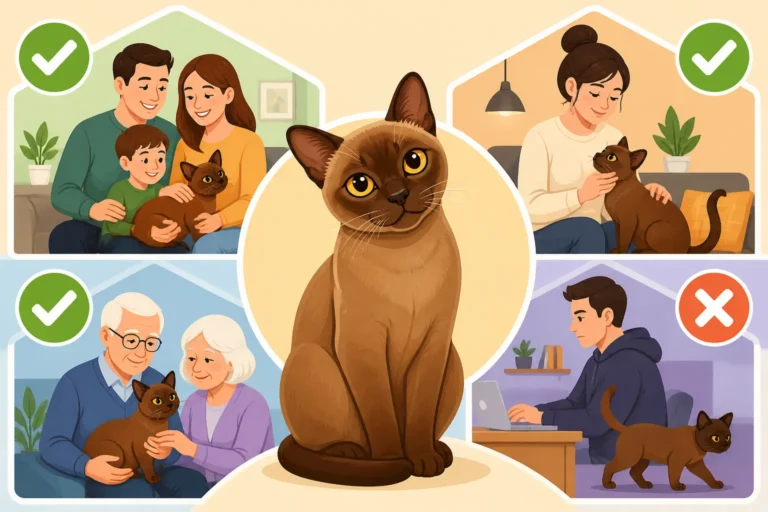
Burmese cat behavior and care requirements determine whether a household suits this affectionate, demanding, and devoted breed.

The Burmese cat breed ranking within the Cat Fanciers Association based on annual pedigreed registrations from 1936.

Burmese and Tonkinese cat breeds share ancestral roots through Wong Mau, but differ in physical traits, origins, and genetics.
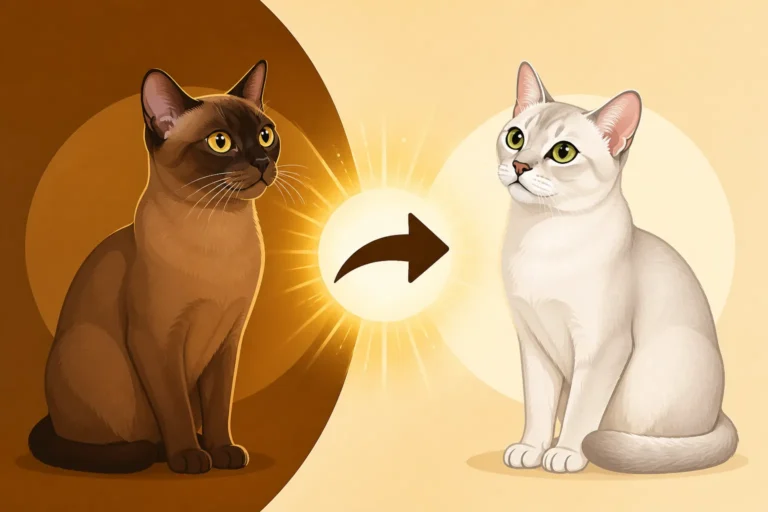
The Burmilla breed origin traces back to an accidental 1981 UK mating between a Chinchilla Persian and a Burmese cat.
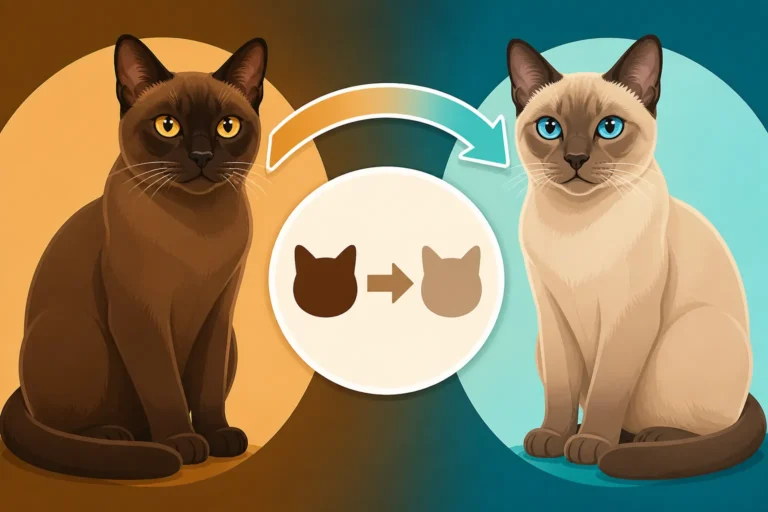
The genetic history of the Tonkinese cat reveals how breeding Burmese cats and Siamese crosses created the breed.
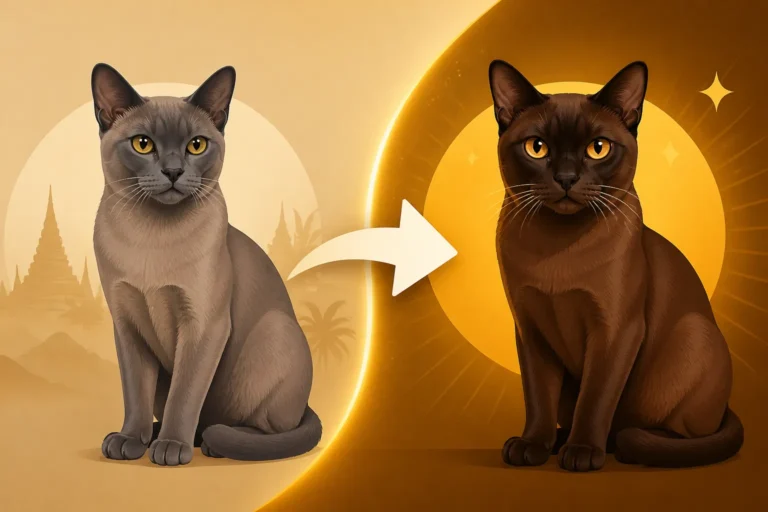
Breeder Nikki Horner used the Burmese in the late 1950s to create the Bombay cat with inky black fur and copper eyes.
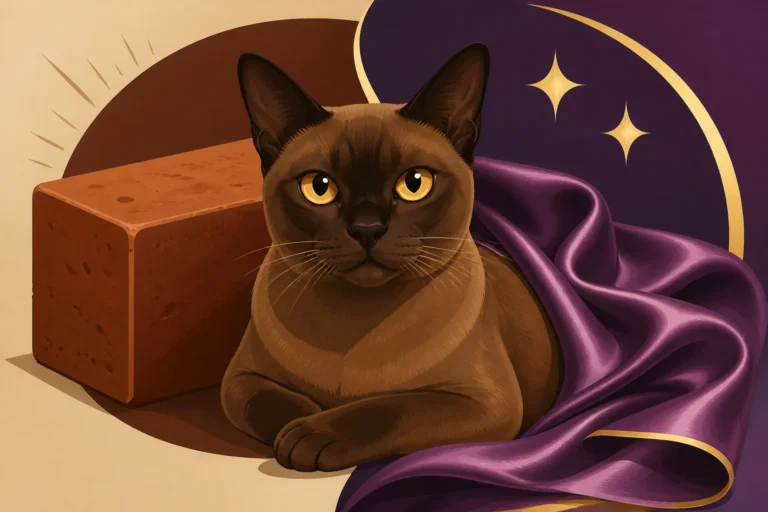
The Burmese cat breed features a dense muscular build and soft coat that explain its unique nickname and heavy weight.
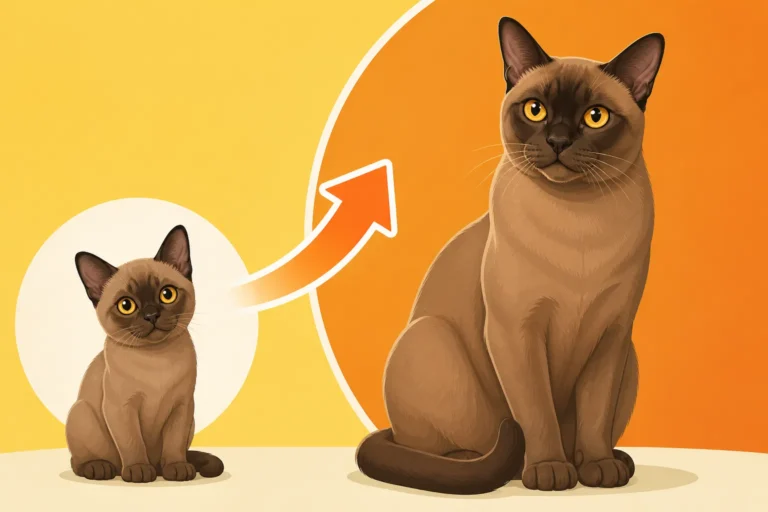
Burmese cat growth stages, detailing rapid kitten development, heavy boning, and the timeline for achieving dense adult muscle mass.
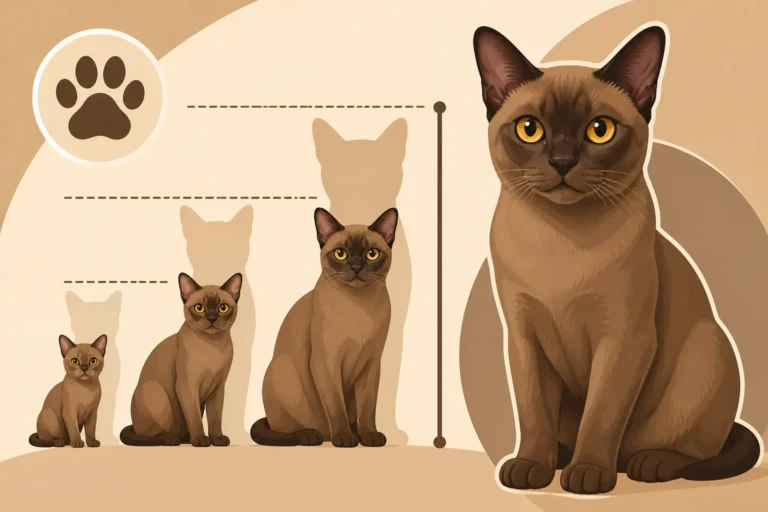
Adult Burmese cat size and weight ranges for males and females, showing heavy muscle and dense bone structure.
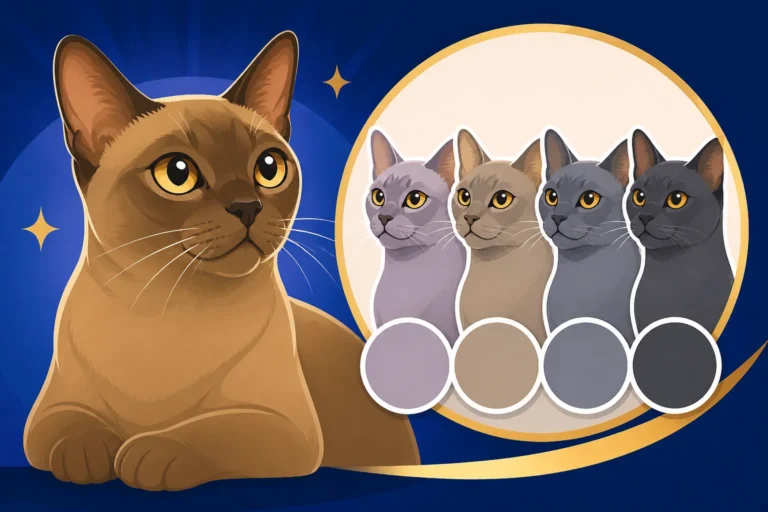
European Burmese cat standards, which add reds, creams, and tortoiseshell patterns to the four core American shades.