How the Burmilla Was Made From a Burmese
It's easy to look at a beautiful cat and wonder about its origins, especially when it shares striking similarities with another beloved breed, yet has its own unique flair. For many Burmese cat enthusiasts, seeing a Burmilla for the first time sparks this very question: how did this shimmering, green-eyed beauty come to be? This guide will dive deep into the fascinating story of the Burmilla, tracing its lineage directly back to the elegant and affectionate Burmese, and exploring how a happy accident led to the creation of a truly distinct and cherished companion.
The Unexpected Pairing That Started It All
The story of the Burmilla isn't one of careful genetic planning by a dedicated team of breeders setting out to create a new feline masterpiece. Instead, it’s a charming tale of serendipity, a beautiful accident that occurred in the early 1980s in the United Kingdom. It all began with a delightful misunderstanding between two cats from very different backgrounds, proving that sometimes, the best things in life truly are unplanned.
The Baroness, the Persian, and the Burmese
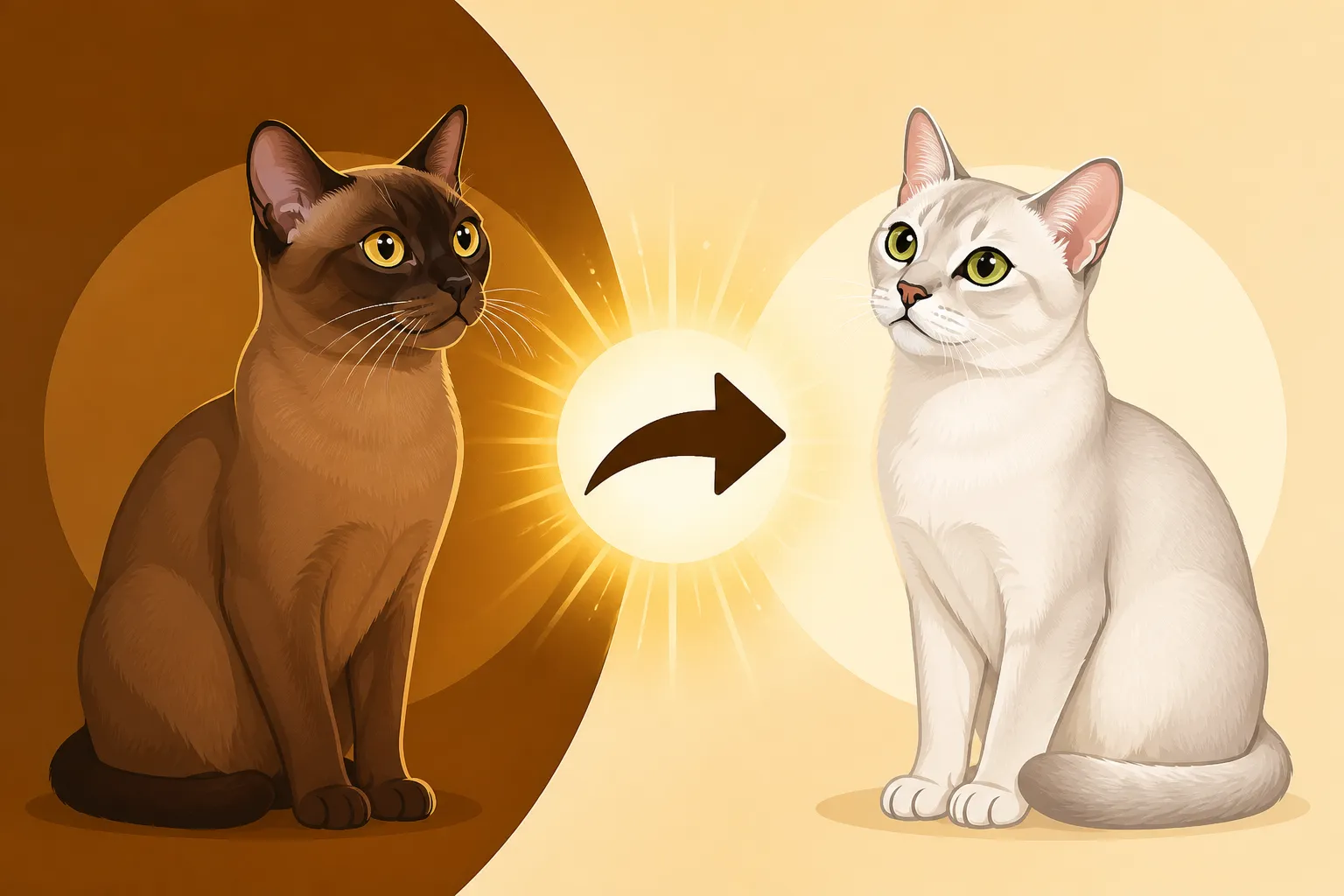
Our story unfolds in 1981 at the home of Baroness Miranda von Kirchberg in the UK. She owned a magnificent Chinchilla Persian named Sankist, a cat renowned for his lustrous silver-tipped coat and striking green eyes, embodying all the classic elegance of his breed. Separately, she also had a beautiful lilac Burmese queen named Faberge, a feline known for her sleek, satiny coat and immensely affectionate, dog-like personality. These two cats, representing such distinct branches of the feline family tree, were certainly never intended to be matched. However, fate, or perhaps just a momentarily open door and a dash of feline determination, had other plans. One day, Faberge, being the clever and curious Burmese that she was, managed to get herself into the breeding enclosure where Sankist resided. The result, to the Baroness's surprise, was a litter of kittens that would change cat fancy history.
The First Kittens: A Happy Accident
When Faberge's kittens arrived, they were an absolute revelation. Instead of looking like purebred Burmese or Chinchilla Persians, they were a stunning blend, possessing unique characteristics that hinted at both their prestigious parents. These kittens, four females, displayed a short, dense coat like their Burmese mother but with a subtle, shimmering silver tipping inherited from their Chinchilla Persian father. Their eyes, a distinct greenish-gold, were also a beautiful combination, differing significantly from the Burmese's typical golden or amber and the Persian's deep emerald. It was clear from the outset that these were not just ordinary mixed-breed cats; they possessed a captivating beauty and a delightful temperament that suggested the potential for something entirely new. The Baroness was captivated, and soon, others in the cat community began to take notice of these enchanting hybrid felines.
Recognizing a New Breed: The Path to the Burmilla
The birth of these unique kittens ignited a spark of interest among a small group of devoted cat fanciers and breeders. They saw beyond the accidental nature of the pairing and recognized the inherent beauty and promising characteristics of these first-generation hybrids. The question quickly became: could these special cats form the foundation of an entirely new breed? It was a journey that required careful observation, dedicated breeding, and the development of a specific vision for what the Burmilla should embody.
From Hybrids to a New Standard
The initial four kittens, often referred to as the "Founding Four," became the crucial starting point. Their unique appearance and delightful personalities indicated that the accidental cross had yielded something truly special. Breeders who were intrigued by this new look began to collaborate, focusing on what traits they wished to preserve and what attributes they wanted to enhance in future generations. This involved careful selective breeding, often back-crossing to either Burmese or Chinchilla Persians in a controlled manner to strengthen certain desired traits while maintaining genetic diversity. The goal was to move beyond simply a hybrid and to establish a consistent set of characteristics that would define the new breed. It was a painstaking process of observation and refinement, ensuring that each generation moved closer to a cohesive and recognizable type.
Establishing the Burmilla Standard
As these pioneering breeders worked, they began to formalize the ideal "look" and "feel" of this nascent breed. They developed a comprehensive breed standard, which is essentially a blueprint detailing all the physical and temperamental traits that define a purebred cat. The Burmilla standard aimed for a medium-sized cat with a muscular, compact body, reminiscent of the Burmese, but without the extreme cobby nature of a Persian. The head was to be gently rounded with a medium-length nose, and the ears medium in size. The most defining features were, of course, the coat: short, close-lying, with a distinct silver or golden tipping that created a sparkling, iridescent effect over a solid base color. Crucially, the eye color was specified as green or greenish-gold, a hallmark that sets them apart from both parent breeds. The temperament was also a key focus, seeking to combine the outgoing, affectionate nature of the Burmese with a touch of the more placid Persian demeanor, resulting in a playful yet gentle companion.
The Burmese Influence: Personality and Build
It's impossible to talk about the Burmilla without recognizing the profound impact of its Burmese ancestry. The Burmese cat is celebrated for its distinctive personality and robust physical traits, and many of these beloved characteristics have been beautifully passed down to its Burmilla descendants. When you spend time with a Burmilla, you're not just seeing a shimmering coat; you're often experiencing the very heart and soul of a Burmese, just with an elegant twist.
The Burmese Temperament Shines Through
Anyone who has ever had the joy of sharing their home with a Burmese knows they are truly special. They are often called "dog-like" for their intense loyalty, their tendency to follow their humans from room to room, and their insatiable need for interaction. This incredible sociability is one of the most prominent traits inherited by the Burmilla. A Burmilla isn't just a cat that tolerates company; it thrives on it. They love to be involved in whatever you're doing, whether it's "helping" you work on the computer, snuggling under the covers, or simply observing your every move from the nearest available lap or shoulder. This deep attachment means they often struggle with being left alone for extended periods, preferring constant companionship. This desire for connection and their playful intelligence are hallmarks of the Burmese, and Burmillas beautifully carry this torch. They will seek out affection, engage in interactive games, and often communicate with a gentle, raspy purr or soft chirps, much like their Burmese forebears. The Burmese Is the Velcro Cat of the Cat Fancy describes this personality perfectly.
The boundless energy and playful spirit of the Burmese also manifest strongly in Burmillas. They remain kittenish well into adulthood, often retaining their love for games and toys for many years. You'll find them chasing feather wands, batting at crinkly balls, and even engaging in games of fetch. This energetic side, combined with their sharp minds, makes them highly trainable cats, capable of learning tricks and responding to commands with positive reinforcement. Their curious nature means they love to explore their surroundings and investigate new things, bringing a vibrant, engaging presence to any household.
Physical Traits Inherited from the Burmese
Beyond temperament, the Burmese contributed significantly to the Burmilla's physical structure and overall presentation. The original Burmese breed standard called for a cat that felt surprisingly heavy for its size, often described as a "brick wrapped in silk." This compact, muscular body type is a key characteristic that Burmillas share. While perhaps not as extreme as some lines of American Burmese, the Burmilla carries a substantial weight and solid bone structure beneath its sleek exterior. This contributes to their athletic build and enduring playful nature, allowing them to leap and climb with grace. Why a Burmese Is Called a Brick Wrapped in Silk vividly captures this aspect.
The Burmilla's coat, while visually distinct due to the silver tipping, inherits its texture and length from the Burmese. It is short, fine, and lies very close to the body, giving it that characteristic "satin" feel. This short coat means minimal shedding and relatively low grooming needs, much like the Burmese. Unlike the fluffy, long-haired Persian, the Burmilla's coat is designed for ease of care, emphasizing sleekness and shine. The overall head shape also shows clear Burmese influence, with a pleasingly rounded forehead and a medium-short muzzle, providing a softer, less extreme appearance than the flat-faced Persian.
The Chinchilla Persian Contribution: That Striking Look
While the Burmese undeniably shaped the Burmilla's heart and core structure, it was the Chinchilla Persian that gifted this new breed its truly captivating and distinctive aesthetic. Without the Persian's unique genetic traits, the Burmilla would not possess the shimmering, ethereal beauty that makes it so instantly recognizable and adored. This fusion of elegance from two very different worlds is what truly defines the Burmilla's visual appeal.
The Silver Shimmer and Tipped Coat
The most striking visual contribution from the Chinchilla Persian is undoubtedly the iconic silver or golden tipping that gives the Burmilla its name (a portmanteau of Burmese and Chinchilla). This isn't a solid color; rather, each individual hair shaft is colored at the tip while the base remains a pristine white or golden hue, depending on the genetic foundation. This partial pigmentation creates an extraordinary shimmering, almost sparkling effect as the cat moves, making their coat appear alive with light. It's a truly mesmerizing quality that instantly distinguishes a Burmilla. The depth of this tipping can vary, from a delicate dusting to a more pronounced, darker shade, but the overall effect is one of iridescent beauty. This genetic trait is a direct inheritance from the Chinchilla Persian, a breed famed for its unique tipped coats, and without it, the Burmilla would simply be another solid-colored cat.
This tipped pattern is crucial to the breed's identity. Imagine looking at a Burmilla in sunlight – the way the light plays across its coat, highlighting the subtle variations in tipping, is part of its charm. It's not just "silver" or "golden"; it's a dynamic interplay of color that shifts with movement and light. This meticulous detailing of the coat is a testament to the Chinchilla Persian's genetic legacy, elevating the Burmilla's appearance from merely attractive to truly enchanting.
The Emerald Eyes and Sweet Expression
Another unmistakable gift from the Chinchilla Persian lineage to the Burmilla is the magnificent eye color. While Burmese cats typically boast captivating golden or amber eyes, and some Siamese-related breeds have blue, the Burmilla's breed standard specifically calls for large, expressive eyes in shades of green or greenish-gold. This vibrant eye color provides a stunning contrast to their tipped coats, adding to their ethereal and refined appearance. The intensity of this green can range from a delicate chartreuse to a deep emerald, but it is always a defining feature. This is a direct echo of the Chinchilla Persian's own striking eye color.
Furthermore, the overall facial expression of the Burmilla often carries a touch of the Persian's sweet, open, and innocent look, albeit in a less extreme form than the heavily-boned Persian face. This softer expression, combined with their large, wide-set eyes, gives the Burmilla an endearing and approachable demeanor that melts hearts. It’s a captivating blend: the alertness and intelligence often seen in the Burmese, softened by the gentle, expressive quality inherited from the Chinchilla Persian. The combination of these features creates a truly balanced and aesthetically pleasing feline that embodies the best of both worlds.
Living with a Burmilla: A Blend of Both Worlds
Bringing a Burmilla into your home means embracing a cat that truly embodies the phrase "the best of both worlds." They are a delightful testament to their lineage, showcasing a captivating blend of the spirited, affectionate nature of the Burmese and the gentle, elegant charm of the Chinchilla Persian. Understanding this unique combination is key to appreciating their personality and ensuring their well-being.
Temperament: Playful and Affectionate
When it comes to temperament, the Burmilla is often described as having found a beautiful middle ground between its parent breeds. From the Burmese, they inherit an incredible degree of sociability, intelligence, and an almost dog-like devotion to their human companions. Burmillas crave interaction and will often follow you from room to room, eager to participate in whatever you're doing. They love to be held, cuddled, and will often seek out physical closeness, whether it's snuggling on your lap or curling up under the covers with you at night. Why a Burmese Cannot Be Left Alone All Day explains why this constant companionship is so important for their Burmese relatives, and it holds true for Burmillas as well.
However, they also possess a calmer, more serene quality inherited from their Persian side. While they are undoubtedly playful and active, they often exhibit a slightly less frantic energy than some purebred Burmese. This makes them adaptable to various household environments, fitting in well with families, singles, or couples who can provide plenty of attention. They are known for their gentle nature, making them excellent companions for children and often getting along famously with other pets, including dogs, thanks to their easygoing disposition. This balance means you get a cat that is both engaging and affectionate, without being overwhelmingly demanding. They will certainly initiate playtime and demand attention, but they also appreciate quiet moments spent simply being close to you. A Burmese Is Still Playing at Fifteen demonstrates the enduring playfulness you can expect.
Care Needs: Coat and Health Considerations
One of the lovely aspects of living with a Burmilla is their relatively low-maintenance grooming routine. Their short, close-lying coat, a trait inherited from the Burmese, means they don't require the extensive daily brushing that their long-haired Persian ancestors would need. A weekly brush with a soft bristled brush or even just a rub down with a chamois cloth is usually sufficient to keep their coat gleaming and to remove any loose hairs. This makes them an excellent choice for those who appreciate a well-groomed cat but might not have the time for intensive grooming sessions. How Many Minutes a Month a Burmese's Coat Takes gives you an idea of just how quick this is.
In terms of health, Burmillas are generally robust cats. However, like all breeds, they can be predisposed to certain genetic conditions seen in their parent lines. From the Burmese side, conditions like hypokalemia or diabetes could theoretically be present, though responsible breeders screen for these issues. From the Persian side, they can sometimes inherit tendencies towards polycystic kidney disease (PKD), though reputable breeders actively test for this. It is always crucial to choose a kitten from a breeder who provides health guarantees and proof of genetic testing for common breed-specific ailments. Regular veterinary check-ups, a high-quality diet, and plenty of exercise are vital for keeping your Burmilla healthy and happy throughout their life. What a Burmese Looks Like Against the Standard gives context for how breed standards inform health considerations.
Burmilla vs. Burmese: A Quick Comparison
Understanding the differences and similarities between the Burmilla and its Burmese parent can help clarify what makes each breed special. While they share a foundational connection, their distinct breed standards and physical traits set them apart.
| Feature | Burmese (American Type) | Burmilla |
|---|---|---|
| Origin | Southeast Asia (developed in US) | United Kingdom (from Burmese x Chinchilla Persian cross) |
| Body Type | Compact, muscular, "brick wrapped in silk," rounded | Medium-sized, muscular, elegant, less extreme than Burmese |
| Coat Type | Short, fine, satin-like, lies close to body | Short, close-lying, with characteristic silver or golden tipping |
| Coat Colors | Sable (brown), Champagne (chocolate), Blue, Platinum (lilac) | Various tipped colors (e.g., black tipped, blue tipped, chocolate tipped) |
| Eye Color | Gold to amber | Green to greenish-gold |
| Head Shape | Rounded with broad muzzle | Gently rounded with moderate muzzle |
| Temperament | Extremely affectionate, dog-like, vocal, playful | Affectionate, playful, social, slightly calmer than Burmese |
| Grooming Needs | Minimal | Minimal |
This table highlights the key distinctions, especially in eye color and coat pattern, which are the most obvious differentiators. While the Burmese comes in solid colors based on the cb gene, the Burmilla always has that signature tipped appearance from the Chinchilla Persian.
The Burmilla's Legacy: A Testament to Accidental Genius
The journey from an unexpected litter of kittens to a recognized and cherished breed like the Burmilla is a fascinating chapter in the history of cat fancy. It stands as a testament to the beauty that can emerge from accidental pairings and the dedication of breeders who saw potential in a new genetic combination. The Burmilla truly carries the best traits of its noble ancestors, offering a unique blend of beauty, intelligence, and unwavering affection.
Through its Burmese heritage, the Burmilla inherited a heart full of love and a spirit full of play. Its desire for constant companionship, its vocal charm, and its enduring kittenish energy are all gifts from that foundational breed. For those who adore the intensely social nature of the Burmese but are captivated by a more shimmering aesthetic, the Burmilla offers an irresistible choice. This breed is more than just a pretty face; it's a living piece of history, a thriving example of how a simple accident can lead to the creation of a truly magnificent companion.
Whether you're admiring their shimmering coat or basking in their affectionate purrs, the Burmilla reminds us that sometimes the most beautiful creations arise from the most unexpected beginnings. They are a wonderful breed for active households that can provide plenty of interaction and love, and in return, they offer years of devoted companionship. Whether a Burmese Suits a First Time Cat Owner can offer insights into the needs for highly social cats that resonate with the Burmilla.
Disclaimer
This article is for general informational purposes only and does not constitute professional advice. Laws, prices and regulations vary by location and change over time. Consult a qualified professional for guidance on your specific situation.