Why an Old Burmese’s Appetite Should Be Watched Closely
Senior Burmese cat appetite changes indicate potential health issues requiring close monitoring, careful tracking, and prompt veterinary care.
The daily stuff, done right.
Feeding amounts by life stage, coat and skin routines, dental and nail care, exercise needs, and what changes as they age.
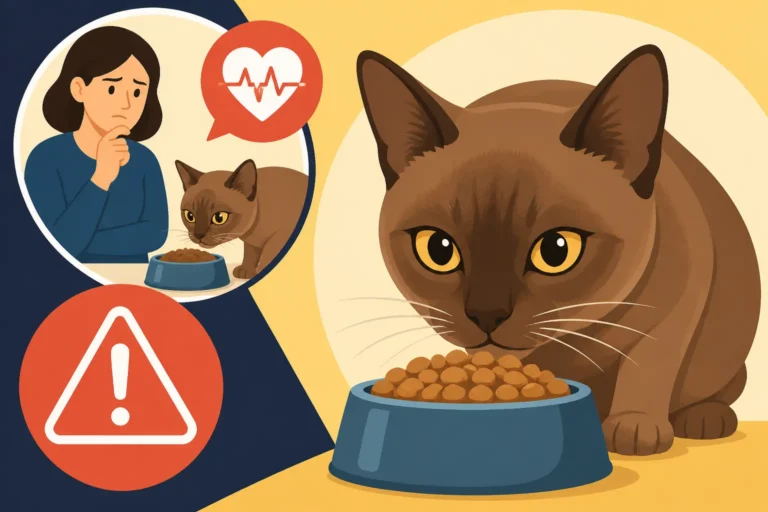
Senior Burmese cat appetite changes indicate potential health issues requiring close monitoring, careful tracking, and prompt veterinary care.
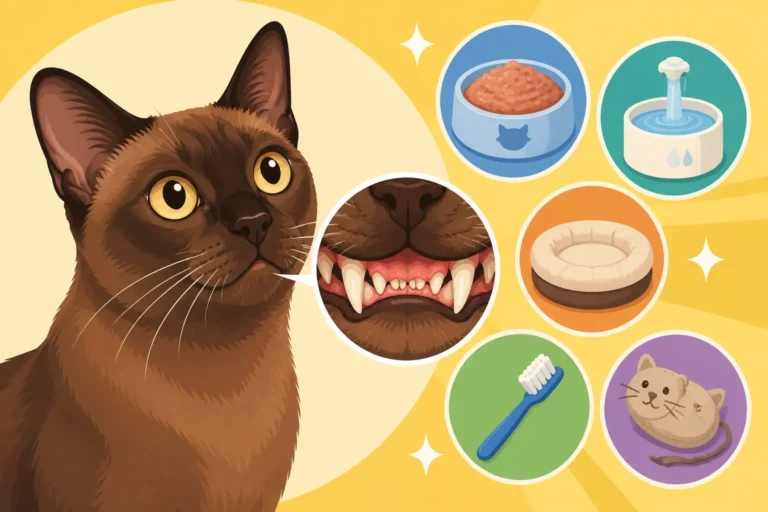
Senior Burmese cats with receding gums require nutritional adjustments and prompt veterinary care to manage pain and maintain comfort.
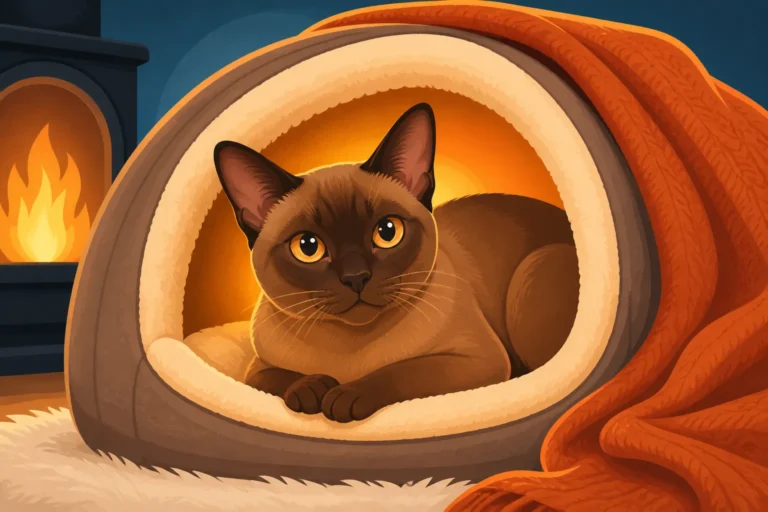
Burmese cats seek extra warmth because their short coats lack insulating undercoats, allowing body heat to dissipate quickly.

Burmese cats lack an insulating undercoat, causing rapid heat loss and explaining why this satin-coated breed feels cold easily.

Unregulated feline diabetes causes excessive thirst and increased urination, requiring Burmese owners to provide larger litter boxes.
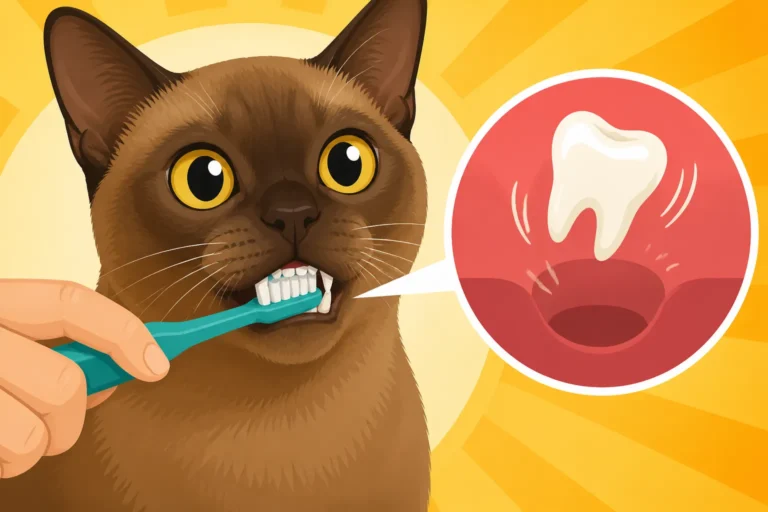
Burmese dental care and regular brushing prevent painful gum disease and tooth resorption that cause receding gums and infected teeth.
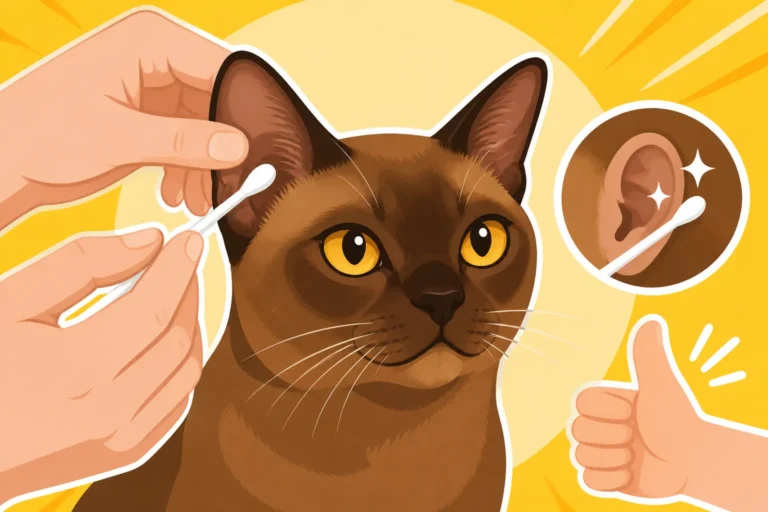
Cleaning a Burmese cat ear involves inspecting the L shaped canal to remove wax and prevent mites, bacteria, and yeast.
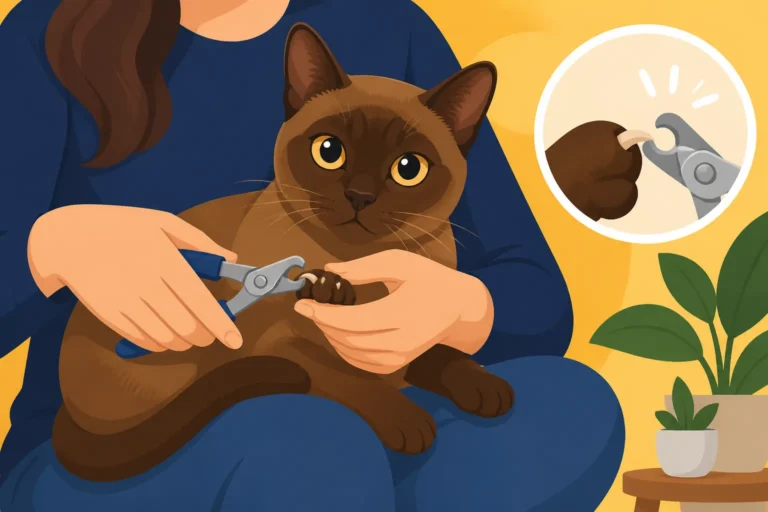
Trimming a Burmese cat claws while seated together prevents overgrown nails from curling into the paw pad and protects furniture.
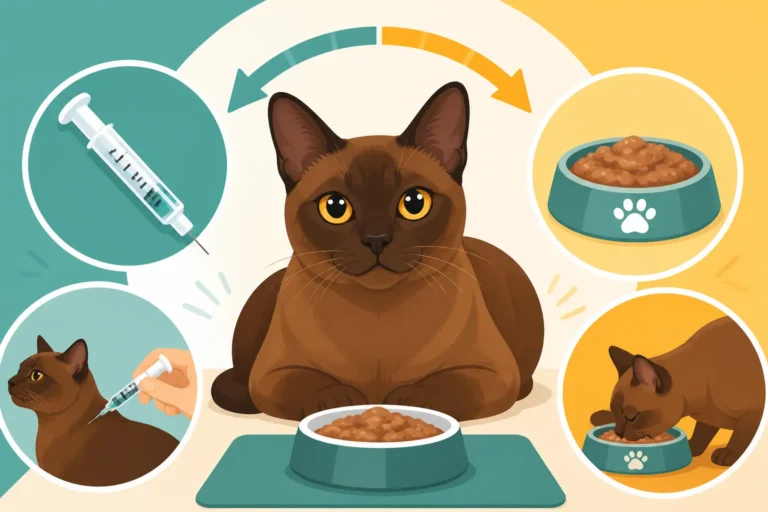
Feeding a diabetic Burmese cat requires timing meals precisely with insulin injections to prevent dangerous blood sugar drops.
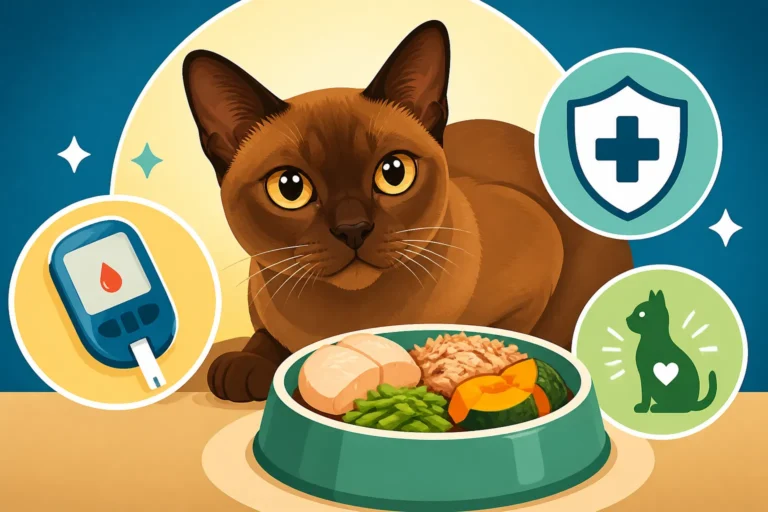
Dietary requirements for a diabetic Burmese explain low carbohydrate needs and the link between obesity and insulin resistance.