Trimming a Burmese’s Claws While It Sits on You
One of the unique joys of owning a Burmese cat is their incredible affection; they truly are "Velcro cats" that want to be with you always. This deep bond can be a huge advantage when it comes to routine care like claw trimming, which many cat owners dread. Instead of a wrestling match, it can actually become another moment of closeness. This guide will walk you through how to transform claw trimming into a gentle, bonding experience, ensuring both you and your beloved Burmese stay calm and comfortable.
Understanding Your Burmese's Claws
Before you even pick up the clippers, it's really helpful to understand a bit about your Burmese's claws. It’s not just about lopping off the sharp bit; it’s about their health and comfort.
Why Regular Trimming is Crucial
Think about your Burmese cat's natural instincts. In the wild, cats would be constantly wearing down their claws through hunting, climbing, and marking territory. Our cherished indoor companions don't have those same opportunities, which means their claws can grow incredibly long and sharp. When claws get too long, they can snag on carpets, furniture, or even get caught in bedding, leading to painful tears or injuries. Imagine trying to walk around with shoes that are far too long for your feet – that’s a bit like what it’s like for a cat with overgrown claws. They can start to curl under, growing into the paw pad itself, which is not only excruciating but also a serious infection risk. Regular trimming prevents these issues, keeping your Burmese comfortable and preventing unnecessary trips to the vet for painful paw problems. It’s a proactive step in their overall well-being.
Moreover, while Burmese cats are generally good-natured, overgrown claws can inadvertently cause harm during playtime. That playful swat that might normally be harmless can turn into a deep scratch if their claws are needle-sharp and too long. Keeping them neat not only protects your furniture and your own skin but also helps maintain the peace and enjoyment of your interactions. It’s just another small way we show our love and responsibility for these wonderful creatures. You might even find it lessens their urge to scratch inappropriate surfaces because their claws aren't causing them discomfort. How Fast a Burmese's Claws Grow Back can give you a good idea of why consistency is key.
The Anatomy of a Cat's Claw and the Quick
To trim safely, you need to know what you're looking at. A cat's claw isn't just a solid piece of keratin. Inside each claw, there's a sensitive area called the "quick." This quick contains blood vessels and nerves, and cutting into it is painful for your cat and will cause bleeding. It’s the equivalent of cutting too far back on your own fingernail and hitting the nail bed – ouch! In lighter-colored claws, the quick often appears as a pinkish area, making it relatively easy to see and avoid. However, many Burmese cats, especially those with darker coats like sable or blue, will have darker claws where the quick is much harder to distinguish.
For darker claws, you'll need to be extra cautious. Instead of trying to find the pink, look for the opaque part of the claw that forms a small hook. The quick typically ends just before this hook begins. When in doubt, it’s always better to take off tiny slivers at a time, just the very tip, rather than attempting a larger cut. You’re aiming to remove only the sharp, transparent tip that extends beyond the quick. If you’re truly unsure, don't hesitate to ask your vet or a professional groomer to show you how to identify the quick safely during your next visit. Learning this crucial step will build your confidence and make the process much less stressful for both of you.
Gathering Your Tools for a Stress-Free Session
Preparation is half the battle, especially when it comes to cat care. Having the right tools at hand, and knowing how to use them, will make all the difference in turning claw trimming into a calm, almost meditative experience.
Choosing the Right Clippers for Your Burmese
The market is flooded with different types of cat nail clippers, and choosing the right one can feel a bit overwhelming. Generally, there are two main styles: scissor-style clippers and guillotine-style clippers. For Burmese cats, with their sturdy build and often thicker claws compared to more delicate breeds, scissor-style clippers are often the preferred choice. These clippers resemble small, sharp scissors with safety stops, giving you excellent control and visibility of the claw as you cut. This precision is invaluable, especially when you're trying to avoid the quick on those darker claws. Guillotine-style clippers, while effective for some cats, can sometimes obscure your view of the claw, making precise cuts harder.
When you're shopping, look for clippers that feel comfortable in your hand. If they're awkward for you to hold, it will make the process more difficult and potentially less safe for your cat. Don't cheap out here; a good quality, sharp pair of clippers makes a clean cut, which is less likely to split or crush the claw, causing discomfort for your Burmese. Dull clippers are definitely something to avoid. You can find excellent options on platforms like Chewy or Amazon, often with reviews from other cat owners that can guide your choice. Personally, I've found that stainless steel blades stay sharp longer. Which Clippers Suit a Burmese That Sits Still for It offers more specific recommendations on types.
Essential Ancillary Supplies
Beyond the clippers, a few other items will ensure your claw trimming session goes smoothly and safely. First and foremost, you absolutely must have styptic powder on hand. Even with the utmost care, accidents happen, and you might nick the quick. Styptic powder is a lifesaver in this situation; it quickly stops the bleeding and helps prevent infection. Just a tiny pinch applied to the bleeding claw will do the trick. Don't try to use flour or cornstarch as a substitute, as they aren't as effective and carry a higher infection risk.
Next up, high-value treats are your secret weapon. Burmese cats are often highly food-motivated, which makes positive reinforcement incredibly effective. Think about those irresistible treats your cat goes wild for – maybe freeze-dried chicken bits, or a small dollop of a favored wet food. Having these ready will help create a positive association with the trimming process. A soft towel or blanket can also be helpful, not just for comfort but also for gently wrapping your cat if they're a bit squirmy (though many Burmese will simply drape over you). Finally, good lighting is non-negotiable. You need to clearly see the claw and, if possible, the quick. A bright room or a small, focused lamp will make all the difference.
The Art of Trimming a Burmese While They Cuddle
This is where the magic happens, turning a potentially stressful chore into a moment of calm connection. The key is to leverage your Burmese's naturally affectionate nature and make it a positive ritual.
Creating a Calm Environment and Routine
Burmese cats thrive on routine and comfort. The best time to trim their claws is when they are relaxed, perhaps after a meal when they're a bit sleepy, or during one of their many cuddle sessions. Avoid trying to do it when they're wound up from play or when there's a lot of household commotion. Choose a quiet spot where you both feel comfortable – your favorite armchair, a soft blanket on the couch, or even just sitting on the floor. Consistency is your friend here. Try to trim at roughly the same time, in the same place, and always with the same calm demeanor. This helps your Burmese understand what’s coming and associates it with a peaceful interaction.
Start by simply handling their paws gently and frequently, even when you're not trimming. Just massage their toes, extend a claw, and release it, offering praise and a treat. This desensitization process, started when they are kittens, is invaluable. Introducing a Toothbrush to a Burmese at Twelve Weeks highlights the importance of early positive introductions to grooming habits. If they're used to their paws being touched, the actual clipping will be far less of a surprise. Remember, your calm energy is contagious. If you're stressed, your Burmese will pick up on it. Take a deep breath, keep your voice soft and reassuring, and focus on the bond you share.
The Gentle Grip and the Snip
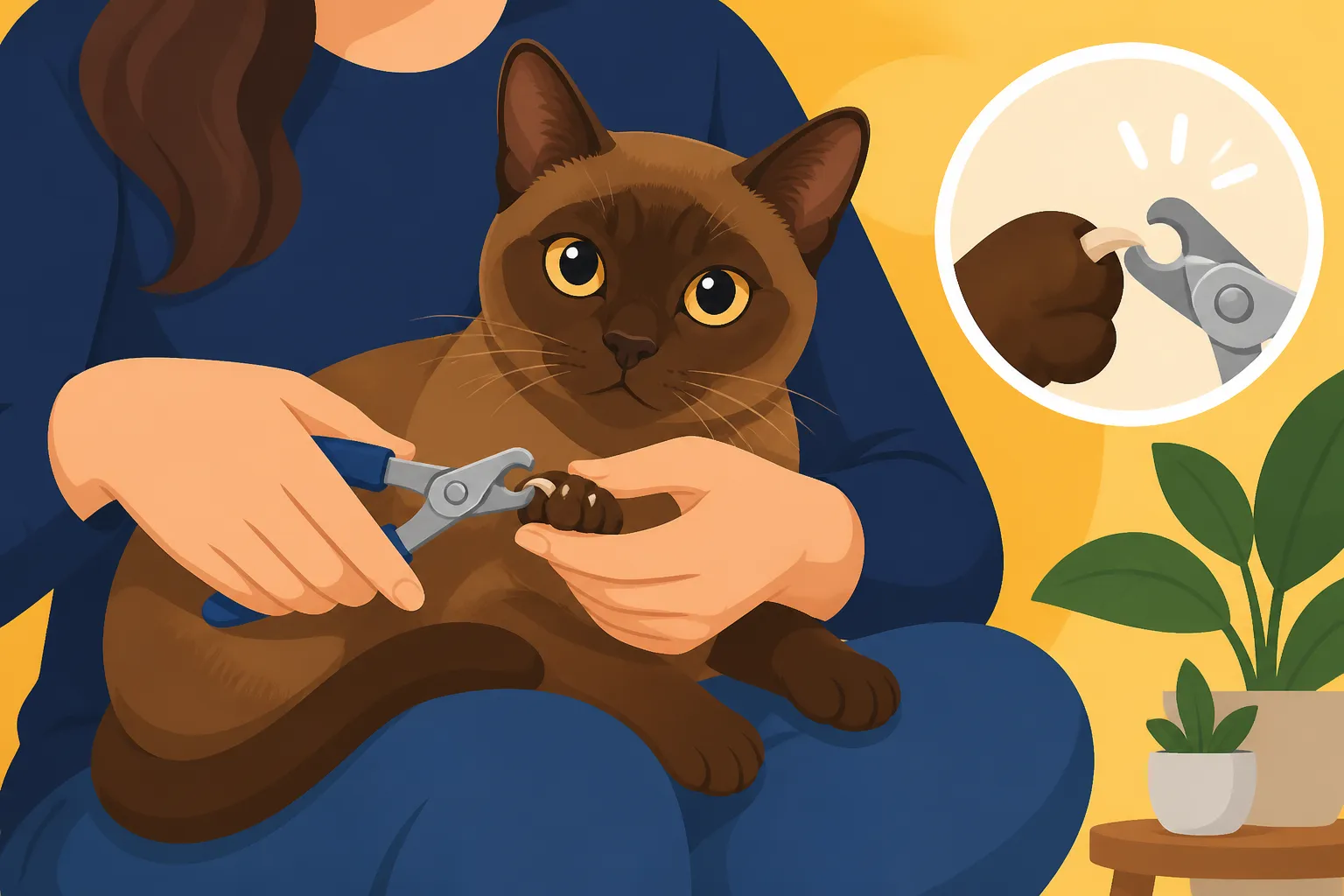
Now for the actual trimming. Get your Burmese settled comfortably on your lap or next to you, ideally in a position where they feel secure and can still relax. Many Burmese love being cradled like a baby or simply draped over your arm or shoulder. Gently take one of their paws in your non-dominant hand. With your thumb on top of the paw and your index finger underneath, gently press your thumb down on the top of the paw and your index finger up on the paw pad just behind the claw. This action will extend the claw fully, making it easier to see.
Identify the sharp, clear tip of the claw, making sure you can see where the quick ends. If you're unsure, aim for just the very tip, a millimeter or two at most. Position the clippers perpendicular to the claw, ensuring you're only cutting the very end. Make a swift, confident snip. The quicker and cleaner the cut, the less your cat will notice. After each successful clip, release the paw, offer immediate praise, and a tiny high-value treat. Don’t try to do all the claws at once, especially when you're both learning. Maybe just one paw, or even one claw per session, to start. The goal is positive association, not speed. Cutting a Burmese's Claws While It Purrs emphasizes how their affectionate nature can be your greatest asset here.
Dealing with Resistance and Dark Claws
Even the most laid-back Burmese might have an off day, or initially be resistant. If your cat starts to squirm, pull their paw away, or vocalize, don't force it. Trying to hold them down or overpower them will only build negative associations and make future sessions harder. Gently release them, give them some calming pets, and try again later, or even the next day. Sometimes, a change of scenery or a different time of day can make a big difference. Remember, short, positive sessions are better than long, stressful ones.
For those dark claws where the quick is invisible, take an even more conservative approach. Trim off only the very sharp, transparent tip. If the claw still feels a bit long, you can take another tiny sliver off, inspecting it after each cut. The goal isn't to get them perfectly short in one go, but to keep them from becoming overgrown and painful. If you accidentally nick the quick, don't panic. Stay calm, apply pressure with a clean cloth, and then immediately apply the styptic powder. Acknowledge your cat's discomfort with soothing words and extra treats. They'll forgive you, especially if you handle the situation calmly. Over time, as your Burmese trusts the process, you'll find they often purr through the entire trimming session, seeking attention more than resisting the snipping. Why a Burmese Purrs Through a Vet Examination is a good read on their general tolerance for handling.
Making Claw Trimming a Positive Experience
Building a positive association with claw trimming is crucial for long-term success. Your Burmese's intelligence and desire for human connection mean they can be trained to accept, and even enjoy, this necessary grooming.
Positive Reinforcement and Rewards
The power of positive reinforcement cannot be overstated with a Burmese cat. Every time you successfully clip a claw, even if it's just one, immediately follow it with a high-value treat and enthusiastic praise. Use a specific phrase, like “Good paws!” or “Nice claws!”, so your cat learns to associate that sound with a positive outcome. The treat needs to be given immediately after the clip, so they link the action to the reward. For some Burmese, a lickable treat paste might work wonders, allowing you to keep them distracted while you work, or providing a substantial reward afterward.
Over time, your Burmese will learn that sitting still for a few snips means delicious rewards and loving attention. This transforms the experience from something to tolerate into something to look forward to. You're not just clipping claws; you're strengthening your bond and teaching them that routine care is a safe and pleasant part of their life with you. This same principle applies to other forms of handling, such as when you might need to Teach a Burmese to Sit Still for a Glucose Check. They quickly understand that cooperation leads to good things.
Building Trust and Patience Over Time
Rome wasn't built in a day, and neither is perfect claw-trimming behavior. Consistency and patience are paramount. Don't expect your Burmese to be a perfect angel on day one, especially if they haven't had much paw handling before. Start small. Perhaps just pick up a paw, gently extend a claw, praise, and treat, without even bringing out the clippers. Do this a few times a day for a week. Then, introduce the clippers, but just let them touch the claw without clipping, followed by praise and a treat. Gradually build up to actual clipping, starting with just one or two claws at a time.
The goal is to chip away at any anxiety or resistance your cat might have. If you sense they're getting stressed, stop the session and try again later. It's far better to have several short, positive sessions than one long, traumatic one. Think of it as a dance: you lead, but you also respond to your partner's cues. Your Burmese trusts you implicitly; honor that trust by making this a gentle, respectful interaction. Over months, you'll find that what once seemed like a chore becomes a quick, easy, and even enjoyable routine for both of you. Why a Burmese Treats Grooming as Attention delves deeper into how their desire for interaction can work in your favor.
Common Challenges and Troubleshooting
Even with the best intentions and techniques, you might encounter hurdles. It’s important to know when to persist, and when to seek professional help.
When Your Burmese Just Won't Cooperate
Despite your best efforts, some Burmese cats might genuinely dislike having their claws trimmed, no matter how many treats you offer or how calm you are. Perhaps they had a bad experience before you adopted them, or maybe they just have a particularly sensitive quick that makes them wary. If you find yourself in a perpetual wrestling match, or if your cat becomes genuinely aggressive during trimming attempts, it's time to consider alternative strategies. Your first stop should be your veterinarian. They can offer professional trimming services, often for a small fee, and can assess if there's an underlying reason for your cat's extreme resistance, such as pain or arthritis.
Another excellent option is a professional cat groomer. Many groomers specialize in gentle handling and have techniques and tools that might make the process less stressful for your cat. They can also provide tips and demonstrations tailored to your cat's specific temperament. Remember, the goal is to keep your cat's claws healthy, not to prove you can do it yourself at all costs. Sometimes, stepping back and letting a professional handle it is the kindest thing you can do for your beloved pet. Never feel guilty about needing help; every cat is an individual, and what works for one might not work for another. Even a senior cat, whose mobility might be reduced, might require more careful handling during claw trims, as outlined in Caring for a Burmese Past Twelve.
Recognizing Signs of Overgrown or Problematic Claws
It's vital to regularly inspect your Burmese's paws, not just when you're trimming. Knowing what to look for can help you catch problems early. Overgrown claws are easy to spot: they'll extend noticeably past the paw pads and might start to curve downwards. You might hear them clicking on hard floors as your cat walks, which is a definite sign they’re too long. If you hear that clicking, it means the claw is touching the ground and pushing back into the toe, which is uncomfortable and unnatural.
Beyond just length, watch for signs of discomfort or injury. Is your cat limping, favoring a paw, or excessively licking at their feet? These could indicate a snagged, broken, or even ingrown claw. Ingrown claws occur when the claw curls so far under that it starts to pierce the paw pad. This is incredibly painful and can lead to severe infection. If you suspect an ingrown claw, or if you see any swelling, redness, discharge, or persistent lameness, schedule a vet appointment immediately. These issues won't resolve on their own and require professional medical attention. Keeping an eye on their paws is just as important as monitoring their weight, as discussed in Why Portion Control Is Medical Care in a Burmese, as it all contributes to their overall health.
| Clipper Type | Pros | Cons | Best For |
|---|---|---|---|
| Scissor Style | Excellent control, good visibility of claw | Requires some dexterity | Most cats, especially those with thicker claws like Burmese, or dark claws |
| Guillotine Style | Quick cuts, good for strong claws | Can obscure view of quick, less precise, may crush claws | Experienced users, larger cats with very thick claws (less ideal for Burmese) |
| Pliers Style | Very strong, good for very thick claws | Less common for cats, can be bulky | Extremely thick or overgrown claws (often vet use) |
| File/Grinder | No risk of quicking, smooth finish | Can be noisy/vibrating (may scare some cats), takes longer | Cats tolerant of noise/vibration, maintaining length between trims |
Disclaimer
This article is for general informational purposes only and does not constitute professional advice. Laws, prices and regulations vary by location and change over time. Consult a qualified professional for guidance on your specific situation.