How a Burmese’s Coat Differs From a Siamese’s
It’s easy to look at a sleek, short-haired cat and think they’re all pretty much the same, especially when you consider two popular breeds like the Burmese and the Siamese. They both have that undeniable elegance and striking eyes, but when you dig a little deeper into their coats, you'll find some truly fascinating differences that impact everything from how they look to how you care for them. This guide is going to walk you through exactly what sets the Burmese coat apart from the Siamese, exploring the unique qualities of each and helping you understand why these distinctions matter.
The Distinctive Satin Sheen of the Burmese Coat
When you run your hand over a Burmese cat, you’re not just feeling fur; you’re experiencing something truly unique in the feline world: a coat often described as satin. This isn't just poetic license; it’s a specific characteristic that breeders and owners cherish. The Burmese coat is incredibly fine, short, and lies exceptionally close to the body, creating a remarkably smooth, almost liquid appearance.
Why the Burmese Coat Feels Like Satin
The secret to that signature satin feel lies in the Burmese's genetic makeup. Unlike many other cat breeds, the Burmese has virtually no undercoat. Most cats have a double coat: a protective outer layer of guard hairs and a dense, insulating undercoat. The Burmese largely skips that dense undercoat, leaving only the fine, soft guard hairs. This absence is what gives the coat its sleek, almost polished look and its distinctively soft, warm-to-the-touch texture. Imagine the difference between velvet and a coarse wool blanket – that’s somewhat analogous to the difference in feel. This lack of undercoat also means that the hair shafts themselves are quite fine, contributing to the overall impression of a smooth, flowing fabric rather than individual strands of fur. It's why What Makes a Burmese's Coat Satin Rather Than Silky is such a distinct characteristic.
The way the hairs lie flat against the body further enhances this effect. There's no fluff or volume; the coat simply hugs the contours of the cat's muscular body. This not only contributes to its luxurious feel but also highlights the powerful, compact build of the breed, giving them that "brick wrapped in silk" reputation. When they move, light catches their coat, making them appear to shimmer. This unique texture also means they tend to feel warmer to the touch than many other cats, as their body heat isn't trapped by a thick layer of fur.
Color and Pattern: Burmese Solid Tones
The Burmese is famous for its rich, solid colors, though "solid" is a bit of a misnomer due to their unique genetic coloring. The original and most iconic color is sable, a deep, warm brown that deepens with age. You'll also find them in champagne (a warm beige or fawn), blue (a medium grey with a subtle silver sheen), and platinum (a pale, almost lavender grey). What unites these colors is their depth and luminosity.
The "solid" appearance is actually a trick of genetics. Burmese cats carry a gene, known as the Burmese color restriction gene (cb/cb), which is a form of partial albinism. This gene causes pigment to develop more intensely in cooler areas of the body and less intensely in warmer areas. While the effect is much less pronounced than in a Siamese, it means that a Burmese's extremities (ears, face, paws, tail) are often a shade or two darker than its main body. A kitten, for example, is typically born quite pale and gradually darkens as it matures and is exposed to cooler temperatures. This subtle gradient, however, still gives the overall impression of a beautifully uniform, rich color, a far cry from the stark contrast of a Siamese. You can read more about this in What the cb Allele Does to a Burmese's Color.
The Striking Pointed Contrast of the Siamese Coat
Now, let’s pivot to the Siamese, a breed instantly recognizable by its dramatic colorpoint pattern. While also short-haired and sleek, the Siamese coat presents a completely different aesthetic and genetic story compared to the Burmese.
The Defining Features of the Siamese Coat
The Siamese coat is notably short, fine, and lies very close to the body, much like the Burmese. However, where the Burmese coat is dense and satiny, the Siamese often feels a bit more "crisp" or "silky" rather than plush. It doesn't have the same velvety depth because the individual hairs tend to be slightly coarser and less dense than those of a Burmese, though still very smooth. This contributes to their elegant, almost delicate appearance.
The lack of an insulating undercoat is also characteristic of the Siamese, which is why they, like the Burmese, often seek out warm laps and cozy spots. They aren't built for cold weather! Their sleekness means that every muscle and bone contour is visible, emphasizing their long, lithe, and elegant body type. This is a cat whose physique is as much a part of its visual appeal as its coloring.
Colorpoint Pattern: A Masterpiece of Temperature Genetics
The hallmark of the Siamese coat is, without a doubt, its colorpoint pattern. This pattern is another manifestation of the same temperature-sensitive gene (the cb allele, or more specifically, the Himalayan allele cs when referring to full colorpoint) that gives the Burmese its subtle darkening, but in the Siamese, it's far more extreme. Siamese cats are genetically albinos, but their albinism is partial and temperature-dependent. This means that the enzyme responsible for producing pigment only functions properly in cooler temperatures.
So, a Siamese kitten is born pure white or cream because of the uniform warmth inside the mother's womb. As the kitten grows and its body is exposed to the cooler outside world, pigment develops in the coldest areas: the tips of the ears, nose, paws, and tail. These areas become intensely colored points, creating a stunning contrast with the much paler body. The body color itself can vary from ivory to fawn, depending on the specific point color (seal, blue, chocolate, lilac, etc.). The more contrast, the better the example of the breed standard. This dramatic pattern is genetically distinct and is the foundation of the breed's iconic look. It’s a fascinating example of Why a Burmese's Color Gene Reacts to Temperature, even if the expression is different.
Direct Comparison: Burmese vs. Siamese Coat Characteristics
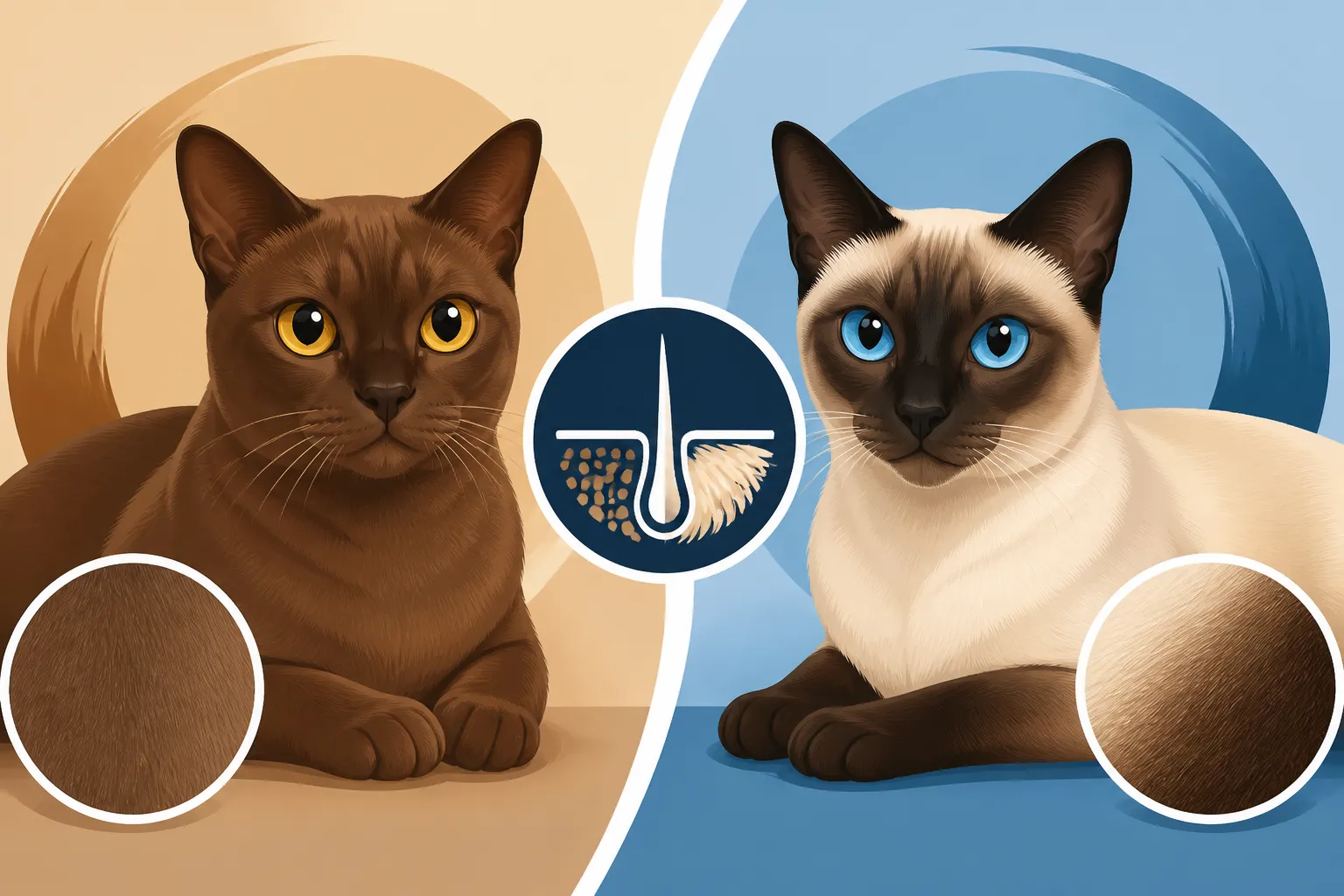
To truly appreciate the differences, let's put them side-by-side. While both breeds boast short, low-shedding coats, the specifics of their texture, density, and color presentation are where they diverge dramatically. Understanding these distinctions is key not just for appreciating their beauty, but also for specific grooming considerations, however minimal.
Texture and Density
The Burmese coat is renowned for its dense, soft, and plush "satin" feel. It's almost like a very fine velvet. This density, even without a heavy undercoat, gives it a substantial, warm quality. When you stroke a Burmese, your hand feels like it's sinking into something luxurious. How Short a Burmese's Coat Actually Is often surprises people because of how dense it feels for such a short coat.
In contrast, the Siamese coat tends to be finer and silkier, often described as "crisp." It's less dense than the Burmese, and while equally smooth and close-lying, it doesn't have the same plushness. You feel the sleekness and the underlying musculature more directly with a Siamese. Both are low-shedding compared to many other breeds, which is a big plus for allergy sufferers or those who prefer a cleaner home. However, the Burmese’s slightly denser coat might hold onto a bit more dander if not regularly wiped down. This makes How Little a Satin Coated Burmese Sheds a frequently asked question.
Color and Pattern Expression
This is perhaps the most glaring difference. The Burmese features rich, generally uniform "solid" colors (sable, champagne, blue, platinum), with only subtle darkening at the points due to the partial albinism gene. The overall impression is one of deep, luminous color across the entire body. The gradient is soft and often only noticeable upon close inspection.
The Siamese, on the other hand, is defined by its dramatic colorpoint pattern. Its body is a pale cream or fawn, strikingly contrasted by dark points on the ears, mask, paws, and tail. This high-contrast appearance is genetically driven by a more extreme expression of the temperature-sensitive gene. This is why Why a Burmese Is Brown and a Siamese Is Pointed is a deep dive into genetics, not just aesthetics. The difference in appearance isn't just cosmetic; it reflects distinct genetic pathways that cat fanciers have painstakingly bred for over generations.
Here's a quick comparison table:
| Feature | Burmese Coat | Siamese Coat |
|---|---|---|
| Length | Short | Short |
| Texture | Dense, plush, satin-like, warm to touch | Fine, silky, crisp, smooth |
| Undercoat | Minimal to almost none | Minimal to almost none |
| Shedding | Low, fine hairs | Low, fine hairs |
| Color Pattern | Mostly uniform "solid" colors with subtle points | Distinct colorpoint pattern with pale body, dark extremities |
| Genetic Basis | cb/cb allele (Burmese color restriction) | cs/cs allele (Himalayan color restriction) |
| Temperature Effect | Subtle darkening of points, overall rich color | Extreme contrast with pale body, dark points |
Grooming and Care Implications for Each Coat Type
While both breeds are relatively low-maintenance when it comes to grooming, their subtle coat differences do lead to slightly different recommendations for keeping them looking their best and ensuring their skin health. Since neither has a substantial undercoat, neither requires extensive brushing to prevent mats or tangles, which is a huge relief for many cat owners.
Burmese Coat Care
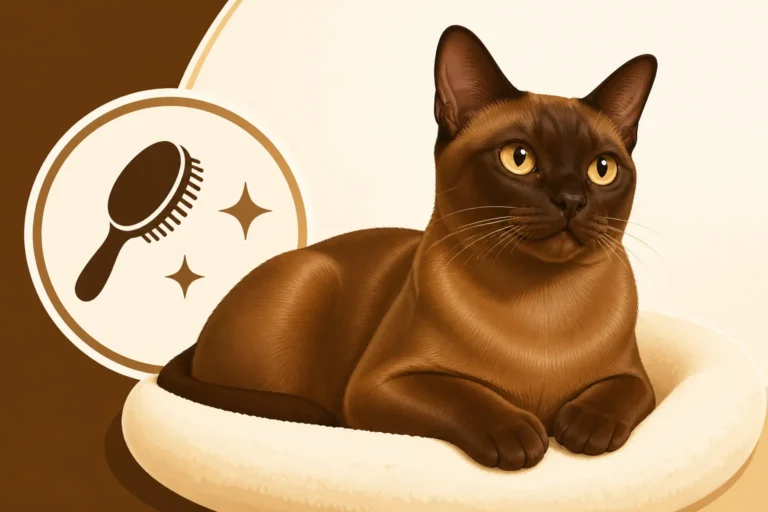
For the Burmese's satin coat, the focus is on enhancing that beautiful sheen and keeping it free of loose hairs. Because the coat is so fine and dense, even minimal shedding can make it appear a bit dull.
- Wiping: The best tool for a Burmese is often not a brush at all, but a soft chamois cloth. A quick wipe-down with a damp chamois once a week (or even daily if you want that extra sparkle) will pick up any loose hairs and distribute natural oils, bringing out an incredible shine. You can find excellent quality chamois cloths on Amazon or specialized pet supply sites like Chewy. This attention to detail is how you truly bring out How to Bring Up the Shine on a Burmese's Coat.
- Minimal Brushing: If you prefer a brush, a grooming glove or a very soft rubber curry comb can be used gently. Avoid harsh slicker brushes, which are overkill and can irritate their delicate skin. The goal is to remove dead hair and stimulate circulation, not to detangle or de-shed a heavy coat.
- Bathing: Burmese cats rarely need baths. Their short, sleek coats are quite adept at self-cleaning. If they do get into something particularly messy, a gentle cat-specific shampoo is sufficient, followed by a thorough rinse to avoid any residue. They dry quickly thanks to their minimal coat.
- Warmth: Due to their lack of a thick undercoat, Burmese cats can be sensitive to cold. Ensure they have warm, cozy places to sleep, especially in cooler climates. They love snuggling under blankets or on heated beds.
Siamese Coat Care
The Siamese coat, while similar in length, benefits from a slightly different approach to maintain its crispness and highlight the dramatic colorpoint pattern.
- Gentle Brushing: A soft rubber brush or a grooming mitt can be used once or twice a week. This helps remove any loose hairs and stimulates the skin, keeping it healthy. The fine hairs of a Siamese are easily managed, and regular light grooming helps prevent any dullness that can come from shed hair accumulating.
- Wiping for Shine: Similar to the Burmese, a damp cloth or chamois can be used to wipe down a Siamese, enhancing its natural luster and removing surface dust. This is particularly effective at making their points look sharp and their body color clean.
- Bathing: Again, baths are rarely necessary for a Siamese. Their self-grooming is usually sufficient. If a bath is needed, use a mild shampoo and ensure they are thoroughly dried afterward to prevent chilling, as they feel the cold easily.
- Temperature Considerations: Like the Burmese, the Siamese thrives in warmth. Their temperature-sensitive coloring actually means that if a Siamese is consistently exposed to very cold temperatures, their body color can darken slightly over time as more pigment develops in areas that would normally be pale. While this isn't a health concern, it's something owners of show cats might consider. Providing plenty of warm sleeping spots, perhaps even a cat tree near a sunny window or a soft blanket, is a great way to keep them comfortable.
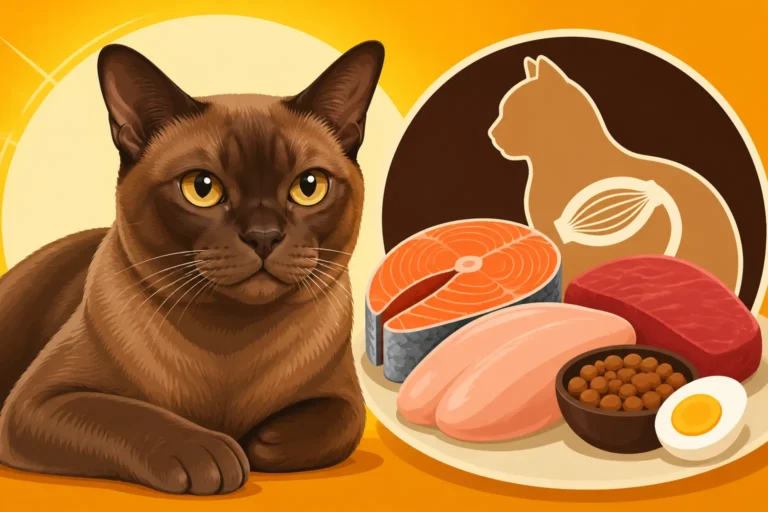
In both cases, good nutrition plays a vital role in coat health. A high-quality diet, rich in protein and essential fatty acids, will contribute to a healthy, shiny coat regardless of the specific breed. Always check ingredient lists and consider brands that prioritize whole meat ingredients.
Understanding the subtle yet significant differences between the Burmese and Siamese coats not only deepens your appreciation for these magnificent breeds but also helps you provide the best possible care, ensuring their luxurious fur remains a source of beauty and comfort for years to come.
Disclaimer
This article is for general informational purposes only and does not constitute professional advice. Laws, prices and regulations vary by location and change over time. Consult a qualified professional for guidance on your specific situation.