How a Burmese’s Coat Differs From a Tonkinese’s
It’s easy to get lost in the beautiful, short-coated world of the Burmese and Tonkinese cat breeds. On the surface, they might seem quite similar, both boasting those gorgeous, expressive eyes and affectionate personalities. But if you’ve ever found yourself wondering why one feels like pure silk and the other like the softest velvet, or why their colors seem to play tricks on your eyes, you’re not alone. This guide is here to unravel the subtle yet significant differences between a Burmese and a Tonkinese coat, helping you appreciate the unique beauty of each and understand exactly what makes them distinct.
Understanding the Burmese Coat: The "Satin" Standard
When you first touch a Burmese, there's an immediate, almost startling, sensation. It's not just soft; it's something else entirely. This unique tactile experience is what truly sets the Burmese coat apart.
The Unique Texture and Appearance of a Burmese Coat
Imagine running your hand over a piece of fine satin—smooth, cool, and incredibly sleek. That's precisely the experience of petting a Burmese cat. Their coat is remarkably short, lying exceptionally close to their body, almost as if painted on. There's virtually no undercoat, which contributes to its incredibly fine texture and the way it seems to shimmer in the light. This absence of an insulating underlayer also means that when you stroke a Burmese, you can feel the warmth of their muscular body underneath, earning them the affectionate nickname of a "brick wrapped in silk." The way light catches their fur creates a distinctive glossy sheen, giving it that characteristic "satin" appearance. It's a coat designed for elegance and minimal fuss, perfectly complementing their compact, muscular build. If you've ever wondered about this unique feel, it's because Why a Burmese's Coat Feels Like Satin is truly one of a kind in the feline world.
How the Burmese Coat Gene Influences Color and Pattern
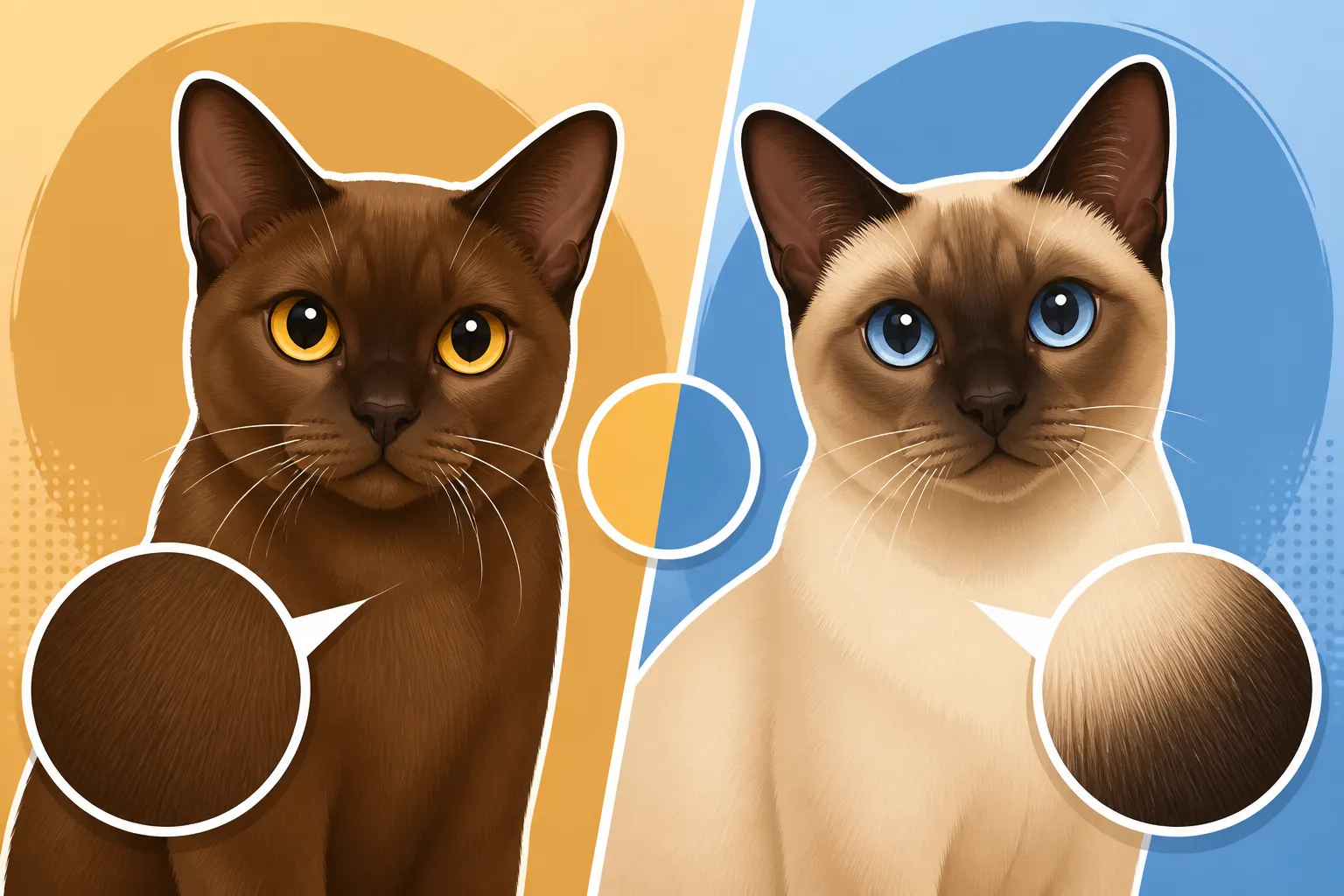
The magic behind the Burmese coat's color and pattern lies in a specific genetic allele known as cb. This gene is responsible for what's called the "sepia" pattern. Unlike the more dramatic contrast seen in a Siamese, where the points (ears, face mask, paws, tail) are significantly darker than the body, the Burmese sepia pattern is much more subtle. The body color is only slightly lighter than the points, creating a rich, uniform appearance that deepens towards the extremities but without harsh lines. For instance, a classic sable Burmese will have a deep, rich brown body that softly graduates to an even deeper shade on the points. You won't see stark demarcation; instead, it's a seamless blend of warmth and depth.
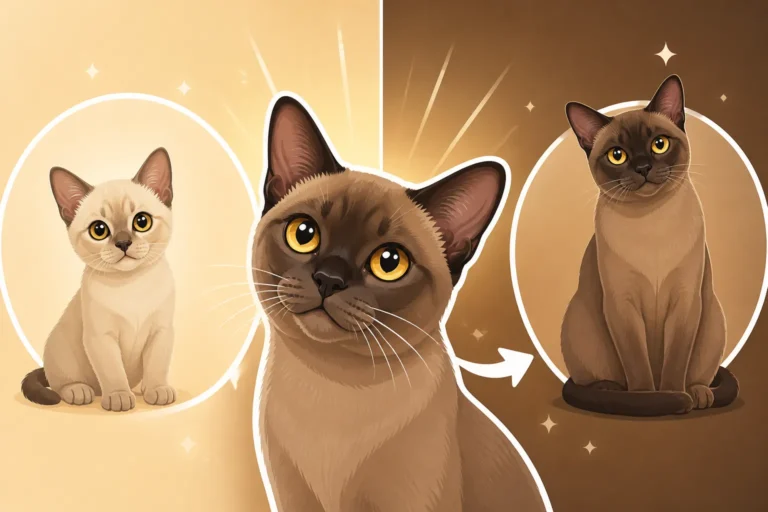
This genetic influence also means that Burmese kittens are typically born much paler than their adult counterparts. Their color gradually deepens and develops over the first few months, settling into its mature shade around a year or so of age. It's a fascinating transformation to witness! The temperature-sensitive nature of the cb gene means cooler body parts develop darker pigment, which is why you see the slight intensification on their ears, face, and paws. This subtle shading is a hallmark of the breed, whether you're admiring What a Sable Burmese Looks Like, What a Blue Burmese Looks Like, or any of their other recognized colors. This is also why Why a Burmese Is Darker at the Extremities is a defining characteristic.
Minimal Shedding and Grooming Needs
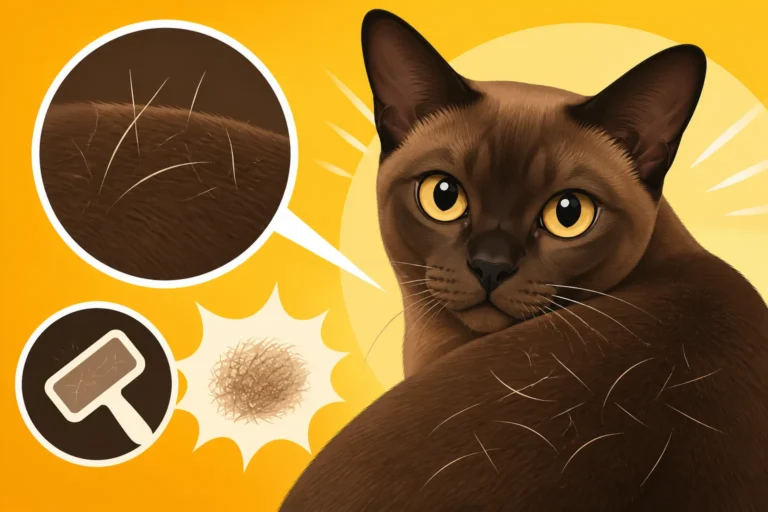
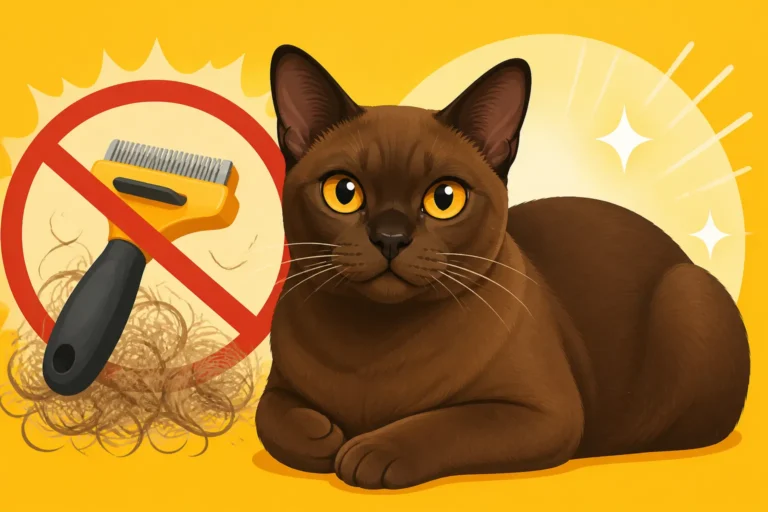
One of the great joys of living with a Burmese is their incredibly low-maintenance coat. Because they have very little to no undercoat, they shed significantly less than most other cat breeds. You won't find tumbleweeds of fur rolling across your floors or needing to lint-roll your clothes constantly. This sparse shedding is a huge plus for many owners, making daily clean-up a breeze. It's truly impressive How Little a Satin Coated Burmese Sheds compared to many other breeds.
Grooming a Burmese is less about necessity and more about bonding. A weekly wipe-down with a soft cloth or a chamois is usually all it takes to keep their coat looking its best and to enhance that characteristic satin sheen. Many Burmese absolutely adore this attention, turning it into a cherished ritual. It’s a moment of connection where you can admire their sleek beauty while giving them some loving strokes. This simple routine is often the only grooming they ever truly need, highlighting Why a Weekly Chamois Is All a Burmese Needs to maintain their stunning appearance.
Deciphering the Tonkinese Coat: The "Mink" Hybrid
The Tonkinese, often called the "Tonk" by enthusiasts, occupies a beautiful middle ground in the cat world, a true testament to its heritage. Its coat is a direct reflection of its unique genetic blend, resulting in a look and feel that's distinctly its own.
The Blended Appearance: A Bridge Between Burmese and Siamese
The Tonkinese is not just a pretty face; it's a carefully crafted blend of two magnificent breeds: the Burmese and the Siamese. This heritage is most evident in its stunning coat, which breeders affectionately refer to as "mink." The mink pattern is precisely what it sounds like – a harmonious balance that sits right between the sepia pattern of the Burmese and the pointed pattern of the Siamese.
Visually, a Tonkinese will have more contrast between its body color and its points than a Burmese, but less dramatic contrast than a Siamese. The points—ears, face, legs, and tail—are distinctly darker than the body, but the body itself isn't stark white or cream like a Siamese; it has a rich, medium shade that beautifully complements the darker points. The transition from body to point color is gentle and blended, creating a soft, appealing aesthetic. The coat itself is usually short to medium-short, wonderfully soft, and incredibly silky to the touch, often with a slight sheen that sets it apart. It’s dense without being plush, offering a luxurious feel. When you understand that Why the Tonkinese Is Half Burmese, its coat makes perfect sense.
The Genetic Mix: Burmese and Siamese Alleles at Play
To understand the Tonkinese coat, we need to delve back into genetics. While the Burmese carries two copies of the cb allele (sepia), and the Siamese carries two copies of the cs allele (pointed), the Tonkinese carries one of each – a cb/cs combination. This heterozygous genetic makeup is precisely what gives the Tonkinese its distinctive "mink" pattern.
The cb/cs combination results in a partial expression of both sepia and pointed traits. The body color is slightly diluted compared to a full sepia, but it retains more pigment than a full pointed pattern. The points are more pronounced than a Burmese but softer than a Siamese. This genetic blueprint allows for a wider range of expression within the "mink" category, encompassing various shades and intensities of color, all while maintaining that characteristic harmonious blend. From rich browns to delicate lavenders, the Tonkinese coat offers a beautiful spectrum of colors, all unified by the unique mink pattern created by its dual heritage.
Grooming the Tonkinese Coat
Just like their Burmese cousins, Tonkinese cats are relatively low-maintenance when it comes to grooming, which is a big win for busy owners. Their short, silky coat doesn't tend to mat or tangle, and while it's slightly denser than a Burmese coat, it still sheds minimally. You won't need a professional groomer or elaborate tools to keep a Tonkinese looking spick and span.
A light, regular brushing a couple of times a week with a soft brush or a grooming mitt is usually sufficient to remove any loose hairs, distribute natural oils, and keep their coat looking lustrous. This also doubles as a wonderful bonding experience, as most Tonkinese thrive on attention and affection. Their willingness to sit still for a gentle brush makes grooming a pleasure rather than a chore. It’s rare for a Tonkinese to require a bath unless they've gotten themselves into a particularly messy situation, as they are diligent self-groomers. This ease of care further adds to their appeal as delightful household companions.
Key Distinctions in Coat Type and Care
While both the Burmese and Tonkinese are celebrated for their affectionate natures and stunning, short coats, a closer look reveals significant differences that truly define each breed. Understanding these distinctions goes beyond mere aesthetics; it helps us appreciate the unique genetic tapestry of each cat.
Texture and Feel: Satin vs. Mink
When it comes to the tactile experience, the difference between a Burmese and a Tonkinese coat is palpable. The Burmese coat is famously described as "satin." It is extraordinarily fine, exceptionally short, and lies incredibly flat and close to the body, almost like a second skin. When you stroke a Burmese, you feel its muscular form distinctly, and the fur itself has a cool, incredibly smooth, almost slippery quality. It truly feels like running your hand over a piece of silk or satin fabric – a unique and luxurious sensation that is a hallmark of the breed. This lack of an insulating undercoat contributes to its sleekness and the way it reflects light with a distinctive sheen.
In contrast, the Tonkinese coat, while still short and soft, has a different character entirely. It's often described as "mink" because of its plush, dense, and wonderfully silky texture. While it doesn't have a thick undercoat, it does have more density than a Burmese coat, giving it a richer, more substantial feel. When you pet a Tonkinese, your hand sinks in just a little, experiencing a delightful softness that is less about sleekness and more about luxurious silkiness. It's still a close-lying coat, but it has a slight loft that the Burmese lacks, creating a different kind of visual depth and tactile pleasure.
Color and Pattern Contrast: Sepia vs. Mink
The visual differences in their coat patterns are arguably the most telling distinctions between the two breeds, reflecting their unique genetic makeups.
The Burmese exhibits a "sepia" pattern. This means the body color is only slightly lighter than the points (ears, face, legs, tail). The contrast is very subtle, creating an almost uniform, rich, deep coloration across the entire cat. Think of it as a beautifully blended watercolor where the shades gradually deepen without any sharp lines. For example, a sable Burmese is a solid, rich brown, with only a soft deepening of color on the points. The overall impression is one of solid color, albeit with a fascinating depth and warmth.
The Tonkinese, with its "mink" pattern, presents a moderate level of contrast, sitting squarely between the Burmese and Siamese. The body color is noticeably lighter than the points, but not starkly so. The points are clearly darker and more defined than on a Burmese, yet they blend smoothly into the body color without the dramatic, sharp demarcation seen in a Siamese. A mink Tonkinese might have a creamy body with distinct chocolate points, or a soft grey body with darker blue points. The overall effect is striking and sophisticated, offering a clearer visual distinction between body and extremities than the Burmese, but with a more harmonious blend than the Siamese. It’s this balanced contrast that makes the Tonkinese coat so captivating.
To make it a little clearer, here's a quick comparison:
| Feature | Burmese Coat ("Satin" / Sepia) | Tonkinese Coat ("Mink") |
|---|---|---|
| Texture | Very fine, extremely short, close-lying, sleek, cool, "satin" feel | Short to medium-short, dense, soft, silky, "mink" feel |
| Undercoat | Virtually none | Minimal, but slightly more than Burmese |
| Shedding | Very low | Low |
| Body-Point Contrast | Very subtle; body slightly lighter than points | Moderate; body noticeably lighter than points, blended transition |
| Genetic Basis | cb/cb (homozygous Burmese allele) | cb/cs (heterozygous Burmese/Siamese alleles) |
| Overall Look | Rich, almost solid, uniform depth of color | Distinct points with a complementary body color, harmonious blend |
Grooming Implications for Each Coat Type
Thankfully for owners, both Burmese and Tonkinese cats are renowned for their relatively easy-care coats. Neither breed requires extensive grooming, complicated tools, or frequent professional intervention, which is a huge relief for many cat parents.
For the Burmese, their extremely short, close-lying coat with minimal undercoat means shedding is very light. A simple weekly wipe-down with a soft cloth or a chamois is genuinely all that's typically needed. This routine not only removes any loose hairs and dust but also enhances that signature satin sheen, bringing up a beautiful gloss. Many owners find Which Chamois Brings Up a Burmese's Satin Shine is perfect for this, turning grooming into a quick, pleasant bonding ritual. Their coats are so sleek that special brushes designed for deshedding or tangles are largely unnecessary.
The Tonkinese coat, while slightly denser and silkier, also boasts low shedding. A light brushing a couple of times a week with a soft rubber brush or a grooming mitt is usually sufficient. This helps to distribute natural skin oils, keeping the coat healthy and shiny, and gently removes any loose hairs. While you might find a bit more hair than with a Burmese, it's still far less than many other breeds. Both breeds are excellent self-groomers, keeping themselves tidy, and rarely require bathing unless they've had a messy adventure. This makes both the Burmese and Tonkinese ideal companions for those who appreciate a beautiful coat without the demanding grooming schedule.
Why These Differences Matter for Owners
Understanding the nuances between a Burmese and a Tonkinese coat isn't just an exercise in feline aesthetics; it has practical implications for potential owners and helps deepen your appreciation for these wonderful breeds.
Understanding Breed Standards and Appearance Expectations
For those interested in showing cats, or simply in acquiring a purebred feline, knowing the precise differences in coat type is absolutely fundamental. Breed standards meticulously describe every aspect of a cat's appearance, and coat texture, color, and pattern are often key distinguishing features. A Burmese is expected to have that distinct "satin" feel and a sepia pattern with subtle contrast, while a Tonkinese should display a "mink" coat with its characteristic silky texture and moderate point coloration. What a Burmese Looks Like Against the Standard is a precise description, and any deviation in coat characteristics could impact its conformation to the breed ideal.
For a pet owner, knowing these differences ensures you are getting the breed you expect. If you're drawn to the uniform, deep richness of a sepia Burmese, you'll want to ensure your kitten displays those traits. Conversely, if the striking but harmonious contrast of a mink Tonkinese appeals to you, understanding what to look for will guide your choice. It helps manage expectations and ensures you're delighted with your new family member, recognizing and celebrating their unique characteristics right from the start.
Practical Care Considerations and Potential Misidentifications
While both breeds are relatively low-maintenance, understanding the subtle differences can inform your very minor grooming choices. For example, a chamois might be slightly more effective for bringing out the extreme sheen of a Burmese's ultra-short coat, while a soft bristle brush might glide more smoothly over the slightly denser Tonkinese mink. It’s not about doing more work, but about making the right small choices.
Furthermore, being able to distinguish between the coats can be important in situations where a cat's history is uncertain, such as a rescue. While personality and physical structure are also vital clues, the coat pattern and texture can offer strong indicators of a cat's genetic makeup. Being able to correctly identify the breed characteristics, such as if Whether a Rescue Burmese's Type Can Be Identified through coat traits, can sometimes help a new owner understand potential inherited health predispositions or typical behaviors associated with that particular breed. It empowers you to provide the best possible care, recognizing the unique needs and beauty of your beloved companion. In essence, knowing How to Tell a Burmese From a Tonkinese through their coats gives you a deeper connection and understanding of your feline friend.
Disclaimer
This article is for general informational purposes only and does not constitute professional advice. Laws, prices and regulations vary by location and change over time. Consult a qualified professional for guidance on your specific situation.