How to Feed a Diabetic Burmese in a Multi Cat House
Living in a multi-cat household brings immense joy, but when one of your beloved Burmese cats receives a diabetes diagnosis, mealtime can quickly transform into a source of stress and anxiety. Suddenly, what was once a simple routine becomes a complex balancing act, trying to ensure your diabetic furball gets their precise, low-carbohydrate meals while preventing the other feline residents from "sharing" or, worse, eating the wrong food. This guide is here to walk you through the practical, empathetic strategies to manage feeding a diabetic Burmese cat seamlessly in a bustling home, ensuring all your kitties stay happy and healthy.
Understanding the Diabetic Burmese's Dietary Needs
The journey to managing diabetes in your Burmese begins with a deep understanding of their unique nutritional requirements. It's not just about giving insulin; it's about making their diet a cornerstone of their treatment and overall well-being.
Why Low-Carbohydrate is Non-Negotiable
For a diabetic Burmese, a low-carbohydrate, high-protein diet isn't just a suggestion; it's a critical component of their medical management. Think of it this way: carbohydrates break down into sugar in the body, which then requires insulin to be processed. If your Burmese is diabetic, their body either isn't producing enough insulin or isn't using it effectively. Flooding their system with high-carb foods makes the problem worse, sending their blood glucose levels soaring and making insulin injections less effective.
By switching to a diet that's rich in animal protein and significantly lower in carbohydrates, you are essentially reducing the "sugar load" on their system. This helps stabilize blood glucose, reduces the amount of insulin your cat might need, and crucially, gives them the best chance at achieving diabetic remission. Many owners report seeing a remarkable improvement once they fully commit to this dietary change. This breed is unfortunately predisposed to this condition, with Why a Burmese Is Four Times More Likely to Become Diabetic, making early and consistent dietary management even more vital.
Choosing the right food means looking beyond the front of the bag or can. You'll need to scrutinize the guaranteed analysis for protein, fat, and fiber, and then calculate the carbohydrate content. Most vets recommend aiming for a diet with less than 10% metabolizable energy from carbohydrates. This often means saying goodbye to most dry kibbles, which are typically very high in carbohydrates, and embracing wet food options that are specifically formulated for diabetic cats or are naturally very low in carbs.
The Importance of Fixed Meal Times and Portions
Another cornerstone of diabetic management, particularly for a Burmese, is the strict adherence to fixed meal times and precisely portioned meals. This isn't just about managing hunger; it's intricately linked to their insulin schedule. Insulin injections are typically given at specific intervals after meals to coincide with the rise in blood sugar from eating. If meals are erratic, or if your cat is free-feeding, that delicate balance is thrown completely off.
Free-feeding, where food is left out all day for a cat to graze on, is a major no-no for a diabetic Burmese. Not only does it make it impossible to track their actual intake, but it leads to constant fluctuations in blood sugar, making insulin dosing incredibly difficult and ineffective. Why a Burmese Should Never Be Free Fed explores this in more detail. Imagine trying to give medication for a condition that's constantly changing in severity—it's a recipe for disaster.
For a diabetic Burmese, you'll typically be looking at two to three meals per day, precisely timed with their insulin injections. Each meal needs to be weighed accurately using a digital kitchen scale, not just scooped. This consistency ensures that the insulin dose matches the food intake, leading to more stable blood glucose levels throughout the day. It also helps in managing their weight, which is another crucial factor in controlling feline diabetes. This strict routine can feel daunting at first, especially if your other cats are used to a more flexible feeding schedule, but it's absolutely essential for your diabetic cat's health.
Strategies for Managing Separate Diets
The real challenge in a multi-cat household is implementing these strict dietary rules without causing chaos or inadvertently putting your other cats at risk. Thankfully, there are several effective strategies you can employ.
Dedicated Feeding Stations
One of the most straightforward ways to ensure your diabetic Burmese eats only their prescribed diet is to create dedicated feeding stations. This sounds simple, but it requires a bit of planning and potentially some feline training.
The most basic approach involves physical separation during meal times. This could mean feeding your diabetic Burmese in a separate room, like a bathroom or a spare bedroom, closing the door until they've finished eating. If you have multiple other cats, you might need a "feeding rotation" where each cat or group of cats gets their turn in different designated areas. For instance, the diabetic cat eats alone in the kitchen, while the other cats eat in the living room, or even in their own individual carriers if space is extremely limited. The key is to ensure complete isolation from other food sources during their meal.
For a more technologically advanced solution, microchip feeders are an absolute game-changer. These ingenious devices only open for the specific cat whose microchip (or RFID tag worn on a collar) they recognize. This means you can fill the diabetic cat's feeder with their special food, and only they can access it. The other cats, whose chips aren't programmed into the feeder, will be locked out. This offers tremendous peace of mind, especially if you can't always be present to supervise every meal. Brands like SureFeed and PetSafe offer reliable microchip feeders that can be easily found on platforms like Chewy or Amazon. This allows your diabetic Burmese to graze on their smaller, frequent low-carb meals if advised by your vet, without the risk of other cats getting into it, or conversely, your diabetic cat getting into their food.
The "Eat and Remove" Method
Even with dedicated feeding stations or microchip feeders, there might be times when you need a more active approach, or perhaps your cats are not keen on the microchip feeder concept. This is where the "eat and remove" method comes in. It requires supervision, but it's highly effective.
The premise is simple: you put down the food for all your cats simultaneously, but only leave it down for a short, predetermined period—say, 10 to 15 minutes. During this time, you supervise closely to ensure each cat is eating its own meal. As soon as the time is up, or as soon as a cat walks away from its bowl, you pick up all the food. This means any unfinished portions are removed, preventing your diabetic Burmese from sneaking extra bites or preventing other cats from sampling the specialized diet. This method encourages cats to eat when food is available, rather than grazing throughout the day.
Training your cats to eat quickly can be part of this method. Some cats are naturally fast eaters, while others are leisurely. If your diabetic Burmese is a slow eater, you might need to give them a slight head start or extend their supervised feeding time a little. For other cats that are quick, they might finish their bowl and then try to investigate the diabetic cat's food. This is where your active supervision is crucial – a gentle redirection or a barrier (even just your leg or arm) can work wonders. Consistency is paramount here. If you are inconsistent, your cats will learn that sometimes the food stays, and sometimes it doesn't, leading to confusion and potentially more stress. By making it a consistent routine, all your cats will adapt to the expectation that food is available for a limited window.
Choosing the Right Food for All Cats (Where Possible)
While the focus is rightly on your diabetic Burmese, finding a harmonious feeding solution for the entire household can simplify your life immensely.
Finding a Universal Low-Carb Option
One of the most effective ways to reduce the complexity of multi-cat feeding is to feed all your cats a low-carbohydrate, high-protein diet, not just your diabetic Burmese. This eliminates the risk of accidental food swapping and provides health benefits for all your feline friends. Many commercial cat foods, especially wet foods, are naturally lower in carbohydrates because they mimic a cat's natural prey diet.
When looking for such a universal food, scrutinize the labels. You want to see real meat as the first few ingredients, and steer clear of excessive fillers like corn, wheat, or soy. The carbohydrate content is often not directly listed, but you can calculate it roughly. Look for foods where protein is high (ideally over 40-50% on a dry matter basis), and fat is moderate to high, leading to a much lower carb percentage. Wet food is generally superior to dry kibble in this regard, as Why Wet Food Beats Kibble for a Burmese explains. Wet food also provides crucial hydration, which is beneficial for all cats, and especially important for a diabetic cat who might be drinking more due to their condition.
Many premium pet foods, including fresh, human-grade options, often fit this low-carb profile well. While they might seem more expensive upfront, the health benefits for all your cats, and the reduced stress of managing separate diets, can be well worth the investment. Always discuss any universal diet changes with your veterinarian, as they can help you select the best options for your specific feline family.
Gradual Dietary Transitions
Sudden dietary changes can wreak havoc on any cat's digestive system, leading to upset stomachs, diarrhea, or even food aversion. This is particularly true when transitioning multiple cats, some of whom may be diabetic or have sensitive systems. Therefore, any shift to a new food, especially a significantly different one, must be done gradually.
The general rule of thumb is to introduce the new food slowly over seven to ten days, gradually increasing the proportion of new food while decreasing the old. Start by mixing just a small amount (about 10-20%) of the new low-carb food with their current food. For the first few days, observe how all your cats react. Are they eating it? Are there any digestive upsets? If all goes well, you can slowly increase the percentage of the new food every two to three days.
This slow transition allows their digestive systems to adjust and also helps prevent finicky eaters from refusing the new food altogether. Cats are creatures of habit, and some will vehemently reject anything unfamiliar. Patience is key. If a cat shows strong aversion or digestive issues, slow down the process even further, or consult your vet about alternative food options. It might take longer with some cats, but a smooth transition is vital for their health and your peace of mind. Remember, the goal is to get all cats happily eating the new, healthier diet, rather than rushing the process and causing stress for everyone involved.
Overcoming Common Challenges
Even with the best strategies, managing a diabetic Burmese's diet in a multi-cat household will inevitably present a few hurdles. Knowing what to expect and how to tackle them can save a lot of frustration.
The Sneaky Scavenger
Burmese cats are known for their intelligence, curiosity, and sometimes, their utterly shameless pursuit of food. If your diabetic Burmese is on a restricted diet, their natural drive to find extra sustenance can turn them into a "sneaky scavenger," constantly looking for opportunities to steal food from counters, trash bins, or even other cats' bowls. Why a Burmese Steals Food From the Counter highlights this common behavior.
To combat this, you need to become a master of food security. Never leave human food unattended on counters or tables. Invest in trash cans with secure, locking lids. Ensure all cat food, including treats, is stored in sealed containers that are difficult for clever paws to open. If you're using the "eat and remove" method, be vigilant about picking up all bowls promptly. It's a bit like baby-proofing your house, but for a very determined, food-motivated cat.
During mealtimes, if your diabetic Burmese is particularly prone to attempting to steal, consider feeding them in a slightly more isolated area, or providing them with a puzzle feeder for their own meal. This can slow down their eating and keep them occupied longer, reducing the temptation to eye their housemates' plates. Distraction toys, especially those that dispense a tiny portion of their approved low-carb treat (if allowed by your vet), can also be used to redirect their attention during moments of high temptation.
Monitoring and Adjusting
Managing diabetes is an ongoing process that requires constant vigilance and a willingness to adjust. What works perfectly one month might need tweaking the next.
Regular weight checks for all your cats are essential. For your diabetic Burmese, maintaining an ideal body weight is crucial for glucose control. An increase in weight, even a small one, can lead to insulin resistance and a need for higher insulin doses. For your other cats, ensuring they aren't losing weight due to dietary changes or gaining weight from sneaking extra portions is also important. Knowing How to Weigh a Burmese Accurately at Home is a valuable skill for any owner. It's not always easy to tell if a muscular Burmese is gaining weight, so consistent weighing is key.
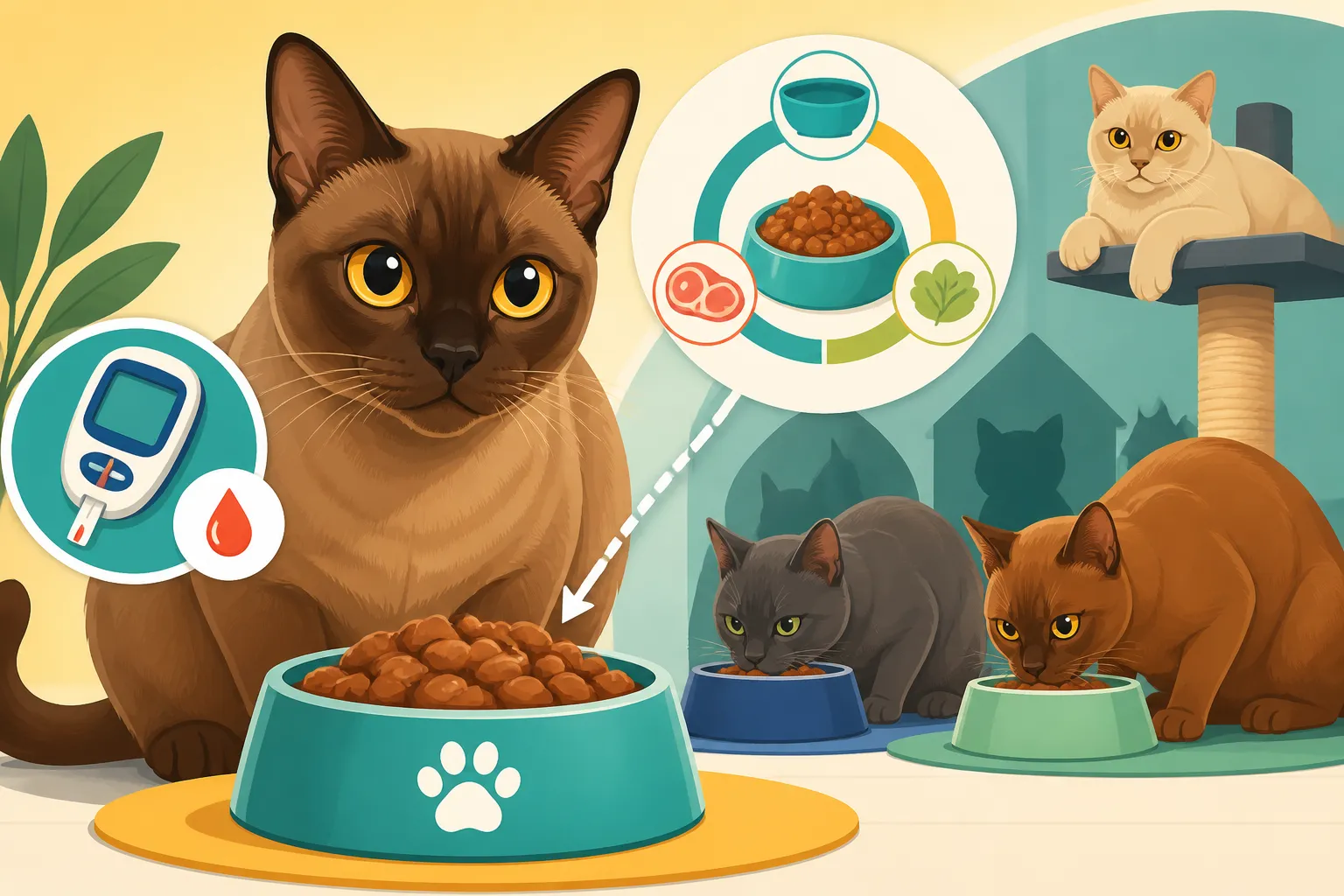
Beyond weight, tracking your diabetic Burmese's glucose levels at home (if you've been trained by your vet) provides immediate feedback on how their diet and insulin are working together. You'll learn to correlate certain foods or activities with changes in their blood sugar. Keep a detailed log of food eaten, insulin given, and glucose readings. This data is invaluable for your veterinarian, who will use it to make informed decisions about insulin adjustments or dietary modifications. Don't hesitate to reach out to your vet if you notice consistent high or low readings, or if your cat's behavior changes. They are your primary partner in managing this condition.
Here's a quick comparison of common feeding strategies in a multi-cat household with a diabetic Burmese:
| Strategy | Pros | Cons | Best For |
|---|---|---|---|
| Physical Separation | Simple, low-cost, ensures diabetic cat eats only their food. | Requires active supervision, time-consuming for multiple meals. | Owners with flexible schedules, fewer cats, specific feeding rooms. |
| Microchip Feeder | Highly effective for individual portions, reduces supervision needed. | Initial cost, some cats may be resistant to feeder or collar tag. | Busy households, cats who graze, preventing food theft. |
| Eat and Remove | Encourages quick eating habits, minimizes food waste, good for portion control. | Requires strict timing and supervision, might stress slow eaters. | Cats with established meal routines, owners who can supervise. |
| Universal Low-Carb Diet | Simplifies entire household feeding, benefits all cats' health. | Finding suitable food for all, potential for pickiness in non-diabetic cats. | Households committed to optimal feline nutrition for all. |
Remember, managing a diabetic Burmese in a multi-cat home is a marathon, not a sprint. There will be good days and challenging days. With patience, consistency, and close collaboration with your veterinarian, you can ensure your beloved Burmese lives a full and healthy life, while keeping harmony in your multi-feline family.
Disclaimer
This article is for general informational purposes only and does not constitute professional advice. Laws, prices and regulations vary by location and change over time. Consult a qualified professional for guidance on your specific situation.