Whether a Burmese Prefers Sisal or Cardboard
It’s a frustration many cat owners know all too well: you buy a brand-new, perfectly good scratching post, and your beloved feline friend decides their absolute favorite place to sharpen their claws is your antique armchair. When it comes to our wonderfully affectionate and often mischievous Burmese cats, finding the right outlet for their natural instincts is paramount to a harmonious home. This guide will help you understand the core needs behind your Burmese's scratching habits and explore the eternal question of sisal versus cardboard, ensuring your furniture remains pristine and your cat's paws are happy.
The Deep-Rooted Need to Scratch: Why Your Burmese Can't Help It
Before we even dive into the materials, let's talk about why scratching is such a fundamental part of being a cat, especially for an intelligent and active breed like the Burmese. This isn't just some naughty behavior; it's deeply ingrained in their biology and psychology. Understanding this helps us approach the problem with empathy and provide solutions that truly meet their needs.
Claw Maintenance and Health
One of the primary reasons cats scratch is to maintain the health of their claws. Think about it: their claws grow in layers, and scratching helps remove the dull, outer sheath, revealing the sharp, new claw underneath. If you’ve ever found a little clear claw sheath on your carpet, you’ve seen the evidence of this natural process! For your Burmese, whose playful nature means they'll be climbing, pouncing, and batting at toys, sharp, healthy claws are essential. Without appropriate scratching surfaces, these old layers can build up, leading to discomfort, snagging, or even ingrown claws which can be painful and require veterinary attention. Proper claw care is just as important as their diet, reminding us that Feeding a Burmese Is a Medical Decision, Not a Preference in many aspects of their lives.
Scent Marking and Communication
Cats are territorial creatures, and their paws contain scent glands. When your Burmese scratches, they're not just sharpening their claws; they're also depositing their unique scent onto the surface. This is a subtle but powerful form of communication with other cats (even if those "other cats" are just you and your family). It marks their territory, asserting their presence and comfort in their environment. A prominent scratching post in a communal area isn't just a place to scratch; it's a billboard advertising "I live here, and I'm happy!"
Stress Relief and Exercise
Scratching is also a fantastic way for your Burmese to stretch, flex their muscles, and release pent-up energy. Have you ever watched your cat arch their back, stretch their front paws far out, and then rake their claws down a surface? It’s a full-body workout that feels incredibly satisfying. For a breed that remains remarkably kittenish into old age – A Burmese Is Still Playing at Fifteen, after all – this physical outlet is crucial. If your Burmese is bored, stressed, or simply has too much energy, inappropriate scratching can be a symptom. Providing engaging toys and ample play sessions, as explored in How Many Play Sessions a Burmese Asks For, can go a long way in preventing destructive behaviors that stem from boredom or anxiety.
Sisal: The Durable Choice for the Discerning Burmese
When you start looking at scratching posts, sisal is probably the most common material you'll encounter. It's a natural fiber known for its strength and coarse texture, making it an excellent choice for a sturdy, long-lasting scratching surface.
What Makes Sisal So Appealing?
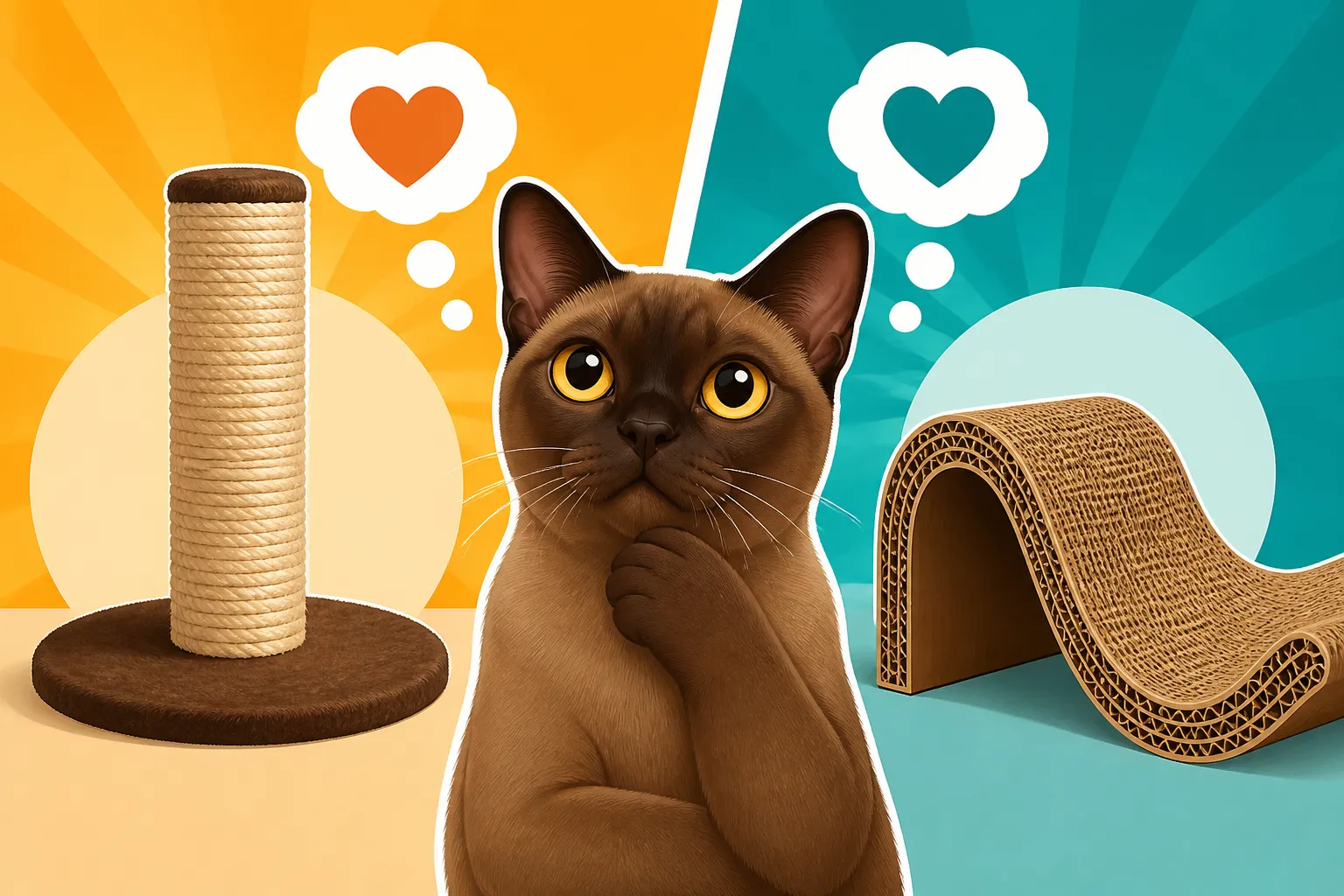
Sisal is derived from the agave plant and woven into ropes or fabric. Its rough, fibrous nature provides excellent resistance and a satisfying "rip" when a cat drags its claws across it. This texture mimics the bark of a tree, which is a cat's natural scratching surface in the wild. The durability of sisal means a good quality sisal post can withstand years of enthusiastic scratching from even the most active Burmese.
You'll typically find sisal in a few forms:
- Sisal Rope: This is the classic wrapping you see on many vertical scratching posts. It offers a very satisfying grip and shredding experience.
- Sisal Fabric: Sometimes posts are covered with a flat sisal matting. This can be good for cats who prefer a slightly less aggressive texture or for horizontal scratchers.
Vertical vs. Horizontal Sisal Scratchers
Cats generally have a preference for scratching direction, and this is where observation comes in handy. Some Burmese love to stand on their hind legs and stretch up to scratch, a full-body extension that vertical posts fulfill beautifully. Others prefer to crouch down and scratch horizontally, perhaps on a sisal mat or a low-lying scratcher. Often, the ideal solution is to offer both.
Imagine your Burmese stretching languidly after a nap, then walking over to a tall sisal post, extending their body fully, and pulling their claws down. That's a satisfying stretch and scratch. On the other hand, if you notice your Burmese frequently trying to scratch your carpet, a horizontal sisal mat might be more their style. Placing one near their favorite sleeping spot or window perch can be very effective.
Longevity and Investment
Sisal scratchers, especially those made with tightly wound rope or durable fabric, are built to last. While the initial cost might be a bit higher than a cardboard alternative, their longevity often makes them a more economical choice in the long run. Brands available on platforms like Chewy offer a wide range of sisal options, from simple posts to elaborate cat trees with sisal-covered sections. Investing in a good, heavy-based sisal post means it won't tip over easily, which is crucial for encouraging consistent use. A wobbly post is a turn-off for any cat, and your clever Burmese will quickly learn to avoid it.
Cardboard: The Satisfying Shred for Your Burmese
Cardboard scratchers have exploded in popularity over the last few years, and for good reason. They offer a unique appeal that many cats, including the Burmese, absolutely adore.
The Irresistible Shredding Sensation
Unlike the more resistant pull of sisal, cardboard offers a softer, more shreddable experience. Cats love the feeling of tearing and ripping the corrugated cardboard, which often results in a satisfying mess of shredded bits. This sensory experience can be incredibly gratifying, fulfilling a different kind of instinct than the deep scratch of sisal. It’s like the difference between sharpening a knife on a whetstone versus whittling wood – both are satisfying, just in different ways.
Cardboard scratchers come in a vast array of shapes and sizes:
- Flat Pads: Simple rectangular pads that sit on the floor, often reversible for double the lifespan.
- Inclined Ramps: Slightly angled scratchers that offer a different ergonomic experience.
- Bowls and Loungers: These combine a scratching surface with a cozy spot for your Burmese to curl up and nap. Many cats love to scratch, then immediately settle down on their newly "worked" surface.
Disposability and Variety
One of the biggest advantages of cardboard scratchers is their disposability and relatively low cost. When one gets too worn out or loses its appeal, you can simply toss it and replace it with a new one. This also means you can experiment with different shapes and sizes without a huge financial commitment. If your Burmese ignores a particular cardboard scratcher, it’s not the end of the world to try another style.
You'll find cardboard scratchers practically everywhere, from local pet stores to online giants like Amazon. Because they're so popular, new designs are constantly emerging, ensuring there's always something fresh to pique your Burmese's interest. Some even come infused with catnip to really grab their attention, as discussed in How a Burmese Behaves on Catnip.
Environmental Considerations
While they are disposable, many cardboard scratchers are made from recycled materials and are often recyclable themselves, which is a big plus for environmentally conscious owners. Just be sure to check the packaging for specific recycling instructions in your area. The rapid turnover of cardboard scratchers might seem wasteful to some, but the joy and appropriate scratching behavior they encourage are often worth it.
Making the Choice and Encouraging Good Habits: Sisal, Cardboard, or Both?
So, which one does your Burmese prefer? The truth is, many cats enjoy both! Offering a variety of scratching surfaces can cater to their different moods and needs, ensuring they always have an appropriate outlet.
Observing Your Burmese's Habits
The best way to determine preference is through observation.
- Where do they currently scratch? If they're attacking your vertical doorframes, a tall sisal post is likely to be a hit. If they're tearing at the carpet, a horizontal cardboard pad or sisal mat on the floor might be the answer.
- What kind of texture do they seem to enjoy? Do they love to really dig in and pull, or do they prefer a lighter, shreddier action?
- What is their scratching posture? Do they stretch upwards or crouch low?
Remember, a Burmese needs a place where it can really get to work. An ideal scratching post, whether sisal or cardboard, should be sturdy and tall enough for your cat to stretch to their full height. If it wobbles or is too short, they won't use it.
Strategic Placement is Key
Even the most perfect scratcher is useless if it's in the wrong place. Cats like to scratch in prominent areas for scent marking, or near their sleeping spots for a good stretch after a nap.
- High-traffic areas: Place scratchers where your Burmese spends a lot of time or where they might be tempted to scratch inappropriately (e.g., near the sofa).
- Near sleeping spots: A quick scratch and stretch upon waking is common.
- Multiple locations: If you have a large home, multiple scratchers in different rooms are a good idea. Think about it, you wouldn't just have one piece of furniture in your house, would you?
This links directly to advice on Where a Burmese Wants Its Scratching Post. They want it where the action is, where you are, because they're such social, "Velcro" cats.
Encouragement and Positive Reinforcement
Once you have your scratchers, make them irresistible!
- Catnip: Sprinkle fresh catnip (or use a catnip spray) on the new scratcher.
- Play: Entice your Burmese to the scratcher with a wand toy, dragging it up or across the surface to encourage them to engage their claws.
- Praise: When they use it, lavish them with praise and maybe a small, healthy treat (keeping in mind that Why Portion Control Is Medical Care in a Burmese is always important).
- Patience: It might take a while for them to catch on, especially if they've developed bad habits. Consistency is key.
Here’s a quick comparison of sisal and cardboard:
| Feature | Sisal Scratchers | Cardboard Scratchers |
|---|---|---|
| Texture | Coarse, fibrous, resistant | Shredable, gives way easily |
| Durability | High, very long-lasting | Low, wears out quickly |
| Cost | Higher initial investment, lower long-term | Lower initial cost, higher ongoing replacement cost |
| Scratching Feel | Deep, resistant pull, mimics tree bark | Satisfying shredding, tearing |
| Maintenance | Occasional vacuuming of fibers | Regular sweeping of shredded bits, frequent replacement |
| Environmental | Long lifespan, but eventually disposed of | Often recycled/recyclable, but high turnover |
| Common Forms | Vertical posts, horizontal mats, cat trees | Flat pads, ramps, bowls, loungers |
Ultimately, providing both types of scratchers is often the winning strategy. This ensures your Burmese has options to satisfy their various scratching moods and preferences. You can find excellent options for both types of scratchers from online retailers like Chewy and Amazon, and they often carry bundles or multi-packs of cardboard scratchers, making it easy to keep a fresh supply.
When Scratching Goes Wrong: Troubleshooting for Your Burmese
Even with the best intentions and carefully selected scratchers, sometimes a Burmese will still choose the sofa. Don't despair! This is a common issue with many solutions.
Redirecting Inappropriate Scratching
If your Burmese is scratching something you don't want them to, the first step is always redirection.
- Identify the target: What are they scratching? Is it the arm of the sofa, a specific rug, or a curtain?
- Place a preferred scratcher nearby: Immediately put the most appealing scratcher (based on your observations of their preference) right next to or in front of the forbidden item.
- Make the forbidden item unattractive: Use deterrents like double-sided sticky tape, aluminum foil, or scent sprays (citrus or bitter apple) on the area they're targeting. Cats generally dislike these textures and smells.
- Reward good behavior: Whenever they use the correct scratcher, praise them. Positive reinforcement is always more effective than punishment. Punishing a cat for a natural behavior will only make them scared of you, not stop the behavior.
Remember that Why a Burmese Climbs People Rather Than Furniture could also be related to seeking attention, so ensure they have plenty of interactive play.
Addressing Ignored Scratchers
Sometimes, it's not that your Burmese is choosing wrongly, it's that they're not choosing any scratcher at all.
- Check stability: A wobbly scratcher is no good. Ensure vertical posts are heavy-based and secure.
- Evaluate placement: Is it in a prominent enough spot? Cats don't usually scratch hidden away in a corner.
- Refresh materials: Cardboard gets dull, and sisal can become too smooth over time. A fresh scratcher or a new wrap for a sisal post can renew interest.
- Try different textures/orientations: If you've only offered vertical sisal, try a horizontal cardboard pad. Variety is key!
- Catnip it up! A little fresh catnip can work wonders to make an ignored scratcher suddenly irresistible.
For a social breed like the Burmese, sometimes inappropriate behavior stems from loneliness or anxiety if they're left alone for long periods. While dedicated scratchers won't fix loneliness, addressing their social needs, perhaps by considering Why a Burmese Breeder Recommends Buying a Pair, can reduce stress that might manifest as destructive behaviors. Keeping their environment engaging and stimulating, along with providing ample appropriate scratching opportunities, will help your affectionate Burmese thrive.
Disclaimer
This article is for general informational purposes only and does not constitute professional advice. Laws, prices and regulations vary by location and change over time. Consult a qualified professional for guidance on your specific situation.