Why a Burmese’s Gums Need Checking Monthly
It's incredibly frustrating when our beloved Burmese cats, who are usually so expressive and demanding of attention, suddenly seem withdrawn or hesitant to eat. Often, we look for obvious signs of illness, but one crucial area many cat owners overlook is their feline friend's oral health. Regularly checking your Burmese's gums each month is not just a good idea; it's a vital part of their preventative care, helping you catch potential problems before they become painful, expensive emergencies.
The Silent Threat: Why Dental Disease Sneaks Up on Burmese Cats
Our beautiful Burmese companions are known for their loving, dog-like personalities, their sleek satin coats, and their insatiable appetites. But beneath that charming exterior, there can be a silent battle brewing: dental disease. Unlike us, cats don't complain about a toothache, and their instinct is to hide any discomfort until it's really advanced. This makes their dental health a top priority for us as responsible owners.
The Burmese Predisposition to Gum Issues
It might surprise you to learn that Burmese cats, despite their robust appearance, can be particularly prone to gum problems. While they aren't considered a brachycephalic (short-nosed) breed in the same way a Persian is, some lines can have a more compact jaw structure, which can lead to tooth crowding. When teeth are crowded, it creates more nooks and crannies where food particles and bacteria can get trapped, making it harder for a cat's natural saliva to wash them away. This sets the stage for plaque and tartar buildup much faster than in breeds with more spacious mouths.
Beyond their anatomy, their affectionate nature can sometimes work against them when it comes to dental pain. A Burmese will often try to "purr through" discomfort, leaning into you for comfort even when their mouth hurts. You might notice subtle changes – a slight hesitation before crunching a treat, choosing wet food over dry, or chewing more on one side – but these can be easily missed. This is why a proactive, monthly check-up from you is so important. It's often in their later years that we see the most significant issues, with many a Burmese owner having to contend with Why a Burmese's Gums Recede Early, which can be particularly distressing.
What Exactly Is Periodontal Disease?
Periodontal disease is a fancy term for infection and inflammation of the tissues surrounding the teeth. It's not just a surface problem; it goes deep. It all starts with plaque, a sticky film of bacteria, food particles, and saliva that constantly forms on your cat's teeth. If this plaque isn't removed regularly (which, let's be honest, is rare for most cats), it hardens into tartar, or calculus, within a few days. Tartar is rough and porous, providing an even better surface for more plaque to accumulate, and it's far too hard to remove with just a toothbrush.
Once tartar builds up, it starts to irritate the gums, leading to gingivitis. This is the first stage of periodontal disease, characterized by red, swollen, and sometimes bleeding gums. At this point, it's often reversible with a professional dental cleaning. However, if left untreated, gingivitis progresses to periodontitis. This is where the infection spreads below the gum line, attacking the bone and ligaments that hold the teeth in place. Pockets form, more bacteria accumulate, and eventually, teeth can become loose, painful, and even fall out. It’s a truly miserable experience for your cat, even if they're too stoic to show it directly.
Beyond the Mouth: Systemic Impacts of Poor Oral Health
It’s easy to think of dental disease as just a problem for the mouth, but nothing could be further from the truth. Your Burmese’s mouth is directly connected to the rest of their body, and harmful bacteria from untreated dental disease don't stay put. These bacteria can enter the bloodstream through the inflamed gum tissue and travel to major organs, causing serious systemic health issues.
The heart, kidneys, and liver are particularly vulnerable. Chronic inflammation and bacterial infection can put a huge strain on these organs, potentially leading to heart disease, kidney failure, or liver damage over time. Imagine trying to fight off a low-grade infection constantly – it's exhausting and damaging. For a breed already predisposed to certain health conditions, like diabetes, maintaining excellent overall health, including oral health, becomes even more critical. It’s not an exaggeration to say that neglecting your Burmese’s teeth can quite literally shorten their lifespan and diminish their quality of life. This is why understanding Why Portion Control Is Medical Care in a Burmese and other health factors go hand-in-hand with dental care.
How to Perform a Monthly Burmese Gum Check at Home
The idea of poking around your cat's mouth might sound daunting, especially with a breed as playful and sometimes mischievous as the Burmese. However, with patience and the right approach, it can become a routine bonding experience. The goal isn't to diagnose complex issues but to get familiar with what a healthy mouth looks like and to spot early warning signs.
Getting Your Burmese Comfortable with Mouth Handling
The key to successful home checks is gradual desensitization and positive reinforcement. Start early, ideally when your Burmese is a kitten. Begin by gently touching their face and around their mouth while they're relaxed, perhaps during a cuddle session. Use lots of praise and treats. You want them to associate this handling with pleasant experiences. Over several days or weeks, gradually work your way up to lifting their lip for a quick peek at their gums and teeth. Don't force it; if they resist, stop and try again later. Short, frequent sessions are far more effective than long, stressful ones.
I often tell people to make it a game. When your Burmese is nestled on your lap, purring, gently stroke their cheeks and then, with a fingertip, lift their lip for just a second. Immediately give them a favorite high-value treat – something like a tiny piece of cooked chicken or a lickable puree treat. The moment they tolerate it, even for a split second, that's a win! Building this positive association is crucial. If you've got a new kitten, start with Introducing a Toothbrush to a Burmese at Twelve Weeks and build from there. Consistency is your best friend here.
What to Look For During Your Inspection
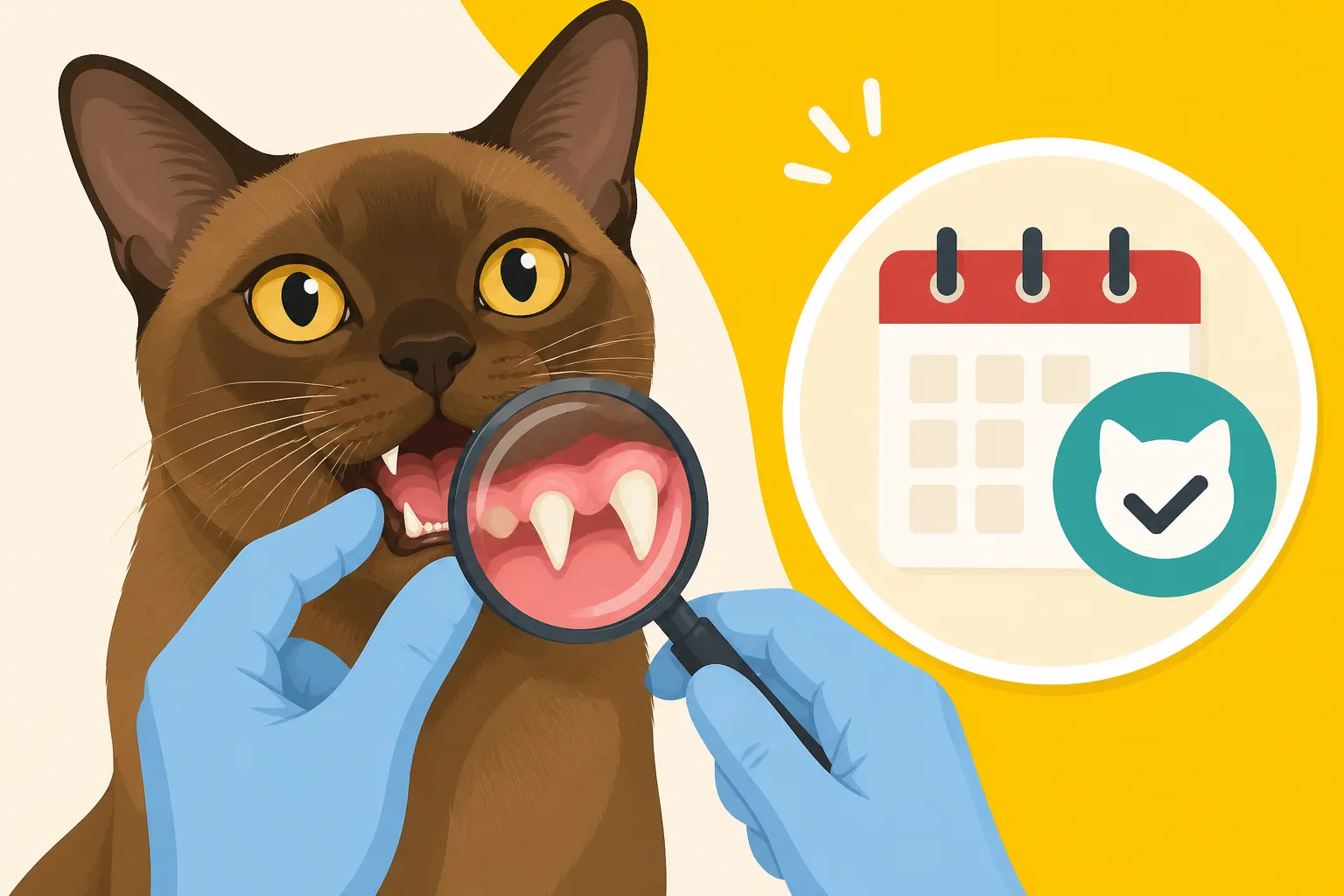
Once your Burmese is comfortable with you handling their mouth, you can start your monthly inspection. You’re looking for changes from their normal healthy state. A healthy Burmese's gums should be a salmon pink color (though some cats can have naturally pigmented black spots, which are normal). They should be firm and tightly hug the teeth, without any redness or swelling along the gumline. The teeth themselves should be clean and white, with no visible plaque or tartar buildup. Their breath should be relatively neutral, not foul or offensive.
Now, for the red flags:
- Redness or Swelling: This is a classic sign of gingivitis, especially along the gum line where the tooth meets the gum.
- Bleeding Gums: Any bleeding, even slight, when you touch the gums or if you see blood on their toys, is a definite concern.
- Yellow or Brown Buildup: This is tartar. It often appears on the outside surfaces of the back teeth and the canines.
- Receding Gums: If the gums appear to be pulling away from the teeth, exposing the root, that’s a sign of advanced periodontal disease.
- Missing or Loose Teeth: Obvious signs of severe problems.
- Foul Breath: While "cat breath" isn't minty fresh, unusually bad breath is a strong indicator of bacterial overgrowth.
- Lesions or Growths: Any unusual bumps, sores, or masses inside the mouth warrant immediate veterinary attention.
- Drooling or Pawing at Face: These are often signs of pain.
Here's a quick comparison table for reference:
| Feature | Healthy Burmese Gums & Teeth | Unhealthy Burmese Gums & Teeth |
|---|---|---|
| Gum Color | Salmon pink (or naturally pigmented) | Red, inflamed, swollen, sometimes bluish or very pale |
| Gum Texture | Firm, smooth, tight against teeth | Puffy, boggy, easily bleeding, receding |
| Teeth | Clean, white, no visible stains or chips | Yellow/brown tartar, broken teeth, loose teeth, dark stains |
| Breath | Mild, neutral | Foul, offensive, strong odor (halitosis) |
| Discomfort | No signs of pain or sensitivity | Reluctance to eat, chewing on one side, pawing at mouth, drooling |
| Lesions/Growths | None | Any bumps, ulcers, or masses |
Tools and Techniques for Effective Home Checks
You don't need a lot of fancy equipment for a monthly gum check, but a few things can make it easier and safer for both of you. Good lighting is essential; try to do this in a well-lit room or use a small penlight. You might also want to wear thin latex or nitrile gloves for hygiene, although some owners prefer direct contact to better feel for abnormalities.
The technique is simple:
- Approach Gently: Make sure your Burmese is relaxed and comfortable.
- Lift the Lip: Gently lift their upper and lower lips on both sides to expose the gums and outer surfaces of the teeth.
- Inspect Visually: Look closely at the color, texture, and integrity of the gums. Check for any tartar buildup on the teeth.
- Palpate (Feel) Gently: With your gloved finger, very gently feel along the gums and jawline. You're feeling for any swelling, lumps, or tenderness.
- Check the Inside (if tolerated): If your cat allows, gently open their mouth a little to view the inner surfaces of the teeth and the roof of their mouth. This is often the hardest part, so don't push it if they resist.
- Reward: Always end on a positive note with praise and a treat, reinforcing that this is a good experience.
Remember, patience is paramount. If your cat is really resistant, just do what you can, even if it's just a quick peek at the front teeth. The consistency of the routine is what builds trust over time.
When to Seek Veterinary Intervention for Your Burmese's Gums
While home checks are invaluable for early detection, they are not a substitute for professional veterinary care. Knowing when to make that call to the vet is crucial for your Burmese's health and comfort.
Recognizing the Red Flags for Professional Help
Sometimes, what you find during your monthly check will be more than just a bit of plaque; it will be a clear signal that professional help is needed urgently.
- Persistent Bad Breath: If the bad breath is so strong it clears a room, and it doesn't improve with home care, it's time for a vet visit.
- Refusal to Eat or Difficulty Eating: A cat that suddenly stops eating, or starts dropping food, chewing only on one side, or showing pain when eating, could have severe dental pain. This is a serious symptom and needs immediate attention.
- Excessive Drooling: More drooling than usual, especially if it's thick, discolored, or has blood in it, is a huge red flag for oral pain or infection.
- Pawing at the Mouth or Face Rubbing: These are clear behavioral signs that your Burmese is trying to relieve discomfort in their mouth. They might rub their face against furniture or paw at their jaw.
- Visible Swelling on the Face: Swelling below an eye or on the jawline can indicate a dental abscess, which is a painful infection that requires prompt veterinary treatment.
- Bleeding from the Mouth: Any visible blood from the gums, tongue, or lips.
- Visible Lesions or Growths: As mentioned, any unusual changes inside the mouth should be examined by a vet.
Don't wait if you notice these signs. Dental pain can be excruciating, and untreated infections can spread quickly. Your Burmese, being the stoic little brick wrapped in silk that they are, might hide these symptoms until they are advanced, so your vigilance is key. It's truly heartbreaking to think of them suffering in silence, which is a prime example of Why a Burmese Hides Illness Behind Its Affection.
Understanding Professional Dental Cleaning and Treatment
When your vet determines that your Burmese needs more than just home care, they will likely recommend a professional dental cleaning, often referred to as a COHAT (Comprehensive Oral Health Assessment and Treatment). This procedure is performed under general anesthesia, and for good reason. Just like in humans, a thorough dental cleaning involves more than just scraping the surface.
Here's what a COHAT typically involves:
- Pre-Anesthetic Bloodwork: Your vet will recommend blood tests to ensure your Burmese is healthy enough for anesthesia, especially for older cats.
- Anesthesia: This allows for a complete and stress-free examination of the entire mouth, including areas that are impossible to reach in a conscious cat. It also ensures the cat remains still and safe during the procedure. Don't worry, modern anesthesia protocols are very safe, and your vet will monitor your cat closely.
- Oral Examination: Once under anesthesia, the vet can perform a detailed oral exam, checking every tooth and gum surface, probing for pockets under the gum line, and looking for any hidden issues.
- Full Mouth Dental X-rays: This is perhaps the most crucial part. Much of dental disease occurs below the gum line, where it's invisible to the naked eye. X-rays reveal issues like bone loss, root resorption (a painful condition common in cats), and abscesses.
- Scaling: Using ultrasonic and hand scalers, the vet or veterinary technician meticulously removes plaque and tartar from above and below the gum line.
- Polishing: After scaling, the teeth are polished to smooth the tooth surface, making it harder for plaque to adhere again.
- Fluoride Treatment: Sometimes applied to strengthen enamel and reduce sensitivity.
- Extractions: If severe disease, fractures, or painful conditions are found, the vet may need to extract affected teeth. This is done with pain management and careful surgical techniques.
It can be a significant procedure, but it's often life-changing for cats suffering from chronic dental pain. Many owners report a dramatic improvement in their cat's mood, appetite, and energy levels after a professional dental cleaning and any necessary extractions. It’s certainly a question of How Often a Burmese's Gums Send It Under Anesthetic over their lifetime if home care is neglected.
Managing Advanced Periodontal Disease
If your Burmese has progressed to advanced periodontal disease, the goal shifts to managing the condition and ensuring their comfort. This often involves a combination of ongoing professional cleanings (though less frequent once the initial issues are addressed), medication, and dietary changes. Pain management might include anti-inflammatory drugs or other medications to keep your cat comfortable, especially if extractions have been performed.
Diet plays a huge role. Cats with sensitive or painful mouths might struggle with dry kibble. Switching to a soft, palatable wet food can make a world of difference. Fresh, human-grade food could be very appealing and easier to eat for a cat with dental issues, providing good nutrition without the chewing struggle. Your vet might also recommend special prescription dental diets designed to help reduce plaque and tartar, though these are typically dry kibble and might not be suitable for an already sore mouth. Ultimately, the focus is on maintaining their quality of life, even if some teeth are lost or special care is needed.
Proactive Care: Keeping Your Burmese's Mouth Healthy
Prevention is always better than cure, especially when it comes to dental health. By implementing a consistent routine of home care and regular veterinary check-ups, you can significantly reduce your Burmese's risk of developing severe periodontal disease. It's about combining daily habits with professional oversight.
The Power of Daily Brushing and Dental Chews
I know, I know, brushing a cat's teeth sounds like a recipe for scratched hands and a stressed cat. But I promise you, with a Burmese, who often tolerate handling remarkably well, it's absolutely doable, and incredibly effective. Daily brushing is the gold standard for preventing plaque buildup. Use a soft, small cat-specific toothbrush or a finger brush, and a cat-specific enzymatic toothpaste (never human toothpaste, as it contains fluoride that's toxic to cats). Even if you can only manage a minute or two, focusing on the outside surfaces of the upper teeth where plaque accumulates fastest, it will make a huge difference. Which Toothpaste a Burmese Will Actually Accept will be key here, so try a few different flavors if needed.
Beyond brushing, dental chews and treats can be a helpful adjunct, but they are not a replacement for brushing. Look for products that have been awarded the Veterinary Oral Health Council (VOHC) seal of acceptance, as these have been scientifically proven to reduce plaque and/or tartar. Be mindful of your Burmese's tendency towards weight gain and their predisposition to diabetes; dental treats still contain calories and carbohydrates. Always factor them into their daily caloric intake to prevent obesity, which is a major risk factor for diabetes. You can find a good selection of VOHC-approved dental treats on sites like Chewy or Amazon, but check the ingredients carefully. Remember, Why Low Carbohydrate Food Matters for a Burmese extends to treats too!
Dietary Choices for Optimal Oral Health
What your Burmese eats can have a direct impact on their dental health. While dry kibble is sometimes touted for "cleaning" teeth, the abrasive action is often minimal and only affects the tips of the teeth, leaving the gumline vulnerable. In reality, many kibbles are high in carbohydrates, which can stick to teeth and fuel bacterial growth, contributing to plaque.
For overall health, and often for dental health, a high-protein, low-carbohydrate wet food diet is generally recommended for Burmese cats. Wet food helps keep them hydrated and can be less sticky than kibble. If your cat tolerates it, a raw or freeze-dried raw diet can also be beneficial, as it often has a more natural texture that helps clean teeth as they chew. If you stick with kibble, choose one designed for dental health and ensure it’s low in carbohydrates. Always measure your cat's food carefully; portion control is not just for weight, but for managing the food residue that contributes to dental issues.
The Role of Regular Vet Check-ups
Even with diligent home care, regular veterinary check-ups are non-negotiable. Your vet can spot subtle signs of dental disease that you might miss, and they can assess the overall health of your Burmese's mouth. These annual visits are not just for vaccines; they're comprehensive health assessments. A vet can monitor your cat's weight, listen to their heart, check their joints, and, importantly, conduct an initial oral examination.
For kittens, an early vet check-up is crucial. Why a Burmese Kitten Needs an Early Vet Check will include a preliminary look at their developing mouth. As your Burmese gets older, these check-ups become even more vital. From seven years old onwards, it's often recommended that a vet includes a glucose reading in their annual blood panel due to the breed's diabetes risk. Catching dental problems early can prevent them from spiraling into more serious health complications, saving your cat pain and you significant veterinary bills in the long run. Consistent visits, as described in How Often a Healthy Adult Burmese Needs Checking, are the backbone of a long and healthy life for your beloved companion.
Disclaimer
This article is for general informational purposes only and does not constitute professional advice. Laws, prices and regulations vary by location and change over time. Consult a qualified professional for guidance on your specific situation.