What CFA Required Before Reinstating the Burmese
It's incredibly frustrating when a beloved cat breed, one known for its unique personality and stunning appearance, faces uncertainty regarding its very definition. For enthusiasts of the Burmese cat, there was a pivotal moment in the breed's early history when the Cat Fanciers' Association (CFA) temporarily suspended its registration. This wasn't a minor hiccup; it was a serious challenge that forced breeders to re-evaluate and adhere to strict new guidelines to ensure the long-term health and integrity of the breed. This guide will walk you through what led to that suspension and the critical requirements CFA put in place before the Burmese could once again be fully recognized.
The Early Excitement and the Looming Shadow of Hybridization
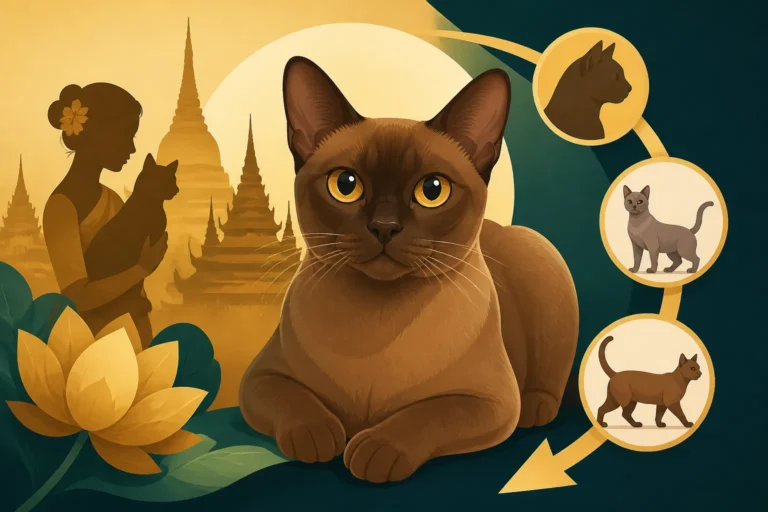
When the Burmese first arrived on the scene in the United States, primarily through Dr. Joseph Thompson and his foundation cat, Wong Mau, there was immense excitement. Here was a distinctively beautiful cat, rich in color, with a personality that quickly captivated hearts. Initially, Dr. Thompson’s breeding program, which included outcrossing Wong Mau to a Siamese, aimed to understand the genetics behind her unique coat color and body type. This pioneering work laid the groundwork for establishing the breed. The Burmese Began With One Cat Called Wong Mau and Dr Joseph Thompson and the Burmese He Bought in 1930 offer more details on these early origins.
The Initial Rush to Recognition
The allure of the Burmese was undeniable. Their distinctive sable brown coat and captivating golden eyes quickly drew attention, and breeders were eager to establish the breed officially. The Cat Fanciers' Association, recognizing the unique qualities and potential of these cats, granted the Burmese initial recognition for championship status. This was a thrilling time, as it meant the Burmese could compete and gain widespread popularity. Owners and breeders alike were proud to be part of this burgeoning new lineage, showcasing their beautiful, affectionate companions at shows across the country. The breed's unique "dog-like" temperament and striking appearance made it an instant favorite, driving up demand and interest.
The Problem of Influx and Dilution
However, this rapid rise in popularity, coupled with the breed's still-nascent genetic foundation, inadvertently created a significant problem: the dilution of the breed's distinctive characteristics through rampant hybridization. In the early days, some breeders, perhaps eager to produce more cats quickly to meet demand, or confused about the precise genetic makeup of the Burmese, began crossing them with Siamese cats. This was partly due to the fact that Wong Mau herself carried the gene for Siamese points, and her initial breeding to a Siamese was purely for scientific understanding. Why the First Burmese Was Bred to a Siamese explains this scientific reasoning. The issue arose when these first-generation hybrids were then presented as Burmese, or bred back into Burmese lines without proper documentation or understanding of the genetic consequences. The problem escalated when these hybrid cats, often resembling Burmese but not truly purebred in their ancestry, started being registered as full Burmese. This practice threatened to erase the very qualities that made the Burmese unique and led to a lack of uniformity in type and temperament, raising alarms among purists and eventually, the CFA.
Unpacking the Core Problem: The Integrity of Burmese Pedigrees
The Cat Fanciers' Association is a governing body that takes breed integrity very seriously. Their primary role is to maintain the standards and ensure the purity of recognized breeds. When they noticed a significant influx of cats being registered as Burmese that didn't truly represent the distinct characteristics and pure lineage, they knew they had to act. The root of the problem wasn't just about appearance; it was about documented heritage and genetic truth.
The Pervasive Siamese Influence
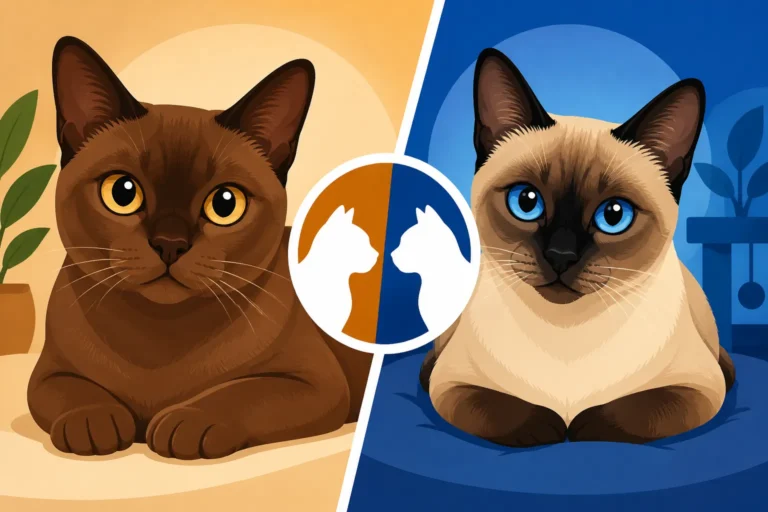
The initial crossbreeding of Wong Mau with a Siamese was a controlled experiment to understand genetics. However, as the breed gained traction, this practice was replicated by others, not for scientific study, but often for expediency or misguided attempts to expand breeding stock. Cats resulting from Burmese-Siamese crosses often displayed intermediate characteristics – not quite a true Burmese, nor a true Siamese, but something in between, now known as Tonkinese. This made it difficult for judges and even breeders to discern a truly pure Burmese from a hybrid. The CFA was specifically concerned about Why Siamese Hybrids Flooded Burmese Registration, as this directly undermined the careful work done to establish the breed. A true Burmese has a specific genetic makeup responsible for its sable brown color and compact, muscular body, which was being blurred by these crosses.
Why Pedigree Accuracy Was Paramount
For any recognized breed, the pedigree is more than just a family tree; it's a testament to the animal's genetic heritage and adherence to the breed standard. Without accurate pedigrees, the very definition of the Burmese breed was at risk. If cats with mixed ancestry were continually registered as Burmese, the distinct characteristics (like head shape, eye color, and coat type) would become inconsistent, and inherited health traits could become unpredictable. The CFA understood that allowing this dilution to continue would ultimately harm the breed, leading to a loss of the unique traits that owners adored. They had to put a stop to what What CFA Objected To in Burmese Pedigrees in 1947 described as an unacceptable compromise of the breed's genetic foundation. The goal was to ensure that every cat registered as a Burmese truly carried the expected lineage, ensuring future generations would be consistent and healthy.
CFA's Ultimatum: The "Three Generations Pure" Mandate
Faced with the challenge of ensuring the true identity of the Burmese cat, the Cat Fanciers' Association made a bold and necessary move. They suspended the registration of Burmese cats in 1947. This was a drastic step, but one born out of a deep commitment to preserving the integrity of the breed. The path to reinstatement was clear, albeit demanding: breeders had to prove "three generations pure" of Burmese ancestry for every cat they wished to register.
Defining "Three Generations Pure"
So, what exactly did "three generations pure" mean in practice? It wasn't merely about a cat looking Burmese. It was a rigorous requirement demanding that every single cat presented for registration had to have a documented pedigree showing three consecutive generations of unadulterated Burmese ancestors. This meant that not only the cat itself, but its parents, and its grandparents, all the way back three full generations, had to be verifiable, purebred Burmese, without any outcrosses to Siamese or other breeds in their lineage.
Imagine tracing a family tree. For a cat to be registered under this new rule, you'd need to confirm:
- The cat's parents: Both sire and dam must be registered purebred Burmese.
- The cat's grandparents: All four grandparents must be registered purebred Burmese.
- The cat's great-grandparents: All eight great-grandparents must be registered purebred Burmese.
This strict genealogical requirement forced breeders to meticulously verify their breeding stock and ensured that any cat being registered truly carried the genetic blueprint of the Burmese. It was a commitment to historical accuracy and genetic purity, aiming to rectify the dilution that had occurred.
The Unwavering Goal: Eradicating Hybrid Crosses
The ultimate objective of the "three generations pure" rule was straightforward: to systematically eliminate the influence of hybrid crosses from the Burmese gene pool. By mandating a fully traceable and pure lineage, CFA sought to solidify the breed's distinct characteristics and prevent further genetic ambiguity. This rigorous standard wasn't just about appearances; it was about ensuring that the foundational genetics of the Burmese remained intact, preventing the unique qualities derived from Wong Mau from being diluted away. It was a reset button, allowing breeders to build a solid, consistent foundation for future generations. This strict approach helped to clearly differentiate the Burmese from emerging breeds like the Tonkinese, which purposefully embraced the hybrid status.
Implementing the Stringent New Requirements
The announcement of the "three generations pure" requirement wasn't just a pronouncement; it kicked off a period of intense work and dedication for Burmese breeders. They had to go back to basics, scrutinizing their existing breeding programs and ensuring every cat destined for registration met the new, demanding criteria. This wasn't a quick fix; it required careful planning and a deep commitment to the breed.
The Essential Role of Documented Pedigrees
With CFA demanding "three generations pure," the importance of precise and verifiable documented pedigrees became absolutely critical. Gone were the days of simply assuming a cat's lineage based on its appearance. Breeders now needed irrefutable proof, a paper trail that could stand up to scrutiny. This meant meticulously recording every mating, every birth, and every transfer of ownership, with each ancestor clearly identifiable as a purebred Burmese. For a breeder, this meant keeping impeccable records, often working closely with other dedicated Burmese enthusiasts to cross-reference and confirm lineage. It was a massive administrative undertaking, but one essential for building trust and transparency within the fancy.
Many breeders had to trace back multiple generations, pulling out old registration papers and studbooks. If a cat's ancestry couldn't be definitively proven as 100% Burmese for three generations, that cat simply couldn't be part of the registered breeding program. This level of scrutiny also highlighted the value of early record-keeping, a practice that continues to benefit all purebred cat enthusiasts, ensuring the integrity of the lines they cherish. For new owners, asking to see a cat's full pedigree, often provided by a reputable breeder, is still a vital step. When considering products for your well-documented purebred, knowing their exact dietary needs can lead you to specific foods on platforms like Chewy, which might cater to unique breed health considerations.
Dedicated Selective Breeding for Purity
Beyond the paperwork, breeders also had to practice extremely selective breeding. This wasn't a time for experimentation; it was about consolidating and strengthening the existing pure lines. Breeders prioritized mating cats with undeniable Burmese pedigrees, focusing on individuals that clearly exhibited the desired breed characteristics according to the emerging CFA standard. This meant sometimes delaying breeding plans or even retiring cats from their programs if their lineage couldn't be proven to meet the new strict guidelines.
This period of selective breeding wasn't just about eliminating hybrid genetics; it was also about solidifying the ideal Burmese type. Breeders focused on refining the distinctive "brick wrapped in silk" body, the short, close-lying satin coat, and the expressive golden eyes. They aimed for consistency, ensuring that each new generation moved further away from any lingering Siamese characteristics and closer to the robust, compact Burmese ideal. This dedicated effort, though challenging, was ultimately instrumental in forging the consistent and recognizable Burmese breed we know today. It solidified the understanding of The cb Allele Is What Makes a Burmese Brown and how to maintain that unique genetic expression.
The Reinstatement and its Lasting Legacy
After years of diligent work by dedicated breeders, who painstakingly traced pedigrees and implemented stringent breeding practices, the Burmese breed finally met CFA's rigorous requirements. This commitment to purity and adherence to the breed standard eventually led to the highly anticipated reinstatement of the breed. It was a testament to the perseverance of those who loved the Burmese and believed in its distinct place within the cat fancy.
CFA Resumes Burmese Registration
In 1956, nearly a decade after its initial suspension, the Cat Fanciers' Association officially resumed the registration of Burmese cats for championship status. This was a monumental victory for the breed and its advocates. It signaled that the breeders had successfully purified their lines and established a reliable system for maintaining accurate pedigrees. When CFA Resumed Registering the Burmese marked a turning point, allowing the Burmese to once again compete in shows and cement its place as a recognized and cherished breed.
The reinstatement wasn't just about regaining championship status; it was about validating the identity of the Burmese cat. It ensured that when someone acquired a registered Burmese, they were truly getting a cat with the distinct genetic heritage and physical traits that define the breed. This re-established trust and gave a strong foundation for the breed's future growth and development. For owners looking for reliable information on breed standards or even specific health needs, trusted sources like Chewy offer resources that connect back to these foundational principles of breed integrity.
The Foundation for Modern Burmese Standards
The "three generations pure" mandate had a profound and lasting impact on the Burmese breed, effectively laying the groundwork for its modern standard. By forcing breeders to be uncompromising about pedigree and genetic purity, CFA ensured that the core characteristics of the Burmese became deeply ingrained and consistent across the population. This period of intense refinement meant that the physical and temperamental traits that define the American Burmese today are a direct result of those stringent requirements.
This historical event also contributed significantly to the eventual divergence between the American and European Burmese types. While the American breeders adhered to the specific type refined during and after the suspension, European breeders, with different available gene pools and slightly different aesthetic preferences, began to develop their own distinct look. How the American and European Burmese Split is a fascinating read on this divergence. However, both types owe a debt to the foundational principle of maintaining breed purity. When you look at What an American Burmese's Head Should Look Like or review What the American Burmese Standard Asks For, you are seeing the direct legacy of those early purity efforts. These standards are now the bedrock for judging and preserving the breed, ensuring that its unique heritage continues to thrive for generations to come. Even today, when you're looking for specialized products for your Burmese, perhaps a specific grooming tool for their unique satin coat, a retailer like Chewy often categorizes items by breed, reflecting this adherence to specific breed characteristics.
Table: Pre-Suspension vs. Post-Reinstatement Burmese Breeding Landscape
| Feature | Pre-Suspension Era (Before 1947) | Post-Reinstatement Era (After 1956) |
|---|---|---|
| Pedigree Integrity | Often unclear, prone to unacknowledged Siamese crosses. | Strictly documented "Three Generations Pure" required. |
| Breed Uniformity | Inconsistent, wide variations due to hybrid influence. | Significantly improved consistency in type, color, and temperament. |
| Breeding Practices | Some outcrossing to Siamese for expansion or perceived benefit. | Highly selective breeding, strict adherence to Burmese-only lines. |
| CFA Status | Initially recognized, then suspended due to concerns. | Fully reinstated for championship status. |
| Breeder Focus | Rapid expansion, understanding new genetics. | Purity, refinement, and adherence to established standard. |
| Genetic Pool | Potentially diluted by hybrid genes. | Consolidated and strengthened pure Burmese genetics. |
Disclaimer
This article is for general informational purposes only and does not constitute professional advice. Laws, prices and regulations vary by location and change over time. Consult a qualified professional for guidance on your specific situation.