Whether a Burmese Can Produce a Pointed Kitten
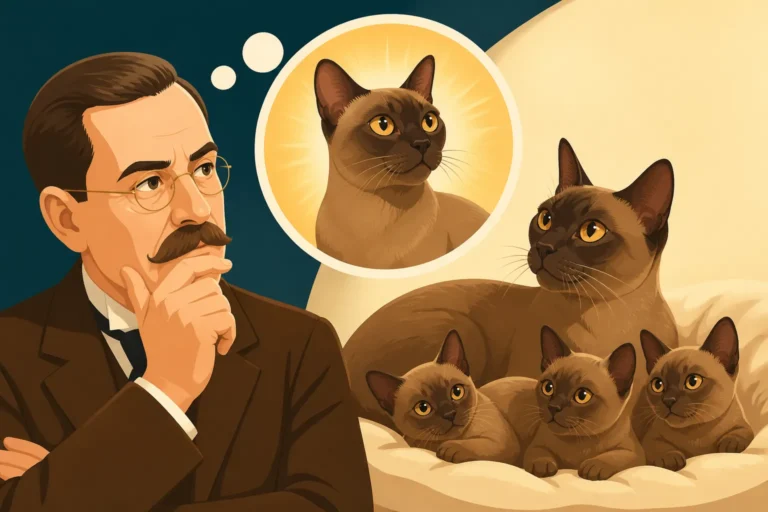
A Burmese can produce a pointed kitten, but not simply because it is Burmese. The answer depends on which coat-color alleles each parent carries and whether both can pass on the Siamese-pointing allele. This guide explains the genetics, likely litter outcomes, and what to check if a pointed kitten appears in a Burmese litter.
How Burmese and pointed coat colors are inherited
The Burmese allele and the Siamese allele
The familiar Burmese coat color and the Siamese pointed pattern are linked to different versions of the same color gene. For simplicity, the Burmese allele is often written as cb, while the Siamese allele is written as cs. The gene affects how pigment develops in the coat.
A cat with two Burmese alleles, cbcb, generally has the Burmese sepia-toned coat. A cat with one Burmese allele and one Siamese allele, cbcs, usually has a Tonkinese-type coat pattern, with more contrast than a Burmese but less than a classic Siamese. A cat with two Siamese alleles, cscs, can have the familiar pointed pattern: a lighter body with darker color on the face, ears, paws, and tail.
These are simplified genetic labels, not a way to identify a cat’s ancestry by appearance alone. Coat shade, age, temperature, and other inherited factors influence what you see. For more on the Burmese color gene, see What the cb Allele Does to a Burmese's Color and What Happens When Burmese and Siamese Genes Meet.
Why a Burmese-looking cat might carry the pointed allele
A cat can look Burmese while carrying a Siamese allele if it has one of each: cbcs. The Burmese allele can mask the full pointed appearance, so the cat may not look like a Siamese even though it can pass cs to its kittens.
That detail explains why a pointed kitten can sometimes surprise an owner. Appearance tells you what a cat’s coat looks like; it does not reveal every allele the cat carries. A pedigree or appropriate genetic test may provide more useful information, although the test must be interpreted alongside the cat’s lineage and the specific question being asked.
A pointed kitten needs to inherit a cs allele from both parents. If only one parent can pass cs, the kitten may carry the allele without showing the classic pointed pattern. This distinction between carrying a gene and expressing a visible coat pattern is central to understanding the possibility.
Which pairings can produce pointed kittens
The parents’ genotypes determine the possibilities
The table shows simplified outcomes for the Burmese and Siamese color alleles. It assumes the parents’ genotypes are known and leaves out other genes that may affect coat appearance.
| Parent pairing | Possible kitten genotypes | Can a pointed kitten occur |
|---|---|---|
| cbcb Burmese × cscs Siamese | All cbcs | No, not from this pairing alone |
| cbcs Burmese-type carrier × cscs Siamese | cbcs or cscs | Yes |
| cbcs × cbcs | cbcb, cbcs, or cscs | Yes |
| cbcb × cbcb | All cbcb | No |
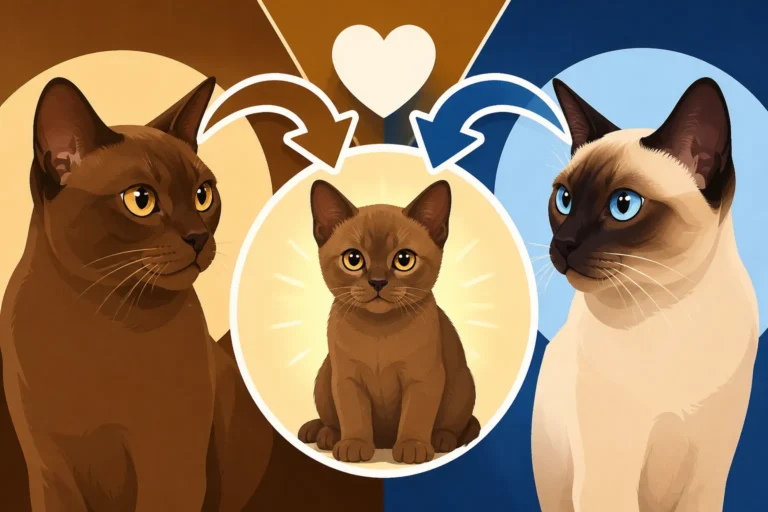
The important example is cbcb Burmese × cscs Siamese. Every kitten receives cb from the Burmese parent and cs from the Siamese parent, making the kittens cbcs. Those kittens may have a Tonkinese-type appearance, but they do not have two copies of cs, so they are not genetically pointed in this simplified model.
By contrast, if both parents can pass on cs, a kitten could inherit one copy from each and be cscs. That is the basic genetic route to a pointed kitten. For background on how these patterns relate to the Burmese and Tonkinese, see Why the Tonkinese Sits Between Burmese and Siamese and How a Burmese Differs From a Tonkinese.
A surprising litter is a reason to check, not guess
If a pointed kitten appears in a litter described as Burmese, there are several possible explanations. A parent may carry an allele that is not visible in its own coat. The mating may have involved a cat from a different breed or ancestry. There could also be a misunderstanding about the kitten’s coat pattern, parentage, or breed description.
It is better not to leap straight to accusations or conclusions from a photo. Ask for the parents’ registered names and pedigrees, confirm how the litter was registered, and discuss the coat pattern with the breeder. If the genetic result matters for breeding or registration, consult a veterinarian or a qualified feline genetic testing service about what test can answer the specific question.
A pointed appearance alone cannot prove that a kitten is a purebred Siamese, a Tonkinese, or a Burmese. Breed identity involves documented ancestry and the rules of the relevant registry, not just coat color. A pointed kitten from Burmese-associated lines may be genetically understandable while still not meeting a registry’s definition of a Burmese.
What the kitten’s coat can and cannot tell you
Pointing develops with temperature and age
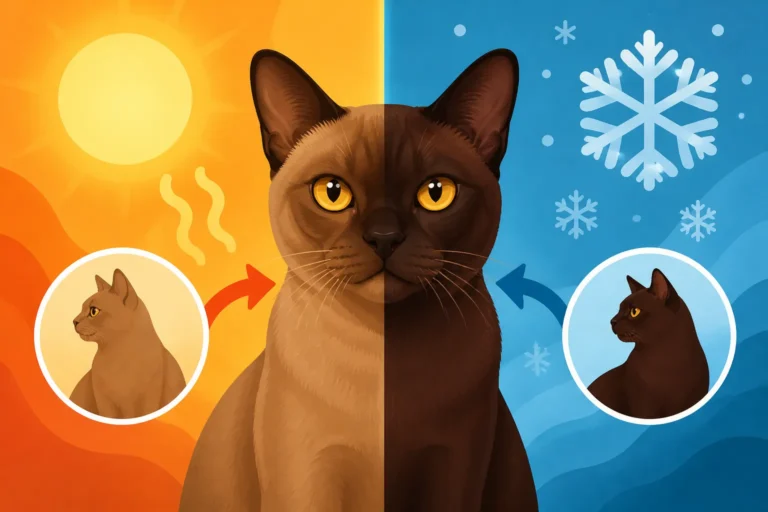
Pointed cats have temperature-sensitive pigment production. Cooler parts of the body tend to develop darker color, while warmer areas remain lighter. That is why the face, ears, legs, and tail often become more deeply colored than the torso.
Kittens may be born very pale, and the contrast can become clearer as they grow. Temperature and coat development mean that a young kitten’s appearance can be difficult to interpret from a single photograph. A kitten may also show a pattern that looks less dramatic at first and becomes more noticeable over time.
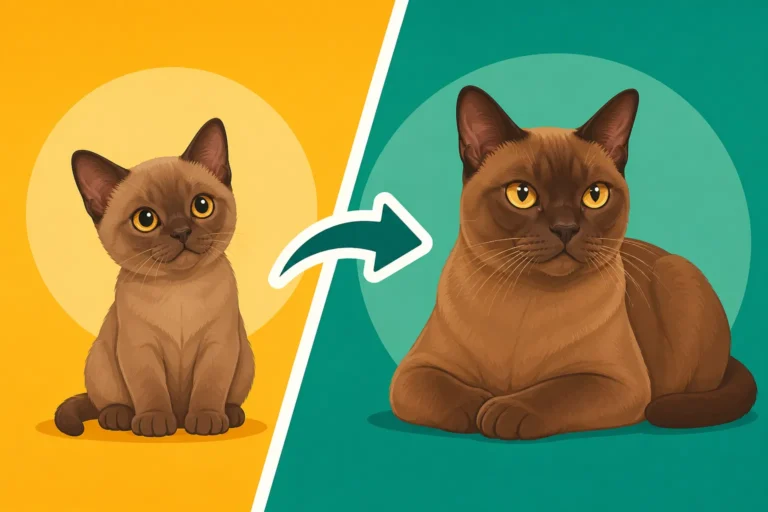
Burmese coats can also deepen or shift in shade as cats mature. That can make it easy to confuse a darkening sepia coat with a pointed pattern, especially when looking at a young kitten or an image with unusual lighting. For more on how color changes, see Why a Burmese Kitten Darkens as It Grows and How a Burmese's Color Deepens Where It Is Cool.
Registration is separate from the genetics
A kitten’s genotype describes the alleles it inherited. Registration describes how an organization records the cat under its own rules. Those are related questions, but they are not interchangeable.
If you are buying a kitten, ask what breed and color are listed on the registration paperwork, and ask to see the pedigree rather than relying only on an advertisement. If the kitten has a pointed coat, ask the breeder to explain how the parents’ ancestry and genetic results account for it. A responsible breeder should be willing to discuss the records clearly and without pressure.
The rules can differ between registries and between breed types. A kitten can have Burmese ancestry without being eligible for registration as a Burmese under a particular organization’s standards. For context on how the two Burmese types and registries are handled, see How the American and European Burmese Split and How CFA Registers a European Burmese.
What to do if a pointed kitten appears
Questions to ask a breeder or veterinarian
Start by asking for the parents’ pedigrees and any relevant genetic test results. Ask specifically whether either parent is known to carry the Siamese allele, and whether the breeder has documentation supporting the litter’s breed and color description. If the answer is unclear, request the registered names of the parents so the records can be checked through the relevant registry.
If the kitten’s parentage or coat genetics matter for future breeding, a veterinarian can help you decide whether genetic testing is appropriate. A test should be chosen to answer a defined question, such as whether the kitten carries a particular color allele. Testing is not a substitute for a pedigree, and a color result alone does not establish breed identity.
If you are adopting rather than buying from a breeder, focus first on the kitten’s health and care. A pointed coat is not itself a health problem. Keep any available adoption records, ask what is known about the parents, and avoid treating a shelter’s visual breed estimate as a confirmed pedigree.
Preparing for a kitten while the details are sorted out
Whether the kitten is registered as Burmese or not, its immediate needs are the same: safe housing, age-appropriate food, clean water, a litter setup, and a veterinary check. If you are arranging supplies through Chewy or a local pet store, choose products for the kitten’s age and size rather than assuming that coat color determines its care needs. A veterinarian can help with feeding and preventive-care decisions.
For a new arrival, a carrier, familiar bedding, food the kitten already eats, and a quiet room can make the transition less stressful. If you are comparing kitten foods on Chewy, or anywhere else, check the label for a statement that the food is complete and appropriate for kitten growth, and ask your veterinarian before making a major diet change. Keeping the kitten on a familiar diet at first can also make it easier to notice changes in appetite or digestion.
If you are ordering supplies from Chewy, keep the breeder’s or rescue’s feeding instructions nearby so you can match the product and feeding routine as closely as practical. The genetic question can be followed up calmly with records and professional guidance; it does not need to delay the basics of settling the kitten safely into your home.
Disclaimer
This article is for general informational purposes only and does not constitute professional advice. Laws, prices and regulations vary by location and change over time. Consult a qualified professional for guidance on your specific situation.