How TICA Registers the Two Burmese Types
When a pedigree says “Burmese,” it may not tell you which Burmese type the cat belongs to. That matters if you are comparing pedigrees, considering a kitten from another country, or hoping to breed or show your cat. This guide explains how TICA handles American and European Burmese, what paperwork can clarify, and what registration does—and does not—prove.
How TICA distinguishes the two Burmese types
Registration is about pedigree and breed designation
The American and European Burmese share a history, but breeders developed them toward different physical standards. The distinction is not simply a matter of coat color or a breeder’s preferred description. Their pedigrees and the standards used to assess them help determine how a cat is identified within a registry.
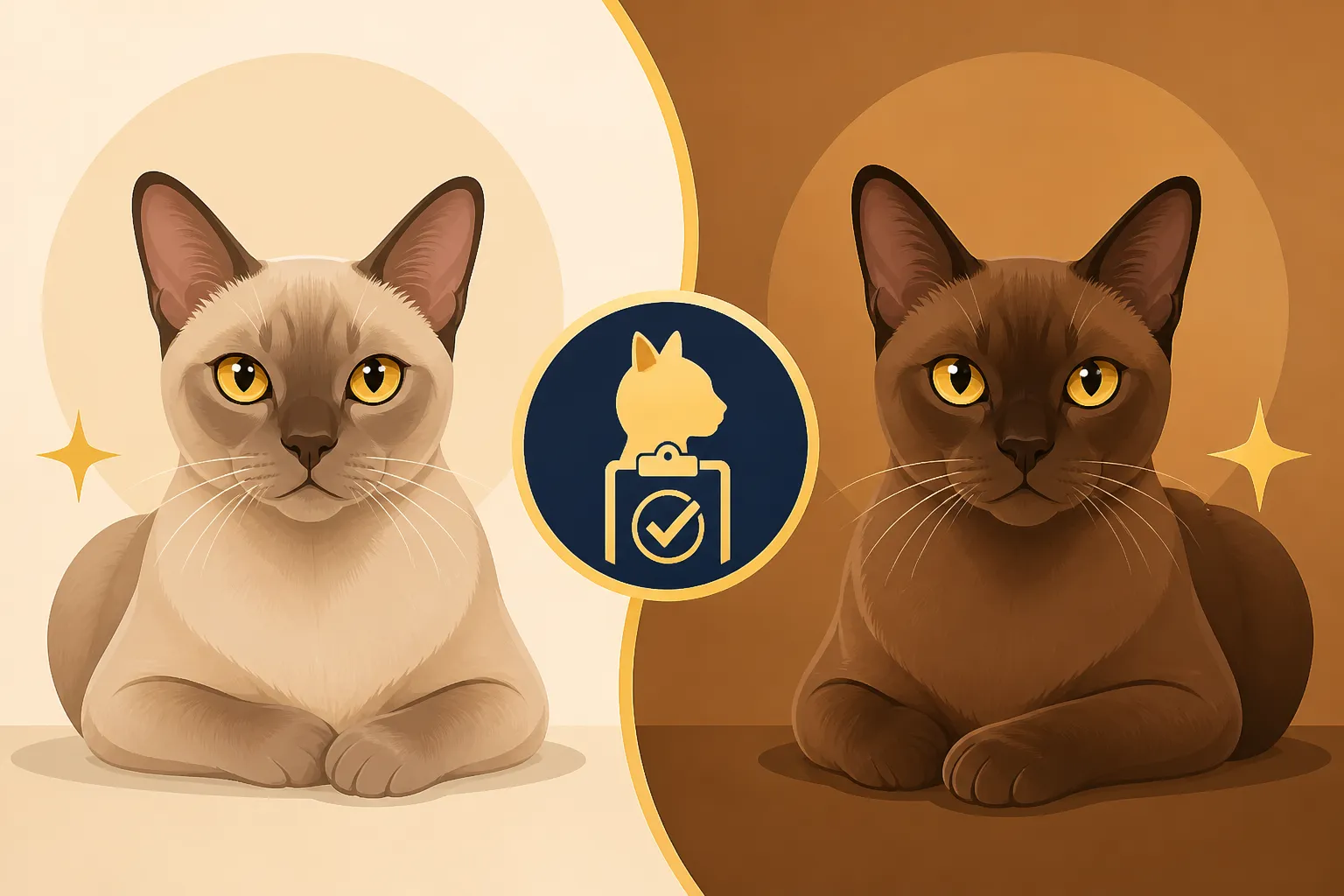
TICA’s registration system distinguishes Burmese and European Burmese as separate breed designations. In practical terms, that means a cat’s registration category should correspond to the type represented by its documented ancestry and the registry’s rules. A casual label in an advertisement is not the same thing as a formal TICA registration.
This can be confusing because the names are used differently across registries and countries. One organization might keep the types distinct, while another may use a different breed name or record type information in another way. For background on why the distinction exists, see How the American and European Burmese Split and Which Registries Separate the Two Burmese Types.
The two types have different standards
The American Burmese is generally associated with a rounded, compact look, including a broad head and rounded eyes. The European Burmese is typically described as more moderate in outline, with a slightly different head shape and a broader range of accepted colors in some registries. Those are general breed characteristics, not a reliable way to identify a cat’s registration category by sight alone.
A kitten may look more like one type than another without that appearance proving how TICA should register it. Kittens change as they grow, and individual cats vary. A photograph, color description, or breeder’s informal label cannot replace a pedigree and the applicable registration requirements. For details on the standards, see What an American Burmese's Head Should Look Like and What a European Burmese's Head Should Look Like.
The difference is easiest to understand as a combination of lineage and standard, rather than as a simple visual checklist. If you are unsure whether a cat is American or European Burmese, ask for the registered names and numbers of its parents and the documentation that connects the kitten to them.
Why a type label matters
A clear type designation helps avoid confusion when a cat is shown, bred, sold, or transferred between registries. It gives the next owner or breeder a better starting point for understanding the cat’s recorded ancestry. It can also help prevent someone from assuming that cats with similar names are automatically eligible to be bred together or entered in the same classes.
The designation does not mean one type is inherently healthier, friendlier, or more valuable as a companion. Nor does a type label guarantee that an individual cat conforms perfectly to a show standard. Registration records lineage and classification; it does not replace an examination of the cat or a careful review of its health history.
If a breeder says a cat is “European type” but the paperwork only identifies it as Burmese, ask what that means in the context of the cat’s registered pedigree. The wording may describe appearance or ancestry informally, rather than the official category. How to Tell Which Burmese Type You Are Buying offers a useful framework for asking those questions.
What to check on TICA paperwork
Match the kitten to its registered parents
When reviewing a kitten’s paperwork, start with the information that connects the individual cat to its parents. Names, registration details, and pedigree records should line up across the documents you are given. If a breeder provides a pedigree but the kitten’s own registration is still pending, ask what has been submitted and what documentation will transfer to you.
A pedigree can be harder to interpret when ancestors were registered in different countries or with different organizations. The same cat may be described using a different breed name or classification in another registry. That does not automatically mean the records are wrong, but it does mean you should ask how the breeder connects the records and which organization issued each document.
For instance, if a kitten is advertised as one type but its parents’ papers use different names, ask the breeder to explain the line of descent and the registration category they expect the kitten to receive. A straightforward breeder should be able to walk you through the paperwork without relying on vague claims such as “the lines are basically the same.”
Confirm the exact breed designation
Do not assume that a generic reference to “Burmese” answers every question about type. Look for the breed designation on the relevant registration or pedigree document, and ask whether the kitten is registered with TICA or whether the breeder is describing a planned registration. If the paper uses a different registry’s terminology, ask how that translates—or whether it translates at all—under TICA’s system.
A useful way to organize the information is to compare what you were told with what the records show:
| What you are checking | What to look for | Why it matters |
|---|---|---|
| Kitten’s identity | Name, date of birth, and identifying details | Helps confirm the document belongs to the kitten |
| Breed designation | The breed category recorded by the registry | Clarifies how the cat is formally classified |
| Parentage | Registered names and registration details for both parents | Connects the kitten to its documented ancestry |
| Registry | The organization that issued each record | Terminology and rules can differ between registries |
| Registration status | Whether the kitten is already registered or paperwork is pending | Sets clear expectations about what you will receive |
| Breeder’s explanation | A consistent account that matches the documents | Helps resolve differences in names or classifications |
If you are comparing a TICA document with paperwork from another organization, avoid treating similar wording as proof that the records are interchangeable. Ask the registry or breeder how that specific pedigree is handled. The related guide Which Registry Calls It a European Burmese explains why the name used can depend on the organization.
Registration is not the same as proof of quality
TICA registration is useful for documenting a cat’s pedigree and breed classification, but it is not a complete quality assessment. It does not, by itself, tell you whether the breeder has made responsible mating decisions, whether the cat has received appropriate veterinary care, or whether the kitten has been well socialized.
That distinction matters when a pedigree looks impressive. A long list of registered ancestors may be meaningful, but it does not replace questions about health testing, living conditions, veterinary records, and the breeder’s plans for the kitten. Ask for those details separately rather than assuming registration covers them.
Registration also does not guarantee that every cat will be eligible for every show class or breeding program. Eligibility can depend on the registry’s rules, the cat’s ancestry, and the relevant class requirements. If showing or breeding is important to you, confirm the specific requirements before making plans.
Buying or registering a Burmese across registries
Ask how each registry names the cat
A breeder may work with pedigrees from more than one organization, particularly when ancestry crosses national borders. Names and categories do not always match neatly between registries. A cat described as European Burmese in one setting may require a different explanation when you review its records through another organization.
Ask the breeder which registry issued the kitten’s paperwork, what breed designation appears on it, and whether the kitten is eligible for TICA registration under the details provided. If the breeder says a transfer or application is possible, ask what records are needed and who will handle the paperwork. That keeps the process concrete and avoids relying on assumptions about automatic recognition.
This is also a good moment to request copies of the relevant pedigree documents before you commit. You do not need to be an expert in registry terminology, but you should be able to see how the kitten’s identity and parentage are documented. The discussion in Whether a Burmese's Papers Name Its Type can help you understand what the paperwork is expected to clarify.
Do not assume cross-type breeding is allowed
A common source of confusion is the assumption that American and European Burmese can be freely crossed because both have “Burmese” in the name. Breed standards and registry rules are not interchangeable, and a breeder’s ability to register a particular mating depends on the rules that apply to the cats and their pedigrees.
If a breeder proposes a cross, ask which registry rules govern the mating, how the kittens would be classified, and whether the resulting pedigree would be accepted for the purpose you have in mind. If the answer is vague, pause and verify the details with the registry before proceeding. Why the Two Burmese Types Are Not Crossed discusses why this question deserves a clear answer.
The same care applies if you are buying a pet rather than planning to breed. You may not need a show or breeding pedigree for everyday companionship, but accurate records still help you understand the kitten’s background and avoid being misled by a type label that is being used loosely.
Questions to ask the breeder
A short, direct conversation can reveal whether the breeder understands the records and is willing to share them. You might ask:
- Which registry will issue or has issued the kitten’s registration?
- What breed designation appears on the kitten’s paperwork?
- Can I see the pedigree details for both parents?
- Are any ancestors recorded under a different registry or breed name?
- If the paperwork is pending, what documents will I receive and when should I expect them?
- If I hope to show or breed the cat later, should I confirm eligibility with TICA before purchase?
A responsible answer should be specific enough that you can follow the trail from kitten to parents to registry documents. It is perfectly reasonable for a breeder to explain that a record is pending or that cross-registry terminology needs clarification. It is less reassuring when a seller cannot provide basic pedigree details or insists that paperwork does not matter while advertising a particular type as a selling point.
Common misunderstandings about TICA Burmese registration
A color does not establish the type
Color can contribute to how a Burmese is described, but it does not establish the cat’s full registration identity. A buyer may hear that a particular color is associated with one type and assume that color alone settles the question. It does not. The cat’s ancestry and the registry’s rules remain central.
Color terminology can also vary between registries. A shade may have a different accepted name, or a color recognized by one organization may not be treated the same way by another. If the color description on an advertisement differs from the wording on a pedigree, ask the breeder to explain the difference rather than concluding that the records are inconsistent.
For a broader view of the histories and standards behind the types, see How the American and European Burmese Split. It is a helpful reminder that breed identity is not just a coat-color label.
Appearance is not a substitute for a pedigree
People often try to identify a Burmese type by comparing a cat’s head, body, or eye shape with photos online. That can be interesting, but it is not a dependable way to confirm registration. Individual variation, age, camera angles, and grooming can all affect how a cat appears in a photograph.
A kitten’s features may also change as it matures. A young cat that looks especially round or slender does not necessarily tell you which category its papers should show. Use physical appearance as context, not as proof of a registry designation.
If you are adopting an adult cat without full records, describe what you know honestly. You can say that the cat resembles a particular type, but avoid presenting that as a confirmed TICA classification unless the documentation supports it.
Registration does not answer every ownership question
A TICA record can help establish pedigree, but it will not tell you whether a Burmese is the right match for your home. Consider the cat’s temperament, social needs, health history, and the breeder’s support alongside registration. A well-documented cat still needs ordinary, thoughtful care after coming home.
Before choosing a kitten, think about what you want from the relationship and what the household can realistically provide. Breed identity can be one useful piece of the decision, but it should not overshadow practical questions about daily care and companionship. For a broader perspective, read Whether a Burmese Is the Right Cat for You.
Disclaimer
This article is for general informational purposes only and does not constitute professional advice. Laws, prices and regulations vary by location and change over time. Consult a qualified professional for guidance on your specific situation.