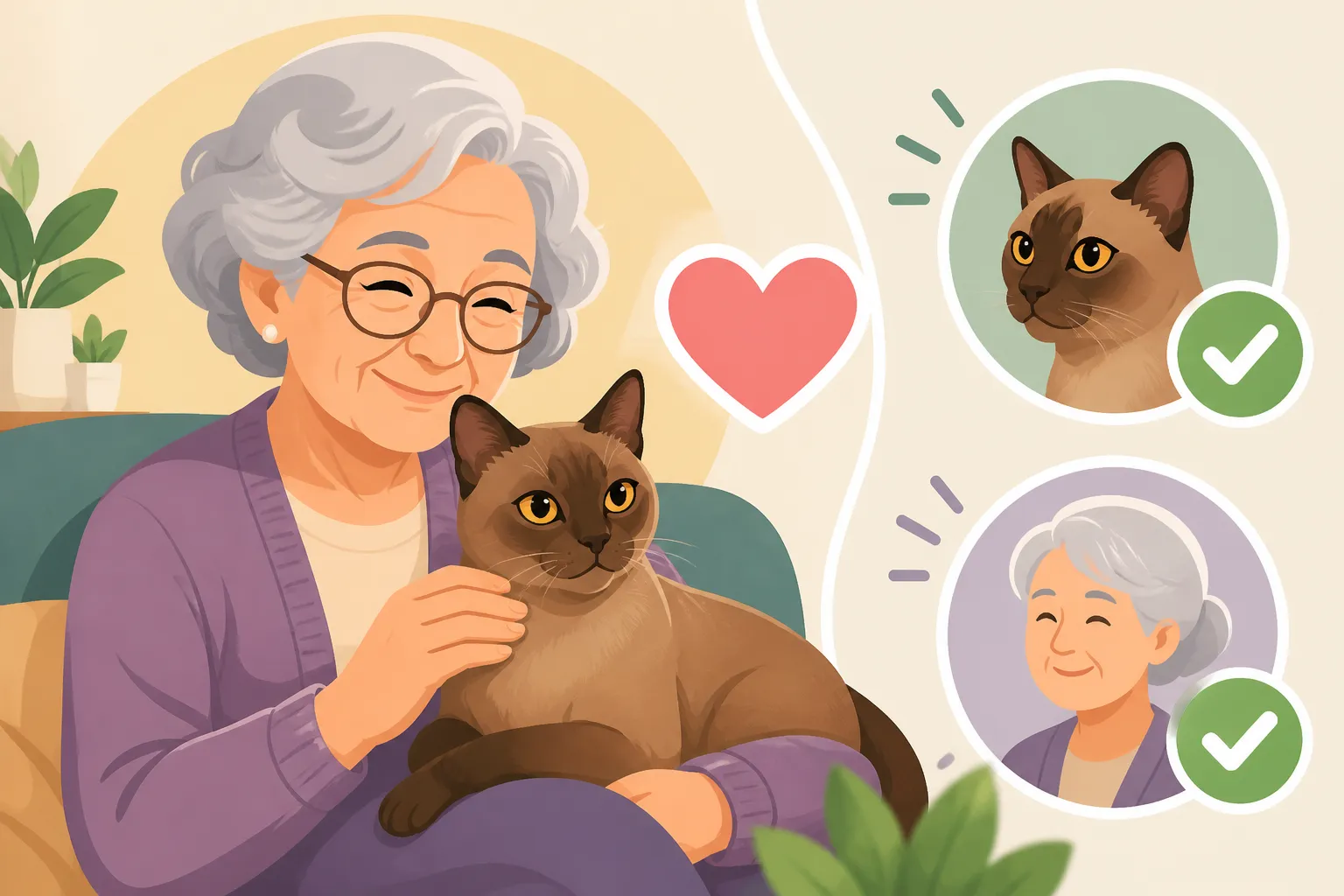
Whether a Burmese Suits an Elderly Owner
A Burmese can be a wonderful companion for an older adult, especially someone who enjoys an affectionate cat that wants to be involved in daily life. The harder question is whether its need for attention, play, and reliable care fits your routine, health, and support system. This guide helps you weigh the companionship against the practical demands before bringing one home.
What living with a Burmese is really like
A close companion who wants to be part of your day
Burmese cats are known for seeking human company. One may follow you from room to room, settle beside you while you read, or call out when you close a door between you. For an older person who lives alone and genuinely enjoys that closeness, the steady presence can be a pleasure. A Burmese is not usually a cat that is happiest being admired from across the room.
That affection can also feel like a lot if you want a quiet, independent pet. A Burmese may ask for attention while you are making breakfast, resting, or speaking with a visitor. If you are looking for a cat that will mostly entertain itself, compare the breed’s social needs with the kind of household it tends to thrive in. Which Household a Burmese Fits
Think about your ordinary day, not only the peaceful moments you imagine sharing. If you spend much of the day at home, enjoy talking to a pet, and have time for play and company, a Burmese may fit naturally into your routine. If you often leave for long stretches or prefer a pet that needs little interaction, its need for company deserves careful consideration. Whether a Burmese Suits Someone Who Works Away
Playful energy and physical handling
Burmese cats often stay playful well beyond kittenhood. They may enjoy chasing a wand toy, investigating cupboards, climbing onto furniture, or learning simple games. You do not need to run around the house to keep one engaged, but you will need to make time for short, regular play sessions and provide safe places to climb, scratch, and rest.
Consider how you feel about bending, reaching, and moving around the home. A toy can be played with from a chair, and a stable cat tree or low climbing route can offer activity without requiring you to lift the cat. But a Burmese may still dart underfoot or leap into your lap when you are not expecting it. Clear walkways and a predictable play routine can help reduce those little hazards.
A Burmese is compact-looking but notably solid for its size. If you might need to carry a cat to a carrier or lift it during an emergency, consider whether that would be comfortable for you. Adult size varies, and a cat that is manageable as a kitten will grow into a muscular adult. How Big an Adult Burmese Gets
The practical fit for an older owner
Match the cat’s needs to your health and home
Age alone does not determine whether you can care for a Burmese. Mobility, stamina, vision, hand strength, living arrangements, and access to help matter more than a birthday. Someone in their seventies who enjoys an active home routine may find the breed easier to manage than a younger person who travels constantly.
Look around your home from a cat’s point of view. Can you reach food and water comfortably? Is there a litter-box location that is easy to access and clean? Would you be able to manage a carrier, arrange transport to the vet, and handle daily grooming and medication if needed? Planning for those ordinary tasks is more useful than assuming everything will be easy because the cat is affectionate.
| Everyday consideration | A Burmese may suit you if | Plan carefully if |
|---|---|---|
| Companionship | You enjoy a cat that follows you and seeks interaction | You need long periods of quiet or privacy |
| Activity | You can offer regular play and enrichment | Bending, reaching, or moving quickly is difficult |
| Time alone | Someone is usually home, or a suitable companion is available | The cat would often be alone for long stretches |
| Care tasks | Feeding, litter cleaning, and vet visits are manageable | You would need dependable help with routine care |
| Future planning | You have a backup caregiver and transport plan | No one can step in if your health or schedule changes |
A second cat is not an automatic fix
Because Burmese cats are so social, people sometimes consider adopting two. A compatible feline companion may provide company when you are busy, but two cats also mean more feeding, litter care, veterinary appointments, and costs. A second cat does not replace human interaction, and the cats need to be introduced thoughtfully rather than expected to become friends immediately.
If you already have a calm, sociable pet, a Burmese may enjoy the company, though individual temperaments matter. A reserved older cat may find a highly interactive newcomer tiring. For a deeper look at the breed’s social needs, see Why a Burmese Should Never Be an Only Cat and Why Burmese Owners Rarely Keep Just One. Those perspectives can help you think through whether a companion animal is realistic in your household.
If you decide to adopt a pair, make sure you can manage the practical side as well as the emotional appeal. Two cats need separate resources, enough litter-box access, and a plan for veterinary care if both need attention at the same time. A pair can be a lovely choice, but it should be a deliberate one rather than a way to avoid assessing the care commitment.
Planning for daily care and changing circumstances
Make routine tasks easier before the cat arrives
A little preparation can make Burmese care less physically demanding. Put food, litter, grooming supplies, and cleaning materials where you can reach them without repeated trips or heavy lifting. Choose a litter box with an easy entry while still providing enough room for a muscular adult cat. A stable scratching post and comfortable resting places can reduce the need for you to redirect climbing or scratching behavior constantly.
Measured feeding is helpful for any cat, and it can be especially important for a breed that may be prone to weight gain. Use a consistent routine and follow your veterinarian’s advice about portions and body condition. If shopping trips are difficult, a retailer such as Chewy may be one option for arranging food and routine supplies; choose products that suit your cat rather than relying on packaging claims.
Make the carrier part of the home environment instead of bringing it out only for vet appointments. Leave it open with a familiar blanket inside so the cat can investigate it voluntarily. This can make travel less stressful for both of you, especially if you do not drive or need someone else to help with transport.
Arrange help for the moments you cannot predict
A Burmese may live for many years, so it is worth thinking beyond the first year. Who could care for the cat if you are hospitalized, take a fall, or need to stay with family? Could a friend, relative, neighbor, or paid sitter feed the cat and clean the litter box? A written note with feeding instructions, veterinary details, and emergency contacts can make a difficult situation easier.
It is also sensible to plan for transportation before an appointment becomes urgent. Identify a trusted person, pet taxi option, or other workable way to reach a veterinary clinic. Keep the carrier accessible and avoid relying on a plan that only works when you feel well and have plenty of notice.
Routine deliveries may reduce the effort of carrying heavy bags home. For example, Chewy can be considered as a source for recurring essentials if its available options suit your household. Keep enough supplies on hand to avoid a last-minute scramble, but do not let automated ordering replace checking that the food and litter are still appropriate.
How to choose the right Burmese for you
Consider an adult cat as well as a kitten
A kitten brings energy, curiosity, and a great deal of play. It may climb curtains, explore narrow spaces, and need close supervision. That can be delightful if you want an active young companion, but it can be tiring if you prefer a calmer routine or have balance concerns.
An adult Burmese may offer a clearer picture of its temperament and energy level. A rescue or breeder may be able to tell you whether a particular cat enjoys being handled, how it behaves around visitors, and how much activity it typically wants. Ask about medical history and any established routines, too. A settled adult might be a better match than choosing a kitten based only on appearance.
Whichever age you consider, meet the cat and pay attention to how you feel during the interaction. Does its approach feel enjoyable or overwhelming? Can you imagine managing its play style and need for company on an ordinary day? Those questions are more useful than deciding based on the breed’s reputation alone.
Ask direct questions and be honest about your limits
Before adopting or buying, ask how the cat responds to being picked up, whether it is comfortable around other pets, and how it behaves when people are occupied. Ask what support the current caregiver thinks the cat will need as it settles in. If you are considering a kitten, ask about socialization, health records, and what care routines are already established.
Be candid about your own routine. If you need help with litter cleaning or transport, say so and build that support into the plan. It is not a failure to need assistance; it is responsible to make sure the cat will have consistent care. A good match is one that works for both the person and the animal.
For a broader view of ownership expectations, Whether a Burmese Is the Right Cat for You and What Burmese Owners Wish They Had Known can help you consider details that are easy to overlook when you are focused on finding a companion.
A Burmese can suit an older owner who wants a sociable, playful cat and can provide reliable daily attention. The best fit is not defined by age, but by whether the cat’s needs align with your energy, home, and support network. If you can plan for routine care and have someone available to step in when needed, a Burmese may bring a great deal of warmth and company to your home.
Disclaimer
This article is for general informational purposes only and does not constitute professional advice. Laws, prices and regulations vary by location and change over time. Consult a qualified professional for guidance on your specific situation.