Why No Door in the House Stops a Burmese
If you're a Burmese cat owner, you've probably experienced that unsettling moment when you realize a door you explicitly closed has magically, inexplicably, swung open. Perhaps it's the bedroom door you shut for privacy, the pantry door you hoped would keep them out of the treats, or even the front door that leads to the great outdoors. It’s a common, if bewildering, frustration, and it stems from the very core of what makes a Burmese so special. This guide will delve into the fascinating reasons behind your Burmese's Houdini-like abilities and offer practical solutions to keep your home secure and your clever cat engaged.
The Inherent Drive Behind a Burmese's Door Opening Habit
It's not just mischief for the sake of it, though a Burmese certainly has a mischievous streak! Their relentless pursuit of open doors is deeply rooted in their breed characteristics. Understanding these foundational traits is the first step toward managing their incredible ability to bypass perceived barriers.
A Drive to Explore Every Nook and Cranny
Burmese cats are incredibly curious creatures. They possess an insatiable desire to know what's happening, where it's happening, and why. A closed door isn't just a barrier; it's a mystery waiting to be solved, an unexplored territory that must hold something fascinating on the other side. This isn't unique to them, of course, but in a Burmese, this curiosity is amplified by their intelligence and persistence.
Imagine your Burmese watching you disappear behind a closed door. Their mind isn't just thinking "Oh, human is gone." It's analyzing the door, the handle, the way you pushed or pulled it. They're processing the sounds from the other side – the clinking of dishes, the rustle of a blanket, or simply the sound of your voice. For them, every closed door represents a potential new scent, a new sunbeam to bask in, or a new human interaction. This drive to explore means they will continuously test boundaries, patiently working at a handle until they achieve their objective.
The "Dog in a Cat's Body" Mentality at Work
We often say the Burmese is a "dog in a cat's body," and nowhere is this more apparent than in their absolute insistence on being with their people. Unlike many independent felines who are perfectly content to nap alone in a quiet room, a Burmese thrives on companionship and interaction. If you're behind a closed door, you're not just out of sight; you're out of reach, and that's often unacceptable to a Burmese.
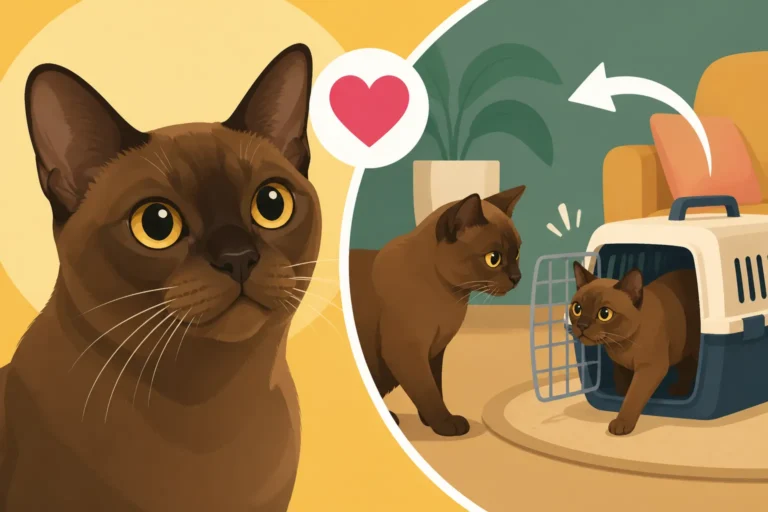
This breed develops incredibly strong bonds with their human family members, often choosing one or two individuals as their primary attachment figures. They follow you from room to room, supervising your every activity, from cooking dinner to taking a shower. So, when a door suddenly separates them from their chosen human, it can create a genuine sense of separation. They aren't just trying to be naughty; they're trying to reconnect, to be part of your world again. This intense need for proximity often drives them to overcome obstacles, including those pesky closed doors. Why a Burmese Cannot Let You Leave the Room is a topic many owners grapple with daily, and it directly relates to their door-opening endeavors.
Learning Through Observation and Persistence
Burmese cats are incredibly intelligent and observant. They don't just randomly push at doors; they watch you. They see how you turn the handle, how you pull the door, or how you slide it open. They're processing these actions, mapping them to the outcome of the door opening. Then, they begin to experiment.
It might start with a tentative paw batting at the handle. Then, they might try to jump up and hang from it, using their body weight. They'll try pushing, pulling, and eventually, mimicking the motion they observed you perform. This isn't a one-and-done process; it's a series of trial and error that they pursue with remarkable persistence. A Burmese doesn't give up easily, especially when the reward is access to their favorite human or a forbidden snack. Their patience can outlast ours, and given enough time, many will figure out even complex latches. You might find your usually pristine Burmese trying to manipulate a handle with surprising focus, driven by their incredible desire to join you or explore. Why a Burmese Attaches to Whoever Is Home Most can also explain why they are so determined to follow one person in particular.
Understanding the Mechanics of a Burmese Door Break-In
It's one thing to understand the why behind their door-opening, but it's another to marvel at the how. Their physical attributes and problem-solving skills combine to make them formidable adversaries for even the most securely latched doors.
The Art of the Lever and the Paw
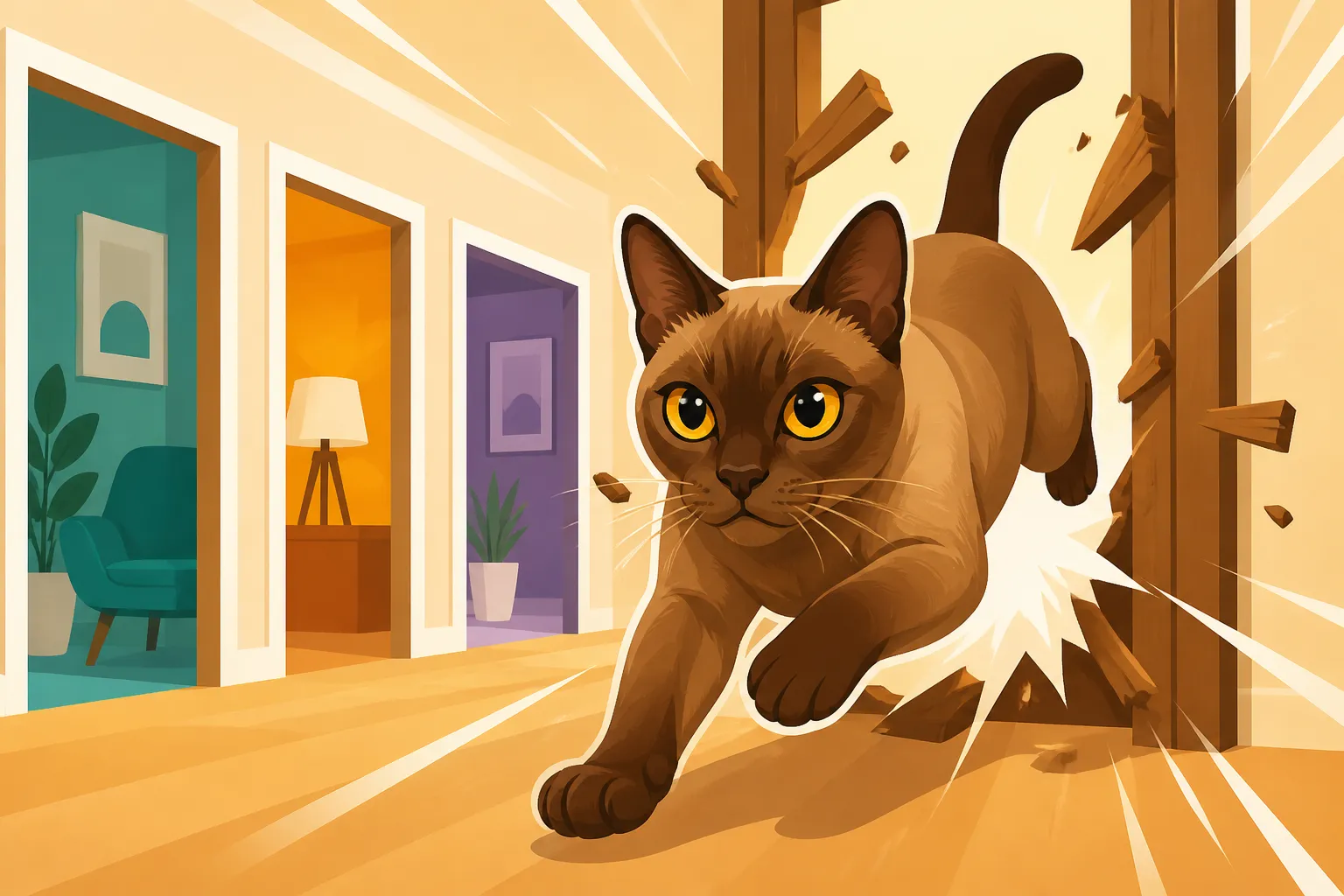
Most modern door handles, especially lever-style ones, are practically custom-made for a clever Burmese cat. A lever handle requires only downward pressure to operate, and a Burmese quickly learns that a paw, or even their body weight, applied strategically, can achieve this. They'll often jump up, grab the lever with their front paws, and hang, letting their weight do the work. Once the latch disengages, a quick push or pull with their nose or body is all it takes to swing the door open.
Even round doorknobs aren't always safe. While harder for them, some Burmese can learn to hook their claws into the gap between the knob and the door, or jump and spin it with remarkable dexterity. I've heard stories of cats jumping onto a nearby counter, then launching themselves at a doorknob, using their momentum to twist it. Their keen motor skills allow them to refine these actions over time, making them incredibly efficient at their door-opening craft. It's truly a sight to behold, even if it's slightly infuriating when you wanted a moment of peace!
The Weight and Agility Advantage
Despite their sleek, "satin-wrapped brick" appearance, Burmese cats are surprisingly muscular and powerful for their size. This strength, combined with their incredible agility, gives them a distinct advantage when tackling doors. They can leap onto handles, balance precariously, and use their body weight as leverage.
Think about how a Burmese moves. They're quick, lithe, and can jump impressive heights. When they decide a door needs opening, they employ their full physical prowess. They'll launch themselves, cling to the handle, and once the door begins to move, they can push it open with surprising force. Their compact, heavy build (earning them the nickname of Why a Burmese Is Called a Brick Wrapped in Silk) means that even a small cat can exert significant leverage against a standard door handle. They are not delicate creatures who will give up with a gentle nudge; they will put their full force behind their efforts.
The Door as a Challenge, Not a Barrier
For a Burmese, a closed door isn't a final statement; it's a challenge, a puzzle to be solved. This intrinsic motivation means they approach door-opening with a playful, yet determined, mindset. The act of opening the door itself can become a rewarding game, quite apart from what might be on the other side.
Every successful door opening reinforces the behavior. They learn that persistence pays off. This is why even if you've secured a door once, they might move on to another or try to find a weakness in your previous solution. They are constantly testing, constantly learning, and constantly adapting. It's a testament to their sharp minds and problem-solving capabilities, making them endlessly fascinating companions, if a bit challenging when it comes to keeping them contained. What a Burmese Does When It Is Shut Out of a Room often involves this kind of determined testing of boundaries.
Strategies for Containing Your Clever Burmese
While you might be tempted to simply surrender to your Burmese's will, there are indeed effective ways to keep them out of restricted areas. It often requires a combination of physical barriers and behavioral management.
Securing Different Types of Doors
The good news is, for every type of door, there's usually a solution, even if it requires a bit of ingenuity.
- Lever Handles: These are the trickiest. The easiest solution is often a child-proof lever lock that encases the handle, preventing it from being pushed down. You can find a variety of these, often quite affordably, on websites like Amazon. Another option is to install a simple sliding bolt latch (the kind you find on bathroom doors or garden gates) higher up on the door, out of your cat's jumping reach.
- Round Doorknobs: While less common for Burmese door-openers, some will still manage. Child-proof doorknob covers are readily available and make it impossible for paws to get a grip. Again, a quick search on Amazon will show you many options. Alternatively, a top-mounted bolt latch is a reliable choice.
- Sliding Doors: For sliding doors (like closet doors or pocket doors), the challenge is different. A simple stick or dowel placed in the track can prevent it from opening. For more secure options, you might look into child-proof sliding door locks that clip or screw into place, effectively blocking the door's movement.
- Bi-fold or Accordion Doors: These are typically less secure and easily pushed open by a determined cat. Simple hooks and eyes or a barrel bolt can be installed to keep them shut.
The key is to think like your Burmese: where would they try to apply pressure or leverage? Then, block that action.
| Door Handle Type | Recommended Security Measure | Why It Works |
|---|---|---|
| Lever Handle | Child-proof lever lock or high-mounted bolt latch | Prevents downward pressure on the lever or places the latch out of reach. |
| Round Doorknob | Child-proof doorknob cover or high-mounted bolt latch | Removes paw grip points or places the latch out of reach. |
| Sliding Door | Track dowel or child-proof sliding door lock | Physically blocks the sliding motion. |
| Bi-fold/Accordion | Hook and eye latch or barrel bolt | Securely fastens the door panels together, preventing them from opening. |
Redirection and Enrichment Inside
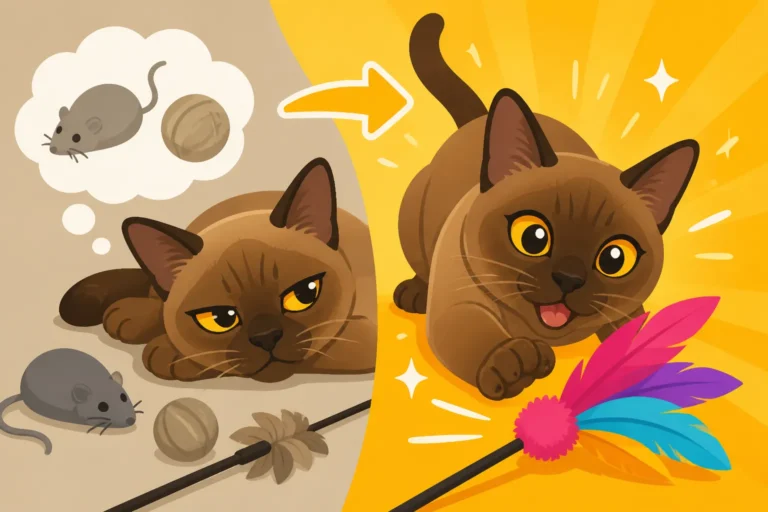
Sometimes, the best defense is a good offense. If your Burmese is constantly trying to get through doors, it might be that they simply aren't getting enough mental and physical stimulation inside the rooms they are in. A bored Burmese is a busy Burmese, and that busyness often translates into finding new challenges, like door-opening.
Providing ample enrichment can significantly reduce their desire to find "new" things behind closed doors. This includes:
- Puzzle Feeders: These make your cat work for their food, engaging their minds and hunting instincts. There are many great varieties available, from simple treat balls to more complex mazes.
- Interactive Toys: Think wand toys, laser pointers (used responsibly), or automatic toys that move and entice play. Remember, A Burmese Is Still Playing at Fifteen, so they need mental and physical activity throughout their lives. Dedicate specific playtimes each day. Which Toys Keep a Burmese Busy When You Are Out are also crucial for when you can't actively engage them.
- Vertical Space: Cats love to climb. Cat trees, shelves, or even just leaving clear space on top of tall furniture can give them an "escape" and a new perspective on their territory.
- Window Perches: A comfy spot to watch the world outside can provide hours of passive entertainment, reducing their focus on indoor barriers.
By making the current environment more stimulating, you decrease the allure of what might be behind that forbidden door.
Embracing Their Need for Company
Perhaps the most potent "fix" for a door-opening Burmese isn't a lock, but companionship. As we discussed, a huge part of their drive to open doors is their desire to be with you. If they're being left alone for extended periods, their separation anxiety can fuel this behavior.
Consider these approaches:
- Another Burmese: This might sound extreme, but many breeders will recommend buying two Burmese kittens together. A pair will keep each other company, play together, and reduce the intensity of their need for constant human interaction. Why Burmese Breeders Sell Them in Pairs is a common recommendation because it truly helps with their social needs.
- Increased Human Interaction: If a second cat isn't feasible, ensure you're dedicating significant time to interacting with your Burmese when you are home. Play sessions, cuddle time, even just having them in the same room as you can make a huge difference.
- Pet Sitter/Daycare: For owners who work long hours, a trusted pet sitter who can spend time with your Burmese during the day, or even a cat-friendly daycare (though these are less common for cats), can help alleviate loneliness. How Many Hours Before a Burmese Starts to Suffer is a serious consideration, and loneliness can manifest in destructive behaviors like door-opening.
Ultimately, addressing their deep social needs is often more effective and humane than simply locking them away. What a Burmese Does to a House It Is Left In can be quite destructive, and door-opening is often just one symptom of under-stimulation or loneliness.
When a Closed Door Signifies More Than Just Mischief
While a Burmese's door-opening can often be attributed to their natural curiosity and desire for company, sometimes it can be a sign of something more. It's important to differentiate between playful persistence and an underlying issue.
Is Your Burmese Seeking Attention or Comfort?
Consider the context of the door-opening. Is it always when you've just left the room? Is it accompanied by excessive vocalization or destructive behavior? If so, your Burmese might be experiencing genuine distress or anxiety.
A cat that is feeling unwell or insecure might seek out its human for comfort and reassurance. If they can't reach you, they'll try anything to bridge that gap. What Separation Anxiety Looks Like in a Burmese can manifest in various ways, and a relentless pursuit of access to you could be one of them. Pay attention to other cues: are they eating less? Hiding more? Changes in litter box habits? These could all point to a deeper issue than just wanting to explore.
Environmental Needs and Behavioral Cues
Sometimes, a Burmese is trying to open a door because it needs something on the other side. Is the litter box behind that closed bathroom door? Is their food or water bowl in a room they've been shut out of? While we intend to keep them out of certain areas, sometimes we inadvertently block their access to essential resources.
Always ensure that your Burmese has easy access to food, fresh water, and a clean litter box, regardless of where they roam in the house. A cat trying to get into a closet might be genuinely looking for a quiet, dark place to rest if their usual spots are disturbed. Observe which doors they try to open and when. This can offer valuable clues about their immediate needs or desires.
Consulting a Professional for Persistent Behavior
If you've tried all the security measures and enrichment ideas, and your Burmese's door-opening behavior remains relentless, or if it's coupled with other concerning behaviors like excessive vocalization, destructive tendencies, or changes in appetite/litter use, it might be time to consult a professional.
- Your Veterinarian: Rule out any underlying medical conditions that might be causing anxiety or discomfort. A vet can assess their overall health and advise if further intervention is needed.
- A Certified Feline Behaviorist: These professionals specialize in understanding and modifying cat behavior. They can help identify triggers for the door-opening, develop a tailored behavior modification plan, and address any associated anxiety or stress. They can offer insights into Making a Room Bearable for a Burmese Left Alone and other strategies to improve your cat's well-being.
Remember, a Burmese's intelligence and strong social drive make them truly unique companions. While their door-opening antics can be frustrating, they are also a testament to their cleverness and their deep bond with you. With understanding, patience, and the right strategies, you can maintain both your privacy and your Burmese's happiness.
Disclaimer
This article is for general informational purposes only and does not constitute professional advice. Laws, prices and regulations vary by location and change over time. Consult a qualified professional for guidance on your specific situation.