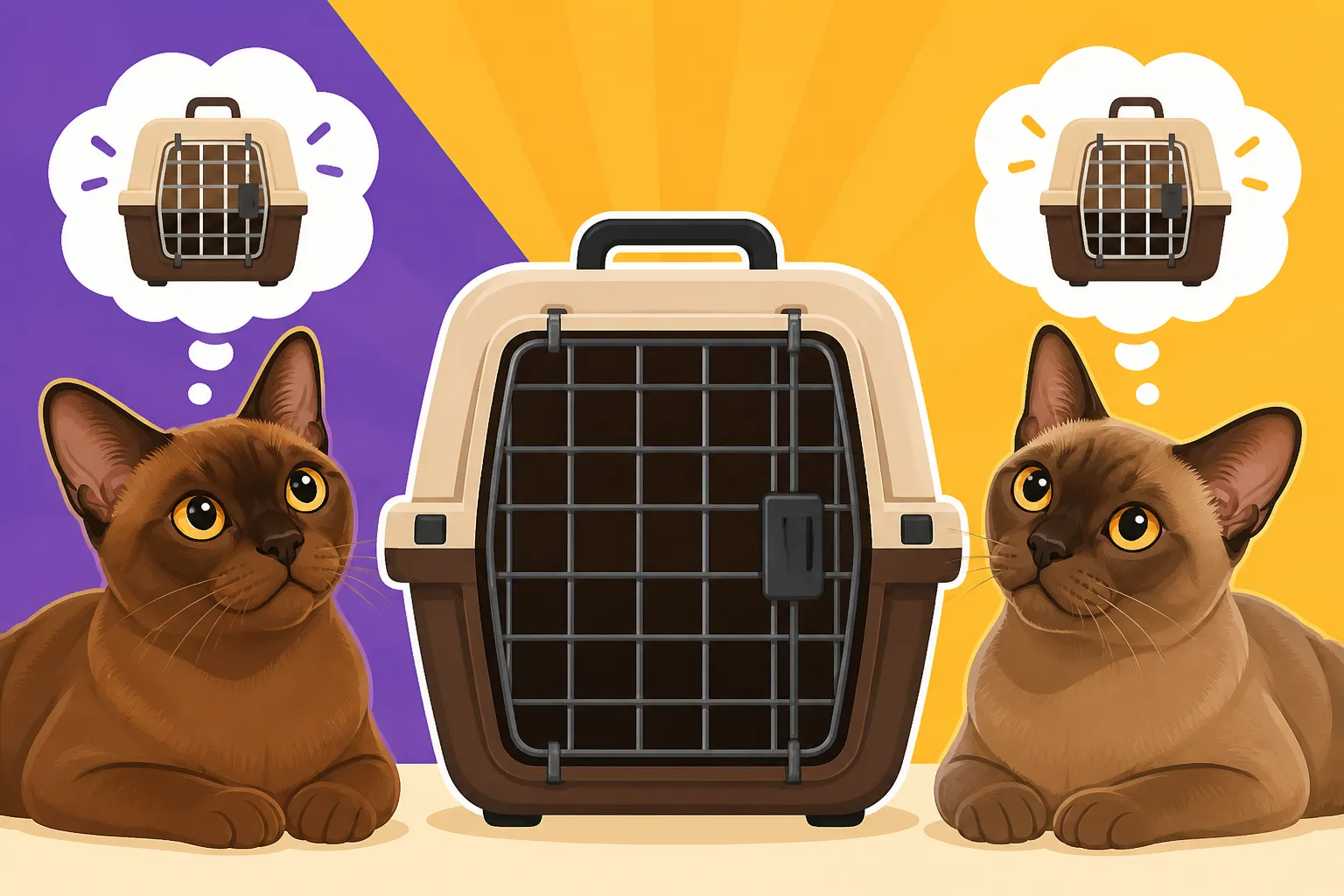
Which Carrier Two Burmese Will Share
It’s a familiar scenario for any devoted Burmese owner: you need to take your beloved felines to the vet, or perhaps on a short trip, and the thought of separating them into individual carriers fills you with dread. These aren't just any cats; Burmese are famously social, often found curled up together in a single pile, and the idea of forcing them apart for even a short journey can be incredibly stressful for both you and them. This guide aims to explore whether two Burmese can comfortably and safely share a single carrier, delving into the practicalities, benefits, and potential challenges to help you make the best decision for your cherished companions.
The Burmese Need for Company: Why Sharing a Carrier Makes Sense (and Scares Us a Little)
Burmese cats aren't just friendly; they're often described as "Velcro cats" for a reason. They thrive on companionship, whether it's from their human family members or, even better, another feline friend. It's a hallmark of the breed, a trait that makes them incredibly loving but also particularly susceptible to loneliness or distress when left alone. This deep-seated need for company translates directly into how they cope with new, potentially scary situations like car rides or vet visits. For many Burmese, the presence of a familiar companion can be a powerful antidote to anxiety.
Think about your own home. Do your Burmese snuggle together, groom each other, or always seek out the same sunny spot to nap, pressed against one another? If so, you're seeing their natural inclination for close proximity in action. When it comes to travel, replicating this sense of togetherness can often be more comforting than isolating them. The worry we often feel as owners about cramming them into one space is valid, but for a bonded Burmese pair, the alternative – being alone in a carrier – can sometimes be far more upsetting. It’s a delicate balance, trying to give them enough space while respecting their inherent need for contact.
Understanding the Burmese Social Dynamic on the Go
The unique social dynamics of the Burmese breed are truly fascinating, and they play a huge role in how they handle travel. These aren't independent, aloof cats who might prefer their own solitude. On the contrary, a Burmese often acts like a little shadow, following you from room to room, demanding attention and affection. When you have two Burmese, this need for connection is often fulfilled by each other, creating an incredibly strong bond. They form a unit, a little furry gang that navigates the world together.
Imagine a scenario where you're preparing for a short car journey. If your two Burmese, let's call them Miko and Suki, are a bonded pair who spend their days wrestling gently, grooming each other, and sleeping in a tangled heap, putting them into separate carriers can feel unnatural to them. Miko might start to yowl, not just because he's in a carrier, but because Suki isn't right there beside him. Suki, in turn, might pace and fret, missing Miko's comforting presence. They draw strength and reassurance from each other, which is why the idea of a shared travel space often resonates with Burmese owners. It's not just about convenience for us; it's about honoring their natural social structure and helping them feel as secure as possible when they're out of their familiar home territory. For more on this, you might find Why Two Burmese Settle Each Other incredibly insightful.
The Benefits of a Shared Travel Space
When managed correctly, allowing a bonded pair of Burmese to share a travel carrier can offer several distinct advantages, primarily centered around reducing stress and promoting a sense of security. The most immediate benefit is often a significant reduction in travel-related anxiety. Cats, especially sensitive breeds like the Burmese, can find the unfamiliar sights, sounds, and motions of car travel quite overwhelming. Having a familiar, comforting presence right beside them can act as a natural calming agent, much like a child holding their parent's hand in a scary situation.
Beyond psychological comfort, there's a practical physical benefit too. Burmese cats have very short, sleek coats and minimal undercoat, which means they can feel the cold more acutely than some other breeds. Sharing a carrier allows them to huddle together, leveraging each other's body heat to stay warm and cozy, particularly during colder months or in air-conditioned vehicles. This communal warmth isn't just about comfort; it's another layer of natural reassurance that can make the journey feel less daunting. Many owners report less vocalization and less frantic behavior from their Burmese when they travel together, turning what could be a stressful ordeal into a much more manageable experience. If you’re considering getting a pair, understanding Why a Burmese Breeder Recommends Buying a Pair can offer further insights into their social needs.
Sizing Up: What Makes a Carrier Suitable for Two Burmese?
Choosing a carrier for two Burmese isn't as simple as picking out a "large" size. It requires careful consideration of actual interior space, not just the external dimensions or a label that says "extra-large cat carrier." While one larger cat might fit comfortably in a spacious carrier, adding a second feline, even another Burmese, changes the dynamic entirely. The goal isn't merely to fit both cats in, but to ensure they can travel safely, comfortably, and without undue stress or being squished. This means looking beyond basic size to the actual usable floor space and height, ensuring both cats have enough room to move a bit, even if they prefer to be touching.
Many standard "large" carriers are designed for a single hefty cat, or perhaps a cat with a lot of floof. A Burmese, while muscular and denser than they look, doesn't have excess fur to fill space. You're dealing with two solid, active bodies. Therefore, the carrier needs to provide enough square footage for both to lie down fully extended without one cat being forced into an uncomfortable position, and ideally, for both to be able to stand up and turn around simultaneously. It's a common oversight, and one that can lead to cramped, unhappy travelers.
Minimum Dimensions for Dual Occupancy
When selecting a carrier for a bonded pair of Burmese, think about the practical reality of two animals needing personal space, even if they adore each other. A good rule of thumb is that each cat should be able to stand up, turn around, and lie down comfortably without obstructing the other. If you have two average-sized adult Burmese, which often weigh between 8 and 14 pounds, you're looking at a combined weight and body mass that demands significant real estate within the carrier. This often means a carrier that might seem excessively large for a single cat is just right for two.
To give you an idea, a carrier typically deemed "large" for one cat might be around 24 inches long, 16 inches wide, and 16 inches high. For two Burmese, you'd ideally want something closer to 28-32 inches long, 20-22 inches wide, and at least 18-20 inches high. This provides crucial floor space for them to stretch out side-by-side or even swap positions without having to climb over each other. Remember, they will likely want to huddle, but they also need the option to shift if one gets too warm or wants a different resting angle. Always measure the interior dimensions, not just the exterior, and consider the weight capacity if you're buying a soft-sided option, as two muscular Burmese can be quite heavy. Knowing How Much an Adult Male Burmese Weighs and How Much an Adult Female Burmese Weighs can help you estimate the combined weight.
Carrier Types: Hard-Sided vs. Soft-Sided Considerations
The choice between a hard-sided and a soft-sided carrier often comes down to personal preference, the nature of your trips, and your cats' individual temperaments. Both types have their merits and drawbacks when accommodating two Burmese.
Hard-sided carriers, typically made of durable plastic, offer superior protection. They maintain their shape, preventing accidental crushing, and are generally easier to clean if an accident occurs during travel. This can be a huge advantage with two cats, as a single accident can quickly become a double mess. Many hard-sided carriers also offer excellent ventilation through multiple grates, which is crucial for two cats generating body heat in a confined space. They often have more secure, often metal, latching mechanisms, providing peace of mind that your clever Burmese won't figure out an escape route. On Amazon, you can find a variety of sturdy, well-ventilated hard-sided carriers that are perfect for dual occupancy, with some models even featuring top-loading doors which can make getting two cats in and out a bit easier.
Soft-sided carriers, on the other hand, are often lighter, more flexible, and can be easier to store as many fold flat. They often come with multiple zippered openings and pockets, which can be convenient for treats or paperwork. However, their flexibility can also be a disadvantage; if they're not robust enough, they can sag under the weight of two cats or offer less protection in the event of a bump. Cleaning can also be more challenging if absorbent fabrics are used. If your Burmese are prone to chewing or clawing when stressed, a soft-sided carrier might not hold up as well. For short, less stressful trips where your cats are calm travelers, a well-constructed soft-sided carrier designed for larger pets might work, but always prioritize robust zippers and strong, reinforced mesh panels to ensure safety and prevent Houdini-like escapes.
Practical Considerations for Shared Carrier Travel
Beyond simply picking the right-sized carrier, there are several practical steps you can take to ensure that traveling with two Burmese in a shared space is as smooth and stress-free as possible. It's not enough to just buy a suitable carrier; you need to prepare your cats, and the carrier itself, for the journey. A trip to the vet, even a short one, can be an anxiety-inducing event for many cats, and adding a companion doesn't automatically negate that. Proactive planning and positive reinforcement are key to turning the carrier from a dreaded box into a somewhat neutral, or even comforting, space.
Remember, Burmese are creatures of habit who thrive on routine and familiarity. Springing a new, enormous carrier on them only when it’s time to leave will likely backfire, leading to protests and resistance. Instead, integrate the carrier into their everyday lives well before any travel is planned. This acclimatization period is vital for building positive associations and reducing fear.
Acclimating Your Burmese to the Shared Space
The secret to successful shared carrier travel with your Burmese pair lies in extensive acclimatization. Never just pull out the carrier on the day of a trip; that immediately associates it with stress and separation. Instead, make the carrier a regular, non-threatening part of their environment. Place the carrier in a high-traffic area of your home, with the door left open, allowing them to explore it at their leisure. Make it inviting by lining it with their favorite soft blankets or a T-shirt that smells like you.
Encourage them to go into the carrier together. You can entice them with treats, catnip, or by feeding them their meals inside. The goal is for them to view it as another cozy nook, a safe den where they can cuddle up. Once they’re comfortable entering and resting in it together, start closing the door for very short periods, gradually increasing the duration. Then, introduce short practice runs in the car, just around the block, slowly extending the distance. This gradual exposure, always ending with positive reinforcement like praise and treats, will help them form a positive association with both the carrier and car travel. It’s a process, but it pays dividends in reducing anxiety for your social Burmese. For more tips on making the carrier inviting, check out Making the Carrier Somewhere a Burmese Sleeps.
Ensuring Safety and Comfort on the Journey
Once your Burmese are accustomed to their shared carrier, the focus shifts to ensuring their safety and comfort during the actual journey. A few key elements can make a world of difference. First, bedding is crucial. Line the carrier with soft, familiar blankets that carry the scent of home and, ideally, of both cats. This familiar scent can be incredibly calming. Absorbent pads underneath the blankets are also a smart idea in case of accidents.
Ventilation is paramount, especially with two bodies generating heat in a confined space. Ensure that all carrier vents are unobstructed and that the carrier isn't covered in a way that restricts airflow. For longer trips, consider a small, non-spill water dish attached to the inside of the carrier, or at least offer water during stops. Securing the carrier in the car is non-negotiable; always use a seatbelt to anchor it firmly. An unsecured carrier can slide around, causing distress or even injury in sudden stops. Positioning the carrier so it's not in direct sunlight is also important to prevent overheating. During the journey, maintain a calm demeanor yourself. Your cats will pick up on your stress, so a relaxed attitude from you can help reassure them that everything is okay.
Potential Pitfalls and When to Opt for Separate Carriers
While sharing a carrier can be a wonderful solution for many bonded Burmese pairs, it's not a universally applicable one. There are distinct situations and feline temperaments that make separate carriers not just preferable, but absolutely necessary for the safety and well-being of your cats. Ignoring these potential pitfalls can turn a well-intentioned effort to comfort into a stressful, or even dangerous, situation for your beloved companions. It’s important to be realistic about your cats' individual personalities and health, as well as external constraints like airline regulations.
The convenience of a single carrier should never outweigh the health, safety, and comfort of your Burmese. Sometimes, even the most bonded pairs can react unpredictably in highly stressful environments, and what works perfectly at home might not translate to a cramped car or a busy vet waiting room. Being prepared to revert to individual carriers is a sign of a responsible and caring pet owner.
When Two Become Too Many: Behavioral and Health Flags
Even the most loving Burmese duo can have moments of tension, especially when stressed or confined. If your cats, despite being bonded, show any signs of conflict in the carrier – hissing, growling, swatting, or one cat attempting to dominate the space or block the other – then it's a clear signal that separate carriers are the safer choice. A stressful journey can exacerbate underlying tensions, potentially leading to injuries or a breakdown in their relationship. Sometimes, it’s not aggression but simply discomfort: one cat might be significantly larger than the other, inadvertently squashing or crowding their smaller companion, leading to stress for the more vulnerable cat.
Health conditions also play a critical role. If one of your Burmese is unwell, has a contagious illness, or requires specific monitoring or medication during travel, individual carriers are essential. An injured cat might need more space and less jostling, while a cat with a contagious disease needs strict isolation to prevent transmission to its housemate. Furthermore, if one cat is prone to motion sickness or excessive anxiety, separating them might allow you to address their individual needs more effectively, such as administering calming supplements without affecting the other. Observing their behavior closely during those practice runs is vital for catching these subtle cues before a critical journey. If you are unsure of average sizes, What an Adult Burmese Should Weigh can provide helpful benchmarks.
Legality and Logistics: When One Carrier Isn't an Option
Beyond your cats' individual needs and dynamics, there are significant external factors that often dictate the use of separate carriers, regardless of how well your Burmese get along. The most common and unavoidable instance is air travel. Almost all airlines, both domestic and international, have strict regulations requiring one animal per carrier for in-cabin travel, and typically also for cargo. These rules are in place for safety, ease of handling, and consistency across their operations, and they rarely make exceptions. Failing to adhere to these rules could mean your cats are denied boarding, leading to significant stress and disruption.
Veterinary office procedures can also be a logistical hurdle. While some vet clinics might be accommodating, many prefer or even require individual carriers for each cat. This makes it easier for staff to handle and examine each cat separately without risking an escape or an altercation, especially in a busy or noisy environment. Imagine trying to get a quick temperature reading or a blood draw with two wiggly Burmese attempting to comfort (or hide behind) each other in one carrier! Finally, certain international travel regulations for specific countries often include very detailed requirements for animal transport, which almost invariably necessitate individual carriers for health and quarantine reasons. Always research and confirm all regulations specific to your mode of transport and destination well in advance to avoid last-minute complications. While Why Two Burmese Should Share One Carrier (the current post title) is about the general principle, remember to always check external rules. You can find many suitable carriers for single or double occupancy on Amazon.
Carrier Comparison: Single vs. Shared for Burmese Pairs
Deciding whether to use one carrier for two Burmese or individual carriers involves weighing various factors. Here's a table to help you compare the practicalities:
| Feature | Single Carrier (for each cat) | Shared Carrier (for two cats) |
|---|---|---|
| Space per cat | Ample room to stand, turn, stretch comfortably | Limited, but with companion comfort & body warmth |
| Stress level | Potentially higher for social Burmese; less for individualists | Potentially lower due to companionship; higher if conflict occurs |
| Cleaning | Easier to manage single messes | Larger area for messes, potentially harder to clean mid-trip |
| Portability | Two carriers can be awkward to carry; easier for one person | One large carrier can be heavy, but a single unit; harder for small individuals to carry |
| Vet Visits | Easier for individual exams and handling | Might require vet staff to separate them; less individual focus |
| Air Travel | Often required by airlines; generally accepted | Almost always prohibited due to airline regulations |
| Cost (Initial) | Two smaller carriers may be cheaper initially | One large, sturdy carrier can be a significant investment |
| Best For | Cats who prefer solitude, during illness, or air travel | Bonded Burmese pairs for routine local trips, low-stress environments |
Choosing the right option ultimately comes down to knowing your cats, understanding their bond, and being realistic about the specific travel situation.
Sharing a carrier can truly be a comfort for a bonded pair of Burmese, allowing them to lean on each other for reassurance during potentially stressful journeys. Their affectionate and social nature often means they genuinely prefer close proximity, and the familiar scent and warmth of their companion can make a significant difference in their anxiety levels. However, it’s not a decision to be taken lightly. Always prioritize ample space, robust construction, and excellent ventilation to ensure their physical comfort and safety. Be vigilant for any signs of stress or conflict, and don't hesitate to opt for separate carriers if your cats' temperament or external regulations dictate it. By carefully considering all these factors, you can make travel as smooth and stress-free as possible for your cherished "Velcro" companions.
Disclaimer
This article is for general informational purposes only and does not constitute professional advice. Laws, prices and regulations vary by location and change over time. Consult a qualified professional for guidance on your specific situation.