Finding a Burmese’s Waist Under All That Muscle
One of the most common head-scratchers for new Burmese owners, and even seasoned ones, is figuring out if their incredibly solid, muscular cat is actually at a healthy weight. They feel so heavy, like a "brick wrapped in silk," that it’s easy to look at that compact body and wonder, "Are they getting a bit thick around the middle?" This guide is here to help you truly understand the unique Burmese physique and give you the practical tools to accurately assess their body condition, ensuring you can nip any potential weight issues in the bud before they become serious health concerns.
The Burmese Physique: A Brick Wrapped in Silk
The Burmese cat is truly a marvel of feline architecture. They are famously described as "bricks wrapped in silk," and anyone who has ever picked one up can attest to this. They possess a surprising heft for their size, a dense musculature that feels incredibly solid, often leading owners to misjudge their actual body condition. It’s not your fault if you find yourself questioning their waistline; their unique build makes it genuinely challenging.
Understanding the "Brick" Analogy
When we talk about the Burmese being a "brick," we're not just being poetic. These cats have a substantial bone structure and a remarkably dense muscle mass that contributes to their impressive weight. Unlike many other breeds, which might feel lighter and more ethereal, a Burmese feels grounded and powerful. You pick them up, and your arm instinctively braces for something much lighter, only to be met with a surprising density. This inherent solidity means that even at a perfectly healthy weight, a Burmese will always feel heavier than you expect, which can be quite deceiving. Why a Burmese Is Heavier Than It Looks This is their natural build, a testament to their athletic and playful nature, and it’s important to appreciate this muscularity rather than mistakenly viewing it as excess weight. It's part of what makes them so unique and wonderful.
The Deceptive Satin Coat
Adding another layer of complexity to weight assessment is the Burmese's signature satin coat. It's incredibly short, fine, and lies perfectly flat against their body. While absolutely stunning to look at and wonderfully soft to touch, this sleek coat offers no 'fluff' to hide under. On a long-haired cat, a few extra pounds might be disguised by a voluminous coat, making them appear cuddly rather than overweight. The Burmese, however, has no such natural camouflage. Their coat clings so closely to their form that early weight gain can sometimes be subtle, a gradual rounding that you might not notice until it’s quite established. It's not like the fur stands out; it just makes the 'brick' feel a bit wider, a change that can creep up on you if you're not actively monitoring. This is why visual checks alone are often not enough; you really need to get your hands on them.
Why Accurate Weight Assessment Matters for Your Burmese
Beyond aesthetics, accurately assessing your Burmese's weight and body condition is a critical component of their health care. It's not about vanity; it's about preventative medicine, especially for a breed with specific health predispositions. Missing subtle changes in their physique can have long-term consequences, turning a minor issue into a significant medical challenge.
The Silent Threat of Diabetes
Here’s the hard truth: Burmese cats are notoriously predisposed to diabetes. It's a genetic lottery they unfortunately drew, and even a few extra pounds can dramatically increase their risk. Why a Burmese Is Four Times More Likely to Become Diabetic This isn't just about making them comfortable; it's about potentially saving them from a chronic, lifelong illness that requires daily insulin injections and careful dietary management. The danger is that because they are naturally muscular, a Burmese that's actually overweight can still appear quite solid and healthy to the untrained eye. You might think they're just robust, when in reality, that extra padding is silently pushing them closer to developing diabetes. Recognizing this predisposition means we, as their guardians, have an even greater responsibility to keep them lean and healthy. Every single extra ounce matters for a Burmese.
Early Detection and Prevention
Regular, accurate weight and body condition checks are your first line of defense. By consistently monitoring your Burmese, you can spot those subtle changes that signal weight creep before it escalates into a problem. Imagine if you only noticed a slight increase in their thirst or appetite – those are often late-stage signs of diabetes. By then, the disease is already present. Instead, if you're regularly checking their ribs and waistline, you might notice that they're a little harder to feel than last month, or that their waist isn't quite as defined. This early detection gives you the power to intervene with dietary adjustments and increased play, potentially preventing the onset of diabetes altogether. It's proactive care that truly makes a difference. Why a Burmese's Weight Should Be Recorded Monthly
Practical Steps to Find Your Burmese's Waist and Assess Body Condition
So, how do you get past the "brick wrapped in silk" illusion and truly know if your Burmese is at a healthy weight? It involves more than just a quick glance. You need to get hands-on and combine that with a scale to get the full picture.
The Hands-On Rib Check
This is probably the most crucial part of assessing your Burmese's condition. You need to physically feel their ribs. Gently run your open palms along their sides, just behind their front legs. You should be able to feel their ribs quite easily, much like feeling the knuckles on your hand, but without pressing hard. You shouldn't see them, but you should definitely be able to feel them distinctively under a thin layer of muscle and skin.
- Healthy Weight: If you can feel the ribs with minimal fat covering them, similar to feeling the back of your hand, that's a good sign. You should be able to count them easily.
- Slightly Overweight: If you have to press a little to feel the ribs, and they feel cushioned by a layer of fat, your Burmese might be carrying a few extra pounds.
- Overweight/Obese: If you can't feel the ribs at all, or only with significant pressure, then it's highly likely your Burmese is overweight.
Do the same along their spine, running your hand down their back. You should be able to feel the bumps of their vertebrae without them being sharply prominent or completely hidden.
The Overhead Taper and Waistline
Once you've done the hands-on check, it's time for a visual assessment from a couple of angles.
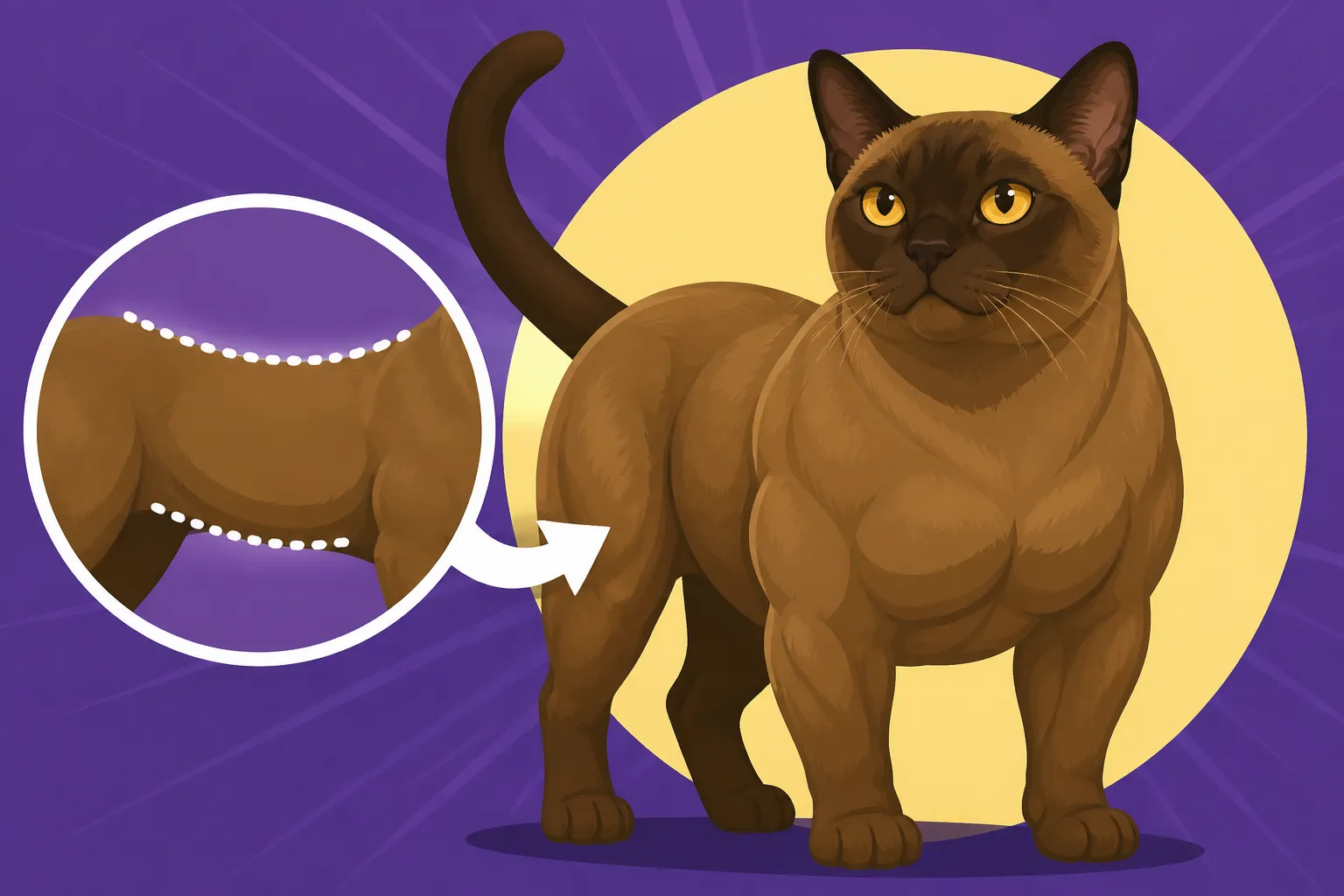
- From Above: Stand directly over your Burmese when they are standing still. Look down at their body shape. A healthy Burmese should have a discernible waistline, a gentle tuck-in just behind their ribs and before their hips. It won't be as dramatic as some svelte breeds, but it should be there. Finding a Burmese's Waist Under All That Muscle If they look like a continuous, straight line from their shoulders to their tail, or even bulge outwards, they are likely carrying too much weight.
- From the Side: Observe your Burmese from the side. You should see a slight tuck-up in their abdomen, meaning their belly doesn't hang low or appear distended. It should rise slightly from their chest to their hind legs. If their belly sags or forms a continuous, flat line from their chest to their back legs, that's another indicator of excess weight. A muscular Burmese often has a deep, broad chest, so don't mistake that for a full belly.
Using Body Condition Scoring Charts
Many veterinarians use a Body Condition Score (BCS) chart, typically on a 1-5 or 1-9 scale, to objectively assess a pet's weight. This can be a really helpful visual tool, often available online or at your vet's office. It gives you pictures and descriptions for different body conditions, making it easier to compare your cat.
Here’s a simplified version of a 5-point scale:
| Score | Description | Burmese Appearance | Rib Feel | Waistline (Top) | Abdominal Tuck (Side) |
|---|---|---|---|---|---|
| 1 | Emaciated (Ribs, spine, pelvic bones easily visible, severe muscle loss) | Extremely gaunt, sunken flanks, prominent bones. | Very easily felt, no fat. | Extreme hourglass shape. | Severe tuck. |
| 2 | Underweight (Ribs easily felt, minimal fat, some muscle loss evident) | Lean, visible bones with minimal coverage, may appear slightly bony. | Easily felt, slight fat covering. | Obvious hourglass. | Significant tuck. |
| 3 | Ideal/Healthy (Ribs felt with slight fat cover, visible waist, tucked abdomen) | Strong, athletic build; you can easily feel the muscle and bone without them being prominent. This is the goal for a Burmese. | Easily felt, slight layer of fat. | Well-proportioned, defined waist. | Slight tuck-up. |
| 4 | Overweight (Ribs difficult to feel, fat deposits, less defined waist) | Broader, rounder appearance; fat pads may begin to accumulate over lower back. | Difficult to feel, moderate fat layer. | Broader, less defined waist. | Little to no tuck. |
| 5 | Obese (Ribs not palpable, significant fat deposits, no waist/abdominal tuck) | Very rounded, apple-shaped body; obvious fat pads on chest, back, and tail base. | Not palpable under heavy fat. | No waist, broad back. | Sagging abdomen, no tuck. |
Aim for a BCS of 3 for your Burmese. This means they are lean, muscular, and have the best chance at a long, healthy life. Your vet can confirm your assessment. How to Score a Burmese's Body Condition
Accurate Home Weighing
While feeling and looking are crucial, a digital scale provides objective data. For kittens and smaller adult Burmese, a kitchen scale can be quite accurate. For larger adults, you might need to weigh yourself, then weigh yourself holding your cat, and subtract the difference. It's a classic trick, but it works! How to Weigh a Burmese Accurately at Home
Make sure to use the same scale and weigh your cat at the same time of day (e.g., before their morning meal) for consistency. Keep a log of their weight. Even small fluctuations can be important over time. If your Burmese is nearing or over What an Adult Burmese Should Weigh, it's definitely time to take a closer look at their diet and activity.
Maintaining a Healthy Weight for Your Muscular Friend
Once you've accurately assessed your Burmese's weight, the next step is maintaining that ideal body condition. This breed thrives on routines and consistency, and their diet and exercise need to reflect their unique needs.
Precision Portion Control
For a Burmese, feeding isn't just about putting food in a bowl; it's a precise, medical decision. Because of their diabetes predisposition and their strong drive for food, free-feeding (leaving food out all day) is almost always a recipe for disaster. Why a Burmese Should Never Be Free Fed You need to know exactly how much your cat is consuming.
- Weigh, Don't Scoop: Invest in a small digital kitchen scale. Measuring cups are notoriously inaccurate for kibble and wet food alike. Weighing their food ensures they get the exact calorie amount needed. Why Portion Control Is Medical Care in a Burmese
- Low Carbohydrate, High Protein: Focus on high-quality wet food that is low in carbohydrates and high in protein. This dietary approach helps manage blood sugar levels and supports their muscle mass without contributing to fat gain. Many commercial brands, found at retailers like Chewy or Amazon, offer excellent low-carb wet food options specifically formulated for cats. Do your research on ingredients! Why Low Carbohydrate Food Matters for a Burmese
- Scheduled Meals: Stick to two to three fixed mealtimes a day. This helps regulate their metabolism and keeps them from overeating. This also gives you a chance to monitor their appetite closely.
Remember that even treats need to be factored into their daily calorie allowance. For a Burmese, every calorie counts towards their long-term health. How Many Calories a Neutered Adult Burmese Burns
Keeping Them Active and Engaged
Despite their mature, dignified appearance, Burmese cats are famously playful and energetic, often retaining their kittenish antics well into their senior years. A Burmese Is Still Playing at Fifteen This natural inclination to play is your best friend when it comes to weight management.
- Interactive Play: Dedicate time each day to interactive play with wand toys, laser pointers (just be sure to end with a physical toy they can "catch"), or puzzle feeders. Your Burmese loves attention and will see playtime as a bonding opportunity. Puzzle feeders, easily found on Amazon, can also slow down their eating and provide mental stimulation.
- Vertical Space: Burmese cats love to climb and explore. Provide cat trees, shelves, or catio access to encourage movement and keep them entertained. Even a cat that loves to cuddle will benefit from having opportunities to stretch and jump.
- Companion Animals: If your lifestyle means your Burmese is alone for extended periods, consider getting them a companion. Another cat, especially another Burmese, can provide the constant interaction and play that keeps them active and mentally stimulated, reducing the risk of boredom-induced overeating or anxiety. Why Burmese Breeders Sell Them in Pairs
The Role of Your Vet
Your veterinarian is an invaluable partner in managing your Burmese's weight. They can offer professional guidance, confirm your body condition assessment, and provide tailored dietary recommendations.
- Regular Check-ups: Ensure your Burmese has regular vet check-ups. How Often a Healthy Adult Burmese Needs Checking Your vet can monitor their weight trends, discuss any changes you've observed, and keep an eye on their overall health.
- Professional Assessment: Your vet will use their expertise, often referencing detailed BCS charts, to give you an objective assessment of your cat's condition. They can also rule out any underlying medical conditions that might be contributing to weight gain or loss.
- Dietary Guidance: If your Burmese is overweight, your vet can recommend specific therapeutic diets or help you formulate a personalized weight loss plan. They can also help you understand the nutritional labels on various cat foods to ensure you're making the best choices for your cat's health.
Taking a proactive approach to your Burmese’s weight, combining careful observation with a healthy diet and plenty of play, is one of the most loving and responsible things you can do for your cherished companion. It ensures they stay the energetic, affectionate "brick wrapped in silk" you fell in love with, for many years to come.
Disclaimer
This article is for general informational purposes only and does not constitute professional advice. Laws, prices and regulations vary by location and change over time. Consult a qualified professional for guidance on your specific situation.