What a Burmese Head Defect Kitten Looks Like
It's absolutely devastating to welcome new life into your home, especially a tiny, vulnerable kitten, only to realize that something isn't quite right. The joy of a new litter can quickly turn to profound worry and heartbreak when a kitten shows signs of a severe birth defect. For Burmese cat owners and breeders, understanding the signs of Burmese Head Defect is crucial, though it's a topic no one ever wants to face. This guide will walk you through what to look for, helping you recognize the indicators of this challenging condition.
The Heartbreaking Reality of Burmese Head Defect
Bringing a Burmese kitten into the world is a moment filled with anticipation – those silky coats, the powerful purrs, the sheer joy these little bundles bring. So, when a serious genetic condition like Burmese Head Defect manifests, it's nothing short of a tragedy. This isn't just about cosmetic differences; it's a profound structural abnormality that impacts a kitten's entire existence, making a normal, healthy life impossible.
What is Burmese Head Defect?
Burmese Head Defect, also sometimes referred to as 'Congenital Cranial Dysplasia,' is a severe and unfortunately lethal genetic disorder unique to the Burmese breed. It’s categorized as a recessive condition, meaning a kitten must inherit two copies of the faulty gene – one from each parent – to be affected. Kittens born with this defect suffer from severe malformation of the skull and brain, which leads to a cascade of neurological and physiological problems. The condition is profound; it's not a minor ailment but a fundamental error in development that severely compromises brain function and overall viability. It's a stark reminder of the fragile balance of genetics and how crucial responsible breeding truly is.
The Recessive Gene Behind the Defect
Understanding the genetics of Burmese Head Defect is key to appreciating why responsible breeding practices are so vital. As we mentioned, this is a recessive genetic condition. This means that a cat can carry the gene for the defect without ever showing any symptoms themselves. These silent carriers look perfectly healthy and can live full, normal lives. However, if two carriers are bred together, each kitten in the litter has a 25% chance of inheriting two copies of the recessive gene and thus being born with the Head Defect. They also have a 50% chance of being carriers themselves and a 25% chance of being completely clear of the gene.
This genetic lottery is why reliable DNA testing is the only way for breeders to prevent this devastating condition. Without testing, a breeder could unknowingly pair two carriers, leading to the heartbreak of affected kittens. It’s a somber illustration of why a breeder's diligence in testing extends beyond immediate health, impacting the very future of the breed. You can learn more about how this inheritance pattern works in our article "Burmese Head Defect Is Lethal and Recessive".
Identifying the Physical Signs in Affected Kittens
When a kitten is born with Burmese Head Defect, the signs are often immediately apparent, or they become painfully obvious within the first few days of life. These are not subtle nuances; they are usually pronounced abnormalities that signal a severe underlying problem. Observing these tiny creatures struggling is incredibly difficult, but early recognition allows for compassionate care and intervention.
Cranial Abnormalities
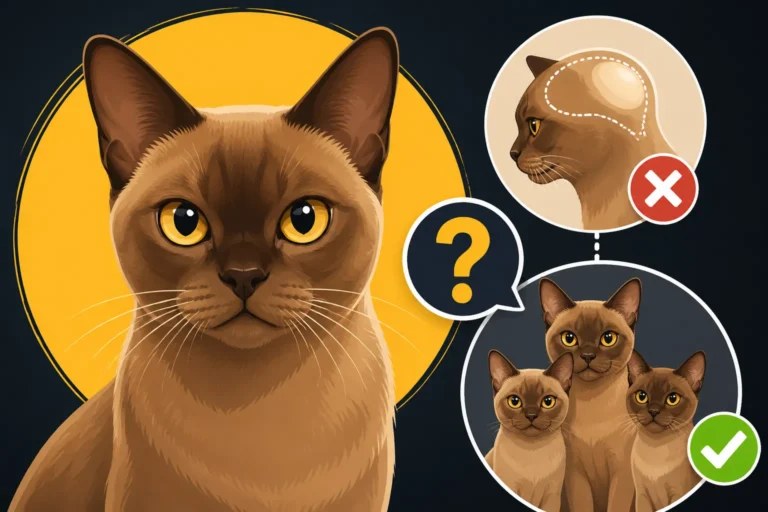
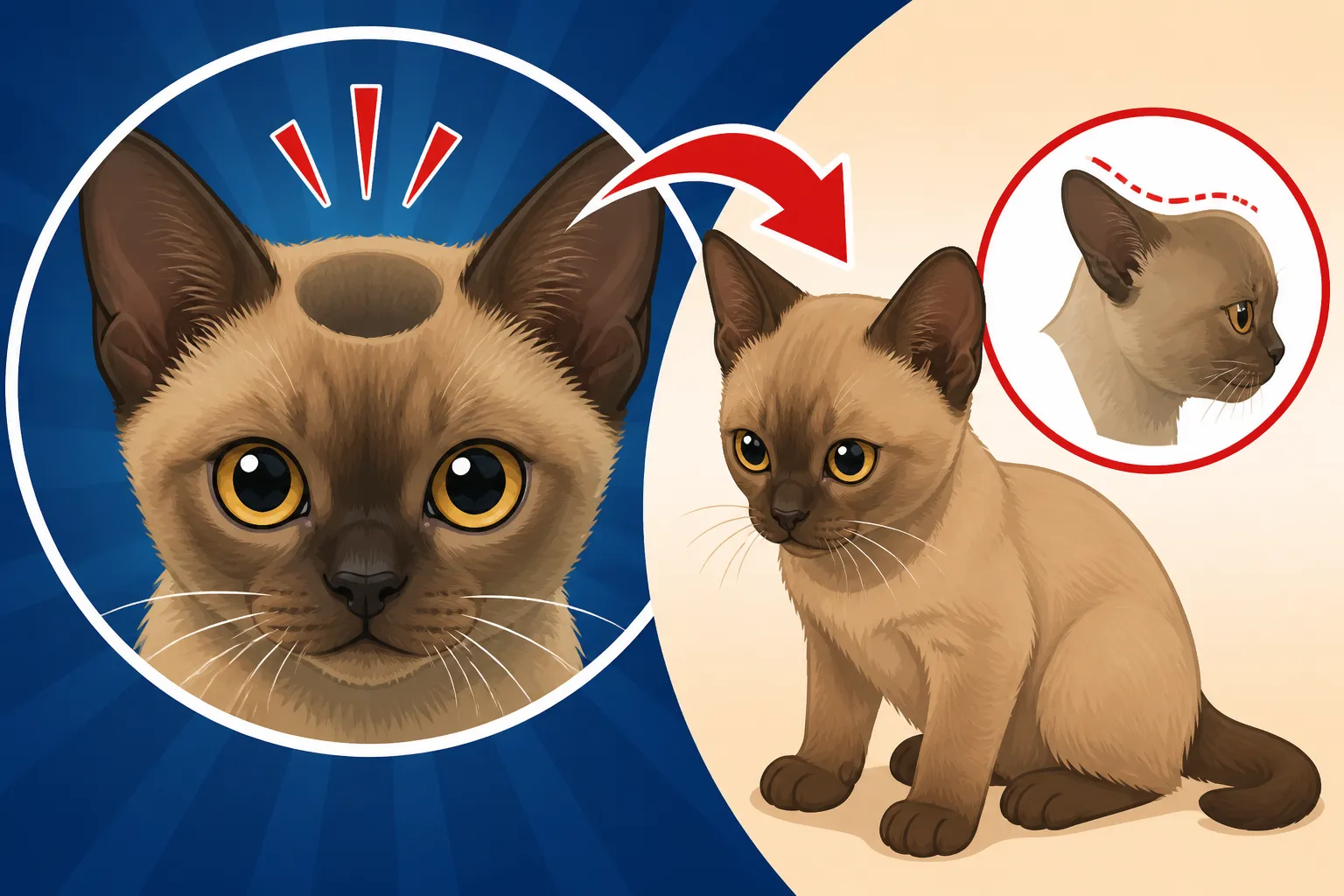
The most defining characteristic of Burmese Head Defect, as the name suggests, lies in the skull. Instead of the beautifully rounded, strong head typical of a healthy Burmese kitten, affected individuals present with a distinctly abnormal skull shape. Often, the top of the skull might appear unusually flattened or, in some cases, overly domed. This isn't just a superficial difference; it indicates that the bones of the skull have not developed or fused correctly.
One of the critical indicators is the presence of abnormally large or persistently open fontanelles – commonly known as "soft spots." In healthy kittens, these soft spots, where the skull bones haven't yet fused, are typically small and close within a few weeks. In kittens with head defect, these areas can be alarmingly large and may not show any signs of closing. This leaves the delicate brain poorly protected and can even lead to the brain tissue bulging outwards in severe cases. This irregular skull development impacts the entire structure of the head, influencing facial features and overall neurological function.
Facial and Ocular Features
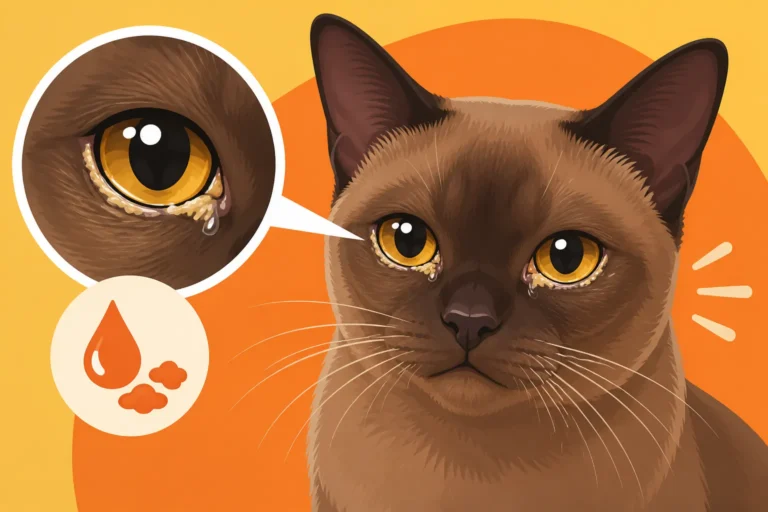
The malformed skull inevitably impacts the kitten's facial features, giving them a distinct and often unsettling appearance compared to their healthy littermates. The eyes are frequently wide-set, sometimes appearing to bulge slightly due to the altered bone structure surrounding the eye sockets. In some instances, the eyes might even appear asymmetrical or not fully formed. The nose can also be affected, often looking flattened or unusually broad.
Beyond the visible abnormalities, these kittens often struggle with basic functions essential for survival. The jaw and mouth might be malformed, making it incredibly difficult, if not impossible, for them to latch onto a mother's teat and suckle effectively. This inability to feed properly leads to rapid weight loss, weakness, and a general failure to thrive. A normal Burmese kitten is typically quite vigorous from birth, eagerly seeking out milk, so any hesitation or struggle with feeding is a significant red flag.
General Appearance and Behavior
Beyond the specific cranial and facial deformities, kittens with Burmese Head Defect exhibit a range of concerning general behaviors and appearances. They are typically noticeably smaller than their healthy siblings, even at birth, and fail to grow at the expected rate. Their movements are often uncoordinated, lacking the typical agile grace even a newborn kitten possesses. They may appear weak, listless, and unable to compete with their littermates for nursing positions.
Neurological symptoms are common and can include tremors, convulsions, or an inability to orient themselves properly. They may seem disoriented or unresponsive to stimuli that would normally provoke a reaction in a healthy kitten. Sadly, these kittens often lack the natural playfulness and inquisitive nature that even very young Burmese kittens display. While a healthy kitten at eight weeks might be a bundle of energy, exploring its world and interacting playfully, an affected kitten would show a marked absence of these developmental milestones. This profound lack of vigor and an overall failure to develop normally are strong indicators of the severe internal issues caused by the defect. It’s a tragic contrast to the robust, affectionate kittens breeders strive for. You can see what a healthy kitten should look like around that age in our guide "What a Burmese Kitten Looks Like at Eight Weeks".
The Grim Prognosis and Breeder Responsibility
Facing a kitten with Burmese Head Defect is one of the hardest experiences for any breeder or new owner. The reality of this condition is that it is overwhelmingly, and almost without exception, fatal. These are not issues that resolve with time or treatment; they represent fundamental developmental failures.
Failure to Thrive
Kittens born with Burmese Head Defect rarely survive beyond a few days or, at most, a few weeks. Their severe cranial and neurological malformations mean their brains simply cannot function correctly to support life. They typically struggle with essential bodily functions from birth, including feeding, regulating body temperature, and coordinated movement. Even with intensive supportive care, such as tube feeding and warmth, their underlying neurological damage is insurmountable.
The heartbreaking truth is that these kittens experience a continuous decline rather than an improvement. They cannot "grow out" of the condition because the structural damage is integral to their development. Most veterinarians, upon diagnosing such a severe condition, will discuss humane euthanasia as the kindest option to prevent prolonged suffering. This painful decision is often made to spare the kitten from a life that would only be filled with struggle and discomfort, as elaborated in "Why Burmese Head Defect Kittens Do Not Survive".
Ethical Breeding Practices
Given the devastating nature of Burmese Head Defect, ethical and responsible breeding practices are absolutely paramount to eradicate this condition from the breed. The cornerstone of prevention lies in genetic testing. Reputable breeders will meticulously screen their breeding cats for known genetic conditions, including the gene responsible for Head Defect. This ensures that no two carriers are ever paired together for breeding.
When searching for a Burmese kitten, it is crucial to ask your breeder about their genetic testing protocols. They should be transparent and willing to provide proof that both parent cats have been tested and are clear of the Head Defect gene, or at least that one parent is clear and the other is a known carrier (in which case they would never be bred to another carrier). A breeder who has taken the necessary steps to test their cats is demonstrating a deep commitment to the health and welfare of their kittens and the breed as a whole. They will also likely screen for other potential health issues like Hypokalemia, which has a specific DNA test, as detailed in "What a Burmese Breeder Must Test Before Any Mating".
While responsible breeding significantly reduces the risk of such severe congenital defects, life can still throw curveballs, and unexpected health issues can arise in any pet. This is why many experienced Burmese owners consider comprehensive pet insurance, perhaps from providers like Healthy Paws, to help manage the costs of unforeseen conditions that might develop later in their cat's life, offering a measure of financial security should a beloved pet require extensive veterinary care. A good insurance policy, like those offered by Healthy Paws, can provide immense peace of mind, knowing you're prepared for anything from an accidental injury to an unexpected illness.
Here's a quick comparison of typical healthy Burmese kitten traits versus those affected by Head Defect:
| Feature | Healthy Burmese Kitten | Burmese Head Defect Kitten |
|---|---|---|
| Skull Shape | Smooth, rounded, strong | Flattened, domed, or irregularly shaped |
| Fontanelles | Small, close within weeks, usually unnoticeable | Abnormally large, persistently open, sometimes bulging |
| Eye Placement | Well-set, proportional to face | Wide-set, sometimes bulging, asymmetrical |
| Nose/Muzzle | Well-formed, distinct | Flattened, broad, or malformed |
| Feeding | Vigorous suckling, gains weight steadily | Difficulty latching, poor suckling reflex, failure to thrive |
| Growth | Robust, grows rapidly and consistently | Smaller size, stunted growth, often underweight |
| Activity Level | Active, playful, coordinated movements | Weak, listless, uncoordinated, tremors, neurological signs |
| Prognosis | Excellent, with proper care and nutrition | Poor, typically does not survive beyond a few weeks |
Ultimately, responsible breeding practices are the strongest shield against such tragedies, ensuring that the wonderful qualities of the Burmese breed continue to flourish without the shadow of preventable genetic diseases. Knowing "How a Burmese Breeder Avoids the Head Defect" is paramount.
Disclaimer
The information provided in this article is for educational and informational purposes only and does not constitute veterinary advice. If you suspect your kitten has a health issue, please consult a qualified veterinarian immediately. Always seek the advice of a veterinary professional for any questions you may have regarding your pet's medical condition.