Why a Burmese’s Coat Lies Flat Against the Body
One of the first things people notice about a Burmese cat, after their captivating eyes and wonderfully affectionate nature, is that coat. It just lies differently, doesn't it? Unlike many other short-haired breeds where the fur might stand a bit fluffy or have noticeable texture, the Burmese coat is almost painted onto their muscular body, smooth and sleek. If you've ever wondered why your Burmese looks like they've just had a professional polish, you're not alone! This guide will explore the unique genetic and physical reasons behind that distinctive flat-lying coat and what it means for you as an owner.
The Genetic Blueprint Behind the Burmese Coat
It’s easy to look at a Burmese and just see a beautiful cat, but beneath that gorgeous, flat-lying coat is a fascinating genetic story. This isn't just a random trait; it's intricately linked to their very identity as a breed and how their color expresses itself. Understanding this helps us appreciate just how special these cats are.
The "cb" Allele and Colorpoint Genetics
The cornerstone of the Burmese coat's appearance, both in terms of its unique lying flat quality and its stunning color, lies in a specific gene mutation: the "cb" allele. This isn't just about making them brown; it's about how that color is expressed and, in turn, how the hair shaft itself behaves. Cats carrying two copies of the "cb" gene (one from each parent) will express the typical Burmese restriction of color, meaning their bodies are a rich, warm tone, with slightly darker points (face, ears, paws, tail). However, unlike a Siamese, this color restriction is far less pronounced, resulting in a more uniform look.
This gene affects the tyrosinase enzyme, which is crucial for pigment production, but it's temperature-sensitive. In simpler terms, the enzyme works less efficiently at warmer body temperatures, leading to lighter body color and darker 'cooler' points. The interesting side effect of this genetic quirk, beyond the gorgeous color, is its influence on the hair follicle structure. While the exact mechanisms are complex, the "cb" allele is believed to contribute to a finer, softer hair shaft that lacks the coarse guard hairs and dense undercoat found in many other breeds. This fine, uniform hair is naturally predisposed to lie flat against the body, creating that signature sleek silhouette. It’s a remarkable example of how a single genetic trait can influence multiple aspects of a cat's physical presentation, from its deepest chocolate sable to its perfectly smooth coat. The cb Allele Is What Makes a Burmese Brown is a good read if you want to dive deeper into this fascinating genetic component.
How the Burmese Coat Differs from Siamese and Tonkinese
When you compare the Burmese to its close relatives, the Siamese and the Tonkinese, the differences in coat structure become even more apparent. All three breeds share a common ancestor, Wong Mau, and carry variations of the colorpoint gene, but their expressions are distinct. The Siamese, for instance, has a true "pointed" gene (cs/cs), which results in a much starker contrast between the dark points and the very light body. Their fur, while also short, can sometimes feel a bit more substantial or slightly coarser than a Burmese, and it doesn't always have that liquid-smooth, painted-on appearance. They often have a fine, dense undercoat that, while not fluffy, gives their fur a bit more lift.
The Tonkinese, often considered an intermediate breed between the Siamese and the Burmese, carries one copy of the "cb" gene and one copy of the "cs" gene (cb/cs). This genetic makeup gives them a "mink" pattern, where the body color is richer than a Siamese but lighter than a Burmese, with points that are distinct but blend more softly. Their coat typically has a beautiful, soft texture that falls somewhere between the two, often described as plush. However, it still doesn't quite achieve the uniquely tight, almost skin-like lie of the purebred Burmese. The Burmese, with its double dose of the "cb" allele, develops hair shafts that are exceptionally fine and close-lying, with minimal to no insulation from a significant undercoat. This is why their coat lies so flat, giving them that "brick wrapped in silk" feel. For more on these distinctions, you might find How a Burmese's Coat Differs From a Siamese's or How a Burmese's Coat Differs From a Tonkinese's incredibly insightful.
The Physical Characteristics of a Flat-Lying Coat
Beyond the genetics, the actual physical structure of the Burmese's hair is what you feel and see every day. This isn't just about being short-haired; it's about the very composition of each strand and how they interact to create that iconic, sleek look.
The Absence of a Thick Undercoat
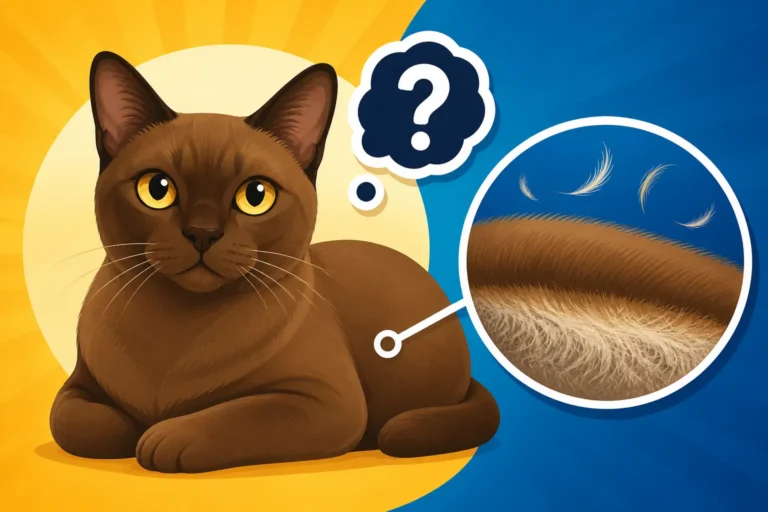
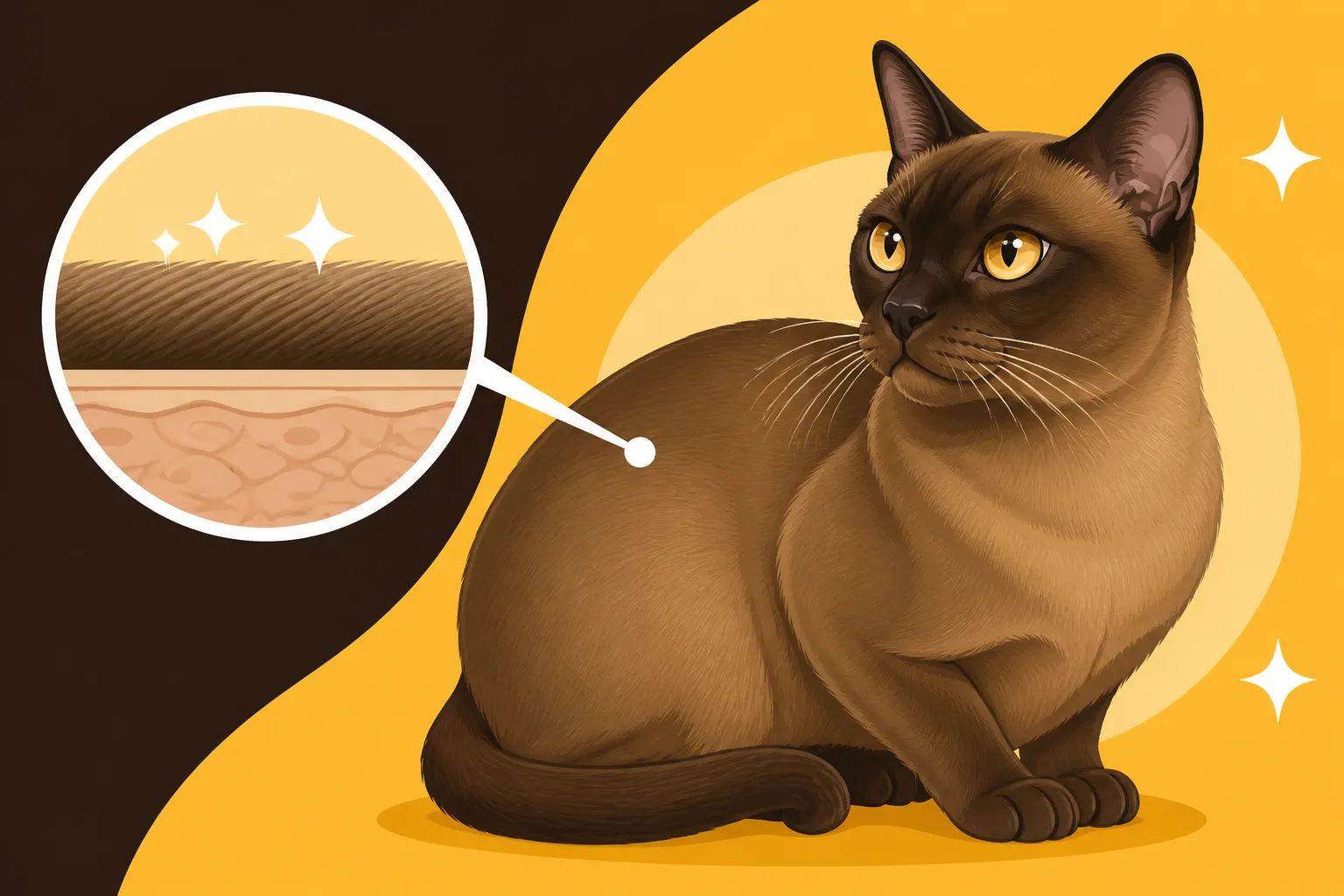
One of the primary reasons a Burmese's coat lies so incredibly flat is the near absence of a thick, insulating undercoat. Many cat breeds, especially those originating from colder climates, have a dense, woolly undercoat that provides warmth and body to their fur. Think of breeds like Maine Coons or even many domestic shorthairs, where you can easily fluff up their fur. A Burmese, however, is a different story. They possess very little, if any, true undercoat. Their fur consists primarily of soft, fine guard hairs that lie directly against their skin.
This lack of a dense undercoat means there's nothing pushing the outer layer of fur away from the body. Each hair shaft, from root to tip, is designed to lie down flat. When you stroke a Burmese, you feel the sleekness directly against their firm, muscular body. There's no 'spring' or 'loft' to the coat. This characteristic contributes significantly to their famously low shedding compared to many other breeds – fewer layers mean fewer hairs to shed! If you've ever wondered Why a Burmese Has Almost No Undercoat, now you know it's a key part of their signature look and feel.
The Unique Texture of the "Satin" Coat
Beyond the undercoat, the individual hair shafts themselves contribute to the Burmese's distinctive "satin" or "silk" coat. Each strand is incredibly fine, smooth, and uniform in texture. Unlike some cats that have a mix of different hair types (guard hairs, awn hairs, down hairs), the Burmese tends to have a more consistent, streamlined hair type that all behaves in a similar manner. This uniformity means there are fewer inconsistencies in texture that might cause hairs to stand out or create volume.
The hair also has a particular sheen to it, almost like polished silk or satin fabric. This isn't just about cleanliness; it's an inherent quality of the hair itself. When light hits it, it reflects evenly across the smooth, flat surface, enhancing the sleek appearance. This unique texture is often described as feeling like "warm satin" when you stroke them. It’s soft, incredibly touchable, and flows beautifully with the contours of their muscular physique. This feeling is a large part of the sensory pleasure of owning a Burmese, and it's what truly sets them apart. Many owners are fascinated by What Makes a Burmese's Coat Satin Rather Than Silky and once you've felt it, you understand the allure.
Practical Implications of the Flat Coat for Owners
While that sleek, flat-lying coat is undeniably beautiful, it also comes with a few practical considerations for owners. From how you groom them to how they manage temperature, this unique coat influences several aspects of Burmese care.
Grooming Needs (or Lack Thereof)
Here's the good news: a Burmese's flat-lying, short coat means their grooming needs are incredibly minimal! If you've ever battled tangles, mats, or excessive shedding with other long-haired or even some dense-coated shorthaired breeds, you'll find the Burmese a breath of fresh air. Because there's virtually no undercoat and the individual hairs are so fine and close-lying, matting is almost unheard of. You won't typically need brushes with bristles, wire pins, or deshedding tools that are designed to rake through thick fur.
Instead, a simple rub with a chamois cloth or even just your hand is often all that's needed to keep their coat looking its best and to enhance that famous satin shine. This action helps to distribute their natural oils, remove any loose hairs, and really make their coat gleam. Many owners find this a wonderful bonding experience, as Burmese cats typically adore being fussed over and enjoy the physical contact. You'll be amazed at How Little Hair a Satin Coated Burmese Leaves Behind – it's truly minimal. As for bathing, it's rarely necessary unless they've gotten into something particularly messy, making their flat coat a dream for low-maintenance grooming. Seriously, The Only Times a Burmese Actually Needs a Bath are few and far between!
Temperature Regulation and Comfort
That sleek, flat-lying coat might be gorgeous, but it's not designed for extreme cold. The very features that give the Burmese their distinctive look – the lack of a dense undercoat and the fine, close-lying hairs – mean they don't have a lot of natural insulation. Just like you'd feel the cold more acutely in a light silk shirt compared to a thick wool sweater, a Burmese feels the chill more readily than a cat with a plush, multi-layered coat.
Because of this, Burmese cats are notorious for seeking out warmth. You'll often find them curled up in sunbeams, snuggled under blankets, or perhaps most famously, burrowing right under the duvet with you. They love human body heat and will gravitate towards the warmest person or spot in the house. This preference for warmth means you need to be mindful of their comfort, especially in cooler climates or during winter months. Providing cozy beds, soft blankets, or even a safe, low-wattage heated bed (available from places like Chewy or Amazon) can make a huge difference to their overall happiness and well-being. They're not just being dramatic when they're seeking out that heat; it's a genuine need due to their unique coat. If you've noticed your Burmese is always looking for the toastiest spot, then Why a Short Coated Burmese Feels the Cold really explains their behavior, and it ties into Why a Burmese Seeks Out the Warmest Spot in your home.
Shedding and Allergen Considerations
For many cat owners, shedding is a constant battle, and allergies can be a significant concern. The good news for Burmese enthusiasts is that their flat-lying coat, with its minimal undercoat, results in significantly less shedding compared to many other breeds. While no cat is truly non-shedding, the Burmese produce far fewer loose hairs than their fluffier counterparts. This means less fur on your furniture, clothes, and floors, which is a definite bonus for household cleanliness.
However, it's crucial to address the misconception that less shedding automatically equates to being "hypoallergenic." Cat allergies are typically triggered by dander (skin flakes), saliva, and urine, not just the hair itself. While a Burmese might spread less dander around because they shed less, they still produce the Fel d 1 protein that causes allergic reactions. So, while their low shedding might be a blessing for people with mild sensitivities, they are not a guaranteed solution for severe cat allergies. If allergies are a concern, spending time with a Burmese cat to test your reaction is always recommended. Nevertheless, the reduced shedding is a major perk for many owners, making daily life much tidier.
Common Misconceptions and What to Watch For
Even with a naturally sleek and beautiful coat, there are still things to understand about maintaining its health and recognizing when changes might signal a deeper issue. A flat-lying coat is part of their normal, healthy appearance, but "normal" can shift if something is amiss.
When a Flat Coat Might Signal a Problem
While a smooth, flat-lying coat is the hallmark of a healthy Burmese, any significant changes in its appearance or texture can be a subtle indicator that something is not quite right. A dull, greasy, or flaky coat, for example, is often a red flag. If your Burmese's usually lustrous coat suddenly looks lackluster, feels sticky, or you notice excessive dandruff, it could point to a nutritional deficiency, skin allergies, or even an internal health issue. Increased shedding beyond their typical minimal amount, or areas of thinning fur, should also prompt a closer look.
Sometimes, stress or anxiety can even manifest in the coat. A highly stressed Burmese might overgroom, leading to bald patches, or their coat might simply lose its vibrant sheen. Likewise, parasites like fleas or mites can irritate the skin, causing excessive scratching and affecting coat quality. If your typically sleek and shiny Burmese starts to look anything but, it’s always best to consult your veterinarian. They can help rule out underlying medical conditions, advise on dietary adjustments, or suggest treatments for skin issues, ensuring your cat returns to their prime, silky state.
Why Diet Plays a Role (Even in a Flat Coat)
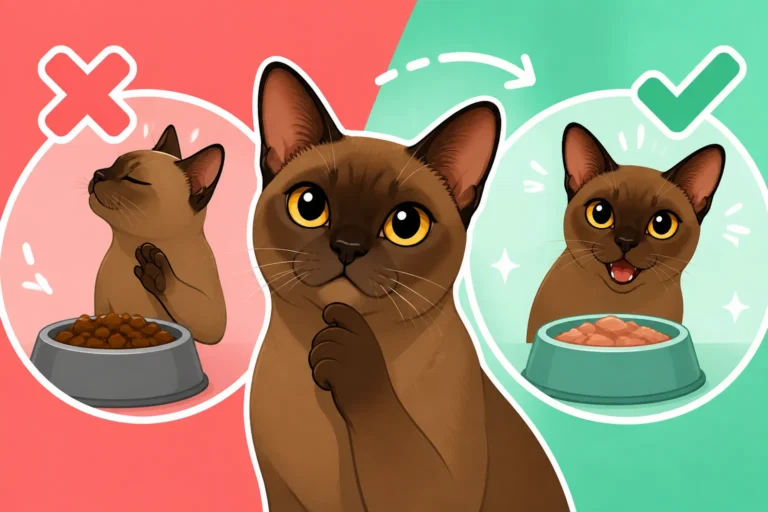
You might think that because a Burmese has such a low-maintenance coat, diet isn't as critical for its appearance. However, that couldn't be further from the truth. A healthy, flat-lying, gleaming coat is a direct reflection of a cat's internal health, and that starts with proper nutrition. A diet rich in high-quality animal protein and essential fatty acids (like Omega-3s and Omega-6s) is vital for skin health and coat luster. Proteins provide the building blocks for healthy hair, while fats keep the skin supple and the coat shiny.
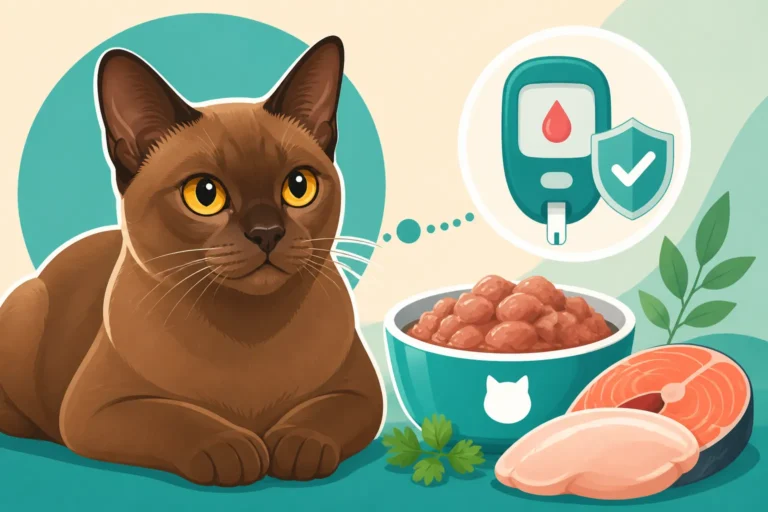
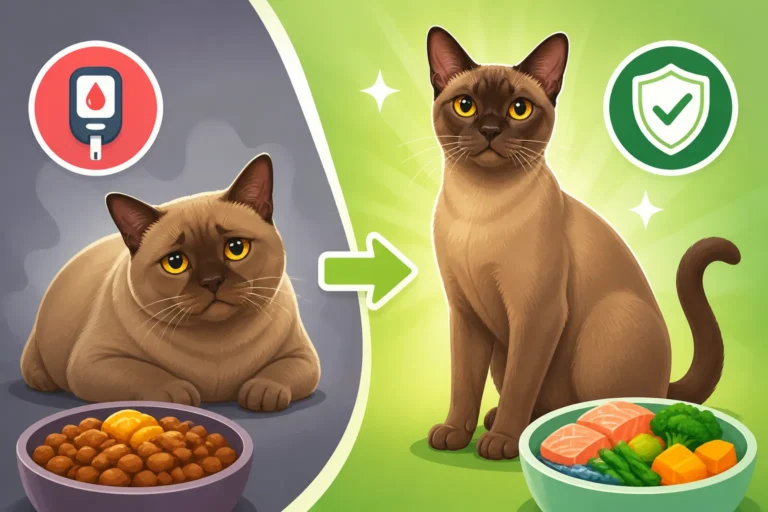
Conversely, a poor diet – one high in carbohydrates, low in quality protein, or lacking essential nutrients – can quickly lead to a dull, dry, or even greasy coat, regardless of breed. You might notice more flaking, less of that signature satin feel, or simply a lack of vibrancy. Since Burmese cats are also genetically predisposed to certain health issues like diabetes, a carefully managed diet is not just about coat health but overall well-being. Opting for high-quality wet foods with lower carbohydrate content can be beneficial. Many high-quality options are available for supporting your Burmese's health from the inside out. Remember, Why a Burmese's Food Bill Is a Health Decision isn't just about weight; it's about supporting every aspect of their health, including that beautiful, flat-lying coat.
Disclaimer
This article is for general informational purposes only and does not constitute professional advice. Laws, prices and regulations vary by location and change over time. Consult a qualified professional for guidance on your specific situation.