Why a Covered Box Suits a Burmese That Hides Nothing
We all know our Burmese cats are absolute characters, don't we? They're the ultimate "velcro cats," always glued to our side, chattering away, and pushing their little heads into our palms for attention. They seem to have no sense of personal boundaries when it comes to us, often leading owners to wonder if such a bold, outgoing cat truly cares about something as mundane as their litter box setup. You might think, "My Burmese isn't shy, an open tray is fine!" However, even the most confident and attention-seeking Burmese benefits immensely from a covered litter box, which offers them a sense of security and keeps your home much tidier. This guide will explore why a covered box isn't just about human convenience, but a surprisingly perfect fit for your beloved, non-secretive Burmese.
Decoding Your Burmese's Private Needs: More Than Meets the Eye
It’s easy to look at a Burmese and think they’re utterly fearless, ready to join in on anything you’re doing, from cooking dinner on your shoulder to snuggling under the covers. Their charmingly forthright nature often makes us forget that even these robust, confident felines have an instinctual need for privacy and security when performing basic bodily functions. What might seem like a minor detail to us can significantly impact their comfort and willingness to use their facilities.
The Myth of the "Non-Secretive" Cat in the Litter Box
While your Burmese might follow you into the bathroom and supervise your morning routine, their own toilet habits are a different story. The common misconception is that because they're so socially intrepid, they don't require discretion for their litter box. This isn't quite right. Most cats, deep down, retain a primal instinct to feel safe and unexposed during vulnerable moments. In the wild, relieving oneself is a time when an animal is distracted and potentially at risk. Even though our domestic Burmese are far removed from such dangers, this deep-seated need for a secure space persists.
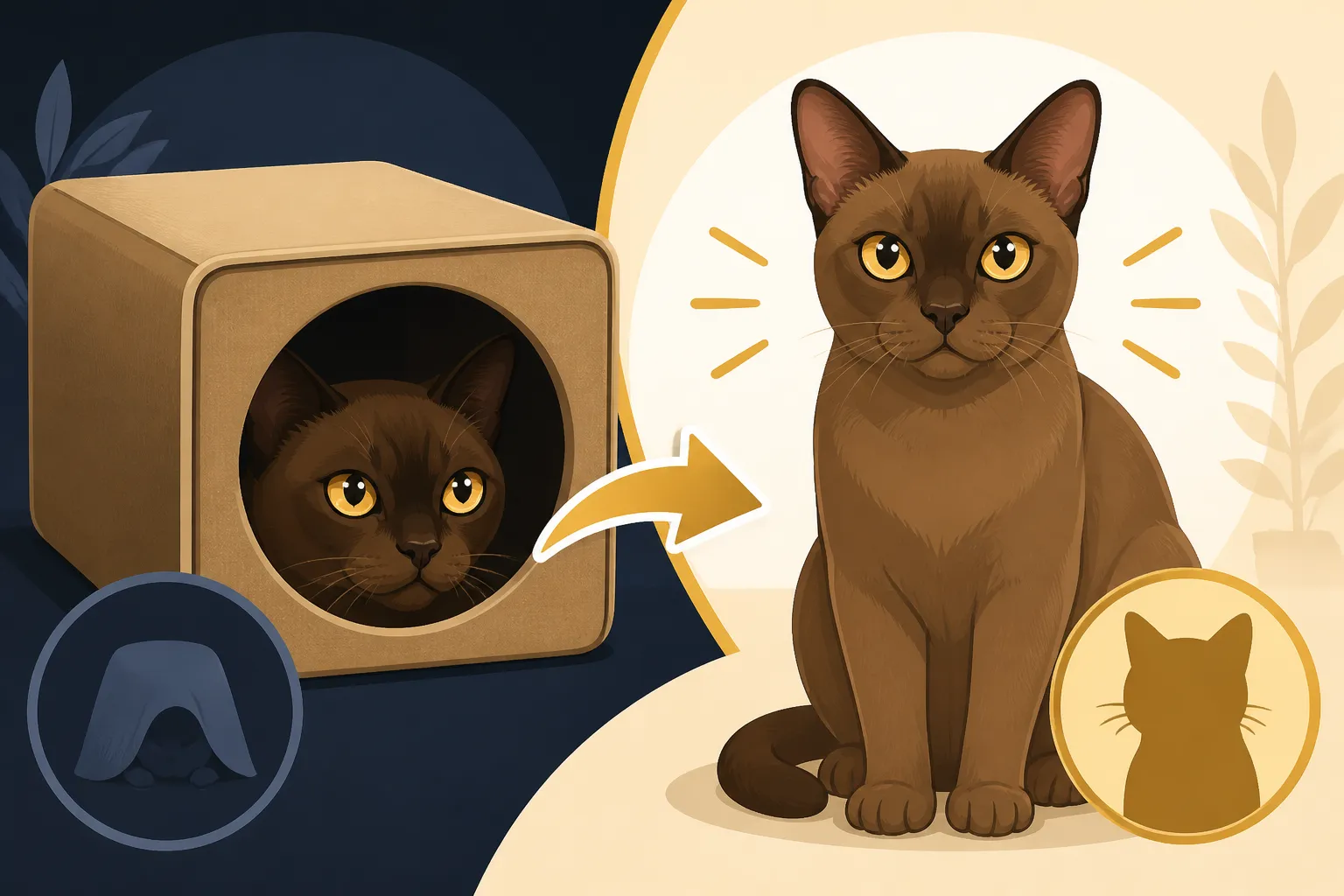
Think about it from their perspective: an open litter box, sitting squarely in the middle of a room, might feel like a stage. While they adore being the center of attention, this isn't the kind of spotlight they crave for their bathroom break. A covered box, on the other hand, mimics the feeling of a den or a secluded spot, allowing them to feel less exposed to their surroundings. It’s not about hiding from you, but rather feeling less vulnerable to potential perceived threats, even if those "threats" are just the household dog trotting by or a sudden loud noise.
Why a Sense of Enclosure Can Be Reassuring
For a breed as connected to their humans as the Burmese, feeling safe and secure is paramount to their overall well-being. A covered litter box offers a tangible sense of enclosure that can be incredibly reassuring. It's like their own little private booth, a quiet corner in a busy world where they can truly relax. This feeling of security can be particularly important in multi-pet households or homes with active children. Even if your Burmese treats the family dog like a giant, furry pillow, the moments of privacy a covered box affords them are invaluable.
This enclosure also helps to dampen external stimuli. Imagine your cat trying to focus on their business while a toddler is playing loudly nearby, or the vacuum cleaner is whirring. A covered box provides a slight buffer, helping them to feel more settled and less prone to being startled. This can be a huge factor in preventing inappropriate urination, a problem that often stems from stress or feeling insecure in their environment. A comfortable cat is a clean cat, and a covered box contributes significantly to that comfort. Why a Burmese Cannot Be Left Alone All Day explains how sensitive these cats can be to their environment and how much they crave security.
Considering Their Robust Build and Physical Comfort
Burmese cats are known for their distinctive "brick wrapped in silk" physique. They are surprisingly muscular and dense for their size, with a sturdy, compact body. This isn't your average dainty feline. When choosing a litter box, it's crucial to consider their physical comfort. A small, cramped open tray might not give them enough room to maneuver, turn around, or properly dig and cover their waste. This can lead to them feeling uncomfortable, balancing precariously, or even stepping outside the box to finish their business.
A well-chosen covered box, ideally one that is generously sized, offers ample space for your Burmese to enter, turn around, and perform their natural digging motions without feeling confined. It allows them to stand tall and comfortable, rather than hunching over. This is especially true as they get older; an older Burmese might appreciate the easier access and spaciousness of a larger covered box, making their bathroom trips less of a physical chore. What an Adult Burmese Should Weigh often surprises new owners, as these cats are heavier than they look, underscoring the need for a spacious box.
The Practical Perks of a Covered Litter Box for Your Home
Beyond the psychological benefits for your Burmese, a covered litter box offers significant advantages for maintaining a clean and fresh-smelling home. Anyone who has lived with a cat knows the struggle against litter scatter and odor can be constant. For a breed as active and enthusiastic diggers as the Burmese, these practical considerations become even more pressing.
The Battle Against Odor and Mess
Let's be honest, no one loves the smell of a litter box, no matter how much we adore our cats. Burmese cats, like all felines, produce waste, and that waste has a smell. An open litter box allows odors to permeate your home much more readily. A covered litter box acts as a natural barrier, trapping those less-than-pleasant smells inside. While it doesn't eliminate the need for regular cleaning, it certainly buys you time between scoops and makes a noticeable difference in the overall freshness of your living space.
Moreover, Burmese cats are often quite vigorous diggers. They take their covering duties seriously, often kicking litter far and wide in their earnest attempts to bury their treasures. An open box can quickly turn the surrounding area into a sandy beach, requiring constant sweeping or vacuuming. A covered box, particularly one with a hooded design or even a top-entry style, dramatically reduces litter scatter. The high sides and enclosed nature keep the kicked-up litter contained, saving you from daily clean-up duty. This is especially helpful if your Burmese is one to get enthusiastic about their digging, which many are!
Integrating the Litter Box Seamlessly into Your Space
Let's face it, a litter box, open or covered, is rarely a centerpiece of home decor. However, a covered litter box can be far less obtrusive and easier to integrate into your living space. Instead of a glaring open tray filled with used litter, a covered box presents a more discreet, often neutral-colored, structure. Many modern covered designs even blend in beautifully, masquerading as a piece of furniture, a small end table, or a bench.
This design flexibility means you can place the litter box in a more convenient location for your cat without it being an eyesore for you or your guests. While you still want to ensure it's easily accessible and not hidden away in a dark, scary corner, a covered box allows for greater discretion. Perhaps it can sit in a laundry room, a quiet corner of a spare bedroom, or even subtly placed in a larger bathroom without drawing immediate attention to its true purpose. This subtle integration helps keep your home feeling clean and presentable, even with a cat's essential facilities present.
Keeping Curious Paws Out (and Pests Away)
Another often-overlooked benefit of a covered litter box is its ability to deter curious visitors – both human and animal. For households with young children, a covered box makes it more challenging for little hands to reach in and explore what they shouldn't. While not foolproof, it adds a layer of protection against accidental (and unhygienic) discoveries. Similarly, if you have other pets, especially dogs who might view a litter box as an exciting snack bar, a covered box can make access much more difficult.
Beyond immediate household members, a covered box can also provide a small deterrent for common household pests. While it won't solve a serious insect problem, it can help contain odors that might attract flies or other undesirables, and physically block easy access to the contents. This extra layer of containment is another way a covered box contributes to a healthier, cleaner home environment. What a Burmese Does to a House It Is Left In often describes behavioral issues that can arise from stress, but also general messes, making containment strategies like a covered box useful.
Setting Up for Success: Choosing and Maintaining Your Covered Box
Choosing the right covered litter box for your Burmese is about more than just picking the first one you see. It requires careful consideration of size, design, and your specific cat's preferences. Once you have it, maintaining it properly is key to ensuring your Burmese continues to use it happily and that it remains a benefit, not a burden, to your home. Many great options can be found on Chewy or Amazon, allowing you to compare features and sizes easily.
Size Matters: Ensuring Ample Space for Your Burmese
As we've discussed, Burmese cats are sturdy, muscular creatures. A cramped litter box, even a covered one, can lead to discomfort and reluctance to use it. When selecting a covered box, err on the side of generous sizing. Your Burmese should be able to comfortably stand up, turn a full circle, and dig without their head or tail hitting the sides or lid. This means looking for boxes that are larger than what might be recommended for an "average" cat.
Measure your cat from nose to tail and from the top of their head to their paws to get a good estimate of the internal dimensions needed. Pay attention to the entry point as well; some covered boxes have smaller openings that might be awkward for a larger or less agile cat. A roomy interior ensures your Burmese feels at ease, encouraging them to use the box consistently. It’s an investment in their comfort and your peace of mind, as a cat who feels confined is more likely to seek alternative, less desirable, places to relieve themselves.
Ventilation and the Importance of Impeccable Cleanliness
While a covered box is excellent for odor containment, it also means that smells and humidity can build up inside if not managed correctly. Proper ventilation is crucial. Many modern covered boxes include vents or clever designs that allow for some air circulation while still containing odors. Regardless of the design, the most critical factor is consistent and thorough cleaning. If a covered box becomes too smelly or stagnant inside, your fastidious Burmese might start to avoid it.
This means scooping at least once, preferably twice, daily. For a multi-cat household or a Burmese who produces a lot of waste, more frequent scooping might be necessary. Beyond daily scooping, a full litter change and a thorough scrub of the entire box with mild, pet-safe soap and water should happen every one to two weeks. Don't forget to rinse thoroughly to remove any soap residue. A clean box is inviting, and a clean covered box is a pleasant place for your Burmese to do their business. You don't want the covered aspect to turn it into an unpleasant, airless cave for your cat. Which Litter a Burmese Will Not Refuse also ties into maintaining a pleasant environment within the box.
Introducing the Covered Box to a Reluctant Feline
Some cats, especially if they're used to an open tray, might be initially hesitant about a new covered box. Patience and positive reinforcement are key. Start by placing the new covered box next to the old open one, giving your Burmese time to investigate. You might even remove the lid of the new box for the first few days, essentially turning it into a very large open box, before placing the lid on.
Never force your cat into the box. Lure them with treats or gentle encouragement. You can also sprinkle a little bit of their old litter into the new box to make it smell familiar. If you have multiple cats, ensure there are enough litter boxes – generally, one per cat plus one extra. How Many Boxes Two Burmese Need is an excellent guideline to avoid turf wars or reluctance to use a shared facility. If your Burmese remains resistant after a week or two, consider if the box is too small, if the entrance is awkward, or if the litter type needs adjusting. Sometimes, removing the swinging door (if it has one) can make a big difference for a hesitant cat.
Maximizing Comfort and Hygiene in Your Burmese's Covered Box
A covered litter box is a fantastic tool, but its effectiveness hinges on how you equip and maintain it. From the type of litter you use to where you place the box, every detail contributes to your Burmese's comfort and your home's cleanliness. Investing a little thought and effort upfront can save you a lot of hassle down the road.
Selecting the Right Litter for Optimal Scent Control
The type of litter you use plays a massive role in both your Burmese's willingness to use the covered box and the effectiveness of odor control. For a covered environment, a high-quality, absorbent, and odor-controlling clumping litter is generally the best choice. Clumping litter makes scooping easier and more effective, removing waste and its associated odors quickly. Look for litters that are low-dust, as dust can become trapped in a covered box and irritate your cat's respiratory system.
While scented litters might seem like a good idea for odor control, many cats are sensitive to strong fragrances. What smells pleasant to us can be overwhelming and off-putting to a cat's much more powerful sense of smell. Opt for unscented or naturally odor-absorbing litters. Activated charcoal or baking soda additives are often excellent for neutralizing smells without adding artificial perfumes. Brands like those available through Chewy or Amazon offer a wide variety of excellent clumping, unscented, and low-dust litters perfect for a covered box.
Strategic Placement for Both Cat and Human
The location of the litter box is just as important as the box itself. Even with a covered box, placement matters for your Burmese's comfort and your family's convenience. Aim for a quiet, easily accessible spot that offers some privacy without being completely isolated. Avoid high-traffic areas where your cat might feel exposed or disturbed, but also avoid dark, forgotten corners that might feel scary or difficult to reach.
Consider placing the box in a laundry room, a spare bathroom, or a quiet nook in a living area where your cat spends time. Placing it near a favorite sleeping spot can also be beneficial, as it's convenient for them. Ensure it's not directly next to their food and water bowls, as cats instinctively prefer to eat and eliminate in separate areas. If your home has multiple levels, ideally, you should have a litter box on each floor, especially as your Burmese ages and stairs become more challenging. Why a Burmese Seeks Out the Warmest Spot for sleeping often means they appreciate warmth and quiet for other activities too.
Long-Term Care and When to Consider Replacement
Even with the best cleaning routine, litter boxes don't last forever. Over time, plastic can absorb odors, develop microscopic scratches that harbor bacteria, and become difficult to sanitize fully. Generally, plastic litter boxes should be replaced every one to two years, or sooner if you notice persistent odors, deep scratches, or cracks. This is particularly important for covered boxes, as trapped bacteria can create a more concentrated, unpleasant environment.
Regularly inspect your covered box for wear and tear. If the lid no longer fits snugly, or if the plastic seems brittle, it's definitely time for a new one. Replacing the box periodically is a simple yet crucial step in maintaining a hygienic environment for your Burmese and a fresh-smelling home for you. While the initial investment might seem like a lot, the health and happiness of your Burmese, along with the improved living conditions, are well worth it.
Here's a quick comparison of open versus covered litter boxes:
| Feature | Open Litter Box | Covered Litter Box |
|---|---|---|
| Odor Control | Minimal; odors dissipate easily | Good; traps odors inside |
| Litter Scatter | High; litter easily kicked out | Low; high sides and lid contain mess |
| Cat Privacy/Security | Low; exposed during use | High; provides a den-like enclosure |
| Aesthetics | Contents visible; can be unsightly | More discreet; contents hidden |
| Cleaning Frequency | Daily scooping, regular full changes | Daily scooping, regular full changes (critical) |
| Ventilation | Excellent; open to air | Can be limited; requires diligent cleaning |
| Accessibility | Easy for all cats | May require adjustment for some cats |
| Cost | Generally less expensive upfront | Can be more expensive, especially furniture-style |
This article is for general informational purposes only and does not constitute professional advice. Laws, prices and regulations vary by location and change over time. Consult a qualified professional for guidance on your specific situation.