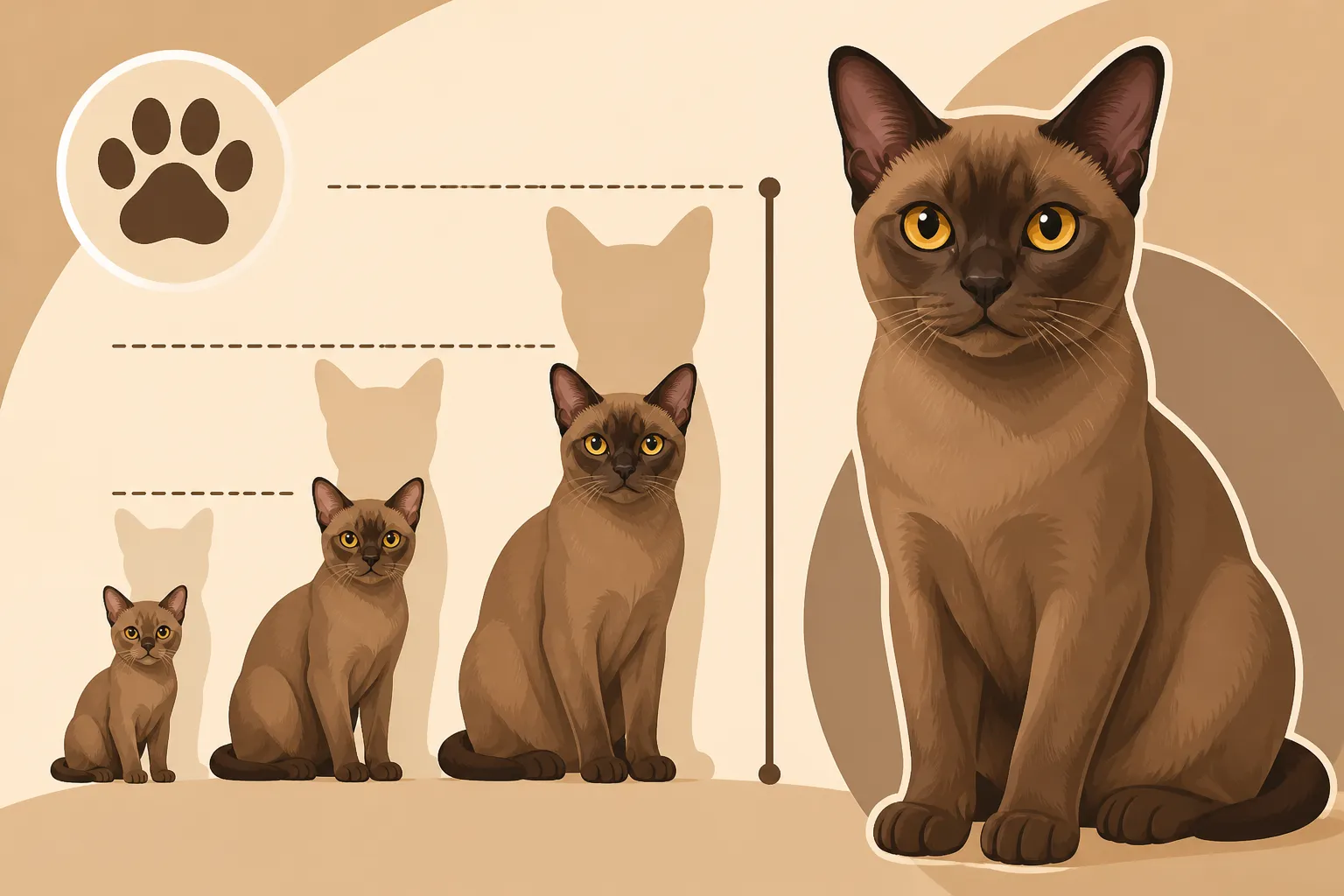
How Big an Adult Burmese Gets
One of the most common surprises new Burmese cat owners experience is just how substantial these little dynamos actually are. They might look sleek and compact, leading you to believe they’re delicate, but picking one up often results in a shocked "Wow, you're heavy!" This guide will dive deep into the true size and build of an adult Burmese, helping you understand their unique physicality and how to maintain their robust health.
Understanding the Burmese Build: A "Brick Wrapped in Silk"
When people first meet a Burmese, they often comment on their svelte appearance. The short, close-lying satin coat and elegant lines can be quite deceptive. Many expect a lightweight, dainty creature, perhaps more akin to a Siamese, but the reality is quite different. The Burmese is a powerhouse in a compact package, often earning them the affectionate nickname, "a brick wrapped in silk."
The Deceptive Compactness of the Burmese
It's truly a marvel how much muscle and bone can be packed into such a seemingly small frame. Imagine picking up what you think is a small, decorative pillow, only to find it's actually a solid, dense stone. That's a bit like the experience of lifting a Burmese. Their body is surprisingly dense and muscular, giving them a weight that belies their size. This isn't fat; it's pure, solid muscle. You can feel the firmness when you run your hands along their sides – a distinct difference from the more lithe or lanky builds of other cat breeds. This density means that while they might not appear tall or long, they carry significant heft. It's a testament to their sturdy genetics and athletic build. They don't have a lot of excess fur to fluff them up, so what you see is truly what you get, and what you get is a lot of cat! Why a Muscular Burmese Is Mistaken for a Fat One
A Look at Bone Structure and Proportions
Beneath that glossy, fine coat is a surprisingly sturdy bone structure. The Burmese boasts a compact, well-muscled body that is neither cobby nor svelte. Their chest is broad and rounded, their legs are proportionate to their body, with neat, oval paws. This strong bone structure provides the foundation for their athletic prowess and gives them their distinctive solid feel. When you compare them to, say, a tall, slender Abyssinian or a fluffy, large Maine Coon, the Burmese occupies a unique middle ground. They aren't designed for extreme height or length; instead, their build is all about balanced strength and agility. Their head is a distinctive rounded wedge, often described as having a sweet, expressive face, which sits atop a strong, graceful neck. These features all contribute to the overall impression of a cat that is substantial and well-put-together, rather than delicate. It's a build perfectly suited for their playful and often boisterous personalities.
Weight Ranges for Adult Burmese Cats
Knowing what to expect in terms of weight is crucial for understanding your Burmese's health. There's a common misconception that all cats are roughly the same size, but breed standards and individual genetics play a huge role. For the Burmese, their weight is often higher than expected for their apparent frame.
Average Weight for Males vs. Females
Generally, adult male Burmese cats tend to be larger and heavier than their female counterparts. A healthy, adult male Burmese typically weighs in the range of 10 to 14 pounds (about 4.5 to 6.3 kg). They have a more masculine, robust build, with broader heads and heavier bone structure. Females, while still incredibly dense and muscular, usually fall into a slightly lighter range, often between 8 to 12 pounds (about 3.6 to 5.4 kg). It's important to remember these are average ranges. Just like people, individual Burmese cats will have their own healthy weights within or slightly outside these figures, influenced by genetics, diet, and activity levels. What's most important is that they feel solid and well-conditioned, not squishy or bony. A Burmese who feels 'light' might actually be underweight, despite their compact appearance.
The Importance of Healthy Weight Management
Given their naturally dense and muscular build, it can be tricky to tell if a Burmese is carrying too much weight. However, maintaining a healthy weight is absolutely paramount for this breed, especially considering their genetic predisposition to certain health issues. Burmese cats have a significantly higher risk of developing diabetes, and excess weight is a major contributing factor to this condition. It's not just about looking good; it's about prolonging their healthy lifespan. Owners need to be vigilant about portion control, especially as their cats age and activity levels might naturally decrease. Why Portion Control Is Medical Care in a Burmese Free-feeding, where food is left out all day, is a definite no-no for a Burmese. Instead, precise, measured meals twice a day are recommended. Many owners find that a high-quality, low-carbohydrate wet food diet, available from retailers like Chewy, helps keep their Burmese at an ideal weight and supports metabolic health. Regular weighing at home is also a wise practice to catch any creeping weight gain early.
When a Burmese Reaches Full Size
Understanding the growth trajectory of your Burmese kitten helps set realistic expectations for their adult size. While they might seem to shoot up initially, their development is a multi-stage process.
The Growth Trajectory from Kitten to Adult
Burmese kittens grow at an impressive rate in their first few months, quickly transforming from tiny, playful bundles into active, energetic adolescents. However, unlike some larger breeds that take several years to fully mature, most Burmese reach their full height and length by about 12 to 18 months of age. That said, they continue to "fill out" and build muscle mass well into their second year, sometimes even subtly into their third. This means that while they might look adult at one year old, they'll likely gain a bit more substance and density over the next 6-12 months. This is a period where their true "brick-wrapped-in-silk" physique fully develops, with their musculature becoming more pronounced. It's a gradual process, but by the time they are two years old, you'll generally have a fully mature Burmese in terms of both size and build.
Distinguishing Between Growth and Weight Gain
It can sometimes be challenging for owners to differentiate between healthy maturation and unwanted weight gain, especially during those filling-out months. As your Burmese approaches its full adult size, it's crucial to pay attention to its body condition rather than just the number on the scale. A growing cat will increase in size and density, but it should still have a discernible waist and you should be able to feel its ribs easily, though not see them prominently. If you start to notice a loss of waistline, or difficulty feeling the ribs without pressing firmly, then it’s likely your cat is gaining excess fat, not just growing muscle. Regular weighing at home is incredibly helpful. How to Weigh a Burmese Accurately at Home Keeping a monthly record helps you track trends and allows for early intervention if your Burmese starts to creep beyond a healthy weight. Remember, the goal is solid muscle, not soft padding, and consistent monitoring is key to achieving that.
Height and Length: Beyond Just Weight
While weight is a significant indicator of the Burmese's sturdy build, their actual dimensions also contribute to their overall impression of compact power. They might not be the tallest or longest cats, but their proportions are all about density.
Measuring a Burmese: Head to Tail and Shoulder Height
When you consider an adult Burmese from head to the base of the tail, they typically measure between 15 to 18 inches (about 38 to 45 cm). Their tails, which are usually medium in length and taper to a point, add another 10 to 12 inches (25 to 30 cm) to their overall length, but this isn't usually included in their 'body' length. In terms of shoulder height, a Burmese usually stands around 10 to 12 inches (25 to 30 cm) tall. Their legs are muscular and well-proportioned, but not overly long, which contributes to their compact, rather than leggy, appearance. This balance of length and height, combined with their dense musculature, reinforces their 'brick-like' reputation. They carry themselves with an athletic grace, despite their solid build, often seeming to glide rather than lumber, which can further hide their true weight until you pick them up.
How the American and European Burmese Differ in Build
It's important to note that there are two distinct types of Burmese recognized by different cat associations, and they do have subtle differences in their build. The American Burmese tends to be more compact, with a rounder head, shorter muzzle, and a slightly cobby body type. They present a very distinctive, rounded appearance. What an American Burmese's Head Should Look Like On the other hand, the European Burmese (often just called Burmese in Europe and other parts of the world) generally has a more oriental or moderate build. They are typically a bit longer in the body, with a more wedge-shaped head, longer muzzle, and slightly larger ears. What a European Burmese's Head Should Look Like While both types are undeniably muscular and dense, the European Burmese might appear a touch more elegant or less 'cobby' than their American counterparts. Regardless of type, both retain the core characteristics of a solid, well-built cat that feels surprisingly heavy for its size. These differences in build contribute to the varied aesthetics within the breed, but the fundamental density remains a hallmark.
The Impact of Diet and Lifestyle on Size
A Burmese's size isn't solely determined by genetics; it's a dynamic interplay with their environment, particularly their diet and how much they move. These factors are critical in shaping their healthy adult physique.
The Role of Nutrition in Healthy Growth and Maintenance
Proper nutrition is the cornerstone of a healthy Burmese, influencing not just their size but their overall well-being and longevity. For a breed prone to diabetes, the quality and composition of their diet are paramount. A high-protein, moderate-fat, and low-carbohydrate diet is generally recommended to support their muscular build and minimize the risk of metabolic issues. Think of feeding a Burmese as a medical decision, not just filling a bowl. Dry kibble, even "premium" varieties, often contains too many carbohydrates for a Burmese, making wet food a much better choice. Why Low Carbohydrate Food Matters for a Burmese The protein helps maintain their impressive muscle mass, which is crucial for their active lifestyle, while limiting carbohydrates helps manage blood sugar levels. Many pet food brands, including those found on Chewy, offer formulations specifically designed to meet these needs, often labeled as high-protein or diabetic-friendly. It's not just about what they eat, but how much. Each meal should be carefully weighed to ensure they receive the right number of calories without overindulging.
Activity Levels and Muscle Development
The Burmese is renowned for its playful, almost puppy-like energy. They remain active and inquisitive well into their senior years, often still chasing toys and engaging in vigorous play even at fifteen years old. A Burmese Is Still Playing at Fifteen This high activity level is a huge benefit for maintaining their muscular physique and preventing obesity. Regular, interactive play sessions are not just for fun; they are essential for their physical and mental health. Engaging them with wand toys, laser pointers, or even teaching them to fetch helps keep their muscles toned and burns off excess calories. Without sufficient exercise, even a well-fed Burmese can start to lose muscle tone and accumulate fat, diminishing their "brick wrapped in silk" build. Providing climbing opportunities, like cat trees, and plenty of space for zoomies also contributes to a healthy, active lifestyle. A Burmese that has its activity needs met is more likely to maintain its ideal weight and benefit from strong muscle development throughout its life.
Practical Tips for Monitoring Your Burmese's Size
As a responsible Burmese owner, keeping a close eye on your cat's size and body condition is one of the most important things you can do for their long-term health. It's about being proactive, not reactive.
Regular Body Condition Scoring at Home
Since the Burmese's weight can be deceiving, learning how to perform a body condition score (BCS) at home is invaluable. This goes beyond just looking at your cat; it involves feeling their body. Here’s a quick guide:
- Feel the Ribs: Gently run your flat palms along your cat's sides. You should be able to easily feel the ribs under a thin layer of muscle and skin, without seeing them visibly. If you can't feel them without pressing, your cat is likely overweight. If they feel sharp and distinct, your cat might be underweight. How to Feel a Burmese's Ribs Under a Satin Coat
- Check the Waist: Look at your cat from above. There should be a noticeable waist tuck behind the ribs, especially when they are standing. A straight or bulging line indicates excess weight.
- Observe the Abdominal Tuck: Look at your cat from the side. There should be a slight upward tuck of the abdomen behind the rib cage. If the belly hangs low or looks distended, it's a sign of a pudgy Burmese.
Aim for a BCS of 4 or 5 out of 9 (or 2-3 out of 5), where a 5/9 or 3/5 is ideal. Regular checks, perhaps weekly or bi-weekly, will help you become attuned to your cat's healthy physique.
When to Consult Your Vet About Size or Weight Concerns
While regular home monitoring is excellent, there are times when a professional opinion is necessary. If you notice any sudden or significant changes in your Burmese's weight, either up or down, it's a red flag. Unexplained weight loss can signal underlying health issues, while rapid weight gain, even with controlled feeding, could point to metabolic problems or conditions like diabetes. How a Diabetic Burmese Is Diagnosed If your cat consistently scores as overweight or underweight despite your best efforts with diet and exercise, a vet visit is warranted. They can rule out medical causes, adjust dietary recommendations, and help you create a tailored plan to get your Burmese back to its ideal body condition. Remember, the Burmese are masters at hiding illness behind their affectionate nature, so vigilance regarding their physical condition is an act of love. Maintaining a healthy weight not only prevents potential health problems but also contributes to the impressive The Sixteen to Eighteen Years a Well Bred Burmese Gets that these wonderful cats often achieve. Many high-quality, vet-approved prescription diets are available through online retailers like Chewy, which can be an excellent resource if your vet recommends a specific nutritional plan for weight management or other health concerns.
Summary Table of Burmese Size Indicators
To help you keep track, here's a quick overview of what you can expect from a healthy adult Burmese:
| Characteristic | Male Burmese (Average) | Female Burmese (Average) | Ideal Body Condition Score (BCS) |
|---|---|---|---|
| Weight | 10 – 14 lbs (4.5 – 6.3 kg) | 8 – 12 lbs (3.6 – 5.4 kg) | 4-5 out of 9 (or 2-3 out of 5) |
| Shoulder Height | 10 – 12 inches (25 – 30 cm) | 10 – 12 inches (25 – 30 cm) | N/A |
| Body Length | 15 – 18 inches (38 – 45 cm) | 15 – 18 inches (38 – 45 cm) | N/A |
| Tail Length | 10 – 12 inches (25 – 30 cm) | 10 – 12 inches (25 – 30 cm) | N/A |
| Physical Maturity | 18 – 24 months (full muscle) | 18 – 24 months (full muscle) | N/A |
| Ribs Feel | Easily felt, not seen | Easily felt, not seen | Yes |
| Waistline | Noticeable tuck from above | Noticeable tuck from above | Yes |
| Abdominal Tuck | Slight upward tuck from side | Slight upward tuck from side | Yes |
Always remember these are averages, and your individual cat's healthy size might vary slightly. The key is consistent monitoring and a close relationship with your vet. What an Adult Burmese Should Weigh
Disclaimer
This article is for general informational purposes only and does not constitute professional advice. Laws, prices and regulations vary by location and change over time. Consult a qualified professional for guidance on your specific situation.