Why the Tonkinese Sits Between Burmese and Siamese
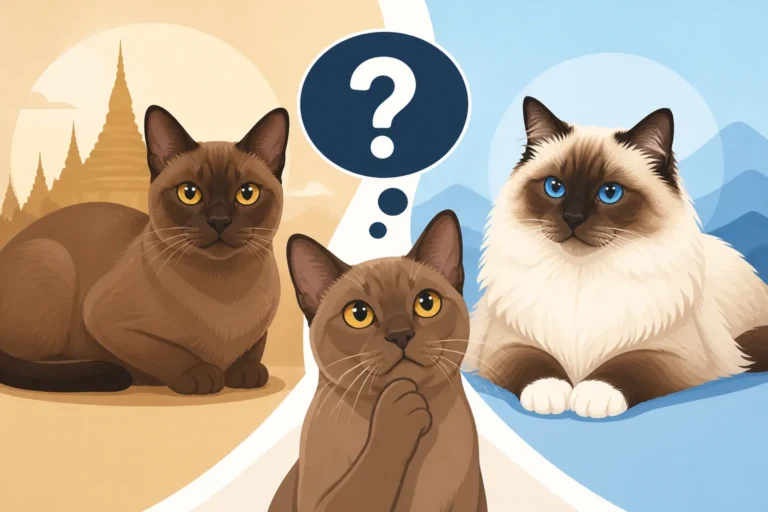
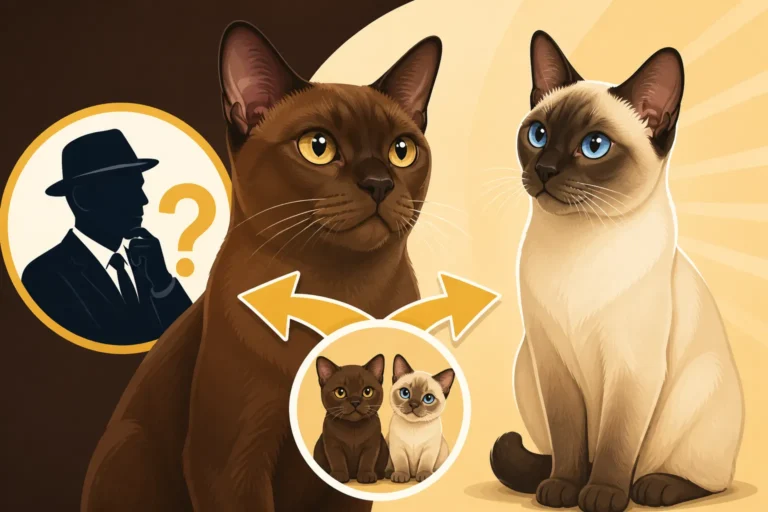
When a cat has the blue eyes and pointed coat of a Siamese but the build and coloring of a Burmese, it can be hard to tell where one breed ends and another begins. The Tonkinese sits between them because of its ancestry and distinctive coat-color genetics. This guide explains that middle ground, how the three breeds differ, and what to check when identifying a cat.
Why the Tonkinese sits between the Burmese and Siamese
Three coat patterns, one genetic relationship
The Burmese, Siamese, and Tonkinese are related through a gene that affects how much pigment develops in a cat’s coat. The gene is often described using the alleles cb and cs. In simplified terms, Burmese cats typically inherit two Burmese-pattern alleles, Siamese cats two Siamese-pattern alleles, and Tonkinese cats one of each.
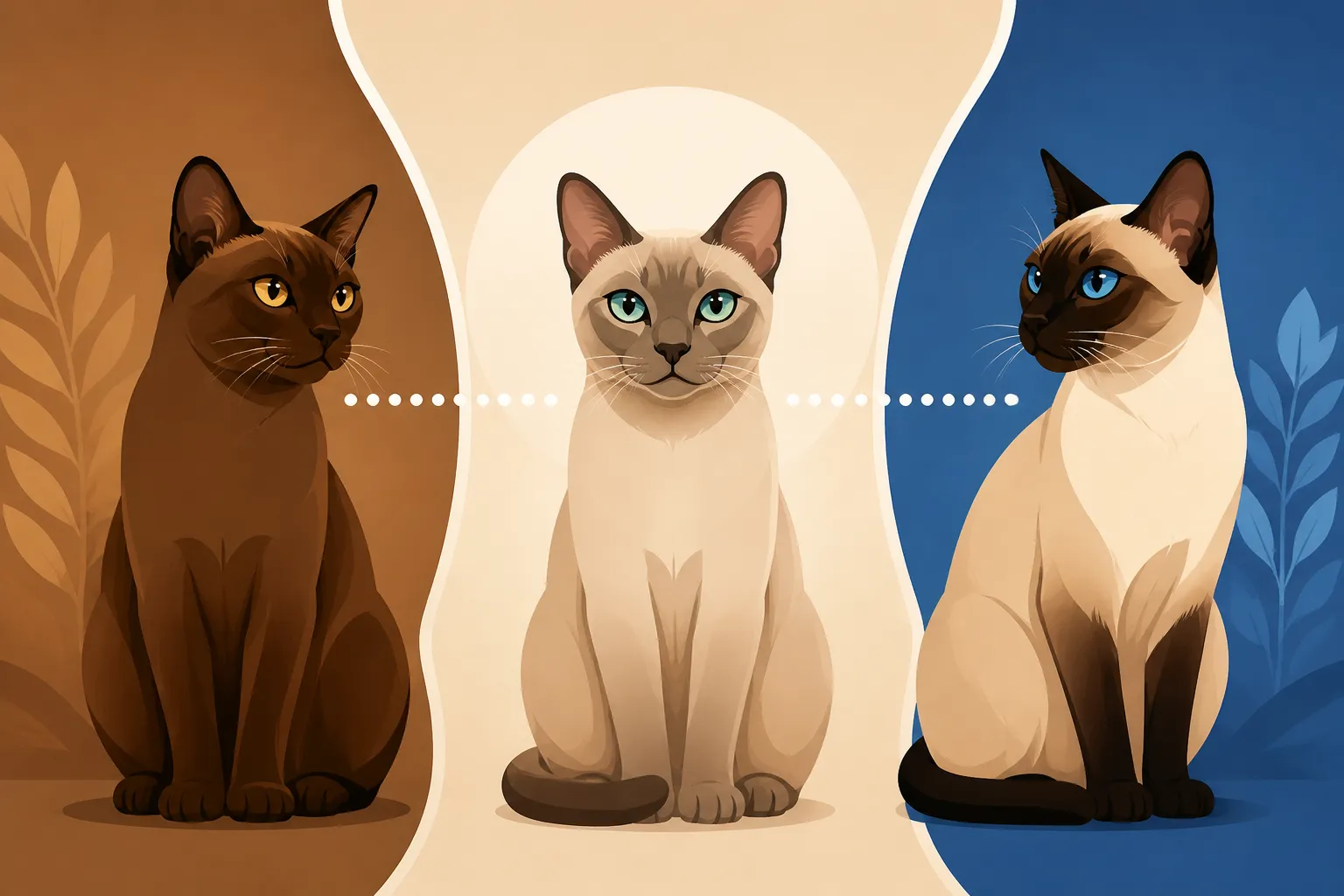
That combination helps explain the Tonkinese’s characteristic “mink” pattern. Its points—the face, ears, legs, and tail—are usually darker than the body, but the contrast is generally less pronounced than on a Siamese. The coat often looks like a blend of the two patterns, rather than a copy of either one.
This is a useful way to understand the relationship, but genetics is not the only factor shaping a cat’s appearance. Individual cats vary, and lighting, age, and coat color can affect how strong the contrast looks. For the broader background on the Burmese side of the story, What the cb Allele Does to a Burmese's Color explains how that allele affects coat pigment.
What “between” means—and what it does not mean
Calling the Tonkinese a cat that “sits between” the Burmese and Siamese describes its ancestry and some of its physical traits. It does not mean that every Tonkinese looks exactly halfway between the other two breeds, or that the three names are interchangeable.
A Tonkinese is a distinct breed with its own standards and history. Its mix of coat-pattern traits is a result of inherited alleles, not a visual grading scale. A particular Tonkinese might have more noticeable points, while another may appear more softly shaded. That variation does not, by itself, make either cat more or less Tonkinese.
The phrase can also cause confusion when people are looking at an individual cat without pedigree information. A cat that resembles a Tonkinese may have a different ancestry, and appearance alone cannot confirm its breed. As with the Burmese and Siamese, documented lineage is more useful than a quick visual guess.
A simple comparison of the three
The table below gives a general comparison. Individual cats may differ, and breed standards can vary between registries.
| Breed | Typical coat pattern | Typical contrast | What the pattern suggests |
|---|---|---|---|
| Burmese | More even, shaded coat | Usually subtle | Commonly associated with two Burmese-pattern alleles |
| Tonkinese | Mink pattern with darker points | Moderate, though it varies | Commonly associated with one Burmese-pattern and one Siamese-pattern allele |
| Siamese | Pointed coat with a paler body | Usually pronounced | Commonly associated with two Siamese-pattern alleles |
This comparison is about coat pattern, not temperament or overall quality. It also does not replace a pedigree, breeder records, or a registry’s breed description.
How coat color helps explain the Tonkinese
Burmese, Siamese, and mink patterns
A Siamese coat is known for strong contrast between a lighter body and darker points. A Burmese coat usually appears more evenly colored, with less dramatic contrast. The Tonkinese mink pattern often falls visually between those extremes: the body is shaded, and the points are darker, but they may blend more gradually into the body color.
The exact impression depends on the cat. A dark-coated cat may show less obvious contrast than a lighter one, and a photograph can make the pattern look stronger or weaker depending on exposure. A kitten’s coat can also change as it matures, so an early picture may not show the adult pattern clearly.
The Burmese coat itself is not simply a solid, uniform color in the genetic sense. Its color is affected by temperature-sensitive pigment expression, which contributes to the way color can vary across the body. Why a Burmese Is Not a Solid Colored Cat offers more detail on that distinction, while Why a Burmese's Color Deepens Where It Is Cool looks at the role of temperature.
Eye color is a clue, not proof
Eye color is often discussed alongside coat pattern, but it should not be used alone to identify a breed. Breed standards describe expected traits, and eye color can help people understand the general appearance associated with a breed. Still, a cat’s eyes cannot confirm its ancestry.
That matters because online photos can make breed identification seem easier than it is. A close-up may highlight vivid eyes while hiding body shape, coat texture, or other features. Even when a cat appears to match a familiar breed description, a resemblance is not the same thing as documented pedigree.
If you are researching a cat for adoption or considering a kitten from a breeder, ask what records are available. Pedigree documents and registration details can clarify whether the cat is being represented as Burmese, Tonkinese, Siamese, or a domestic cat with similar features.
Color does not determine the breed by itself
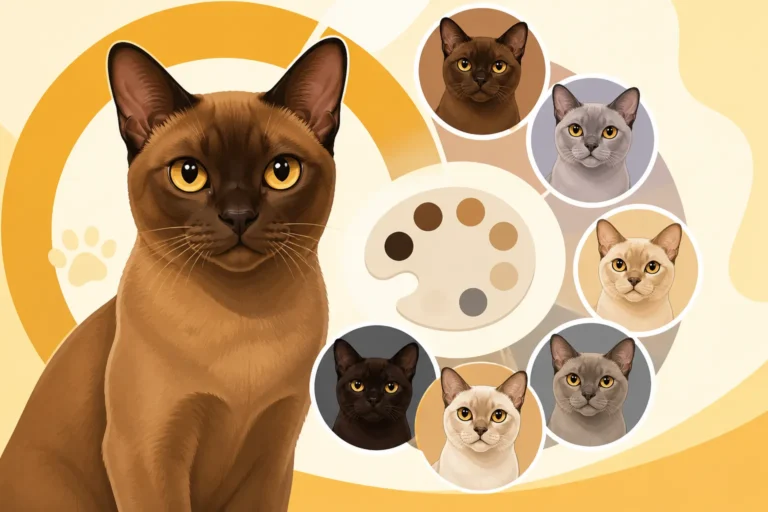
People sometimes assume that a cat with a particular shade must belong to a particular breed. That shortcut can be misleading. Coat shade and pattern offer useful clues, but they are only part of the picture; ancestry and the relevant breed standard matter too.
A cat may resemble a Burmese because of its coat while having no known Burmese ancestry. The same is true of cats that look Siamese or Tonkinese. This is especially common with mixed-breed cats, whose appearance can combine traits from several ancestors.
If you are browsing breed information or supplies on a retailer such as Chewy, remember that general descriptions are not pedigree records. Chewy can be a place to explore everyday cat products, but a product page or breed label cannot establish a specific cat’s lineage. For ancestry, ask the breeder, rescue organization, or registry for the documentation they have.
The ancestry behind the Tonkinese
The Burmese and Siamese connection
The Tonkinese relationship makes more sense when viewed alongside the history of the Burmese and Siamese. These breeds contributed to the development of Tonkinese lines, and their coat-pattern alleles help explain the mink look. For an overview of the inherited coat-color interaction, see What Happens When Burmese and Siamese Genes Meet.
The story is not simply that a modern Tonkinese is a Burmese crossed with a Siamese in every case. Breed development involves generations of selective breeding and the creation of a consistent population, not just one cross. The result is a breed recognized for its own combination of features.
That distinction is important when someone is choosing a kitten. A one-off cross between a Burmese and a Siamese may produce kittens with a range of appearances, but that alone does not make each kitten a registered Tonkinese. Breed identity depends on ancestry and the applicable registration rules, not just the parents’ appearance.
Why the Burmese has more than one type
The word “Burmese” can also refer to cats with different type traditions, particularly the American and European Burmese. Their standards developed along different paths, and they may differ in the look breeders and registries emphasize. That history can complicate comparisons when someone is trying to decide whether a cat looks Burmese, Siamese, or Tonkinese.
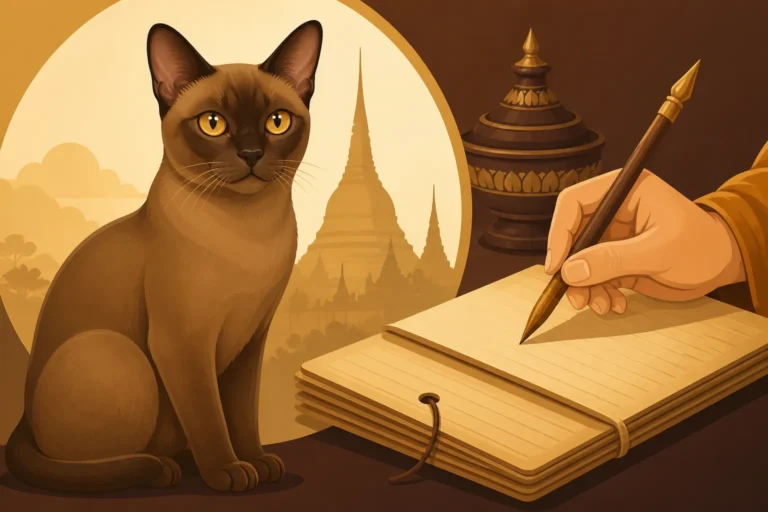
A Burmese with a more defined coat contrast may prompt a mistaken Tonkinese comparison, while a Tonkinese with subtle contrast may be mistaken for a Burmese. Those impressions are understandable, but they cannot settle the question of breed. How the American and European Burmese Split explains why Burmese type can vary, and The Burmese Began With One Cat Called Wong Mau gives context for the breed’s early history.
These differences are also a reminder that breed labels are shaped by human decisions over time. Standards describe the traits a registry recognizes; they do not turn every cat with similar features into that breed. When comparing cats, it helps to separate three questions: what does the cat look like, what does its pedigree say, and what standard does its registry use?
How the Tonkinese became a breed of its own
A breed is not defined by a single visual trait. Breeders work across generations to produce cats with recognizable, repeatable characteristics, while registries set rules for how cats are recorded and judged. The Tonkinese became established through that kind of development, rather than simply serving as a nickname for any cat with an intermediate coat pattern.
This is why descriptions of the Tonkinese often emphasize both its background and its distinct identity. Its coat pattern reflects the relationship between Burmese and Siamese alleles, but the breed’s identity includes more than that one genetic feature. The phrase “half Burmese” can be a handy shorthand in casual conversation, yet it can leave out the history of selective breeding and registry recognition. Why the Tonkinese Is Half Burmese explores what that shorthand captures—and what it misses.
When researching a kitten, it is reasonable to ask the breeder which registry records the litter and how the parents are classified. If you are browsing general breed listings on Chewy or another retailer, treat those descriptions as introductory information, not a substitute for registration paperwork. The useful question is not merely whether a cat looks like a Tonkinese, but whether its documented ancestry supports that designation.
How to tell a Burmese from a Tonkinese
Start with the coat, then check the records
If you are looking at a cat in person, begin by noticing the coat pattern. A Burmese often has a more even appearance, while a Tonkinese commonly has a mink pattern with some shading at the points. A Siamese typically shows more pronounced contrast. These are broad tendencies, not a guaranteed identification test.
Next, look at the whole cat rather than focusing on one photograph or feature. A picture can distort color, and cats may change in appearance as they mature. Ask about the cat’s age, parents, and pedigree if those details are available. A breeder should be able to explain how the litter is registered and what breed the parents are recorded as.
For a fuller comparison of appearance and other traits, How a Burmese Differs From a Tonkinese is a useful companion read. It is also worth reviewing How to Tell a Burmese From a Tonkinese if your question is specifically about distinguishing the two breeds. Neither visual guide can replace the cat’s documented history, but both can help you ask more informed questions.
Questions to ask a breeder or rescue
A careful conversation can clear up uncertainty much faster than comparing photos online. Ask the breeder or rescue organization what the cat is registered as, what records accompany the cat, and whether the parents’ breed information is available. If the cat is not registered, ask how the organization arrived at its breed description.
Be alert to vague answers. If a seller uses a breed name but cannot explain the lineage behind it, treat the label as an unverified description rather than a confirmed fact. That does not necessarily say anything about the cat’s personality or suitability as a pet; it simply means you should be cautious about claims of pedigree.
Here are practical questions to keep the conversation focused:
- What breed is the cat recorded as by the breeder or registry?
- Are pedigree or registration documents available?
- What are the parents recorded as, and can their records be reviewed?
- Is the word “Tonkinese” being used to describe a registered breed or a cat with a similar appearance?
- What information will be provided in the adoption or purchase paperwork?
If you are adopting, the rescue may only be able to describe the cat’s appearance. That is fine. A loving, healthy companion does not need a confirmed breed label to be a wonderful fit. The important thing is to understand whether the description is based on records or resemblance.
The clearest answer
The Tonkinese sits between the Burmese and Siamese because its characteristic coat pattern is associated with inheriting one Burmese-pattern allele and one Siamese-pattern allele. That combination often produces a mink coat with a degree of contrast between the body and points. Burmese and Siamese cats tend to show different expressions of the same broader color-pattern relationship.
But “between” is a helpful explanation, not a complete definition. The Tonkinese is its own breed, and coat appearance alone cannot prove that a cat belongs to it. To identify an individual cat with confidence, consider its appearance alongside its pedigree and registry records.
If all you know is that a cat looks Burmese, Siamese, or Tonkinese, it is more accurate to describe the resemblance than to claim certainty. That small distinction keeps breed information useful—and helps you appreciate the cat in front of you without asking its coat to tell a story it cannot tell on its own.
Disclaimer
This article is for general informational purposes only and does not constitute professional advice. Laws, prices and regulations vary by location and change over time. Consult a qualified professional for guidance on your specific situation.