Why a Burmese Weighs More Than It Looks
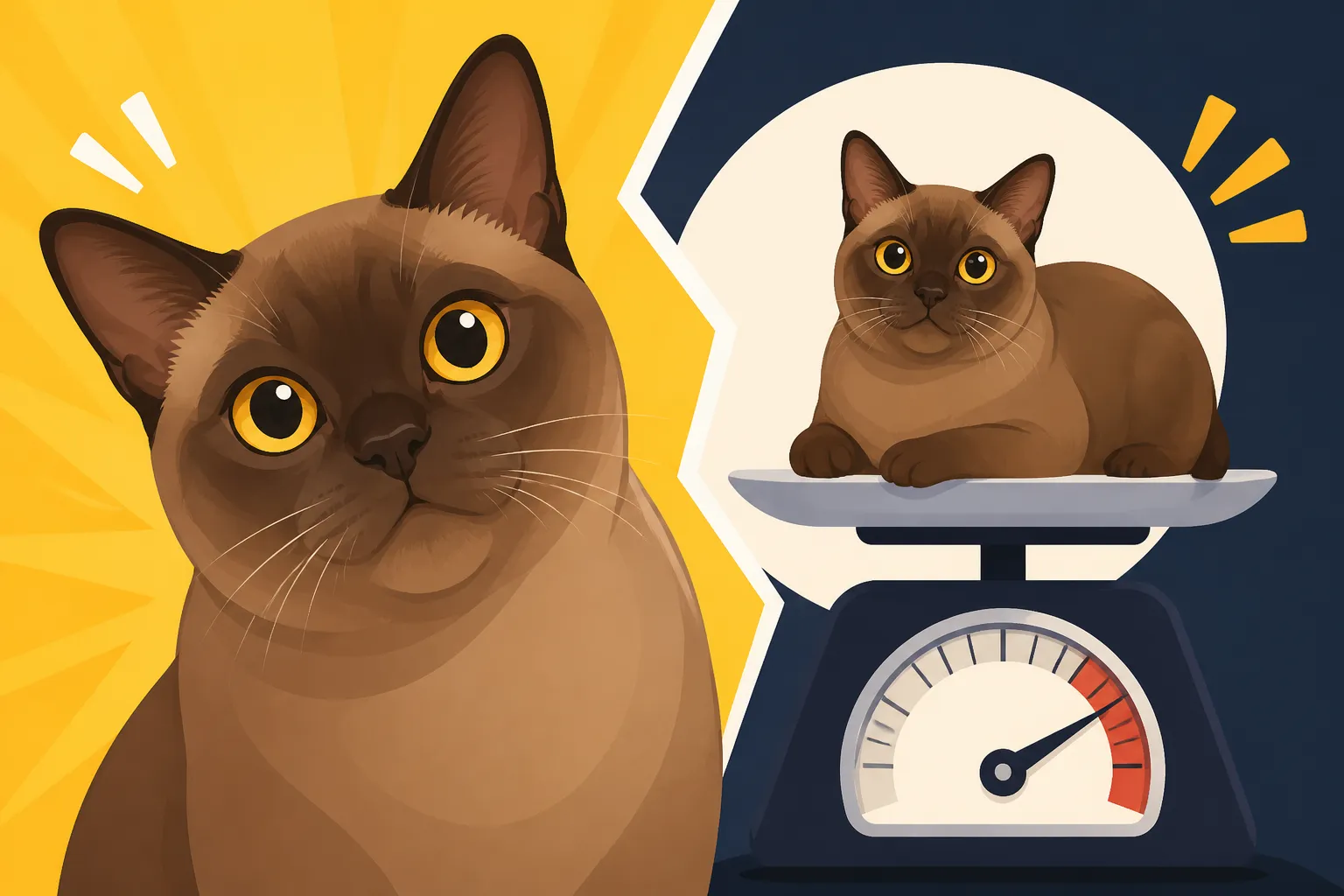
A Burmese can feel unexpectedly heavy when you lift one: the cat may look sleek and compact, yet seem to weigh more than its size suggests. That mismatch is usually explained by a sturdy, muscular build rather than a thick coat or excess fat. This guide explains how to tell normal Burmese density from unhealthy weight gain, and how to track your cat’s condition at home.
Why a Burmese feels heavier than it looks
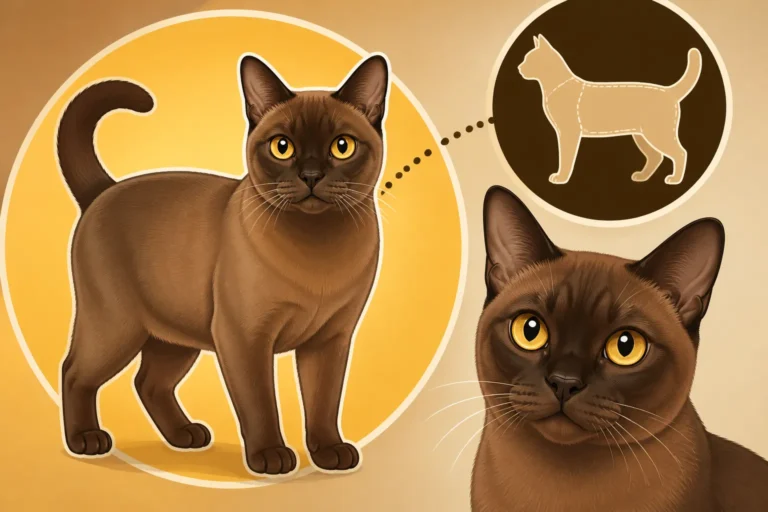
A compact, muscular body carries real weight
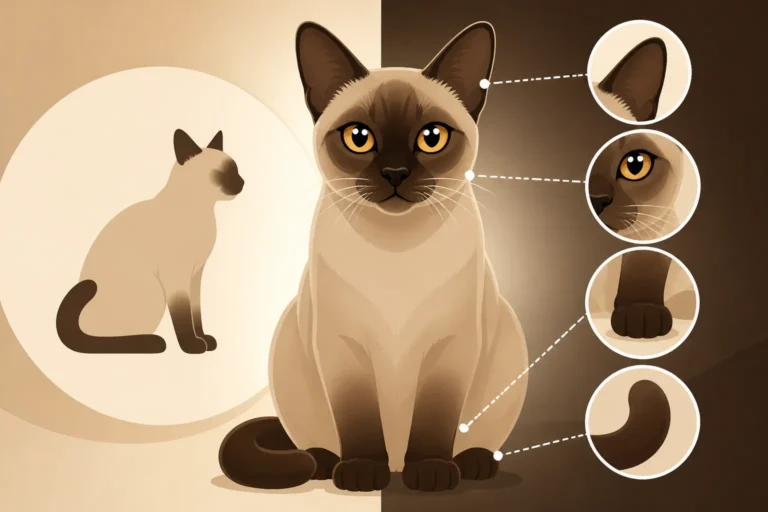
Burmese cats are often described as having a solid, substantial build. Their bodies can look neat and streamlined, but that appearance doesn’t mean they’re delicate or lightweight. When you pick one up, the difference between its outline and its heft can be surprising—especially if you’re used to a longer, leggier cat.
Muscle contributes to that sensation. A Burmese may have a compact frame with well-developed shoulders, chest, and hindquarters. Muscle is denser than fat, so a cat with a firm, athletic body can feel heavier than another cat of similar visible size. This is one reason owners sometimes mistake normal Burmese sturdiness for excess weight.
The breed’s short, close-lying coat also reveals the shape of the body instead of adding visual volume. A fluffy cat can look larger than it is; a Burmese may look smaller and sleeker, even while carrying a solid frame. That contrast is part of why people use the phrase “a brick wrapped in silk.” For more on the breed’s characteristic build, see Why a Burmese Is Called a Brick Wrapped in Silk.
A small outline doesn’t tell you the number on the scale
It’s easy to guess a cat’s weight by eye, but appearance can mislead in either direction. A broad chest or muscular shoulders might make a healthy Burmese look heavier than expected, while a smooth coat can hide a gradual change around the abdomen. A cat that has gained weight may still look tidy from above, particularly if the change has happened slowly.
That’s why “looks small” and “weighs more than expected” are not enough to judge body condition. Weight needs context: your cat’s age, frame, muscle, and shape all matter. There isn’t one number that automatically makes every Burmese healthy or unhealthy. Your veterinarian can help establish an appropriate target for your individual cat.
If you’re comparing your cat with breed descriptions, remember that a general range can’t account for every body type. How Big an Adult Burmese Gets can help you understand typical size, while What an Adult Burmese Should Weigh is best treated as a starting point for discussion with your vet, not a pass-or-fail test.
How to tell muscle from excess fat
Check shape and feel, not just heft
A simple body-condition check can provide more useful information than lifting your cat and trying to guess. Start by looking down at your Burmese from above while the cat is standing naturally. You’re looking for a slight waist behind the ribs—not an extreme tuck, but some narrowing before the hips.
Then look from the side. The abdomen may rise gently toward the hind legs, though the exact outline varies between cats. A loose flap of skin near the belly can be normal and doesn’t, by itself, mean your cat is overweight. What matters is the overall contour and how easily you can feel the ribs and other landmarks.
Use your fingertips to feel along the sides of the chest. You should be able to locate the ribs beneath a light covering, without pressing hard. If they feel buried under a thick layer, or if there is little visible waist and the abdomen has become rounder, ask your veterinarian whether your cat’s body condition has changed. The guide How to Score a Burmese's Body Condition explains how to assess these signs more systematically.
A muscular Burmese may feel firm through the shoulders and thighs. That’s different from a soft layer of fat that makes the ribs harder to feel. You don’t need to make a diagnosis at home; the goal is to notice a change and bring clear observations to the next appointment.
Compare your cat with its own normal
One of the most useful reference points is your cat’s previous shape and weight. If your Burmese has always felt solid but has kept the same waist, rib coverage, energy, and movement, that heft may simply be part of its build. If the same cat becomes harder to lift, loses its waist, or develops a softer, fuller abdomen, the change deserves attention even if the scale reading doesn’t seem dramatic.
Age and activity can shift the picture, too. A young adult may have more visible muscle, while an older cat can lose muscle even as body fat increases. That combination can be easy to miss: the cat’s overall weight may stay similar, but its body composition changes. A vet can assess muscle condition alongside fat coverage, rather than relying on a single number.
For a closer look at a common source of confusion, read Why a Muscular Burmese Is Mistaken for a Fat One. A firm, compact body is not the same as obesity, but breed characteristics are not a reason to dismiss a genuine increase in fat.
| What you notice | What it may suggest | What to do |
|---|---|---|
| Firm shoulders and thighs, ribs easy to feel, slight waist | A solid, muscular build may be normal | Track weight and shape over time |
| Ribs difficult to feel, waist less visible, abdomen fuller | Possible fat gain | Ask your vet to assess body condition |
| Weight stable but muscle seems reduced | A change in body composition may be occurring | Arrange a veterinary discussion, especially in an older cat |
| Sudden weight change or a noticeable change in thirst or appetite | A health issue may be contributing | Contact your veterinary clinic promptly |
How to weigh a Burmese accurately at home
Make the measurement repeatable
A home weight is most useful when you take it in a consistent way. Use the same scale, put it on a hard, level floor, and weigh your cat around the same time of day when practical. A slippery surface or a scale that shifts between readings can make the result less reliable.
If your cat will stand on a household scale, weigh yourself first and then weigh yourself holding the cat. Subtract your weight from the combined reading. This method can be convenient, though some bathroom scales don’t show small changes clearly. If your Burmese wriggles, try placing a carrier or sturdy container on a suitable scale, noting its weight, then weighing it again with your cat inside. Keep the process calm and never force your cat into a situation that causes distress.
A pet scale may be easier if you need regular, more precise readings. When comparing options at Chewy or another retailer, check the scale’s stated capacity, platform size, readability, and return terms before choosing. The most useful scale is one you can use safely and consistently—not necessarily the most elaborate one.
Write each reading down with the date. A note on your phone or a simple notebook is enough. How to Weigh a Burmese Accurately at Home offers more detail on making the measurement routine easier.
Watch the trend rather than reacting to one reading
A single measurement can be affected by timing, recent meals, or a restless cat. Instead of changing food based on one number, look for a pattern across repeated readings and compare it with your cat’s body shape and appetite. Your vet can help you decide how often to weigh your individual cat and what changes merit a check-in.
A written record also helps when appointments are spaced out. You can tell the veterinarian when you first noticed a change and whether the weight has been rising, falling, or staying steady. If you’re shopping for a small household scale through Chewy, look for a design that is stable and easy to read; a scale that’s awkward to use tends to end up in a cupboard.
Weight is only part of the picture. Pair the number with observations such as whether your cat is still jumping comfortably, grooming normally, and eating as usual. A cat may be heavier than expected and still have a healthy body condition—or have a concerning change that isn’t obvious from the scale alone.
What to do if your Burmese is gaining weight
Review food, treats, and daily activity without guessing
If your cat’s weight is trending upward, start by recording what it eats: meals, treats, food offered by other household members, and any food it steals from another pet’s bowl. “A little extra” can become hard to estimate when several people are feeding the cat or when kibble is left out all day.
Measure meals rather than relying on an unmarked scoop, and ask your veterinarian to help set an appropriate feeding plan. Don’t sharply cut portions or put your cat on a crash diet. Cats need a gradual, carefully managed approach to weight loss, and an overly rapid reduction can create serious health risks. Your vet can advise on suitable food, portion adjustments, and a safe pace for your cat.
It may help to compare food scales and measuring tools at Chewy or another retailer, but the goal is accuracy, not a particular brand or gadget. If your Burmese shares a home with another cat, feeding them separately or using a plan that prevents bowl-swapping can make it much easier to know what each cat has eaten.
Know when a weight change needs veterinary attention
A gradual increase is worth discussing at a routine appointment, especially if your cat’s waist is disappearing or the ribs are becoming harder to feel. A sudden change, unexplained weight loss, reduced appetite, unusual tiredness, or a noticeable increase in drinking or urination is more urgent. Don’t assume every change is caused by food or the breed’s naturally sturdy shape.
The same applies if your cat’s weight is stable but its body seems different—for example, if the spine or hips feel more prominent while the belly looks fuller. Changes in muscle and fat can happen together, particularly as cats age. A veterinarian can examine your Burmese, check its overall condition, and recommend whether testing or a feeding adjustment is appropriate.
Finally, make weight tracking part of ordinary care rather than a judgment about your cat’s appearance. Monthly notes can make gradual changes easier to spot; Why a Burmese's Weight Should Be Recorded Monthly explains why a routine record can be useful. The best interpretation comes from combining the scale, body shape, behavior, and veterinary guidance.
Disclaimer
This article is for general informational purposes only and does not constitute professional advice. Laws, prices and regulations vary by location and change over time. Consult a qualified professional for guidance on your specific situation.