What a Sable Burmese Looks Like
A sable Burmese is not simply a brown cat: its coat has a warm, close-lying sheen, and its color can look different in sunlight, shade, and as the cat matures. That can make it surprisingly hard to tell whether a kitten is truly sable or just temporarily pale. This guide explains the shade, coat, eyes, and build that help you recognize the look.
The sable Burmese coat
The shade and its subtle variation
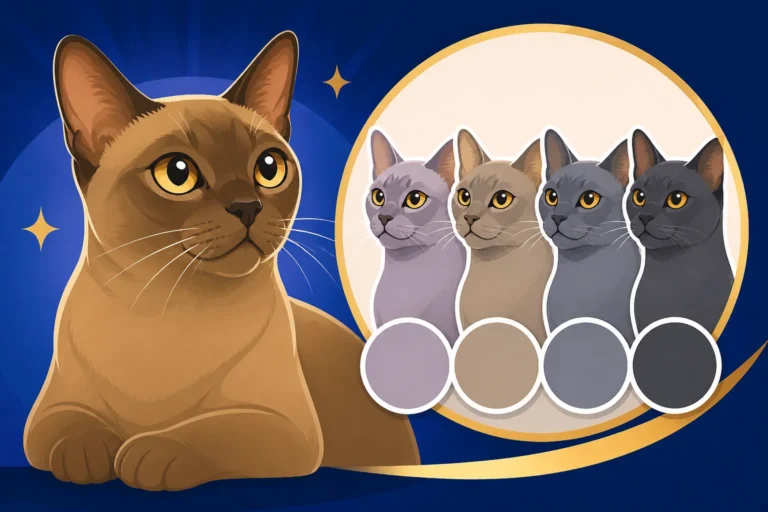
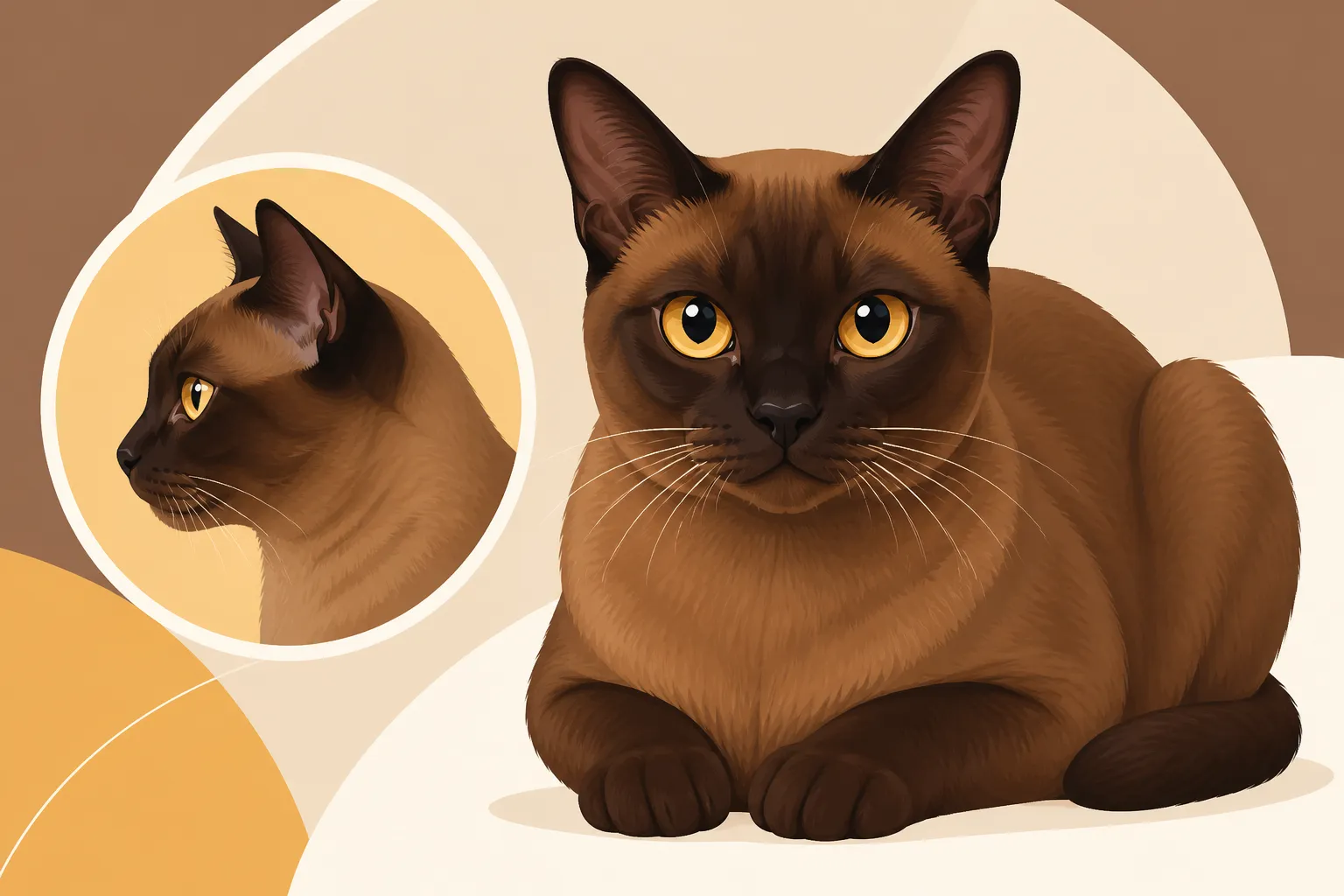
The sable Burmese is typically a rich, warm brown, often described as deep brown or seal brown. The color should look even and glossy rather than sharply divided into a dark mask, legs, and tail against a pale body. In good light, the coat may show warm undertones; in dim rooms, it can appear much darker.
A sable Burmese is not necessarily one identical shade from nose to tail. The coat may be a little lighter on the underside, and some cats have subtle shading across the body. What matters is the overall impression: a close, warm brown coat without strong stripes, spots, or a dramatic point pattern. The breed’s color genetics can create temperature-related shading, but the effect is usually more blended than the high-contrast coloring people associate with a Siamese.
The shade also changes with age. A young kitten may be noticeably paler than the adult it will become, and a mature cat’s coat can deepen over time. This is one reason a kitten’s current color is not always a perfect guide to its adult appearance. For more on that change, see Why a Burmese Kitten Is Born Paler Than It Ends Up and When a Burmese Kitten's Color Settles.
Why the coat looks like satin
The Burmese coat is short, fine, and lies close against the body. It is often described as satin-like because it can catch the light with a smooth, polished sheen. That shine is part of the breed’s recognizable appearance; it does not mean the cat has a long or fluffy coat.
A healthy coat should look sleek, not greasy or clumped. Loose hairs can show against the dark sable color, but regular, gentle grooming is generally enough to keep the coat tidy. A soft grooming mitt or chamois can help lift loose hair without making a short, flat coat look ruffled. If you are comparing grooming tools at Chewy, look for something gentle and intended for short-haired cats rather than a heavy deshedding tool.
The Burmese’s close coat is one reason its outline looks so smooth and compact. It does not hide the cat’s shape under a thick layer of fluff, so you can see the rounded chest, muscular shoulders, and solid body more clearly. For a closer look at the coat texture, read What Makes a Burmese's Coat Satin Rather Than Silky.
Burmese color, points, and look-alikes
Is a sable Burmese a solid brown cat?
The coat can look almost solid at first glance, but Burmese coloring is not simply the same as an ordinary solid-brown coat. The breed’s color genetics influence how pigment appears across the body, and temperature can contribute to subtle differences in shade. The result is generally a warm, blended appearance rather than sharply separated points.
This distinction can be easier to notice when you compare a Burmese with cats whose coloring is strongly contrasted. A Siamese, for example, typically has a pale body and distinctly darker face, ears, legs, and tail. A Burmese may have slightly darker extremities, but the contrast is usually much less dramatic. The underlying color pattern is explained further in Why a Burmese Is Not a Solid Colored Cat and How a Burmese's Color Deepens Where It Is Cool.
For a quick visual comparison, use the table as a guide rather than a strict checklist. Individual cats vary, and coat color alone cannot confirm a cat’s breed or pedigree.
| Feature | Sable Burmese | Siamese | Bombay |
|---|---|---|---|
| Overall coat impression | Warm, rich brown with blended shading | Pale body with darker points | Glossy black |
| Contrast between body and extremities | Usually subtle | Usually pronounced | Little visible color contrast |
| Coat length | Short and close lying | Short and close lying | Short and close lying |
| Common eye impression | Yellow to gold | Blue | Copper to gold |
| What can make identification tricky | Lighting and age change how brown appears | Point pattern is distinctive, but mixes can occur | Black cats can resemble one another |
How sable differs from black and other brown cats
A sable Burmese can look nearly black in a dim room, especially if the coat is very dark or the lighting is cool. Move the cat into soft natural light and the warm brown undertone may become easier to see. Avoid judging the shade from a flash photograph alone: flash can flatten color, create glare, or make the coat look cooler than it does in person.
A Bombay’s black coat is the most common point of comparison. Both breeds can have short, glossy coats and a substantial feel, but a Bombay is recognized for its black color, while the sable Burmese has a warm brown coat. A dark brown domestic shorthair might also resemble a sable Burmese, but color and coat texture by themselves do not establish breed. Pedigree information and a knowledgeable breeder or registry are more reliable than appearance alone. See How to Tell a Burmese From a Bombay for more comparison.
Other Burmese colors can be mistaken for sable in photographs, too. Blue and platinum coats can look darker or lighter depending on the surroundings, and camera settings may shift their apparent tone. Looking at the cat in daylight and comparing several pictures taken under similar conditions is more useful than relying on a single image.
The Burmese shape and facial expression
A compact, muscular body
The sable coat is only part of the Burmese look. Beneath it is a compact, muscular cat that can feel heavier than its size suggests. This is often described as a “brick wrapped in silk”: the cat looks smooth and sleek, yet feels solid when lifted. A fine coat does not mean a delicate build.
The body is generally medium in size, with a rounded chest, strong limbs, and a firm, well-proportioned outline. A healthy Burmese should not look sharply bony, but muscularity can make a normal-weight cat appear heavier than expected. If you are trying to judge an individual cat’s shape, look at body condition as well as the number on a scale. The topic is explored in Why a Burmese Feels Heavier Than It Looks.
Breed standards differ in some details, including head shape and overall type. American Burmese are often described as rounder in the head, while European Burmese have a more moderate, slightly different outline. Those distinctions should not be inferred from coat color; a sable coat can appear on either type. For further detail, see What an American Burmese's Head Should Look Like and What a European Burmese's Head Should Look Like.
Eyes, head, and expression
A sable Burmese commonly has yellow or gold eyes, which stand out against the warm brown coat. The exact shade can vary, and lighting affects how it looks in a photograph. The eyes are expressive and often contribute to the breed’s alert, attentive appearance, but they should be considered alongside the head, body, and pedigree rather than treated as proof of breed.
The face may look especially rounded in some Burmese lines, while other examples have a more moderate shape. A short coat makes the contours of the face easy to see, so small differences in head shape can be noticeable. It is perfectly normal for two sable Burmese cats to look related without looking identical.
When viewing a kitten, remember that its face and body are still developing. A kitten’s proportions can look softer or less defined than an adult’s, and its coat color may deepen as it grows. If a breeder describes a kitten as sable, ask to see clear pictures of its parents and adult relatives, ideally in natural light. This gives you a better sense of the family’s coat shade and overall type than a heavily edited listing photo.
How to recognize a sable Burmese in person
A practical checklist
When you meet a cat you believe is a sable Burmese, assess the whole picture rather than searching for one perfect visual clue. Start with the coat: it should be short, close lying, and warm brown overall. Then look at whether the color appears blended rather than sharply pointed, and whether the body seems compact and muscular.
- Check the coat in natural light. Look for a warm brown tone rather than relying on an indoor photo or flash.
- Notice the coat texture. It should lie close to the body and appear smooth, not long or fluffy.
- Look at the overall color pattern. Subtle shading is possible, but a dramatic pale-body-and-dark-points pattern is less typical of the sable Burmese look.
- Consider the build and face. A Burmese is generally solid and muscular, but head shape varies between types and lines.
- Ask about documentation. A cat’s color and appearance cannot confirm its pedigree. Registration details and breeder records are more useful for verifying breed and type.
A good comparison photo should show the cat’s full body, face, and coat in even daylight. If a listing shows only a close-up under warm indoor lighting, it may be difficult to tell sable from another dark shade. Chewy may be useful for ordinary cat-care supplies, but shopping or product photos are not a way to verify a cat’s color or pedigree.
Common visual mistakes
The first common mistake is assuming that every dark brown cat is a sable Burmese. Many domestic cats have brown coats, and some can share the Burmese’s sleek appearance. Without pedigree records, a similar-looking cat may be a mix or a domestic shorthair.
The second is expecting a kitten to have the same depth of color as an adult. A young sable Burmese can look lighter, and the coat may change with maturity. A photo taken in bright sun can also make brown appear warmer or lighter, while a shadowed image can make it look nearly black.
The third is treating a single breed-standard feature as decisive. Eye color, body shape, and coat shade each provide clues, but no one trait confirms the breed. If you are considering a kitten, ask for consistent, unfiltered images and written pedigree information. If you are simply admiring a cat, you can still enjoy the distinctive satin coat without needing to label it with certainty.
Simple coat care for preserving the look
A short-haired sable Burmese usually does not need elaborate grooming. Gentle stroking or a soft grooming mitt can remove loose hairs and help keep the coat neat. Short sessions are often more comfortable than repeated brushing, especially for a cat that prefers handling to stay calm and predictable.
Avoid using a harsh brush just to make the coat look shinier. The coat’s gloss comes from its texture and condition, not from aggressive grooming. If you shop for a grooming mitt or soft cloth at Chewy, choose a tool suited to short hair and stop if your cat seems uncomfortable. A clean, dry cloth can also be enough for light grooming between sessions.
Changes in coat condition deserve attention. A coat that becomes dull, greasy, patchy, or unusually thin may reflect a health or grooming issue rather than a change in color. In that situation, note when the change began and ask a veterinarian for guidance instead of trying to fix it with stronger grooming products. When comparing basic care supplies through Chewy, keep the goal simple: comfort and cleanliness, not forcing a particular shine.
Disclaimer
This article is for general informational purposes only and does not constitute professional advice. Laws, prices and regulations vary by location and change over time. Consult a qualified professional for guidance on your specific situation.