Whether a Red Burmese Is Recognized
A red Burmese can be recognized under some breed standards, but not all. The answer depends on the registry and the type of Burmese being discussed: the familiar American Burmese standard lists four colors, while some European Burmese standards also recognize red and cream. This guide explains how to check what “recognized” means before trusting a listing or pedigree.
Is a red Burmese an officially recognized color
Why the answer depends on the registry
There is no single worldwide Burmese standard that every cat registry follows. Each organization sets its own rules for accepted colors, registration, and showing. As a result, “red Burmese” may be an accepted color in one registry or region but not in another.
In the United States, the Cat Fanciers’ Association standard for Burmese is centered on four colors: sable, champagne, blue, and platinum. A red cat would not fit that standard as one of those four recognized Burmese colors. For a closer look at the American list, see Which Colors CFA Accepts in a Burmese.
Some European standards include a wider range. In registries where red and cream are accepted for European Burmese, a cat may be eligible for registration or competition in that color, provided it also meets the applicable breed requirements. The relevant list is not identical everywhere, so check the specific registry rather than relying on a general claim that “red Burmese are recognized.” Which Colors the European Burmese Standard Adds explains that broader color range.
What red looks like on a Burmese
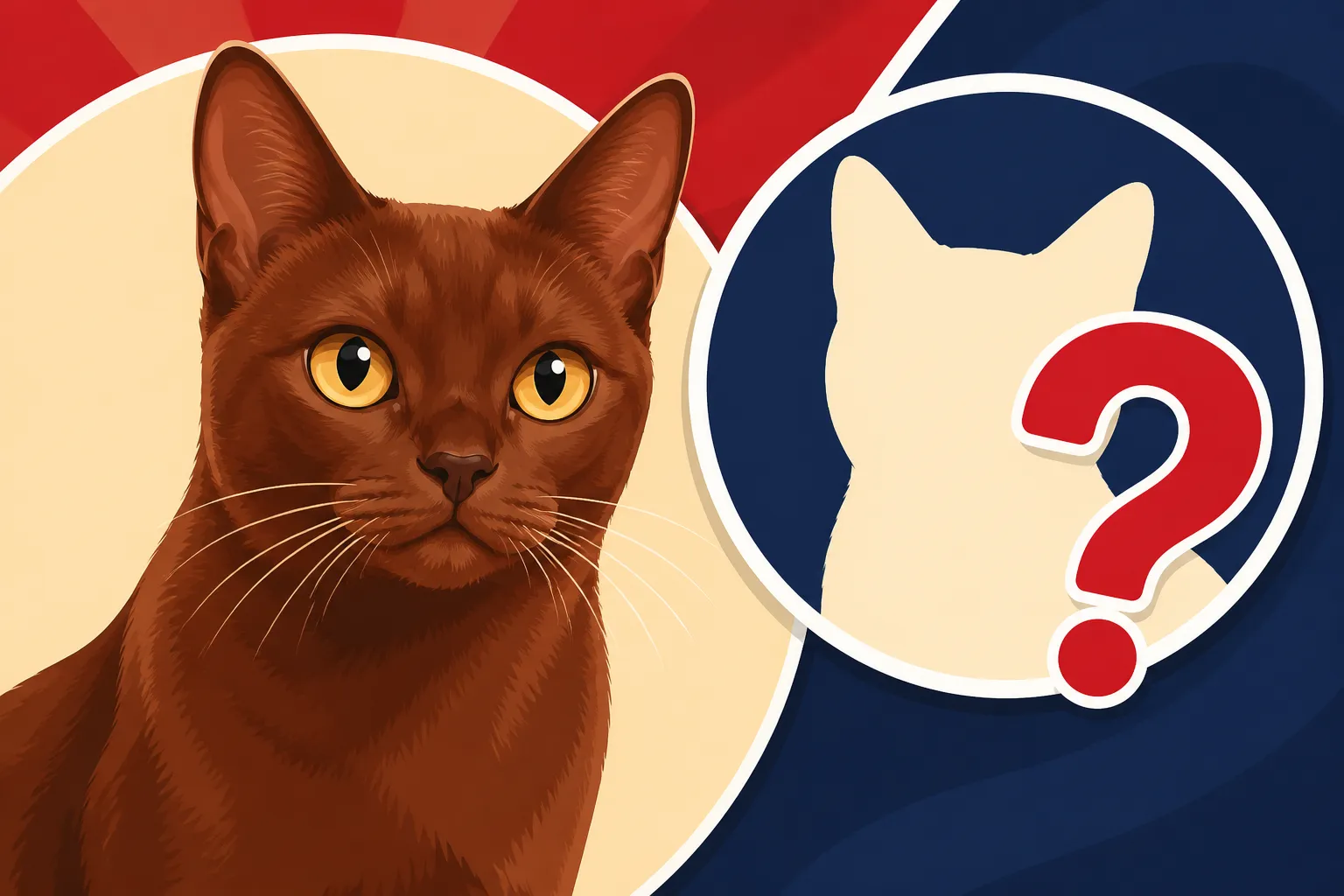
Red usually describes a warm orange, ginger, or reddish coat. The exact shade can vary, and a cat’s coat may not look like a uniform bright orange. Lighting, age, and the cat’s underlying pattern can affect what you see.
Burmese coloring also has a distinctive temperature-sensitive quality. The coat often appears darker in cooler areas, such as the face, ears, legs, and tail, and lighter across warmer parts of the body. This can make color identification less straightforward than comparing a cat with a simple paint-chip description. How a Burmese's Color Gene Reacts to Temperature covers why those shade differences occur.
Red should also be distinguished from tortoiseshell. A tortie Burmese has red or cream mixed with another color, rather than a coat that is simply red. Some registries recognize tortie varieties, but the rules depend on the standard in question. For the distinction, see Whether a Tortie Burmese Is Recognized.
| Registry or standard | How a red Burmese may be treated | What to verify |
|---|---|---|
| CFA American Burmese standard | Red is not one of the four standard colors | Whether the cat is registered as Burmese under that registry |
| Some European Burmese standards | Red may be an accepted color | The registry’s current color list and the cat’s pedigree |
| Other registries or regions | Rules can differ | The exact organization and breed variety named on the papers |
Why a red-looking cat may not be a recognized red Burmese
Coat color and pedigree are separate questions
A cat can look red without being a registered Burmese of a recognized red variety. Appearance alone does not establish breed registration. The cat could be a Burmese mix, belong to another breed, or come from lines whose registry classifies its color differently.
That distinction matters when someone advertises a “rare red Burmese.” The description might refer only to the coat’s appearance, not to a color accepted by the registry named in the listing. Ask which registry issued the pedigree and whether the cat’s registration identifies both its breed type and color. How a Burmese's Color Is Registered explains why those details should be checked on the paperwork rather than inferred from photographs.
Color can also be difficult to judge in kittens. Burmese kittens may be paler when young and deepen in shade as they mature. Photos taken in different lighting can exaggerate the difference, too. A reddish cast in a picture is not enough to confirm that a kitten is genetically or registrably classified as red.
Breed type can change the answer
“Burmese” can refer to different established types, including American and European Burmese. Their appearance and accepted colors are not necessarily the same. A seller who simply says “red Burmese” without naming the type and registry leaves out information a prospective owner needs.
If you are comparing kittens, ask for the registered names of the parents, the registry, and the color recorded on the pedigree. Then check that the registration applies to the specific Burmese type being advertised. How to Tell Which Burmese Type You Are Buying is a useful companion when the listing does not make the distinction clear.
The color gene itself does not prove that a cat belongs to a particular registry’s recognized variety. Burmese coat color is influenced by genetic factors, including the Burmese color pattern, but registration standards determine whether that color is accepted for that breed entry. A cat can have Burmese features and a red coat while still not qualifying as a red Burmese under a particular organization’s rules. Why a Burmese Is Not a Solid Colored Cat gives more context on how the breed’s coat color works.
How to check a red Burmese listing or pedigree
Ask precise questions before you rely on the description
A reputable breeder or seller should be able to answer straightforward questions about registration. Ask which registry the cat is registered with, whether the papers name the cat as American or European Burmese, and what color is written on the pedigree. If the cat is not registered, ask whether “red Burmese” is being used as a visual description rather than an official classification.
Request to see the pedigree and any registration documents before making assumptions based on an online post. The paperwork should make it possible to identify the registry and the registered breed and color. If those details are missing, treat the color claim as unconfirmed and ask for clarification.
It can also help to ask how the breeder arrived at the color description. They may be using a registry-approved term, a local convention, or everyday wording such as ginger or orange. Those descriptions can overlap in casual conversation without meaning the same thing on official documents.
Look beyond the coat color
Recognition is only one part of evaluating a kitten. A color label does not tell you whether the breeder has taken appropriate care of the litter, whether the kitten has been examined by a veterinarian, or whether the parents’ information is transparent. Ask about the kitten’s health records, socialization, and the breeder’s practices as well as the color.
Be cautious if a seller makes strong claims about rarity or value but cannot identify the registry or show relevant paperwork. “Rare” is not proof of official recognition. Nor does a distinctive coat color automatically mean a kitten is healthier, better bred, or more suitable as a pet.
If you are considering the cat mainly as a companion, an unrecognized color does not make an individual cat less deserving of a good home. It does affect how accurately the animal can be described within a registry system and whether it may be eligible for registration or showing. Those are separate considerations from temperament and day-to-day care.
What to remember about red Burmese cats
The practical answer
A red Burmese is not recognized under every Burmese standard. Under the CFA American Burmese standard, red is not among the four accepted colors. Some European Burmese standards do recognize red, but the answer depends on the particular registry and the cat’s registered type.
When you see “red Burmese” in a listing, check three things: the registry, the Burmese type, and the color recorded on the pedigree. If the seller cannot provide those details, the phrase may describe the cat’s appearance rather than an officially recognized color-and-breed combination.
Color terminology can be confusing, especially when a kitten is young or photographs shift its apparent shade. A registry’s written standard and the cat’s papers are more reliable than a casual label. Whether a Burmese Can Produce a Pointed Kitten is another example of why coat appearance and recognized breed classification are not always the same question.
A simple way to make the distinction
Think of “red” as a coat-color description and “recognized red Burmese” as a registry-specific classification. The first is about what the cat looks like; the second depends on whether the relevant organization accepts that color for that Burmese type and whether the cat’s paperwork supports the claim.
That small distinction can prevent a lot of confusion when comparing breeders, evaluating a pedigree, or reading discussions about Burmese colors. If the registration details are clear, you can interpret the label accurately. If they are not, ask before treating “red Burmese” as an official designation.
Disclaimer
This article is for general informational purposes only and does not constitute professional advice. Laws, prices and regulations vary by location and change over time. Consult a qualified professional for guidance on your specific situation.