Who Bred the First Bombay From a Burmese
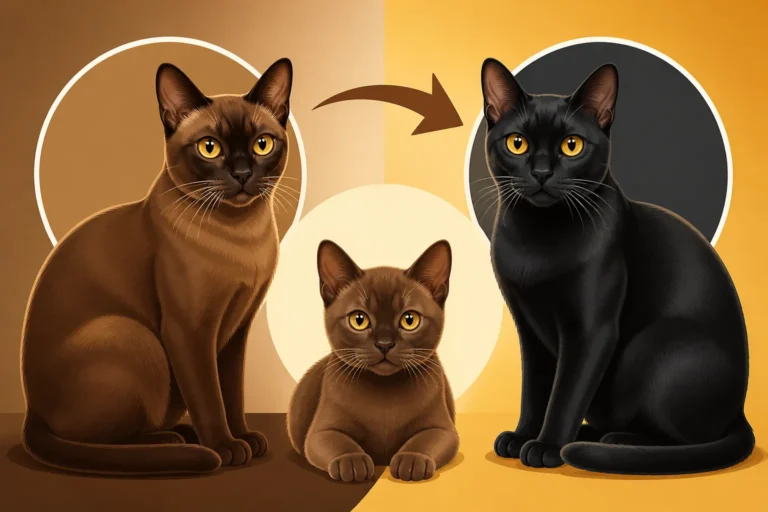
A solid-black cat with the Burmese’s compact build and people-loving nature did not appear by accident. The Bombay was deliberately developed by a breeder who wanted a miniature panther at home, but the first crosses did not instantly create a consistent new breed. This guide explains who bred the first Bombays, how Burmese cats shaped the project, and what the breed’s origins mean today.
Who bred the first Bombay cats
Nikki Horner set out to create a miniature black panther
The breeder credited with creating the Bombay is Nikki Horner, who worked in Louisville, Kentucky. Her aim was strikingly specific: she wanted a domestic cat with the sleek, all-black appearance of a small panther, paired with the affectionate, people-oriented personality she admired in Burmese cats.
That goal called for more than breeding two cats and hoping for the right look. Horner needed to combine a rich black coat with a compact, muscular body and a close relationship with people. She worked toward those qualities through a planned breeding program rather than relying on a naturally occurring black cat that happened to resemble her ideal.
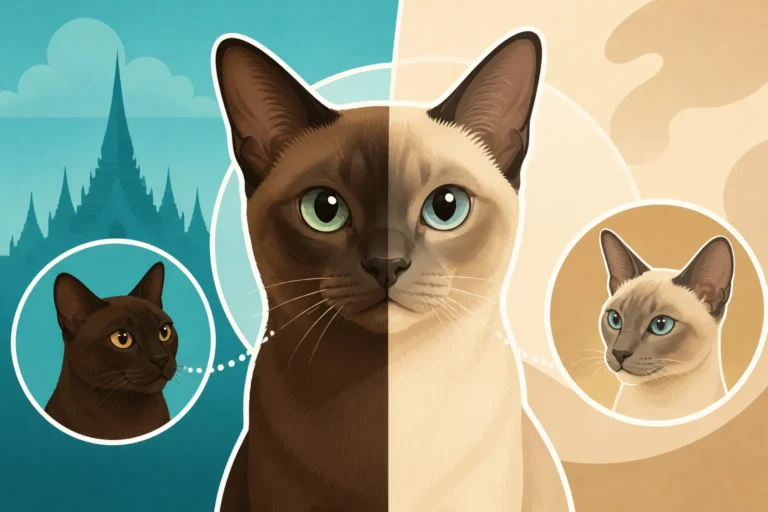
Horner’s project is often described as beginning in the late 1950s. The important point is that the Bombay was intentionally developed, not simply named after a black Burmese. Its history sits within the wider story of how The Bombay and the Tonkinese Came Out of the Burmese, though each breed followed a different route.
The Bombay came from a cross, not from a Burmese alone
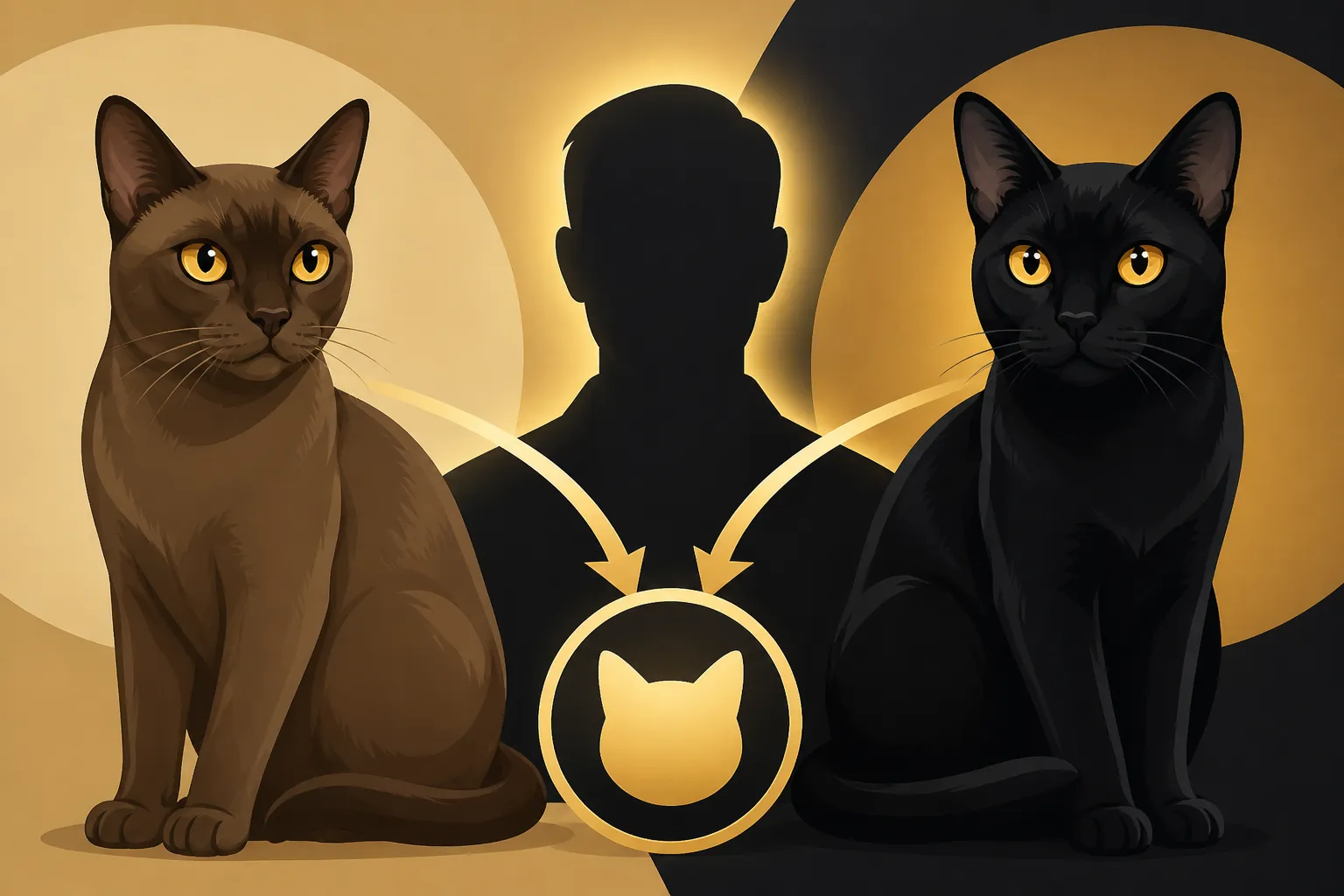
The foundation pairing combined a sable Burmese with a black American Shorthair. Each breed offered qualities Horner wanted to bring into the new cat. The Burmese contributed the compact, substantial body and the lively, affectionate temperament associated with the breed. The black American Shorthair contributed a route toward the solid black coat.
That distinction matters if you have ever seen a black cat and wondered whether it must be a Bombay. Coat color alone does not establish a cat’s breed or ancestry. A black domestic shorthair, a black cat with Burmese ancestry, and a pedigreed Bombay can look similar at a glance while having very different pedigrees and breed characteristics.
The breeding plan was also more involved than producing one attractive kitten. A new breed has to develop recognizable, repeatable features across generations. Horner’s work was about bringing desired traits together and then breeding toward a consistent type. That is why the history is better understood as a sustained program than as one famous pairing.
How Burmese cats shaped the Bombay
Burmese traits helped define the new cat
The Burmese influence was not merely a shortcut to black fur. Horner wanted the Bombay to have an engaging, companionable character as well as a distinctive appearance. Burmese cats are known for being closely involved with their people, and that social quality was part of the appeal of using Burmese cats in the project.
The Burmese also helped contribute to the Bombay’s characteristic physical impression: a compact, muscular cat that can feel heavier than its size suggests. A Bombay is not meant to look like a long, fine-boned cat wearing a black coat. The intended effect is more rounded and solid, with a smooth coat that lies close to the body.
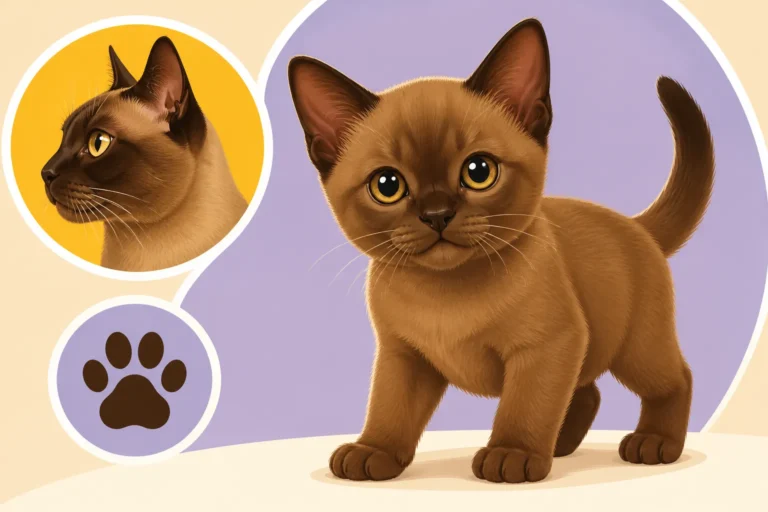
Still, a Bombay is its own breed, not simply a Burmese in black. The two breeds have a related history, but breed standards and pedigrees distinguish them. For a closer look at the Burmese side of that comparison, see What a Burmese Looks Like Against the Standard.
Breeding for a consistent look took generations
A first-generation cross can show a mixture of traits, and the kittens in a litter may not all resemble the breeder’s ideal. A black coat does not automatically come with the desired body type, head shape, eye color, and temperament. Those traits have to be selected and developed over successive generations.
That can be surprising if you picture breed creation as a simple recipe: one Burmese, one black American Shorthair, and a litter of ready-made Bombays. In reality, a breeder has to assess which kittens best express the target traits, make careful choices about future matings, and keep working toward consistency.
This is one reason the Bombay’s origin is often explained as a deliberate cross between Burmese and black American Shorthair cats, followed by selection for a particular type. The story is not that every kitten from the original pairing became a Bombay. It is that Horner used those foundation breeds to build a new, recognizable breed over time. The broader history is explored in How the Bombay Was Made From a Burmese.
| Breed or cat type | Connection to the Bombay | What the connection does not mean |
|---|---|---|
| Burmese | One of the foundation breeds used in the Bombay program | A Bombay is not simply a black Burmese |
| Black American Shorthair | The other foundation breed in the commonly described origin | Every black American Shorthair is a Bombay |
| Bombay | A distinct breed developed by selecting for a specific combination of traits | A black coat alone proves Bombay ancestry |
| Black domestic shorthair | May look similar to a Bombay | Appearance alone confirms neither pedigree nor breed |
How the Bombay became a recognized breed
The goal was to establish a recognizable breed type
Creating a breed involves more than choosing a name and producing a cat with an unusual look. Breeders need to establish a type that can be recognized over time, and cat registries need to decide whether and how to accept that breed. For Horner, that meant pursuing a consistent combination of appearance and personality, not simply producing black kittens from Burmese ancestry.
The name Bombay was chosen to evoke the black leopard associated with India. It is a reference to the image Horner was trying to capture, rather than evidence that the breed originated in the Indian city of Bombay. The name can make the history sound more geographically exotic than it is: the breed’s planned development took place in the United States.
The breed is commonly associated with recognition by the Cat Fanciers’ Association in 1976. Registry recognition is an important milestone because it reflects acceptance of a breed as a defined type, but it does not erase the work that came before. Horner’s breeding program and the selection of cats over generations were central to getting the breed to that point.
“The first Bombay” is not always a single clearly named cat
People often ask who bred the first Bombay, expecting the answer to be the name of one kitten. The more useful historical answer is that Nikki Horner created the breed through a breeding program. The idea of a single, universally identified “first Bombay” can oversimplify a process that involved foundation cats, multiple litters, and ongoing selection.
That distinction is common in breed history. A breeder may produce early cats that show some of the desired characteristics, then continue refining the type before it becomes consistent enough to be recognized. A kitten might be an early example without being the definitive representative of the finished breed.
So if you encounter a story that names one particular cat as the first Bombay, check what it means by “first.” It may refer to an early kitten, a cat from a particular cross, or a later cat that better matched the established breed type. The central credit remains with Horner and her planned development of the breed.
What the Bombay’s origins mean for cat owners
Appearance is not a substitute for pedigree
A glossy black coat can be beautiful, but it cannot tell you whether a cat is a Bombay. If you are adopting from a shelter, it is perfectly reasonable to describe a cat as a black domestic shorthair unless there is reliable pedigree information. That does not make the cat less special; it simply keeps the description grounded in what is known.
If you are considering a pedigreed Bombay, ask the breeder what registration and pedigree paperwork is provided, and ask how the cats are raised and socialized. The breed’s Burmese roots can help explain its reputation for seeking company, but individual temperaments still vary. A cat’s behavior is shaped by more than ancestry alone.
A comparison can also help separate the two breeds in your mind. A Bombay is bred to present a particular black-coated type, while Burmese cats come in recognized colors and have their own standard. For a practical visual comparison, read How a Bombay Differs From a Black Burmese and How to Tell a Burmese From a Bombay.
The history can guide expectations, not replace everyday care
The Bombay’s background helps explain why people often describe the breed as social, lively, and people-focused. But it should not be treated as a guarantee that every Bombay will behave the same way. Some cats want constant company; others are more independent. Getting to know the individual cat matters more than expecting a pedigree to predict every habit.
For a new cat, the practical basics are familiar: a safe place to settle, a suitable litter box, scratching surfaces, play, and a steady feeding routine. If you are arranging supplies online, Chewy is one place owners may look for litter and everyday essentials. Chewy may also be useful when you are comparing food options, but a cat’s diet should suit its age, health, and veterinary guidance rather than its breed label alone.
For enrichment, offer toys and interactive play instead of assuming a cat will entertain itself. If you are shopping online, Chewy can be one option for browsing puzzle feeders or wand toys. Whether you choose Chewy or a local pet shop, introduce new items gradually and pay attention to what your cat actually enjoys; a clever toy that sits untouched in the corner is not much of a solution.
The Burmese connection is an interesting part of Bombay history, but it is only one part of caring for a cat well. A comfortable home, regular veterinary care, and attention to the individual animal will matter far more day to day than whether a black cat resembles the miniature-panther ideal that inspired Horner’s breeding program.
Disclaimer
This article is for general informational purposes only and does not constitute professional advice. Laws, prices and regulations vary by location and change over time. Consult a qualified professional for guidance on your specific situation.