How Many Founding Burmese the Modern Breed Descends From
A Burmese cat’s family tree begins with an unusually small historical foundation, but the answer is not simply “one cat.” Wong Mau was the pivotal female who started the breed’s development in the United States, while Siamese cats also contributed to the early breeding program. This guide explains what “founding Burmese” means, what records can and cannot tell us, and why the breed’s origins are easy to oversimplify.
The founding Burmese story starts with Wong Mau
One cat became the central founder
Wong Mau is widely recognized as the cat at the center of the modern Burmese breed’s American beginnings. Dr. Joseph Thompson brought her to the United States in 1930, and her unusual brown coat and appearance prompted him to investigate what kind of cat she was. She was not just an interesting pet: she became the starting point for a deliberate breeding program.
That is why the question of how many founding Burmese the modern breed descends from can sound as though it has a one-cat answer. Wong Mau was a crucial founder, and every account of the breed’s American development eventually leads back to her. But a breed cannot be built from one cat alone. Her descendants came from matings with other cats, so the foundation involved more than her individual line.
The distinction matters when reading a pedigree or a breed history. “Wong Mau founded the breed” is a useful shorthand for her central role. It does not mean every Burmese cat today descends from Wong Mau and no other ancestors, or that the breed began as a closed population made up of her offspring alone. For more on her arrival and place in the story, see The Burmese Began With One Cat Called Wong Mau and Dr Joseph Thompson and the Burmese He Bought in 1930.
Siamese cats were part of the early foundation
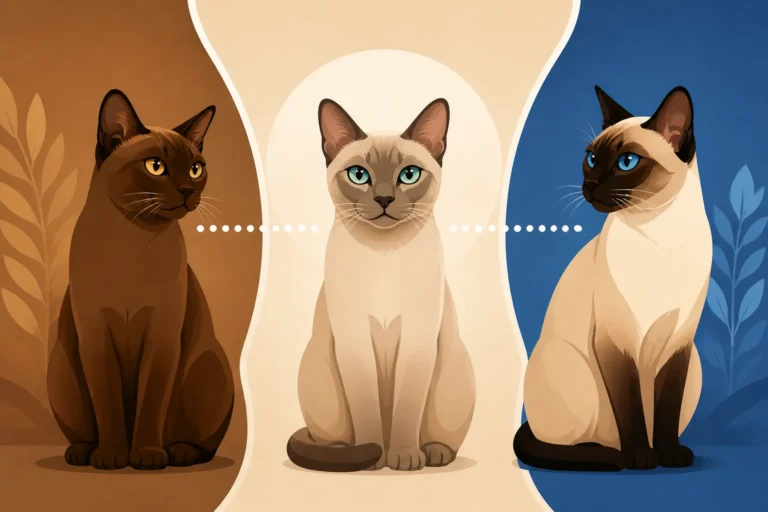
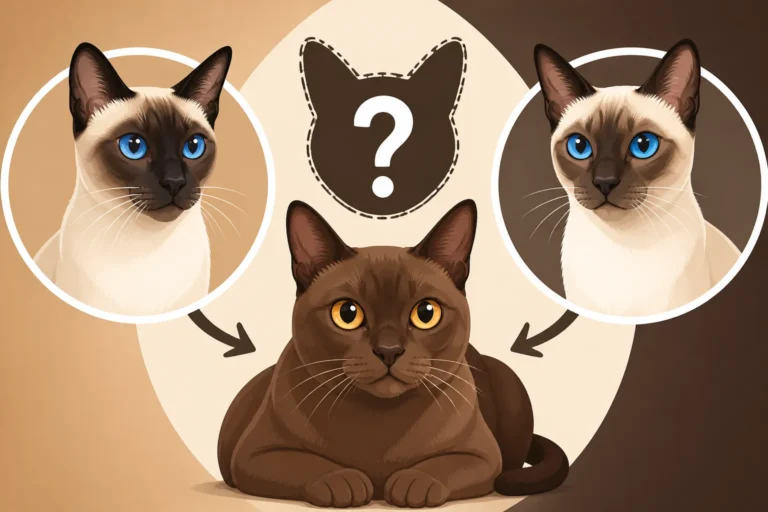
In the early breeding program, Wong Mau was mated with Siamese cats. Those matings helped produce the cats from which breeders selected the Burmese type. This means that when people ask how many founding Burmese there were, they are often combining two questions: how many Burmese-type founders were central to the breed’s development, and how many individual cats contributed ancestry to its earliest generations.
Those are not quite the same thing. Wong Mau is the most prominent early Burmese founder, but the Siamese cats used in the program were also ancestors of the cats that followed. The breed’s beginnings therefore involved a small group of cats, not one isolated Burmese ancestor. The exact individuals and their roles are best understood through the breeding records and historical accounts rather than a single headline number.
This early crossing also helps explain why the first generations could include kittens with different appearances. Breeders had to identify the cats with the desired Burmese traits and continue breeding those cats deliberately. Why the First Burmese Was Bred to a Siamese describes the purpose of those matings, while What Thompson's Program Proved About the Burmese explores what the results showed.
Why there is no simple number for the modern breed
A founder is not the same as every ancestor
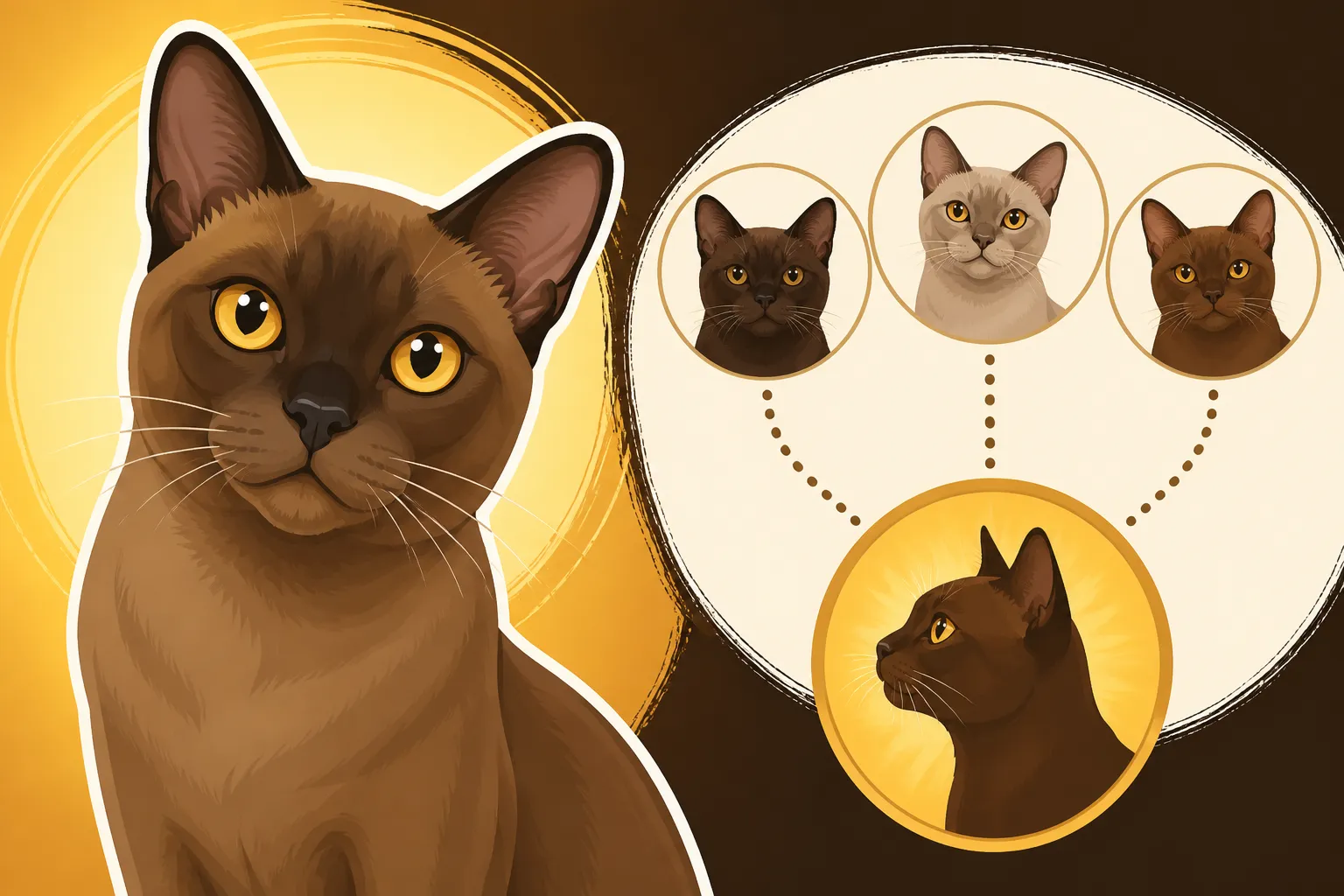
In animal breeding, a founder is an individual whose genes contributed to a population’s development. But a breed’s full ancestry includes more than its most famous founder. A pedigree can trace individual parents and grandparents for several generations, while the broader historical foundation may include cats whose names or records are less familiar to today’s owners.
That makes “how many founding Burmese” an imprecise question unless the time period and definition are clear. Someone might mean the number of cats in Dr. Thompson’s initial breeding program. Another person might mean the number of cats that contributed to the first recognized Burmese lines. Someone else might be asking how many original cats appear somewhere in the ancestry of modern Burmese cats. Those are different counts, and they do not necessarily have one agreed answer.
A pedigree also becomes more complicated with each generation. Two cats can share an ancestor without that ancestor appearing as a direct parent in the same way in every modern family tree. After many generations, the original cats remain part of the breed’s history, but the phrase “descends from” does not tell you how much genetic material a particular cat inherited from any one founder.
The breed’s early population was small
The Burmese breed developed from a narrow early foundation compared with populations that began with a large number of unrelated breeding cats. A small start can make certain ancestors especially important in the breed’s history, and it can mean that early breeding decisions had lasting influence. It does not, by itself, tell us the exact number of founders behind every present-day Burmese.
The early population also grew through planned breeding over time. Breeders selected cats that matched the developing Burmese type and continued those lines. The breed’s story is therefore better thought of as a sequence of generations and decisions, rather than a fixed group of founding cats that remained unchanged.
This history is part of why the Burmese is often discussed through specific early milestones. How Many Burmese Existed in the 1930s offers context for the breed’s small beginnings, while Why Siamese Hybrids Flooded Burmese Registration explains the complications that arose as the population expanded.
How registration rules shaped the Burmese ancestry
Registration was not just about appearance
As the Burmese became popular, distinguishing Burmese from cats with Siamese ancestry became an important issue for registration. A kitten might look Burmese but still have a pedigree that did not meet the standards being required for the breed. This was a problem of documented ancestry and breed definition, not simply a question of whether a cat had a brown coat.
The Cat Fanciers’ Association suspended Burmese registration in 1947 after concerns about the number of Siamese hybrids being registered as Burmese. Registration resumed only after breeders met stricter requirements, including establishing Burmese lines over several generations. That history is one reason why “founding cats” and “recognized Burmese ancestors” are not always interchangeable terms.
The suspension and later reinstatement did not erase Wong Mau’s role. Instead, they reflected an effort to establish a more clearly documented breed population. CFA Suspended the Burmese in 1947 and Took It Back describes this turning point, and What Three Generations Pure Meant for the Burmese explains why generational records became so important.
The American and European Burmese developed along different paths
The Burmese breed later developed into American and European types, which are shaped by different breed standards and breeding histories. Both are Burmese, but the two types have diverged in appearance and have separate histories within the cat fancy. That later split adds another layer to conversations about the breed’s ancestry.
It is useful to keep the timeline straight. Wong Mau’s role belongs to the earliest American development of the breed. The differences between American and European Burmese emerged later, as breeding populations and standards developed on different sides of the Atlantic. The modern types share the broader Burmese origin story, but their pedigrees and breeding programs are not identical.
If you are looking at a particular cat’s ancestry, the most useful evidence is its documented pedigree and the registry that records it, rather than an assumption based only on appearance. How the American and European Burmese Split provides more background on that later development.
| Question | What the historical record supports | What it does not establish by itself |
|---|---|---|
| Who was the central early founder? | Wong Mau was the pivotal cat in the American breed’s beginnings. | That Wong Mau was the only ancestor of the modern breed. |
| Did Siamese cats contribute? | Siamese cats were used in the early breeding program. | A single universal count of all foundation cats. |
| Why is the founder number unclear? | “Founder” can refer to different stages and groups of cats. | One exact number that applies to every modern Burmese pedigree. |
| Why did registration rules matter? | Breed registration required documented ancestry and clearer separation from Siamese hybrids. | That every early Burmese-looking cat was automatically accepted as a registered Burmese. |
| Are all modern Burmese lines identical? | American and European Burmese share the broader breed history. | That their modern pedigrees and standards are interchangeable. |
How to understand a Burmese pedigree today
Follow the records, not just the famous name
If you are researching a Burmese cat’s family tree, begin with the pedigree supplied by the breeder or registry. Check which cats are listed in the first generations and whether the cat is recorded as American or European type where that distinction applies. A pedigree gives you a documented line of descent; it is more useful for understanding an individual cat than a general statement that the breed “comes from Wong Mau.”
It can also help to ask what a breeder means when they describe a line as having a particular foundation or ancestry. They may be referring to a well-known historical ancestor, a specific branch of the breed, or a recent mating decision. Asking for the exact names and documents can turn a vague claim into something you can evaluate.
If you have adopted an adult Burmese without papers, you may not be able to reconstruct its complete ancestry. That does not make the cat any less Burmese in the everyday sense, but it does limit what can be confirmed about its pedigree. Routine supplies from a retailer such as Chewy can help with day-to-day care, but neither a product listing nor a breed label can verify a cat’s historical lineage.
Keep breed history separate from health decisions
A small founding population can be relevant to how people think about inherited traits, but it is not a diagnosis. A Burmese’s ancestry alone cannot tell you whether that individual cat carries a particular inherited condition. For health questions, rely on veterinary assessment and appropriate testing rather than trying to draw conclusions from a famous ancestor’s name.
For a kitten from a breeder, request the available pedigree and health-testing information, and ask which tests were performed on the parents. A responsible breeder should be able to explain what the results mean and how they inform breeding decisions. If records are incomplete, that is a reason to ask more questions, not a reason to assume either that a cat is unhealthy or that it has no inherited risks.
After bringing a Burmese home, keep its veterinary records and any pedigree documents together. Chewy may be a convenient place to find ordinary supplies such as food storage or litter, but it cannot replace documentation from a registry or a breeder. Keeping the distinction clear helps avoid a common frustration: having plenty of information about a cat’s appearance and products, but little reliable information about its actual ancestry.
The most accurate short answer is that the modern Burmese traces its early American development chiefly to Wong Mau, alongside Siamese cats used in the first breeding program. There is no single, uncomplicated number of founding Burmese that captures every early contributor and every modern pedigree. The breed grew from a small, selected foundation, and its documented history was shaped by generations of breeding and registration rules.
Disclaimer
This article is for general informational purposes only and does not constitute professional advice. Laws, prices and regulations vary by location and change over time. Consult a qualified professional for guidance on your specific situation.