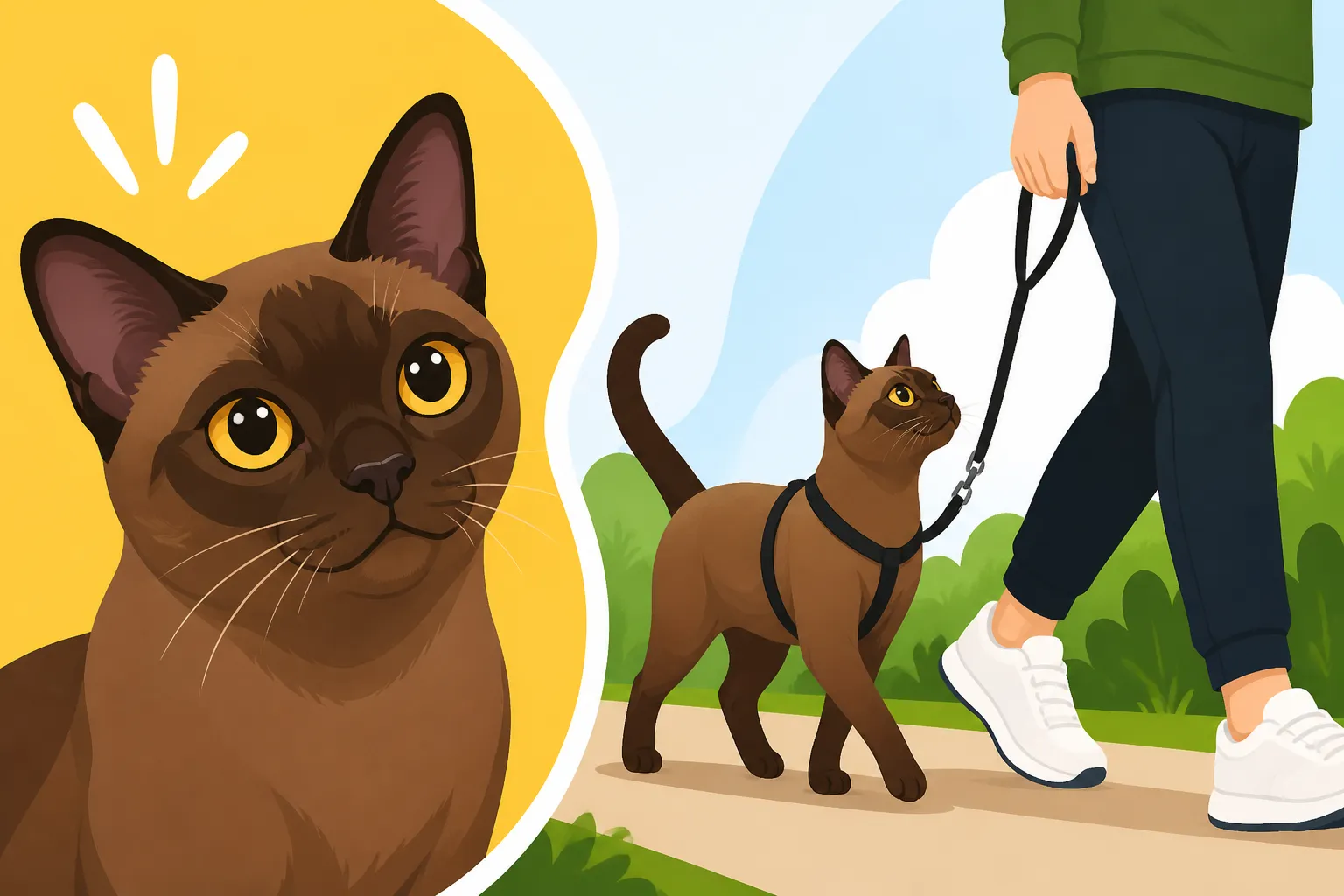
Leash Training a Burmese That Follows You Anyway
You know that feeling when you're just trying to walk from one room to another, and your beloved Burmese is right there, weaving between your ankles, tripping you up, making sure you never quite make it alone? It's their endearing, sometimes exasperating, way of showing affection. This natural "following" instinct makes the idea of leash training a Burmese seem almost redundant, or perhaps even unnecessary. However, embracing leash training can open up a world of safe, enriching outdoor adventures for your highly social and curious companion, offering new stimulation while keeping them safe from the many dangers the outside world presents.
Why Leash Training a Burmese Is Different
Let's be real: most cats bolt at the mere sight of a harness, let alone the thought of a walk. But Burmese cats? They're often cut from a different cloth. Their unique blend of dog-like devotion and insatiable curiosity means that while they might not need a leash to follow you from the kitchen to the living room, they certainly thrive on exploring the wider world with you by their side. This inherent desire to be near their human, coupled with a naturally confident demeanor, can make them surprisingly amenable to leash training compared to other breeds.
Their Innate Following Instinct: How It Helps and Hinders
The Burmese is famously known as the "Velcro cat" of the feline world. They want to be with you, on you, under you, and generally attached at the hip. This intense bond is both a blessing and a curse when it comes to leash training. On one hand, you won't struggle with a cat that wants to run off and explore alone; they’re far more interested in sticking by your side. They’re already predisposed to staying close, making the physical act of walking on a leash feel more natural to them, almost like an extension of their usual shadowing. You'll find them right there, eager to be included in whatever you're doing, including a walk. Why a Burmese Cannot Let You Leave the Room
On the other hand, this deep attachment can mean they might become overly dependent on your presence, and if you're not careful, they might not truly "learn" to walk on a leash but rather just follow you in harness. The goal isn't just for them to follow, but to calmly and confidently navigate the environment while tethered, understanding the boundaries the leash provides. It's about teaching them the difference between following you indoors and exploring safely outdoors on a structured walk. We want them to enjoy the experience, not just tolerate it.
The Social Butterfly Nature: Why They Trust Too Easily
One of the most charming, yet potentially dangerous, traits of a Burmese is their incredible friendliness. They genuinely believe everyone is their friend – dogs, children, strangers, even the mail carrier. This open-hearted nature, which makes them such delightful companions in a busy household, also means they have virtually no street smarts. Unlike many cats who are wary of new people and environments, a Burmese is likely to approach a stranger with a purr and a head-butt, utterly oblivious to any potential threat. This is where a leash becomes not just a tool for exploration, but a vital safety device. Why a Trusting Burmese Would Follow a Stranger
Taking your Burmese outside without a leash, even in what you perceive as a safe, enclosed area, is a huge gamble. Their curiosity is immense, and their trust in humans is almost boundless. A quick dart after a butterfly or a friendly greeting to an unfamiliar dog could lead to disaster. The leash is your way of managing their eagerness and protecting them from the very real dangers of traffic, unfamiliar animals, and individuals who might not have your cat's best interests at heart. Why a Burmese Has No Road Sense
Preventing Boredom and Anxiety: An Outlet for Their Energy
Burmese cats are incredibly intelligent and energetic. They retain their kittenish playfulness well into old age, often still demanding active play sessions when they're well over ten years old. How Much Play a Burmese Still Demands at Ten If not given enough mental and physical stimulation, they can easily become bored, which can manifest in unwanted behaviors like fabric chewing, excessive vocalization, or even overeating. Leash walks offer an incredible source of enrichment, providing new sights, smells, and sounds that can satisfy their curious minds.
Think of it as an outdoor puzzle game for them. They get to investigate new textures underfoot, sniff intriguing new scents on the breeze, and observe birds and squirrels from a safe distance. This kind of novel stimulation is fantastic for their psychological well-being, helping to ward off boredom and the potential for separation anxiety if they're left alone for periods. Even short, consistent walks can make a huge difference to their overall happiness and contentment. Why a Burmese Cannot Be Left Alone All Day
Choosing the Right Gear: Harnesses and Leashes for Your Burmese
Before you even dream of stepping outside, having the right equipment is paramount. A poorly fitting harness or an unsuitable leash can turn an exciting adventure into a terrifying experience for your cat, making them dislike the whole process. Comfort, security, and proper fit are the three non-negotiable factors when selecting your gear.
Understanding Harness Types: Why a Proper Fit Is Crucial
Not all harnesses are created equal, especially for a cat as agile and muscular as the Burmese. A simple H-style harness, which just goes around the neck and chest, can be easily slipped out of by a determined feline. For a Burmese, you want something more secure, often referred to as a "vest-style" or "step-in" harness. These harnesses distribute pressure more evenly across the chest and shoulders, preventing discomfort and making it much harder for your cat to escape.
Look for harnesses made of soft, breathable materials that won't chafe their delicate skin or get tangled in their short, satin-like coat. The fit should be snug, but not tight. You should be able to comfortably slide one or two fingers under the straps once it's on. If it's too loose, they can Houdini their way out; too tight, and it restricts movement and can cause pain. Many brands offer adjustable harnesses, which are excellent for getting that perfect fit. For instance, reputable brands available on platforms like Amazon often have detailed sizing guides and customer reviews that can help you find a suitable harness for your Burmese. Which Harness Fits a Burmese's Heavy Chest
Here's a quick comparison of common harness types:
| Harness Type | Description | Pros | Cons | Best for Burmese |
|---|---|---|---|---|
| H-Style Harness | Two loops, one around neck, one around chest, connected by a strap. | Lightweight, easy to put on. | Easy for cats to slip out of, pressure points can be uncomfortable. | Not recommended for most Burmese; too insecure. |
| Vest-Style Harness | Wider straps or fabric covering the chest and often the back. | Very secure, distributes pressure evenly, harder to escape. | Can be bulkier, some cats may resist initially due to coverage. | Highly Recommended: Offers excellent security and comfort for active cats. |
| Step-In Harness | Cat steps into two leg holes, then pulled up and fastened over the back. | Often comfortable, less fuss around the head for head-shy cats. | Must be sized precisely, can be less secure if not snug around the chest. | Good option if properly fitted, can be easier to put on for some cats. |
Leash Selection: Length, Material, and Comfort
For leashes, simplicity is key. A lightweight, standard four to six-foot leash is ideal. Avoid retractable leashes, especially for initial training. They offer little control, can snap back and injure you or your cat, and encourage pulling behavior by constantly applying tension. You want a fixed-length leash that allows your cat some freedom to explore a few steps ahead but keeps them close enough for you to react quickly to any hazards.
Choose a leash made of a durable yet comfortable material like nylon or cotton. A thin, flimsy leash might feel better in your hand, but it also means less control. Conversely, a thick, heavy leash can be cumbersome for your cat and drag them down. Look for a leash with a sturdy, lightweight clasp that securely attaches to the harness D-ring.
Introducing the Harness: Making It a Positive Experience
This is perhaps the most critical step. Your Burmese needs to associate the harness with positive things, not punishment or fear. Start slowly, indoors, and with lots of treats and praise.
- Just the Sight: Place the harness near their food bowl or favorite sleeping spot for a few days. Let them sniff it, bat at it, and get used to its presence. Don't force anything.
- The Touch: Gently drape the harness over their back for a few seconds, then remove it and offer a high-value treat. Repeat this several times a day, gradually increasing the duration. The goal is for them to associate the harness with delicious rewards.
- Wearing It (Briefly): Once they tolerate the drape, try fastening it, even if just for a minute. Immediately give treats, play with a favorite toy, or offer a meal. Distraction is your friend here!
- Gradual Increase: Over several days, slowly increase the time they wear the harness, always supervising them. Never leave a harnessed cat unattended, as they could get tangled or chew through it. If they flop over or act like a statue, it’s normal! Distract them with play or food until they forget about it and start moving naturally. Why a Burmese Enjoys Being Handled From the Start This is about patience and positive association.
The Step-by-Step Guide to Leash Training Your Burmese
Once your Burmese is comfortable wearing their harness, you're ready to introduce the leash and start the actual training process. Remember, consistency and positive reinforcement are your best allies.
Starting Indoors: The First Steps in a Safe Environment
Begin all leash training indoors, where your cat feels safe and there are no external distractions.
- Attach the Leash: With the harness already on, attach the leash. Let the leash drag on the floor initially, allowing your cat to get used to the feel and weight. Supervise closely so they don't get tangled.
- Guided Exploration: Once they're okay with the dragging leash, pick it up. Don't pull or drag them. Simply follow them around the house, letting them lead. Offer treats and praise as they move naturally with the leash attached.
- Gentle Pressure: When you want to encourage them in a certain direction, apply very light, gentle pressure on the leash. As soon as they take a step in that direction, release the pressure and reward them. The idea is for them to learn that giving in to the leash's direction results in positive outcomes, not force. This helps them understand the concept of "give to pressure."
- Short Sessions: Keep these indoor sessions very short, perhaps 5-10 minutes max, especially at first. End on a positive note, remove the harness, and reward them again. The goal is to build positive associations, so avoid pushing them too far or letting them get frustrated.
Graduating to the Outdoors: Short, Supervised Excursions
Once your Burmese is confidently walking on the leash indoors, it's time to test the waters outside.
- Choose a Safe, Quiet Spot: Your first outdoor excursion should be in a very controlled environment. A quiet backyard, a calm patio, or a very secluded part of a park with minimal foot traffic are ideal. Avoid busy streets, dog parks, or areas with loud noises. Where a Burmese Can Be Walked Without Meeting Strangers
- Carry Them Out: Don't let them walk out the door the first few times. Carry your harnessed and leashed Burmese outside to your chosen spot. This prevents them from associating the front door with an immediate escape route and allows them to adjust to the outdoor environment without the stress of navigating a busy threshold.
- Let Them Explore: Once outside, put them down and let them lead. Don't drag them along. Your role is to supervise, keep them safe, and let them sniff and investigate at their own pace. They might just sit and observe for a while, which is perfectly fine. Praise them for calm behavior.
- Short and Sweet: Keep initial outdoor sessions very brief – just a few minutes. Gradually increase the duration as they become more comfortable and confident. The goal is to make it a positive, enriching experience, not a stressful marathon.
- Observe and Adapt: Pay close attention to their body language. Are their ears flat? Tail tucked? Are they trying to hide or get back inside? These are signs they're overwhelmed. If so, shorten the session or choose an even quieter spot next time. A relaxed Burmese will have curious ears, a high tail, and an engaged posture.
Positive Reinforcement: Making Walks Enjoyable
Positive reinforcement is the backbone of all effective animal training, and it's especially crucial for sensitive and intelligent cats like the Burmese.
- High-Value Treats: Stock up on their absolute favorite treats. These should be special rewards reserved only for training sessions. Think freeze-dried chicken, salmon paste, or tiny pieces of cooked meat.
- Verbal Praise: Use a happy, encouraging tone of voice. Say things like "Good cat!" or "Yes, walk!" when they're doing well.
- Clicker Training (Optional but Effective): If you're familiar with clicker training, this can be incredibly useful. The click marks the exact moment your cat performs the desired behavior, followed immediately by a treat. This precision helps them understand exactly what they're being rewarded for. Which Tricks a Burmese Learns for a Piece of Food
- Play as a Reward: Sometimes, a short burst of play with a favorite wand toy is an even better reward than a treat. Use whatever motivates your individual cat the most.
- Consistency: Regular, positive sessions are far more effective than infrequent, long ones. Aim for a few short sessions daily or every other day to build momentum and solidify the learning. Remember, this isn't about control, it's about partnership and shared enjoyment.
Safety First: What to Watch Out For When Walking Your Burmese
While leash walks can be incredibly beneficial, they also come with responsibilities. Your Burmese's safety should always be your top priority.
Avoiding Overstimulation: Choosing the Right Environment
The outside world is a cacophony of new experiences for a cat used to indoor living. While this can be enriching, it can also be overwhelming, leading to stress, fear, or even panic.
- Start Small, Stay Local: As mentioned, begin in very quiet, familiar areas. Avoid busy parks, dog-walking trails, or areas with heavy traffic or construction. The goal is for your cat to enjoy the experience, not be terrified by it.
- Observe Their Reaction: Watch your Burmese closely. If they seem stressed (flattened ears, crouching, wide eyes, trying to bolt), it's time to go home. You can try again in a calmer environment or shorten the next session.
- Time of Day: Consider walking during quieter times of day – early mornings or late evenings often have less human and animal activity. This can significantly reduce potential stressors.
- No Crowds: A Burmese might be a social butterfly, but a large, noisy crowd is still too much. They need to feel secure and safe with you as their protector. Whether a Burmese Will Sit in an Empty Room
Stranger Danger: Their Trusting Nature Can Be a Liability
We've talked about how friendly Burmese cats are, but it bears repeating in the context of outdoor safety. Their lack of natural caution around strangers means you need to be their vigilant bodyguard.
- Keep Them Close: Always keep your Burmese on a short leash when encountering other people or animals. This prevents them from dashing over for an impromptu greeting or getting into an altercation.
- Politely Decline Interaction: It's okay to say "no" if someone asks to pet your cat, especially if your cat seems hesitant or if you're in a busy area. Your cat's safety and comfort come first. Explain that your cat is in training or prefers not to be handled by strangers.
- Beware of Dogs: Even the friendliest dogs can unintentionally scare or injure a cat. Always be prepared to pick up your cat or move away if you see an off-leash dog approaching. It's better to be overly cautious than risk an incident.
Weather and Pavement Considerations: Protecting Their Paws and Coat
Cats are sensitive to environmental conditions, and their bodies aren't designed for extreme weather or rough terrain.
- Temperature Checks: Burmese cats have very short, sleek coats and almost no undercoat, meaning they feel the cold easily. Avoid walking them in very cold, wet, or windy weather. Similarly, hot pavement can burn their paw pads. If it's too hot for your bare hand to comfortably rest on the pavement for five seconds, it's too hot for your cat's paws. Stick to shaded, grassy areas on warm days. Why a Short Coated Burmese Feels the Cold
- Rough Terrain: Hard, abrasive surfaces like concrete or gravel can be tough on delicate paw pads. Opt for soft grass, smooth dirt paths, or even a soft mat if you're just introducing them to a small outdoor space like a balcony.
- Chemical Hazards: Be mindful of where you're walking. Avoid areas that might have been treated with pesticides, herbicides, or de-icing salts, as these can be toxic if ingested or irritating to their paws.
- Parasite Prevention: Ensure your Burmese is up-to-date on all flea, tick, and worm prevention if they're going outdoors. Outdoor excursions increase their exposure to these common parasites. Consult your vet for the best preventative measures in your area.
Leash training a Burmese is a wonderful way to deepen your bond and provide them with stimulating adventures. It requires patience, consistency, and a keen eye for their comfort and safety, but the rewards of seeing your curious companion confidently explore the world with you are immeasurable.
Disclaimer
This article is for general informational purposes only and does not constitute professional advice. Laws, prices and regulations vary by location and change over time. Consult a qualified professional for guidance on your specific situation.