What GM2 Gangliosidosis Does to a Burmese
GM2 Gangliosidosis in Burmese cats is an inherited neurological disorder caused by a missing lysosomal enzyme that damages nerve cells.
Know what to watch for.
Breed-specific conditions, screening and DNA tests, what surgery actually costs, and the daily habits that stretch a healthy lifespan.
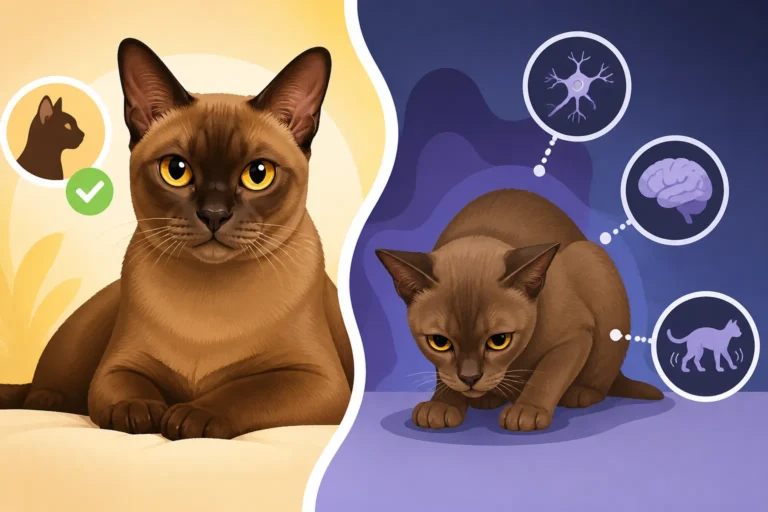
GM2 Gangliosidosis in Burmese cats is an inherited neurological disorder caused by a missing lysosomal enzyme that damages nerve cells.
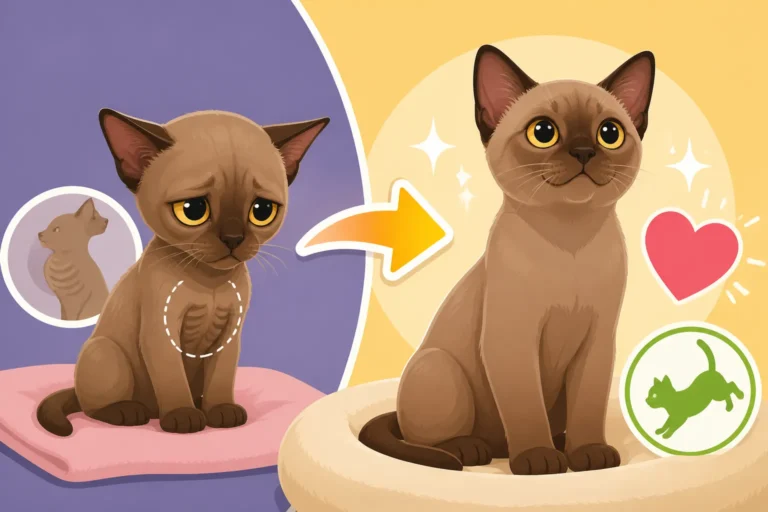
Flat-chested kitten syndrome in newborn Burmese cats, rib cage abnormalities, recovery outlooks, and supportive care methods for breeders.
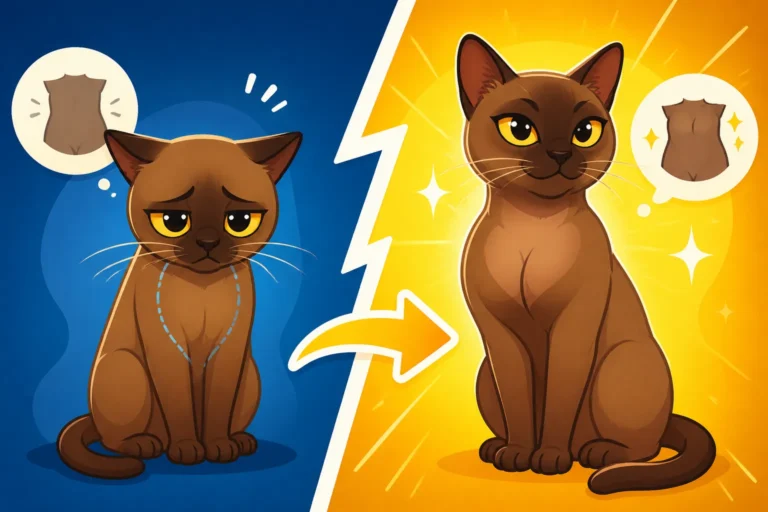
Flat Chested Kitten Syndrome causes rib cage flattening in newborn Burmese litters, restricting breathing and heart function within days of birth.

Burmese head defect is a fatal genetic disorder causing severe neurological damage, requiring responsible breeding and genetic testing to prevent.
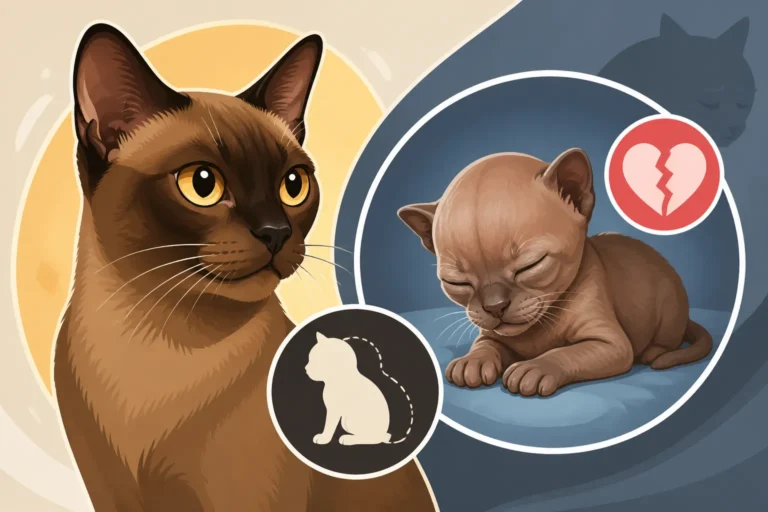
Burmese head defect is a severe recessive craniofacial anomaly causing fatal skull and jaw malformations in newborn kittens.
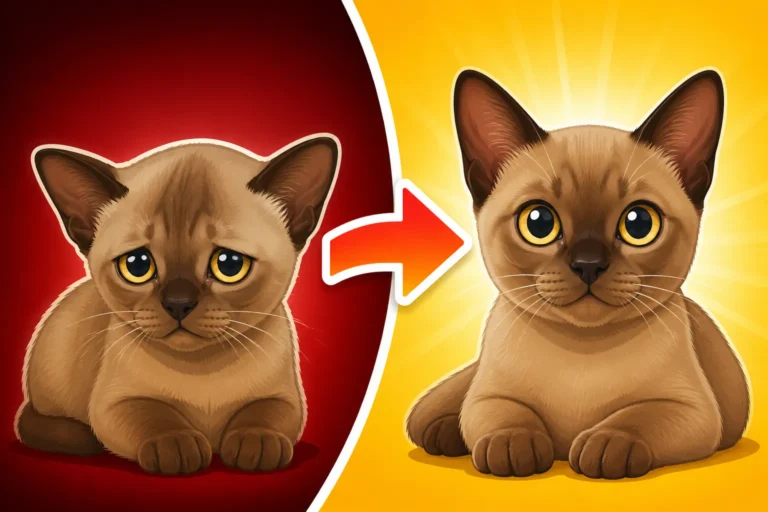
Burmese head defect causes severe craniofacial abnormalities in kittens when inherited as a recessive genetic trait from carrier parents.
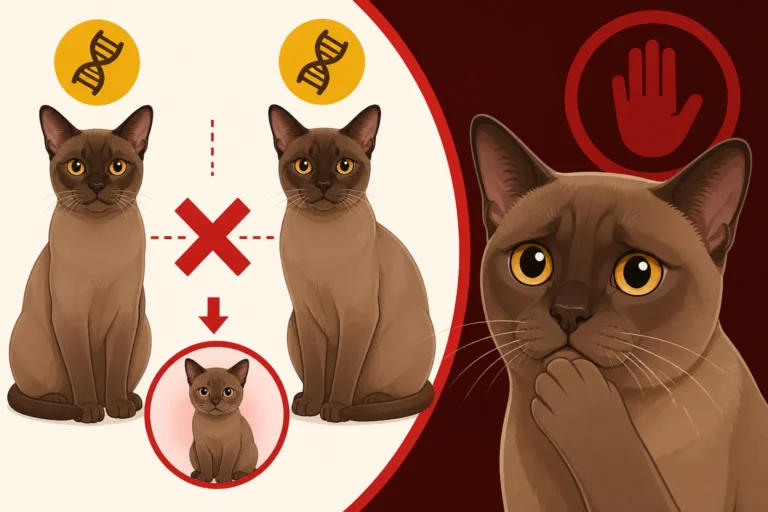
Breeding two Burmese cats that carry the faulty WNK4 gene passes severe hypokalemia and debilitating muscle weakness to kittens.
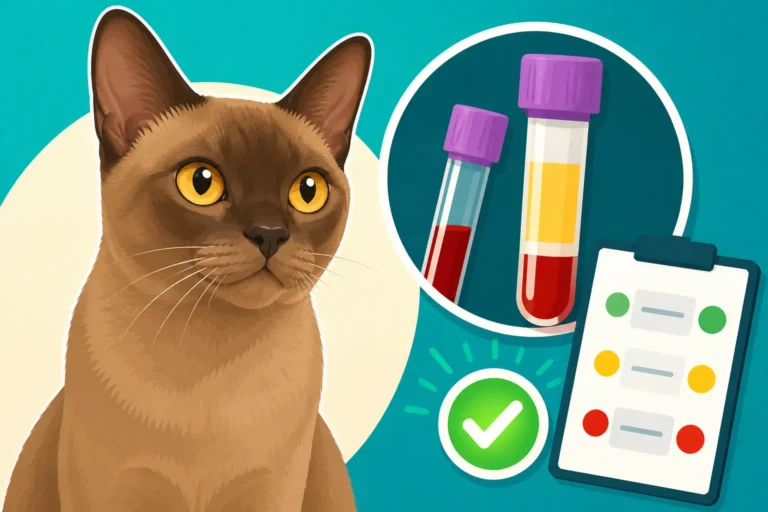
The Burmese hypokalemia DNA test detects WNK4 gene mutations causing low potassium and muscle weakness to interpret test results.
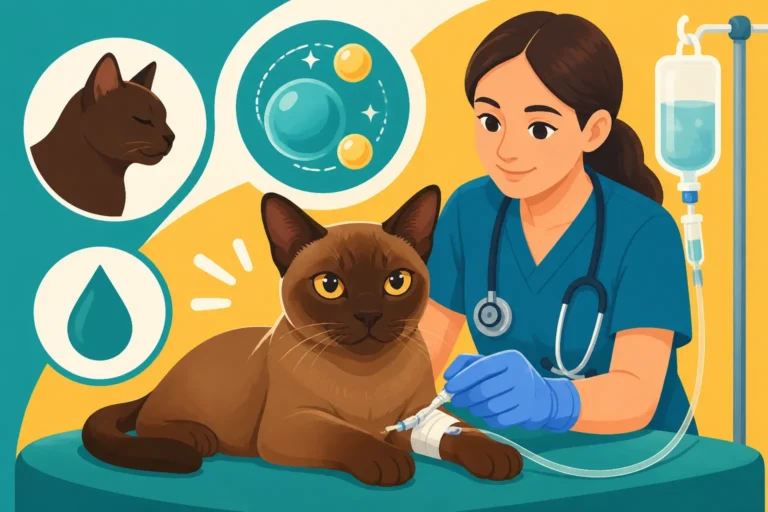
Veterinary diagnosis and treatment of hypokalemic episodes in Burmese cats explain sudden muscle weakness and neck drooping.
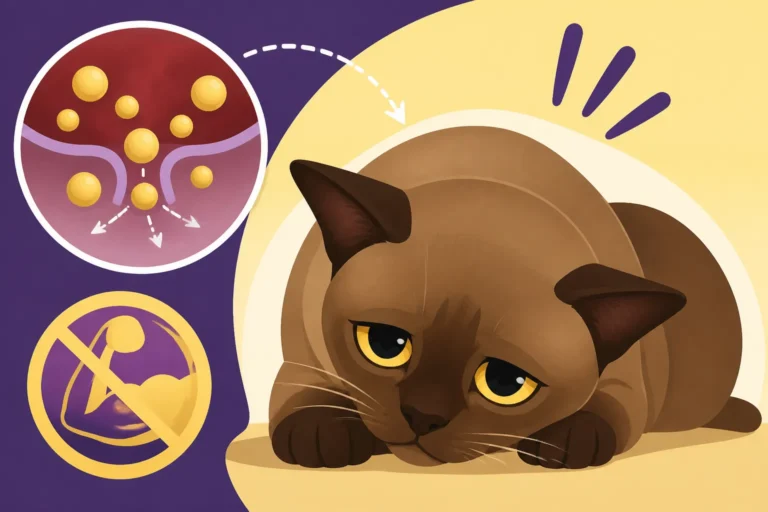
Hypokalemic Burmese cats suffer from low blood potassium caused by a genetic WNK4 gene mutation that triggers muscle weakness.