What a Full Burmese Genetic Panel Costs
Bringing a Burmese into your home is an incredible joy, but many prospective owners grapple with the understandable worry about potential hidden health costs. You've heard whispers about certain breed-specific conditions, and the idea of unexpected vet bills can be daunting. This comprehensive guide is here to shed light on what a full Burmese genetic panel entails, why it's so important, and the general shape of the costs involved, so you can make informed decisions for your beloved feline companion.
Understanding the Importance of a Burmese Genetic Panel
When you welcome a Burmese into your life, you're not just getting a cat; you're getting a member of a specific breed with a unique genetic heritage. And with that heritage come certain predispositions, some wonderful, and some that require careful attention. Genetic testing isn't about finding flaws; it's about understanding and preparing, which ultimately leads to a healthier, happier life for your cat and less stress for you.
Why Genetic Testing Isn't Just "Nice to Have" for a Burmese
Let's be real: nobody wants to discover their cherished pet is suffering from a preventable illness, especially one rooted in genetics. Burmese cats, for all their affectionate charm, are known to carry a few particular genetic quirks. Conditions like Hypokalemia, sometimes colloquially known as Burmese Head Tilt, and Burmese Head Defect, are serious, breed-specific issues that can cause immense suffering if not identified. Then there's the incredibly high rate of diabetes in the breed – a condition that, while not purely genetic in the same way a recessive gene might be, has a strong inherited component that makes genetic screening vital for understanding predisposition.
For responsible breeders, testing is absolutely non-negotiable. They're trying to improve the breed, not perpetuate problems. By knowing the genetic status of their breeding cats, they can make informed decisions to avoid passing on deleterious genes, ensuring healthier lines for generations to come. For pet owners, this means a better chance of bringing home a kitten free from these devastating conditions, saving untold emotional and financial heartache down the line. Imagine the relief of knowing you've done everything in your power to give your kitten the best possible start. It truly transforms the narrative from reactive crisis management to proactive, loving care. This preventative approach is the cornerstone of good ownership. Why a Burmese Breeder Must Test Before Any Mating
The Peace of Mind a Panel Provides for Owners
The emotional investment we make in our pets is huge. We want them to live long, healthy lives, free from pain and suffering. A genetic panel provides invaluable peace of mind because it removes a significant chunk of the "what ifs" related to inherited diseases. Knowing your cat's genetic status allows you to engage in proactive, preventative care from day one. If your Burmese is identified as a carrier for a condition that might not manifest until later in life, or if they have a strong predisposition to something like diabetes, you can work with your veterinarian to implement early screening, dietary changes, or lifestyle adjustments. For instance, understanding a predisposition to diabetes means you can be incredibly diligent about Why Portion Control Is Medical Care in a Burmese and maintain a healthy weight.
This knowledge empowers you to reduce anxiety about potential future health issues because you're no longer operating in the dark. It means you can focus more on enjoying your cat's playful personality and less on constantly worrying if every sniffle or change in behavior is a sign of something serious. It’s an investment in their future health, which in turn is an investment in your peace of mind and the depth of your bond. When you know, you can act, and that's a powerful thing for any devoted cat parent.
Key Genetic Tests Included in a Full Burmese Panel
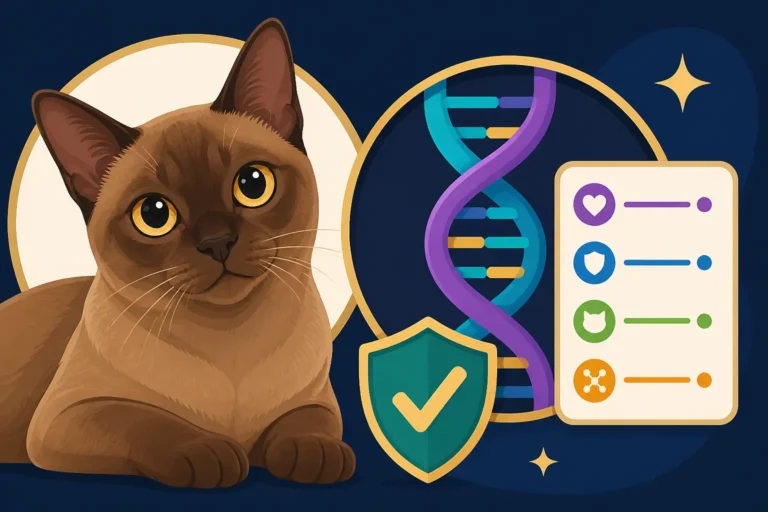
A "full" genetic panel for a Burmese isn't just one test; it's a suite of targeted investigations designed to uncover the breed's most common and serious inherited conditions. Each test addresses a specific vulnerability, and understanding what they cover is key to appreciating their value.
The Non-Negotiable: Hypokalemia (Burmese Head Tilt)
Perhaps one of the most well-known genetic conditions in the Burmese breed is Hypokalemia, also sometimes referred to as Familial Episodic Hypokalemic Polymyopathy (FEHP). This condition, linked to a mutation in the WNK4 gene, affects a cat's potassium levels, leading to episodes of muscle weakness. During an episode, a Burmese might struggle to lift its head, appear unsteady, or have difficulty walking. It can be incredibly distressing to witness, and while episodes can vary in severity and frequency, they are often triggered by stress, exercise, or even certain foods.
Testing for the WNK4 mutation is absolutely crucial because it's an inherited condition. Cats can be "clear" (two healthy copies of the gene), "affected" (two mutated copies, leading to the condition), or "carriers" (one healthy, one mutated copy). Carriers generally don't show symptoms themselves but can pass the mutated gene on to their offspring. This is why thorough testing is essential for breeders to prevent affected kittens from being born. For an owner, knowing your cat's status helps you and your vet monitor potassium levels and manage potential triggers, or simply rule out this worrying condition if your cat presents with similar symptoms later. Understanding How the Burmese Hypokalemia Test Is Read is an important part of knowing what the results mean for your cat.
Other Critical Conditions: Head Defect and GM2 Gangliosidosis
Beyond hypokalemia, two other significant genetic conditions warrant inclusion in a comprehensive Burmese panel:
-
Burmese Head Defect: This is a truly devastating, recessive genetic condition that affects the development of a kitten's skull. Kittens born with this defect typically have severe deformities of the head and face, often including a lack of nasal bones, a small lower jaw, and an open fontanelle. Sadly, Burmese Head Defect Is Lethal and Recessive, and affected kittens are usually stillborn or humanely euthanized shortly after birth due to their inability to survive. The gene responsible for this defect is recessive, meaning a kitten must inherit two copies (one from each parent) to be affected. Again, parents can be carriers without showing any signs, making genetic testing absolutely vital for breeders to identify carriers and prevent tragic matings.
-
GM2 Gangliosidosis: This is another severe, progressive neurological disorder that impacts the Burmese. It's a lysosomal storage disease, meaning the cat's body lacks a specific enzyme needed to break down certain waste products, which then build up in the brain and nervous system. Kittens with GM2 gangliosidosis typically start showing signs of neurological problems, such as tremors, ataxia (uncoordinated movements), and progressive weakness, usually between 2 to 4 months of age. The condition is ultimately fatal. Like head defect, it's a recessive condition, and carriers are asymptomatic but can pass the gene to their offspring. A genetic panel screens for the specific mutation associated with this disease, giving breeders and owners critical information to prevent or prepare for such a serious diagnosis.
Including these tests ensures a thorough understanding of your Burmese's genetic health, offering the best possible chance to avoid these heartbreaking conditions.
Diabetes Predisposition and Other Health Markers
The Burmese breed has a notoriously high incidence of diabetes mellitus. In fact, The Burmese Has the Highest Diabetes Rate of Any Cat Breed, far exceeding that of other breeds. While diabetes is complex and influenced by diet, weight, and lifestyle, there's a strong genetic predisposition at play here. While genetic testing can't definitively say "your cat will get diabetes," it can identify markers associated with a higher risk.
These markers provide invaluable information, especially when paired with responsible ownership practices. If your Burmese carries these predisposition markers, you become even more vigilant about their diet, ensuring a low-carbohydrate, high-protein regimen, maintaining an ideal weight, and ensuring regular exercise throughout their life. It means early conversations with your vet about screening, potentially starting glucose checks earlier in their life, and being acutely aware of signs like increased thirst or urination. This isn't about diagnosing diabetes, but about empowering you to delay its onset or even prevent it entirely through careful management.
Some comprehensive panels might also screen for other general feline health markers or conditions found in various breeds, though the conditions listed above are the most critical and breed-specific for the Burmese. Knowing about predispositions means you can tailor your cat's care, from their food to their routine check-ups, giving them the best shot at a long and healthy life.
Factors Influencing the Cost of a Burmese Genetic Panel
The cost of a full Burmese genetic panel isn't a one-size-fits-all number. Several factors come into play, from what you choose to test for to where you get the testing done. Understanding these variables can help you budget appropriately.
Single Test vs. Comprehensive Panel Pricing
You might assume that choosing individual tests for specific conditions would be cheaper than ordering a comprehensive panel, but that's not always the case. Many reputable veterinary genetics laboratories offer "breed panels" which bundle together all the most relevant tests for a particular breed, like the Burmese, at a discounted rate compared to ordering each test separately.
For example, if you were to order tests for Hypokalemia, Head Defect, and GM2 Gangliosidosis individually, the cumulative cost could often exceed that of a dedicated Burmese panel that includes all of these, plus sometimes even additional markers. Laboratories often streamline their processes for panels, passing those efficiencies on as cost savings to the client. Breeders, in particular, almost always opt for comprehensive panels because they need a full genetic profile of their breeding animals. For a pet owner, it still makes sense to get the comprehensive panel as it gives you the most complete picture of your cat's genetic health.
The Role of the Testing Laboratory and Its Reputation
Just like with any service, different laboratories will have different pricing structures for their genetic testing. Some labs are larger, more established, and specialize in specific breeds, offering highly accurate and reliable results. These labs might have slightly higher base prices, but they often come with the assurance of robust quality control, expert interpretation, and good customer support.
It's wise to consider laboratories that are well-regarded within the feline genetics community and by Burmese breeders. These labs are often recommended by breed clubs and veterinarians. Which Lab Runs the Burmese Hypokalemia Test can be a great starting point for your research, as some labs have specialized expertise in that particular mutation. While cost is a factor, prioritizing a reputable lab ensures the accuracy and reliability of your results, which is paramount when making health decisions for your cat. The old adage "you get what you pay for" often holds true here; a cheap test isn't worth much if the results are questionable.
Breeder's Choice vs. Owner-Initiated Testing
Ideally, when you acquire a Burmese kitten from a responsible breeder, they will have already performed comprehensive genetic testing on both parent cats. A good breeder will be transparent about these results, providing documentation for both the sire and dam (and often the kitten itself, if it was tested). In this scenario, the cost of the genetic panel is typically absorbed into the purchase price of the kitten, reflecting the breeder's investment in healthy lines. This is a critical point to discuss with any potential breeder, as it indicates their commitment to the breed's health.
However, sometimes an owner might initiate testing themselves. This could be if you've rescued a Burmese whose history is unknown, if you acquired a cat from a less scrupulous breeder who didn't perform tests, or if you simply want to re-verify results or add additional tests. Why a Rescue Burmese Should Still Be Tested is especially pertinent because their background is often a mystery, and understanding their genetic predispositions can profoundly impact their ongoing care. While you'll bear the direct cost in these situations, the information gained is incredibly valuable for tailoring their care and addressing any potential issues early.
What to Expect When Getting Your Burmese Tested
The idea of genetic testing might sound complex, but the process for getting your Burmese tested is surprisingly straightforward and minimally invasive. It's designed to be as stress-free as possible for both you and your cat.
The Simple Process of Sample Collection
For most feline genetic panels, the sample required is a simple cheek swab. That's right, no blood draws, no trips to the vet just for sample collection – you can often do it yourself right in your living room! The testing kit typically includes sterile swabs that you gently rub on the inside of your cat's cheek and gums for about 10-15 seconds to collect epithelial cells. It's painless and quick, and most Burmese, being the affectionate and tolerant cats they are, will put up with it with minimal fuss, perhaps just a confused head tilt or a playful batting at the swab.
The key is to collect enough cells and to avoid contamination. The kit will usually come with detailed instructions, but generally, you'll need to make sure your cat hasn't eaten or nursed for at least 30-60 minutes before swabbing to avoid food particles on the swab. Once collected, the swab is air-dried and then sealed in a provided envelope. That's it! You then mail it back to the laboratory. Why a Burmese Cheek Swab Is Enough is because these cells contain all the DNA needed for analysis. It's such an easy process that there's truly no reason to skip this vital step.
Receiving and Interpreting Your Results
Once your sample reaches the lab, it typically takes a few weeks for the results to be processed. The turnaround time can vary depending on the lab and the specific tests ordered. Most labs will provide a clear, easy-to-read report, usually via email or an online portal. The results for specific genetic conditions will generally fall into one of three categories:
- Clear/Homozygous Normal: This means your cat has two healthy copies of the gene and is not affected by the condition, nor can they pass it on. This is the ideal result for breeding animals and offers immense peace of mind for pet owners.
- Carrier/Heterozygous: This means your cat has one healthy copy and one mutated copy of the gene. For recessive conditions like Hypokalemia, Head Defect, or GM2 Gangliosidosis, a carrier cat will not show symptoms of the disease itself. However, they can pass the mutated gene to their offspring. This is critical information for breeders to avoid mating two carriers together, which would result in affected kittens. For a pet cat, being a carrier might simply mean nothing, but it's still good to know.
- Affected/Homozygous Affected: This means your cat has two mutated copies of the gene and is, or will be, affected by the condition. This result necessitates a discussion with your veterinarian about managing the condition, monitoring for symptoms, and potential treatment plans.
It's highly recommended to review the results with your veterinarian or an experienced Burmese breeder. They can help you understand the implications of each result, especially if your cat is a carrier or affected, and guide you on any necessary next steps.
Budgeting for the Cost: Beyond the Initial Fee
While the upfront cost of the genetic panel itself is a primary consideration, it's important to think about potential associated costs. If a genetic predisposition or carrier status is identified, there might be subsequent expenses. For example, if your Burmese is found to be a carrier for Hypokalemia, you might choose to monitor their potassium levels periodically, which involves vet visits and blood tests. If they have a strong predisposition to diabetes, you might invest in specific low-carbohydrate foods or home glucose monitoring equipment.
Pet insurance is another consideration. While an insurance policy from a provider like Healthy Paws is invaluable for covering unexpected illnesses and accidents, it’s crucial to understand that conditions identified as genetic or pre-existing before you obtain coverage are often excluded. Therefore, getting genetic testing done early, ideally before purchasing insurance, and then securing a policy, can be a strategic move to ensure broader coverage for other potential health issues down the line. It's a layer of preparedness that can protect both your cat's health and your wallet in the long run. Whether a Diabetic Burmese Can Be Insured is a very real question for owners, so early testing is vital.
Maximizing Value and Ensuring Accuracy
Genetic testing is an investment, and like any investment, you want to ensure you're getting the best possible return: accurate information that genuinely contributes to your Burmese's health and longevity.
Choosing a Reputable Laboratory
The accuracy of your genetic panel hinges entirely on the quality and expertise of the laboratory performing the tests. Don't simply opt for the cheapest option. Instead, seek out laboratories that are well-established, have a strong reputation in feline genetics, and are frequently used and recommended by reputable Burmese breeders and veterinary geneticists.
Often, breed clubs will have a list of preferred testing facilities. Your veterinarian can also be an excellent resource for recommendations. Look for labs that clearly outline their testing methodologies, offer comprehensive panels specifically for the Burmese breed, and provide clear, understandable reports. These are the labs that will give you truly reliable and actionable results. When you're considering Which Tests Belong on a Burmese DNA Panel, ensure your chosen lab offers all the critical ones we've discussed.
Discussing Results with Your Veterinarian
Receiving a genetic report, especially if it indicates a carrier status or predisposition, can sometimes feel overwhelming. It's easy to jump to conclusions or misinterpret complex scientific language. This is where your veterinarian becomes an indispensable partner. Schedule an appointment to go over the results together.
Your vet can help you:
- Understand the specific implications: What does a "carrier" status for Hypokalemia truly mean for your individual cat's health?
- Develop a monitoring plan: If there's a predisposition to diabetes, what are the early signs to watch for? How often should blood glucose be checked?
- Implement preventative strategies: This might involve dietary adjustments, exercise routines, or specific supplements.
- Address any concerns: Your vet can provide context, offer reassurance, and help you navigate any anxieties you might have about the results.
This collaborative approach ensures that the genetic information translates into concrete, beneficial care for your Burmese.
The Long-Term Financial and Health Benefits
While there's an upfront cost associated with a full Burmese genetic panel, the long-term financial and health benefits far outweigh this initial investment. Consider the alternative: unknowingly bringing home a kitten that is affected by a severe genetic disorder, leading to extensive veterinary care, expensive medications, emergency visits, and profound emotional distress. The costs of managing a chronic condition, or worse, the heartbreak of losing a beloved pet early, can be astronomical, both financially and emotionally.
By investing in a genetic panel, you're potentially preventing these scenarios. You're giving your Burmese the best chance at a full, healthy life, free from preventable genetic diseases. Knowing their genetic makeup allows for proactive health management, often delaying or mitigating the onset of conditions like diabetes. This foresight can lead to fewer vet visits for illness, lower medication costs, and ultimately, a longer, happier, and healthier life for your furry companion. It's an investment in their future, and in the enduring joy, they bring to your family. After all, the goal is for your Burmese to enjoy The Sixteen to Eighteen Years a Well Bred Burmese Gets as fully and robustly as possible.
| Genetic Condition | What It Tests For | Why It's Important | Cost Impact (Relative) |
|---|---|---|---|
| Hypokalemia (WNK4 Mutation) | Detection of the specific genetic mutation | Prevents muscle weakness episodes; informs breeding decisions for carriers | Moderate |
| Head Defect | Recessive gene for severe skull deformities | Prevents birth of non-viable kittens; informs breeding decisions | Moderate |
| GM2 Gangliosidosis | Recessive gene for neurological storage disease | Prevents fatal neurological disorder; informs breeding decisions | Moderate |
| Diabetes Predisposition | Genetic markers associated with increased diabetes risk | Allows for proactive dietary and lifestyle management to delay/prevent onset of disease | Lower |
| Comprehensive Breed Panel | All of the above, often bundled with other markers | Most thorough understanding of breed-specific health risks for pet and breeding cats | Higher |
Disclaimer
This article is for general informational purposes only and does not constitute professional advice. Laws, prices and regulations vary by location and change over time. Consult a qualified professional for guidance on your specific situation.