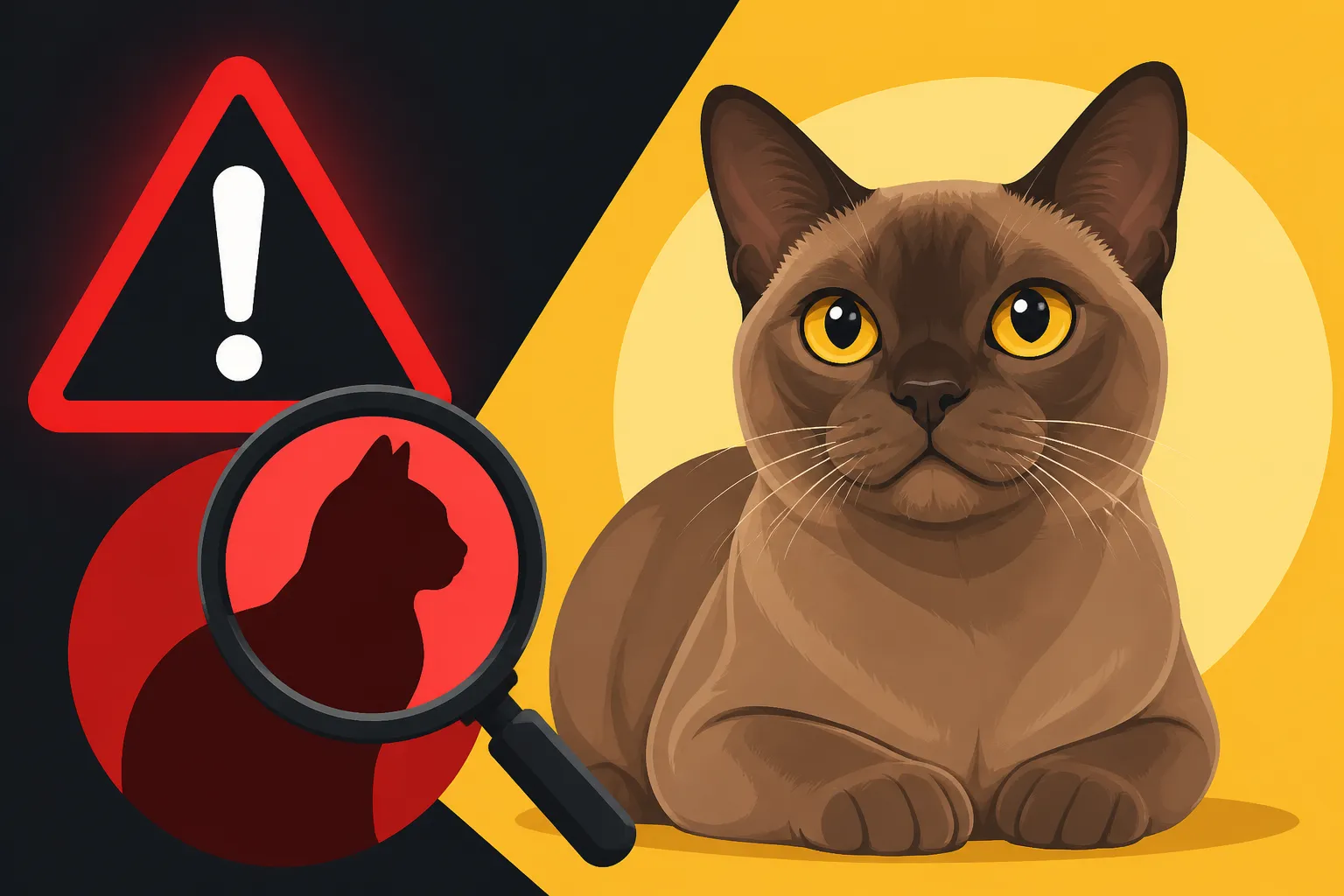
Why a Burmese Advertised as Rare Colored Is a Warning
It's incredibly tempting to fall for the allure of something unique, especially when you're looking for a beloved pet. We've all seen those listings – a gorgeous kitten advertised with a tantalizing phrase like "rare color" or "exclusive shade." For anyone dreaming of bringing a Burmese cat into their home, seeing such a claim should immediately trigger a sense of caution, not excitement. This guide is here to unravel why an advertisement touting a "rare colored" Burmese kitten is a significant red flag, helping you navigate the sometimes murky waters of purebred cat acquisition and ensure you find a healthy, well-bred companion.
The Standard Burmese Colors: A Matter of Genetics, Not Rarity
When we talk about the Burmese cat, we're talking about a breed with a very specific, well-defined genetic makeup that dictates its appearance. The beautiful, short, satin-like coat of a Burmese comes in a handful of recognized colors, and these colors aren't "rare" or "exclusive" in the way some advertisements might suggest. They are the result of specific genes that have been carefully bred for generations to maintain the breed's distinct look and health.
Understanding the Four Core Burmese Colors
The Burmese breed, whether you're looking at the American or European type, officially recognizes four primary colors. These aren't just arbitrary distinctions; they're direct expressions of the breed's genetic code.
- Sable (or Brown): This is the original and most common Burmese color, a rich, dark sepia brown that often deepens with age. Kittens are usually born a lighter shade and gradually darken. You'll find detailed descriptions in articles like What a Sable Burmese Looks Like.
- Champagne (or Chocolate): A warm, lighter fawn-brown, reminiscent of milk chocolate. Like sable, champagne kittens start lighter and darken as they mature. For more on this, check out What a Champagne Burmese Looks Like.
- Blue: A soft, medium grey with a slight bluish cast. This is a dilute version of sable. It’s elegant and subtle. Discover more about this hue in What a Blue Burmese Looks Like.
- Platinum (or Lilac): The lightest of the four, a pale, dove-grey or frosty fawn, which is the dilute version of champagne. It has a delicate, almost lavender tone in certain lights. If you're curious about this shade, read What a Platinum Burmese Looks Like.
These colors are not "rare." They are standard, predictable outcomes of breeding Burmese cats. An ethical breeder understands the genetics behind these colors, knows what to expect in a litter, and prioritizes health and temperament over a novel coat color. The value in a specific color might fluctuate slightly based on demand or how frequently it appears in a particular lineage, but none are truly "rare" in the sense of being an unexpected anomaly.
The Genetics Behind Burmese Colors
The unique color of a Burmese cat is primarily due to the "Burmese allele" (cb) at the albino locus, which results in temperature-sensitive pigment production. This is why a Burmese cat is typically darker on its extremities (ears, mask, paws, tail) where the body temperature is cooler, and lighter on its warmer torso. When two Burmese cats of standard colors are bred, their kittens will fall within these four recognized colors based on the parents' genetic contribution for color and dilution. For example, two sable parents might produce sable, champagne, blue, or platinum kittens, depending on whether they carry the dilute or chocolate genes. This is a predictable genetic process. How a Burmese's Color Is Registered goes into more depth about how these specific colors are logged.
The idea of a "rare" Burmese color often plays on a buyer's lack of understanding of these basic genetics. It preys on the desire for something unique, often at the expense of proper breeding practices and the long-term health of the cat.
Decoding "Rare Color" Claims: What Breeders Are Really Selling
When a breeder advertises a "rare colored" Burmese, they are typically doing one of two things: either misleading you about a standard color, or, more likely, selling a cat that is not a purebred Burmese or is the result of an outcross that introduces non-standard colors. Neither scenario is ideal for a prospective owner looking for a genuine, healthy Burmese.
Non-Standard Colors: A Sign of Outcrossing
The most common reason for a "rare color" claim is the appearance of a color not recognized by the breed standard. This almost always points to outcrossing – breeding a Burmese with a cat from another breed. While some outcrossing might have occurred historically to broaden gene pools (such as the initial breeding of Wong Mau with a Siamese), modern ethical Burmese breeding strictly adheres to known pedigrees and recognized colors.
Colors like red, cream, tortie, or even silver and smoke are not standard Burmese colors. If you see a kitten advertised as a "Red Burmese" or "Cream Burmese," it's a strong indication that somewhere in that kitten's recent lineage, another breed was introduced. The American standard generally accepts only the four core colors, though some registries might acknowledge a few more for the European Burmese type. Whether a Red or Cream Burmese Is Recognized and Whether a Tortie Burmese Is Priced Apart discuss these nuances further.
For instance, a "Red Burmese" would likely have inherited a red gene from a non-Burmese ancestor, such as a domestic shorthair or another breed known for red coloration. While the cat itself might be lovely, it isn't a true-to-type Burmese according to established breed standards. The phrase "rare" in this context often attempts to obscure the fact that the cat doesn't meet the breed's established criteria, turning a genetic deviation into a marketing ploy. This kind of breeding might be done for novelty or simply due to ignorance or negligence on the part of the breeder.
The Implications of Outcrossing for the Burmese Breed
Outcrossing, when not done for specific, approved genetic health reasons and within a carefully controlled breeding program, can dilute the very traits that make a Burmese special.
- Dilution of Breed Type: A "rare color" might come with a departure from the distinctive Burmese head shape, eye color, or body structure. The desired "brick wrapped in silk" physique, the round head, and expressive gold eyes can all be lost.
- Unknown Genetic Health Risks: This is arguably the biggest concern. Ethical Burmese breeders test for specific genetic diseases prevalent in the breed, such as Hypokalemia and the predisposition to diabetes. Outcrossing introduces an unknown genetic lottery. You might be getting a cat that looks interesting but carries unforeseen health problems from its mixed heritage, or has a diluted genetic resistance to typical Burmese ailments. What a Burmese Breeder Must Test Before Any Mating covers the necessary health screenings.
- Temperament Shifts: The Burmese is renowned for its dog-like, affectionate, and people-oriented temperament. Outcrossing can introduce shyness, aloofness, or other behavioral traits that are not characteristic of the breed, leading to an experience that doesn't align with the expectations of a Burmese owner. This could leave you with a cat that doesn't have the "Velcro cat" personality you were expecting.
It’s crucial to understand that reputable registries like the Cat Fanciers' Association (CFA) or The International Cat Association (TICA) have strict standards for what constitutes a Burmese cat. When a breeder advertises a "rare color" that falls outside these standards, it often means they are not adhering to these guidelines, which can have wider implications for the breed's integrity. Back in 1947, CFA actually suspended Burmese registration for a time because of concerns about indiscriminate outcrossing and hybridization diluting the breed. They only reinstated it after strict rules were put in place requiring three generations of pure Burmese ancestry. What CFA Objected To in Burmese Pedigrees in 1947 details this historical precedent.
Why a "Rare Color" Burmese Should Raise a Red Flag
Beyond the genetic and breed standard issues, advertising a "rare colored" Burmese often points to broader ethical concerns in a breeder's practices. It's not just about the color; it's about what the emphasis on "rarity" says about their priorities.
Prioritizing Novelty Over Health and Temperament
Ethical breeders are passionate about preserving and improving the breed. Their focus is on health, stable temperament, and adherence to the breed standard. They dedicate years to understanding genetics, performing health screenings, and socializing their kittens. When a breeder highlights a "rare color" above all else, it suggests their priorities might be skewed towards marketability and novelty rather than the core tenets of responsible breeding.
Imagine a scenario where a breeder specifically aims for a non-standard color. To achieve this, they might intentionally breed outside the recognized Burmese lines, introducing genes that haven't been screened for potential health defects or temperament quirks. This is a gamble with a kitten's future well-being. A truly responsible breeder will tell you the four standard colors and might explain why one is less common than another within the standard, but they won't use "rare" as a sales tactic for a non-standard cat.
Skipping Essential Health Screenings
One of the most critical aspects of choosing a purebred cat is ensuring that its parents have undergone appropriate health screenings. Burmese cats are known to carry certain predispositions, notably a higher risk for diabetes and Hypokalemia. Reputable breeders invest in DNA testing for conditions like Hypokalemia and meticulously track the health history of their lines to minimize these risks. For instance, Hypokalemia Is the Burmese Disease With a DNA Test explains the importance of this specific screening.
A breeder focused on "rare colors" may be less likely to invest in these crucial tests, seeing them as an unnecessary expense that cuts into their profit margin for a "novelty" cat. If a kitten comes from untested lines, you could be unknowingly taking on a cat with a high genetic predisposition to serious, lifelong conditions. Caring for a diabetic Burmese, for example, involves significant time and financial commitment, as outlined in What a Diabetes Prone Burmese Costs to Keep Every Year. Without proper screening, you're rolling the dice, and the odds might not be in your favor. This is where services like Healthy Paws pet insurance become incredibly important, but even then, pre-existing conditions (which could be the outcome of poor breeding) are typically not covered.
Hidden Costs and Long-Term Implications
While a "rare colored" Burmese might initially fetch a higher price due to its perceived uniqueness, the true cost can escalate dramatically down the line. If the cat develops a chronic condition due to neglected breeding practices, your veterinary bills could become substantial.
Consider a Burmese with an inherited predisposition to diabetes. While a good diet of low-carbohydrate wet food can help manage the risk, if the genetic factors are strong and the cat still develops diabetes, the cost of insulin, needles, and regular vet check-ups can be thousands of dollars a year. Why a Burmese Is Four Times More Likely to Become Diabetic and Which Diseases the Burmese Actually Carries shed light on these serious concerns. An ethical breeder provides transparency, not only about the kitten's immediate health but also about the potential long-term health outlook of their lines. A “rare color” claim often serves as a distraction from this vital transparency.
Your Due Diligence: What to Ask a Burmese Breeder
Given these red flags, how can you protect yourself and ensure you bring home a healthy, genuine Burmese cat? It all comes down to asking the right questions and doing your homework. Don't be swayed by marketing jargon; focus on facts and transparency.
Verifying Pedigree and Breed Standards
Always ask to see the pedigree of both parents. A reputable breeder will be proud to share this information. This document traces the cat's ancestry, confirming that it is indeed a purebred Burmese from recognized lines. It should also specify the recognized colors of the ancestors. If a breeder is vague about the pedigree or refuses to show it, walk away.
Moreover, ask which breed registry the cats are registered with (e.g., CFA, TICA, GCCF for European Burmese). The breeder should be able to explain how their cats meet the specific breed standard for their type (American or European). Any mention of "rare colors" that are not listed in the official standard should immediately make you question their breeding practices. Why a Burmese Sold Without a Type Is a Warning and How to Tell Which Burmese Type You Are Buying can help you understand these distinctions.
Essential Health Testing Documentation
This is non-negotiable. Request proof of genetic health testing for both parents. For Burmese cats, this includes screening for Hypokalemia and knowledge of diabetes prevalence in their lines. A reliable breeder will have certificates from a veterinary genetic lab. Don't accept verbal assurances; ask for the paperwork. Which Tests Belong on a Burmese DNA Panel details the comprehensive screenings that responsible breeders undertake.
| Feature | Ethical Burmese Breeder | "Rare Color" Advertiser (Red Flag) |
|---|---|---|
| Color Claims | Offers standard, recognized colors (Sable, Champagne, Blue, Platinum); explains color genetics. | Advertises "rare," "unique," or "exclusive" colors not in standard. |
| Pedigree | Provides full, verifiable pedigrees for parents; registered with official cat associations. | Vague or unwilling to provide pedigree; may claim "purebred" without official registration. |
| Health Testing | Provides documentation of genetic tests (e.g., Hypokalemia, diabetes history); health guarantees. | May skip tests; offers vague health claims or no written guarantee. |
| Transparency | Welcomes visits to cattery; encourages questions; shares knowledge openly. | May avoid in-person visits; pushy sales tactics; evasive about practices. |
| Focus | Prioritizes health, temperament, and breed standard. | Prioritizes novelty, aesthetic uniqueness, and higher price points. |
| Knowledge | Deep understanding of Burmese genetics, health, and behavior. | Limited or inaccurate knowledge of breed standards and health. |
Visiting the Cattery and Observing the Environment
A responsible breeder will welcome you to visit their cattery (or home) to meet the kittens and their parents. This visit is your chance to observe the living conditions, the cleanliness, and most importantly, the temperament of the adult cats and kittens. Are the cats friendly, well-socialized, and confident? Do they exhibit the typical affectionate and playful Burmese personality? Why a Burmese Cattery Should Have Cats in Every Room highlights the importance of seeing how the cats interact within the home environment.
If a breeder is reluctant to allow a visit, insists on meeting in a neutral location, or has excuses for why you can't see the parents, consider it another major warning sign. This could indicate unsanitary conditions, sick cats, or a lack of proper socialization. Pay attention to how the kittens interact with each other and with people. Why to Ask a Burmese Breeder for Photos of the Litter Together is a good start, but an in-person visit is invaluable.
Understanding the Contract and Guarantee
Finally, a reputable breeder will provide a comprehensive contract that outlines their responsibilities and yours. This contract should include a health guarantee, often covering genetic defects for a certain period. Read it carefully. Does it cover conditions like Hypokalemia or offer any assurances regarding diabetes risk? If a "rare color" breeder offers a contract, it might be sparse on these crucial details or try to limit their liability significantly.
Choosing a Burmese cat is a long-term commitment, often for The Sixteen to Eighteen Years a Well Bred Burmese Gets. It's an investment of love, time, and resources. By understanding why a "rare color" advertisement is a warning and performing thorough due diligence, you significantly increase your chances of bringing home a truly wonderful, healthy, and well-adjusted Burmese companion. Don't let the allure of superficial rarity overshadow the profound importance of responsible breeding.
Disclaimer
This article is for general informational purposes only and does not constitute professional advice. Laws, prices and regulations vary by location and change over time. Consult a qualified professional for guidance on your specific situation.