What a Burmese Should Weigh at Five
It can be incredibly confusing to figure out if your beloved Burmese is at a healthy weight, especially once they're past their kitten years and hitting their prime around five years old. You pick them up, and they feel like a solid, warm brick, yet they look so sleek! This guide aims to clear up that confusion, giving you a clear picture of what a five-year-old Burmese should weigh and how to keep them in peak condition.
The "Brick Wrapped in Silk" Physique: Why Burmese Weight Is Deceptive
Anyone who has ever held a Burmese cat knows that they feel much heavier than they appear. It's a common characteristic of the breed, and it can throw even experienced cat owners off when trying to gauge their pet's ideal weight. You might look at your five-year-old Burmese and think they're perfectly svelte, only to pick them up and be surprised by their unexpected heft. This delightful denseness is part of their charm, but it also requires a different approach to weight assessment than you might use for other breeds.
More Muscle Than You Realize
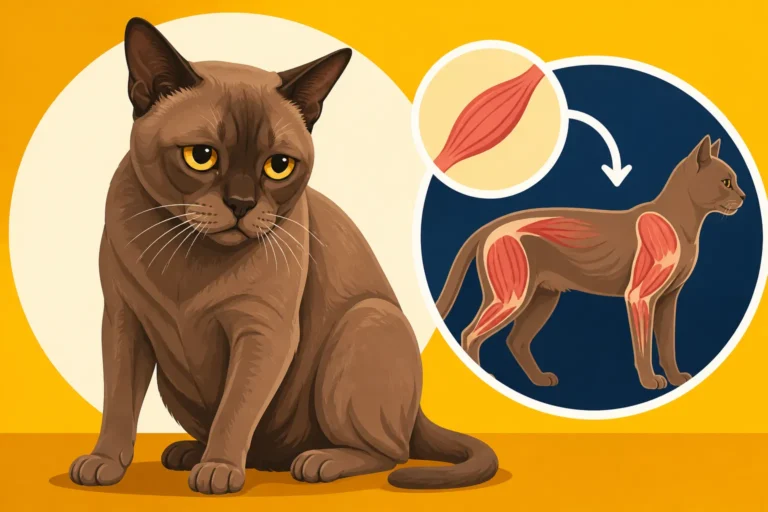
The Burmese is renowned for its incredibly muscular and compact build. Unlike some other breeds that might be fluffy or simply large-boned, a Burmese cat packs a significant amount of lean muscle onto its frame. When you reach down to scoop them up, you're not just lifting bone and fur; you're lifting dense, powerful muscle. This contributes significantly to their overall weight, often making them feel surprisingly substantial in your arms.
This muscularity means that a visually "normal" or even slightly slender-looking Burmese can actually be carrying a healthy amount of weight. Many owners, accustomed to more delicate or fluffy breeds, might mistakenly assume their Burmese is overweight when they are simply well-muscled and in excellent condition. It's important to appreciate this unique physique and understand that their weight might be higher than you'd expect based on their apparent size. In fact, many people often comment on Why a Burmese Is Heavier Than It Looks after their first encounter with the breed. This dense build is a hallmark of the Burmese, a testament to their athletic and robust nature.
It also means that traditional visual cues for weight assessment, like a prominent rib cage or a very tucked waist, might not be as obvious on a Burmese as they would be on, say, a domestic shorthair. Their powerful frame means they carry their weight differently, making hands-on assessment even more crucial. You might not see a dramatic "tuck" at the waist, but rather a gentle curve that indicates their healthy musculature.
The Satin Coat's Illusion
Another factor contributing to the deceptive nature of a Burmese's weight is their signature coat. The Burmese boasts one of the shortest, finest, and most close-lying coats in the feline world. It truly feels like satin against your skin, lying flat and sleek against their muscular body. While this is beautiful and low-maintenance, it also creates an optical illusion.
Because there's no fluff, no long hair, and certainly no dense undercoat to "poof" out, the Burmese's coat doesn't add any visual bulk. Every contour of their body is visible, or so you might think. This sleekness can sometimes hide subtle fat deposits, making a cat who is beginning to gain a few extra pounds still appear quite streamlined. It's not like a Persian or Maine Coon where excess weight might be less apparent due to their voluminous fur.
However, this lack of fluff also means that when a Burmese does start to put on too much weight, it can become quite visible, particularly around their belly or across their back. The satin coat accentuates their form, for better or worse. It’s a double-edged sword: it highlights their stunning musculature but can also make a developing paunch more obvious once it truly takes hold. Knowing How to Feel a Burmese's Ribs Under a Satin Coat is key here, as visual cues alone can be misleading.
Ideal Weight Ranges for a Healthy Five-Year-Old Burmese
So, what should your five-year-old Burmese actually weigh? This is the million-dollar question, and while there's no single "magic number," we can provide a healthy range and, more importantly, tools to assess your cat's individual condition. At five years old, a Burmese is typically in the prime of their adult life, fully grown, and should be maintaining a stable, healthy weight. This is a critical age to ensure they aren't slowly creeping into an overweight category, which can have significant health implications down the line.
Typical Weight for American and European Burmese
Generally, an adult Burmese cat, regardless of whether they lean towards the American or European type, will typically fall within a range that might surprise some first-time owners. The American Burmese often has a slightly more compact, cobby body, while the European Burmese tends to be a bit more elegant and foreign in type, but both are notably muscular cats.
For a healthy, adult Burmese at five years old:
- Males: Often weigh between 10 to 14 pounds (approximately 4.5 to 6.3 kg). Some exceptionally large and muscular males might even be a little heavier.
- Females: Typically weigh between 8 to 12 pounds (approximately 3.6 to 5.4 kg). They are generally daintier than the males but still possess that characteristic Burmese density.
It's crucial to remember that these are general ranges, not strict rules. A well-built, healthy male on the higher end is perfectly fine, just as a smaller-framed female on the lower end can be ideal. The key isn't just the number on the scale, but how that number correlates with their overall body condition. It's good to know What an Adult Burmese Should Weigh but the nuances are critical. Your individual cat's genetics, activity level, and overall frame will dictate where they comfortably sit within this range.
Understanding Body Condition Scoring for Burmese
Because weight alone can be deceptive for Burmese cats, the most reliable method for determining if your five-year-old is at a healthy weight is Body Condition Scoring (BCS). This method involves both visual assessment and, crucially, a hands-on examination to feel your cat's frame. It's a much better indicator of fat reserves than simply reading a number off the scale.
The BCS system typically uses a 9-point scale, where 1 is emaciated, 9 is morbidly obese, and 5 is ideal. Here’s what you should look and feel for in a Burmese aiming for a BCS of 5:
- Ribs: You should be able to easily feel your cat's ribs under a thin layer of fat, without pressing hard. They shouldn't be visible (unless your cat is stretching), nor should they be difficult to feel through a thick padding.
- Waistline: When viewed from above, your Burmese should have a discernible waist, an hourglass shape, behind their ribs. It won't be as dramatic as in some other breeds, but there should be a clear indentation.
- Abdominal Tuck: When viewed from the side, their abdomen should tuck up slightly behind their rib cage, not hang down. Again, this won't be an extreme tuck due to their muscular build, but it shouldn't be pendulous.
- Spine and Pelvis: You should be able to feel the bones of their spine and pelvis with moderate pressure, but they should not protrude sharply or be visible without touching.
A five-year-old Burmese ideally sits at a BCS of 5. If they are trending towards a 6 or 7, it's time to consider dietary adjustments and increased activity. If they're at a 4 or below, a vet visit is in order to rule out underlying health issues. Learning How to Score a Burmese's Body Condition is an invaluable skill for any Burmese owner.
Here's a simplified table to help you assess your Burmese's body condition:
| BCS Score | Description (Burmese-Specific) | Action Recommended |
|---|---|---|
| 1-3 | Underweight: Ribs, spine, pelvic bones very prominent, no fat. | Vet check immediately. Increase caloric intake safely. |
| 4 | Slightly Underweight: Ribs easily felt, minimal fat, obvious waist. | Monitor, ensure adequate food, vet consult if unintentional. |
| 5 | Ideal: Ribs easily felt with slight fat, clear waist, abdominal tuck. | Maintain current feeding and activity. |
| 6 | Slightly Overweight: Ribs felt with difficulty, less defined waist. | Adjust portions, increase exercise. Monitor closely. |
| 7-9 | Overweight/Obese: Ribs hard to feel, no waist, pendulous belly. | Vet check for weight loss plan, rule out diabetes. Serious diet and exercise changes. |
Vigilant Weight Monitoring and Management at Home
Given the Burmese's predisposition to certain health issues linked to weight, such as diabetes, proactive weight management isn't just about aesthetics; it's a critical part of their long-term health plan. Your five-year-old Burmese is still relatively young, but this is exactly the age when healthy habits need to be firmly established and maintained. Being vigilant at home can save you a lot of heartache and vet bills down the road.
The Importance of Regular Weigh-Ins
Regular weighing is paramount for your Burmese, and it's something I strongly recommend incorporating into your routine at home. Even at five years old, subtle changes can creep up unnoticed, and their dense build makes visual assessment tricky. By weighing your cat monthly, you create a baseline and can quickly spot any upward or downward trends that might indicate a problem. This is far more effective than just waiting for their annual vet visit.
To weigh your Burmese accurately at home, you have a few options. For smaller or more compliant cats, a dedicated pet scale can be a great investment. For larger or wigglier Burmese, a reliable method is to weigh yourself, then pick up your cat and weigh yourself again. The difference is your cat's weight. Many standard bathroom scales are accurate enough for this, but if you have a very large Burmese, consider a digital scale for better precision. Always try to weigh them at roughly the same time of day, ideally before their morning meal, to ensure consistency. Keeping a simple log or even a note on your phone helps track these numbers over time, giving you valuable data to discuss with your vet. Knowing Why a Burmese's Weight Should Be Recorded Monthly truly empowers you as an owner.
The subtle weight creep is often the hardest to catch. A gain of just a quarter-pound each month can easily add up to significant weight gain over a year, and it’s much easier to address a small change than a large one. Your consistent monitoring acts as an early warning system.
Dietary Considerations for Weight Control
When it comes to feeding a Burmese, it's not merely about filling their bowl; it's a strategic medical decision. Feeding a Burmese Is a Medical Decision, Not a Preference is a philosophy I live by, especially considering their high risk for developing diabetes. For a five-year-old Burmese, maintaining an ideal weight is inextricably linked to their diet, particularly controlling carbohydrate intake. Their bodies are not designed for a high-carb diet, which is unfortunately common in many dry kibble formulations.
Focusing on a high-quality, protein-rich, low-carbohydrate wet food is generally the best approach. Protein helps maintain their impressive muscle mass and keeps them feeling full, while low carbs help prevent spikes in blood sugar and reduce the risk of insulin resistance. Avoid free-feeding at all costs; leaving food down all day can lead to overeating and makes it impossible to monitor their intake effectively. Instead, divide their daily allowance into two measured meals. You can find excellent low-carb wet food options from retailers like Chewy or Amazon, making it easy to have nutritious food delivered right to your door.
Always weigh your cat’s food portions using a kitchen scale. Scooping can be notoriously inaccurate, and even a slight overestimation daily adds up. If your Burmese is particularly food-motivated, which many are, a puzzle feeder can slow down their eating and provide mental enrichment without increasing their calorie intake. Remember, Why Portion Control Is Medical Care in a Burmese cannot be overstated, especially for preventing weight-related health problems.
Maintaining Activity Levels as They Mature
Even at five years old, a Burmese should still be an active, playful cat. Their kittenish personalities often persist well into adulthood, and this natural energy is a fantastic asset for weight management. However, life happens, and sometimes activity levels can subtly drop without us noticing. Maintaining consistent, engaging playtime is crucial to keep their metabolism humming and their muscles toned.
Dedicate at least 15-20 minutes, twice a day, to interactive play sessions. Use wand toys, laser pointers (with a treat at the end to "catch" the dot), or even teach them to retrieve small toys. Anything that encourages them to run, jump, and stalk will help them burn calories and maintain muscle mass. Rotating toys can also keep their interest piqued. For a breed that loves human interaction, these play sessions also fulfill their deep need for connection with you.
If you have a pair of Burmese, or a Burmese and another equally active cat, they will often entertain each other, which is a huge bonus. However, don't rely solely on their mutual play; still engage them directly. While a five-year-old might not have the boundless, chaotic energy of a kitten, they still require and enjoy vigorous play. It’s comforting to know How Much Play a Burmese Still Demands at Ten, highlighting their lifelong desire for activity. Regular physical activity supports a healthy weight and overall well-being.
Addressing Weight Changes and Health Concerns
Even with the best intentions and consistent care, weight changes can occur in a five-year-old Burmese. It's crucial to know how to respond to these changes, as they can be indicators of underlying health issues. Being proactive and consulting your veterinarian quickly can make all the difference in catching and managing potential problems.
When a Five-Year-Old Burmese Gains Weight
If you notice your five-year-old Burmese creeping above their ideal weight range (a BCS of 6 or higher), it's time to take action. This age is particularly sensitive because it's when the risk of conditions like diabetes starts to climb significantly for the breed. The Burmese Has the Highest Diabetes Rate of Any Cat Breed, and excess weight is a primary contributing factor.
The first step is always to consult your veterinarian. They can rule out any medical reasons for weight gain, such as an underactive thyroid (though less common in cats than dogs), and help you formulate a safe and effective weight loss plan. Typically, this will involve a strict diet adjustment to further reduce carbohydrates and carefully control portion sizes, often using specific therapeutic foods if recommended by your vet. Increasing activity levels will also be key. It's critical that weight loss is gradual; rapid weight loss, especially if your cat stops eating, can lead to a dangerous liver condition called hepatic lipidosis, or fatty liver disease. This condition can be life-threatening, making a slow and steady approach essential. This is why Why Rapid Weight Loss Gives a Burmese Fatty Liver is a serious consideration.
Remember that Why a Burmese Is Four Times More Likely to Become Diabetic underscores the urgency of addressing weight gain promptly. Investing in their weight health now is an investment in preventing more serious, expensive, and life-altering diseases later. Your vet can guide you on brands and quantities, potentially suggesting specific formulations available from stores like Chewy or your vet’s own pharmacy.
Understanding Unexplained Weight Loss
While less common for a five-year-old Burmese who is typically in their prime, unexplained weight loss is a significant red flag and warrants immediate veterinary attention. Unlike weight gain, which can often be attributed to diet and lifestyle, sudden or steady weight loss without a change in diet or exercise often points to an underlying health problem that your cat might be trying to hide. Remember that Why a Burmese Hides Illness Behind Its Affection is a known trait; they are such people-pleasers that they will often mask discomfort until it's severe.
Potential causes for unexplained weight loss in a five-year-old Burmese include:
- Dental Disease: Painful teeth or gums can make eating difficult.
- Hyperthyroidism: An overactive thyroid gland speeds up metabolism.
- Kidney Disease: Affects appetite and nutrient absorption.
- Diabetes (paradoxically): In some advanced cases, uncontrolled diabetes can lead to weight loss despite a good appetite, as the body can't properly utilize glucose.
- Gastrointestinal Issues: Conditions like inflammatory bowel disease (IBD) can impair nutrient absorption.
- Cancer: Though less common at five, it's a possibility that needs to be ruled out.
If you observe your Burmese losing weight, becoming less interested in food, or showing any other subtle changes in behavior (like being less playful or more withdrawn), do not delay a vet visit. Early diagnosis and treatment are crucial for many of these conditions, and your vet will perform diagnostic tests such as blood work and urinalysis to pinpoint the cause.
The Vet's Role in Weight Management
Your veterinarian is your most valuable partner in ensuring your Burmese maintains an ideal weight throughout their life, especially as they reach five years old and beyond. Their annual check-up should include a thorough physical exam, weight assessment, and discussion about their diet and activity levels. This is also the age where proactive screening for conditions like diabetes becomes particularly important.
At their annual check, your vet will perform a Body Condition Score, palpate their abdomen, and discuss any changes you've observed. They may recommend routine blood work, including a glucose check, to establish a baseline and monitor for early signs of metabolic changes. Why a Burmese's Glucose Should Be Checked From Seven is important, but a baseline at five can be very helpful for comparison. If any weight issues are identified, whether gain or loss, your vet can create a tailored plan. This might include a prescription diet, suggestions for increasing exercise safely, or further diagnostic testing if an underlying health condition is suspected.
Working closely with your vet means you'll have professional guidance, peace of mind, and the best chance of ensuring your cherished Burmese lives a long, healthy, and vibrant life. Don't hesitate to reach out to them with any concerns about your cat's weight or general well-being.
Disclaimer
This article is for general informational purposes only and does not constitute professional advice. Laws, prices and regulations vary by location and change over time. Consult a qualified professional for guidance on your specific situation.