Why a Burmese’s Eye Corners Need Wiping
If you’ve ever found yourself wondering why your beloved Burmese cat always seems to have a little bit of gunk or a dark streak in the corners of their beautiful eyes, you're not alone. It's a common observation among Burmese owners, and while often harmless, it's something that warrants regular attention. This guide will help you understand the specific reasons behind this phenomenon in Burmese cats, why regular wiping is more important than you might think, and how to safely keep those sparkling eyes clear and healthy.
The Unique Facial Structure Contributing to Weeping Eyes
Burmese cats are famous for their expressive, round eyes and their wonderfully distinct facial structure. However, these very features, which make them so endearing, can sometimes contribute to persistent tearing or discharge in the eye corners. It's not a flaw, but rather a characteristic that requires a little extra care from us, their devoted companions.
The Burmese's Distinctive Short Muzzle and Round Eyes
Think about your Burmese's face: it’s typically shorter and rounder than many other cat breeds, falling into what’s often called a "brachycephalic" or semi-brachycephalic facial structure. This isn't as extreme as some other breeds, but it's enough to influence how their tears drain. Their prominent, round eyes sit beautifully in their face, but this positioning can sometimes mean the tear ducts, which are designed to carry tears away into the nasal cavity, aren't always perfectly aligned for optimal drainage. It’s like having a perfectly designed gutter system, but one of the downspouts is just a tiny bit off-kilter.
This slight anatomical difference means that tears, which are constantly produced to keep the eye lubricated and clean, might not always flow down the internal tear ducts as efficiently as they would in a cat with a longer muzzle. Instead, a portion of these tears might well up in the eye corner and spill over onto the fur, leading to those damp spots and eventual crusting you notice. It's a normal physiological occurrence for many Burmese, a direct result of their unique charm.
How Tear Drainage Can Be Less Efficient
The tear drainage system in cats is quite intricate. Tears are produced by glands, spread across the eye with each blink, and then collected by tiny openings called puncta, located in the inner corner of the eyelids. From there, they travel down small canals into the nasolacrimal duct, which empties into the nasal cavity. Ideally, this process is seamless and invisible. However, in a Burmese, the angle and position of these puncta, or the narrowness of the nasolacrimal duct itself, can sometimes hinder this smooth flow. Why a Burmese's Eyes Water and Crust delves deeper into these specific issues.
When drainage is less efficient, tears linger on the surface of the eye or accumulate in the inner corner. This isn't necessarily a sign of a blockage or a serious problem, but rather a slight backlog in the system. The excess liquid then spills onto the surrounding fur, and as it evaporates, it leaves behind the non-water components of the tears, such as proteins, salts, and even porphyrins (pigments found in tears that turn reddish-brown when exposed to light). This residue is what forms the crusty bits and dark stains that are so characteristic around a Burmese's eyes. It’s important to understand this isn't usually due to "dirty" eyes, but rather a natural byproduct of their tear composition and facial structure.
Common Culprits Behind That Corner Gunk
While anatomy plays a big role, it's not the only factor contributing to weeping eyes and eye corner gunk in Burmese cats. Our furry friends are sensitive creatures, and various everyday elements can exacerbate this tendency, turning a minor issue into a more noticeable one. Understanding these common culprits helps us create a healthier environment for them.
Everyday Irritants in Their Environment
Just like us, cats can react to environmental irritants, and their eyes are often the first place to show it. Dust, pollen, and even household cleaning products or air fresheners can irritate your Burmese’s delicate eyes. Imagine walking into a dusty room; your eyes might water a bit, right? The same applies to your cat. If your Burmese spends a lot of time by a dusty window, or if you've recently cleaned with strong chemicals, you might notice an increase in tearing. Even particles from cat litter, especially dusty clay litters, can become airborne and settle in their eyes, causing irritation.
Consider the air quality in your home. Smoke from cooking or fireplaces, or even strong perfumes, can be subtle yet persistent irritants. These environmental factors can stimulate tear production as the eye tries to flush out the irritant, leading to more overflow and, consequently, more gunk in the corners. Keeping your home clean, using air purifiers, and opting for dust-free or low-dust cat litter can make a surprising difference in reducing eye discharge.
Minor Allergies and Sensitivities
Sometimes, the eye weeping isn't just about irritants; it can be a sign of minor allergies or sensitivities. Just like people, cats can develop environmental allergies to things like pollen, mold spores, or dust mites. These allergies can manifest as itchy, watery eyes, which of course, leads to more visible discharge. It's a frustrating situation because the trigger can be hard to pinpoint.
Beyond environmental factors, some Burmese cats might have food sensitivities that indirectly contribute to eye issues. While not as common as environmental allergies, an adverse reaction to a particular ingredient in their diet could lead to a range of symptoms, including skin irritation and eye discharge. It's why many owners meticulously choose their cat's food, often looking for specific dietary options. If you suspect a food sensitivity, discussing a diet trial with your vet is a good idea. Observing when the tearing is worse – perhaps seasonally, or after certain activities – can help you narrow down potential allergens.
The Role of Normal Tear Film and Oxidation
Even with perfect tear drainage, a certain amount of "gunk" in the eye corners is perfectly normal. Our eyes, and our cats' eyes, are constantly producing a tear film that consists of water, oils, and mucus. This film is crucial for lubricating the eye, flushing out tiny particles, and providing nutrients to the cornea. When a cat blinks, this tear film is spread across the eye, and excess fluid is ideally drained.
However, a small amount of this tear film naturally collects in the inner corners of the eyes. As it's exposed to air, the water component evaporates, leaving behind the more solid elements, including proteins and those porphyrins mentioned earlier. These dry and oxidize, forming the dark, crusty material you typically find. This is particularly noticeable after a long sleep, as blinking is reduced, allowing more accumulation. For a Burmese, whose anatomy already encourages a bit more overflow, this natural process can just be a little more pronounced. So, a small amount of dry, dark matter in the morning is generally not a cause for alarm, but rather a sign that their eyes have been working as they should overnight.
The Critical Importance of Consistent Eye Care
It might seem like a small detail, but consistently cleaning your Burmese's eye corners goes a long way in ensuring their comfort, health, and even their appearance. Neglecting this routine can lead to more than just unsightly stains; it can pave the way for more serious issues.
Preventing Unsightly Staining and Skin Irritation
Let's be honest, those dark streaks running down from the eye corners on a beautiful Burmese coat aren't exactly the look we aim for. While primarily a cosmetic concern, persistent tear staining is actually a sign of chronic moisture on the fur. These stains, often reddish-brown, are caused by porphyrins in the tears, which oxidize upon exposure to light and air. The longer the tears sit on the fur, the deeper and more stubborn the stain becomes. It’s like leaving a wet teabag on a white surface – it leaves a mark.
Beyond aesthetics, this constant dampness and the residue it leaves can seriously irritate your cat's delicate skin. The skin under and around the eyes is very thin and sensitive. When it’s perpetually moist, it can become raw, itchy, and prone to inflammation. You might notice your Burmese rubbing their face more, which can further exacerbate the irritation or even lead to minor abrasions. Regular, gentle wiping removes this moisture and residue before it has a chance to stain the fur or cause skin problems, keeping your cat comfortable and looking their best.
Warding Off Secondary Infections
This is where consistent eye care truly shifts from cosmetic to critical health maintenance. The moist environment created by tear overflow, combined with the organic matter (proteins, oils, dust) that collects there, is an absolute paradise for bacteria and yeast. Think of it as a warm, damp, nutrient-rich petri dish right on your cat's face. If left unchecked, these microorganisms can multiply rapidly, leading to secondary skin infections, often referred to as "tear scald" or "dermatitis." These infections can be quite uncomfortable for your Burmese, causing itching, redness, inflammation, and sometimes even an unpleasant odor.
In some cases, if the infection progresses, it can even affect the conjunctiva (the lining of the eyelids and part of the eyeball), leading to conjunctivitis. This can be painful, cause excessive discharge, and may require veterinary intervention, including antibiotics. Regular wiping, as simple as it seems, effectively removes the breeding ground for these opportunistic pathogens. It keeps the area dry and clean, dramatically reducing the risk of these secondary infections taking hold. It's a proactive step that can save your cat discomfort and save you vet bills down the line.
Early Detection of Potential Health Issues
Making eye cleaning a regular part of your routine isn't just about cleaning; it's also a valuable opportunity for a quick health check. As you gently wipe your Burmese’s eyes, you'll naturally be inspecting the area more closely. You’ll become attuned to what "normal" looks like for your cat. This familiarity means you're far more likely to notice subtle changes that could indicate a developing health issue before it becomes severe. How to Clean a Burmese's Eye Corners Safely has more tips.
For example, you might notice a sudden increase in the amount of discharge, a change in its color (from clear to yellowish or greenish), or a different consistency. You might spot redness, swelling, or if your cat seems more sensitive to the touch around their eyes. These are all potential red flags. Catching these signs early, whether it's the start of an allergy, an irritation from a foreign body, or even a symptom of an underlying systemic illness, allows for quicker veterinary intervention. Early detection often leads to simpler, more effective treatments and better outcomes for your beloved Burmese.
Your Step-by-Step Guide to Safe and Effective Eye Wiping
Now that we understand why it's so important, let's talk about the how. Cleaning your Burmese's eye corners doesn't have to be a struggle. With the right tools and a gentle approach, it can become a calm, even bonding, part of your daily or weekly routine.
Gathering the Essential Supplies
Before you even approach your Burmese, make sure you have everything ready. This minimizes fumbling and keeps the process smooth and quick, which your cat will appreciate! Here's what you'll need:
- Soft, Lint-Free Wipes or Cotton Pads: Avoid regular cotton balls, as they can shed fibers that might irritate the eye. Specific pet eye wipes are fantastic because they are pre-moistened with gentle, cat-safe solutions designed to break down tear stains and clean the delicate eye area. You can find excellent options on platforms like Amazon or Chewy. If you don't have pet wipes, soft, clean cloths or cotton pads moistened with plain warm water will work perfectly. Just ensure they are genuinely lint-free.
- Warm Water (if not using pre-moistened wipes): A small bowl of lukewarm water is all you need. Ensure it's not too hot or too cold.
- Treats: This is crucial for positive reinforcement, especially when you're first introducing this routine.
- A Calm Environment: Choose a quiet time when your cat is relaxed, perhaps when they're already settled on your lap for cuddles. Avoid times when they're agitated or in a playful mood.
Having these items within arm's reach means you can focus entirely on your cat, making the experience less stressful for both of you.
The Gentle Approach: Technique Matters
This isn't a wrestling match; it's a gentle grooming session. Patience and a light touch are key.
- Position Yourself and Your Cat: Find a comfortable spot. Many Burmese love to be on your lap or shoulder, which can be an ideal position. How to Carry a Burmese Around Without Dropping It shares tips on handling. Gently hold your cat, perhaps cradling them, or have them sit facing away from you so you can access their face easily. Speak to them in a calm, reassuring voice.
- Prepare the Wipe: If using a dry wipe or cotton pad, moisten it thoroughly with warm water. Squeeze out any excess water so it's damp, not dripping. If using a pre-moistened wipe, simply open it.
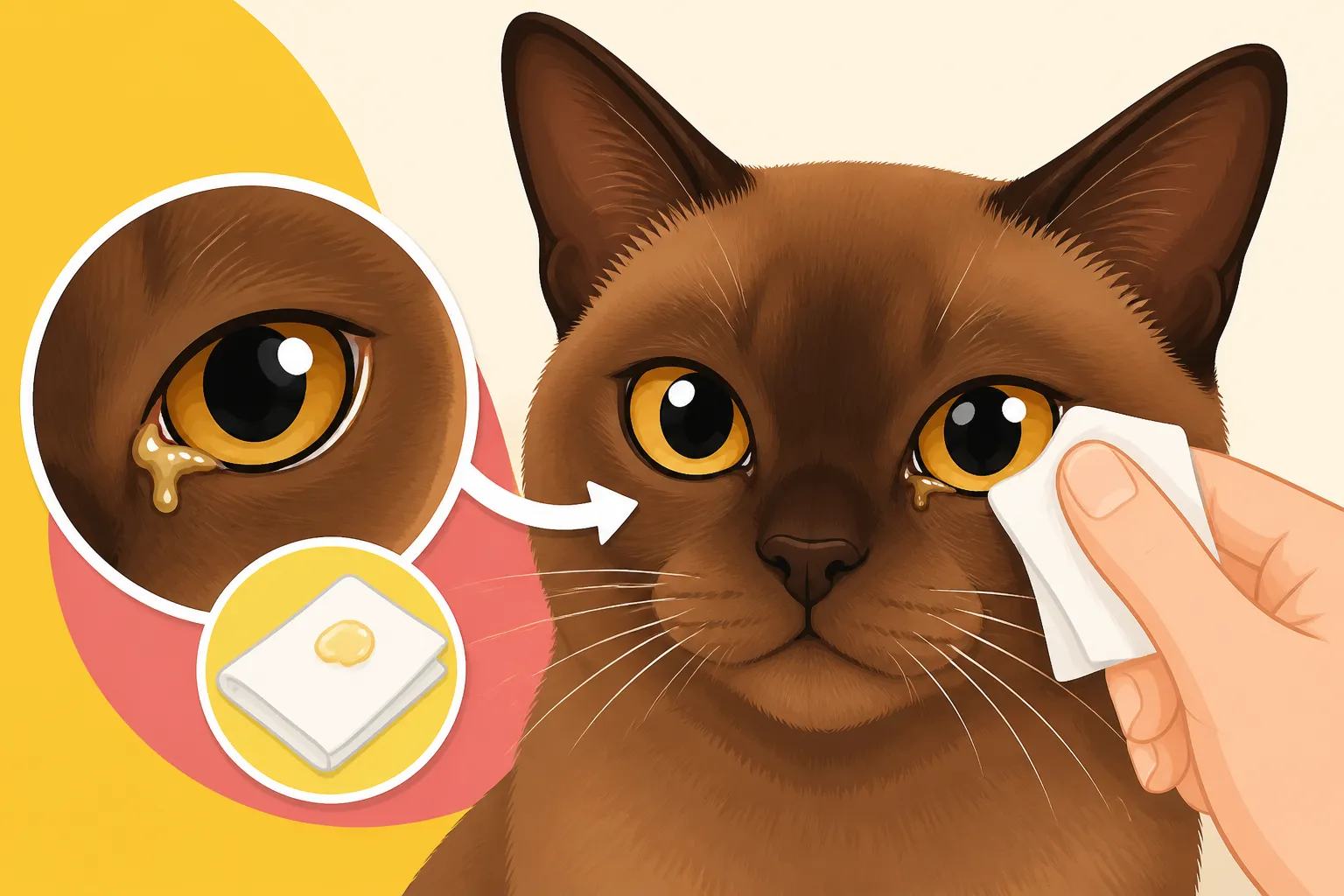
- Gently Wipe: Starting from the inner corner of the eye (near the nose), gently wipe outwards towards the ear. Use a fresh part of the wipe, or a new wipe/pad, for each eye to prevent cross-contamination. Be extremely careful not to touch the eyeball itself. The goal is to clean the fur and skin around the eye, removing crusts and dampness. Don't rub aggressively; instead, use a soft, sweeping motion. For stubborn dried gunk, you might need to hold the warm, damp wipe against the area for a few seconds to soften it before wiping.
- Check for Residue: After wiping, gently part the fur around the eye to ensure all visible gunk and dampness have been removed. If the fur is still wet from the wiping, you can gently blot it dry with a separate, clean, dry tissue or corner of a towel.
- Praise and Reward: As soon as you're done, offer plenty of verbal praise and a favorite treat. This positive association is vital for making future cleaning sessions easier.
Remember, the goal is not to clean in the eye, but around it. If you encounter significant resistance, pause and try again later. It's better to do a quick, partial cleaning than to traumatize your cat.
Making Eye Cleaning a Positive Experience for Your Burmese
For many Burmese cats, their affectionate and trusting nature makes routine care relatively easy, but eye cleaning can still be a tricky spot. The key is to turn it into something they tolerate, or even enjoy, rather than dread.
Starting Early and With Positive Reinforcement
If you're lucky enough to have a Burmese kitten, start eye cleaning early! Even if they don't have much discharge initially, getting them accustomed to having their face and eyes handled from a young age is invaluable. Just like with brushing teeth or nail trims, early exposure builds acceptance. Begin with very short sessions, maybe just a quick touch near the eye, followed immediately by praise and a tiny, high-value treat. Gradually increase the duration and intensity of the contact. A Burmese Kitten's First Year of Never Being Alone emphasizes the importance of early socialization, and this extends to grooming.
The principle of positive reinforcement is your best friend here. Always associate the action of eye cleaning with something good. Avoid punishment or scolding, as this will only create negative associations and make future attempts harder. Your calm demeanor is also infectious. If you're stressed or tense, your cat will pick up on it. Take a deep breath, speak softly, and approach them gently. Make it a peaceful moment you share together, rather than a chore.
Incorporating Treats and Praise
Cats are smart, and Burmese cats, with their "dog-like" personalities, are often highly food-motivated. This is where treats become a superpower. Before you even start wiping, offer a small treat. During the process, pause for tiny bits of encouragement and treats. Immediately after you're done, lavish them with praise and a bigger treat or a short play session.
The idea is to create a conditioned response: "Eye wipe happens, then I get yummy things!" Over time, your Burmese will learn to associate the routine with positive outcomes. You might find a favorite lickable treat or a small piece of cooked chicken works wonders. Some cats even learn to anticipate their treat and will be more cooperative, knowing what's coming. Don't underestimate the power of a gentle voice and a loving stroke, either. For a cat as affectionate as the Burmese, your attention and approval are often just as valuable as a treat. The goal is to build a foundation of trust around this necessary task, making it a predictable, non-threatening, and even rewarding part of their day.
When to Sound the Alarm and Head to the Vet
While some eye discharge is normal for a Burmese, there are definite signs that indicate something more serious might be going on, warranting a trip to your veterinarian. Knowing the difference between normal and abnormal is crucial for your cat's health.
Recognizing Red Flags: Changes in Discharge and Appearance
Regularly wiping your Burmese's eyes means you'll know what's typical for them. Any deviation from this norm should catch your attention. Here's what to look out for:
- Change in Discharge Color or Consistency: If the discharge suddenly becomes thick, yellowish, greenish, or pus-like, this is a strong indicator of infection. If it's unusually sticky or stringy, that's also a concern. Normal Burmese eye corner gunk is usually clear tears that dry to a brownish crust.
- Increased Quantity of Discharge: A sudden and significant increase in the amount of clear or stained discharge, even if it's not colored, could signal a blockage, irritation, or allergy that needs addressing.
- Redness or Inflammation: If the whites of your cat's eyes (sclera) appear red, or if the eyelids themselves look swollen, puffy, or irritated, this isn't normal.
- Squinting or Excessive Blinking: This is a clear sign of pain or discomfort. Your cat is trying to protect its eye from light or irritation.
- Rubbing or Pawing at the Eyes: If your Burmese is constantly rubbing their face against furniture or pawing at their eyes, they are trying to relieve an itch or discomfort.
- Sensitivity to Light (Photophobia): If your cat is shying away from bright lights or preferring darker areas, their eyes might be painful or sensitive.
- Cloudiness or Opacity of the Eye: Any change in the clarity of the cornea (the transparent outer layer of the eye) – such as a bluish haze or cloudiness – is a serious symptom.
- Visible Foreign Body: If you can see something in your cat's eye, like a piece of dust, hair, or debris, and you can't gently wipe it away.
These signs, especially if they appear suddenly or are accompanied by other symptoms like lethargy or a change in appetite, should prompt a call to your vet. Don't wait to see if it improves on its own, as eye issues can escalate quickly. Why a Burmese That Stops Following You Is Unwell reminds us that behavioral changes can be subtle signs of deeper problems.
Conditions Requiring Professional Intervention
While you can handle routine cleaning, certain eye conditions absolutely require professional veterinary diagnosis and treatment. Trying to self-treat can lead to worsening conditions or even permanent damage.
Your vet will be able to perform a thorough eye examination, often using specialized tools, to get to the root of the problem. They might check for corneal ulcers, which are painful open sores on the surface of the eye, often caused by trauma or infection. They'll also check for conjunctivitis, which can be caused by various viruses (like feline herpesvirus), bacteria, or allergies. A common and serious condition, especially in younger cats, is an upper respiratory infection, where eye discharge is often one of many symptoms. Which Diseases the Burmese Actually Carries provides an overview of various health concerns common to the breed.
Furthermore, your vet can rule out more complex issues like glaucoma (increased pressure in the eye), uveitis (inflammation inside the eye), or even corneal dermoid. They can also properly assess the tear ducts for blockages, which might require flushing. If your Burmese is showing any of the red flags mentioned above, or if you're ever in doubt, please don't hesitate. A quick check-up can often lead to a simple solution and prevent severe complications, preserving your Burmese’s precious eyesight and comfort. Investing in their health early on can save significant worry and cost in the long run.
| Eye Symptom | Description | Action |
|---|---|---|
| Normal Appearance | Clear tears, minimal crusting, no redness. | Regular home cleaning. |
| Increased Clear Tears | More overflow than usual, but still clear. | Monitor for other symptoms, increase wiping. |
| Yellow/Green Discharge | Thick, pus-like discharge, often with redness. | Vet visit ASAP. Suspect infection. |
| Redness/Swelling | Red sclera, puffy eyelids, visible inflammation. | Vet visit ASAP. Could be infection, allergy, or injury. |
| Squinting/Pain | Cat holds eye partially closed, rubs face. | Urgent vet visit. Indicates pain or foreign body. |
| Cloudy Eye | Haze or film over the eye surface. | Urgent vet visit. Potentially serious corneal issue. |
| Paw Swelling | Swollen paw after rubbing eyes | Vet visit. Cat self-harmed due to irritation. |
Disclaimer
This article is for general informational purposes only and does not constitute professional advice. Laws, prices and regulations vary by location and change over time. Consult a qualified professional for guidance on your specific situation.