Whether the First Burmese Was Really a Tonkinese
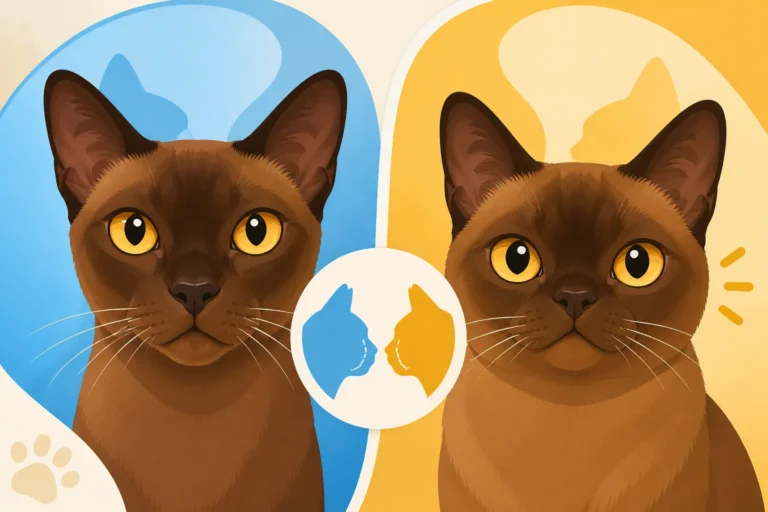
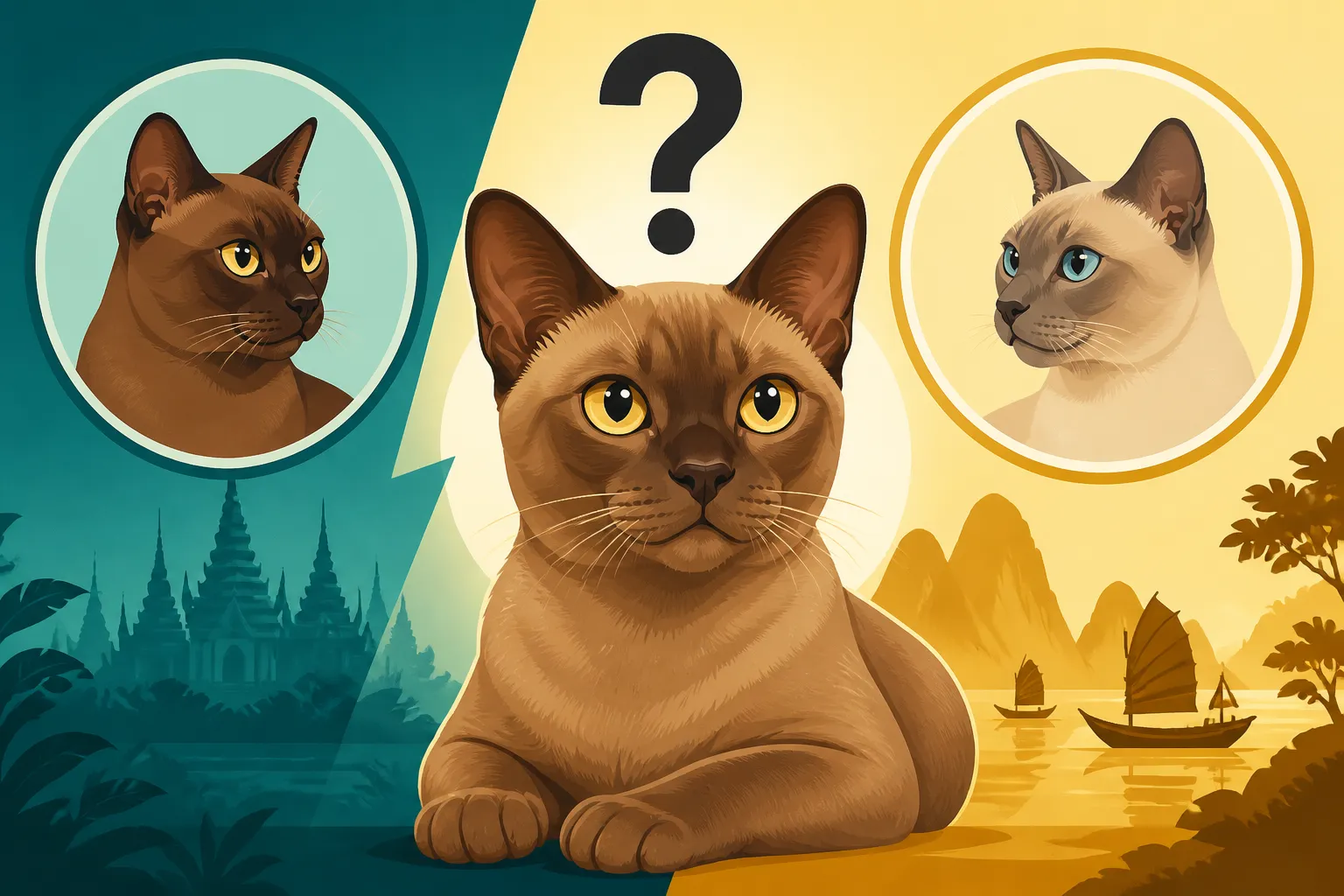
It’s easy to look at a sleek, affectionate Burmese cat today and wonder about its origins. Many people, when they first learn about the breed, are fascinated by the story of Wong Mau, the cat who started it all, and they often ask a very insightful question: was that first cat, Wong Mau, actually a Tonkinese? It’s a completely understandable thought, especially given the visual similarities between the breeds and the somewhat complex history of their development. The truth is, Wong Mau herself wasn't a Tonkinese, but her unique genetics certainly revealed the potential for what would later become the Tonkinese breed, demonstrating just how intertwined their beginnings truly were. This guide will take you through the fascinating journey of the Burmese breed's origins and clarify the relationship between these two wonderful felines.
The Enigma of Wong Mau: The First Burmese Cat
Imagine the bustling port of San Francisco in the early 1930s. A retired U.S. Navy psychologist, Dr. Joseph C. Thompson, received a small, walnut-brown cat from Burma. This cat, named Wong Mau, would become the foundation queen for the entire Burmese breed in the West. She was unlike any cat seen before, captivating Dr. Thompson with her unique appearance and charming personality. It's a story that truly kicked off the organized breeding of Burmese cats.
The Arrival of a Unique Feline in San Francisco
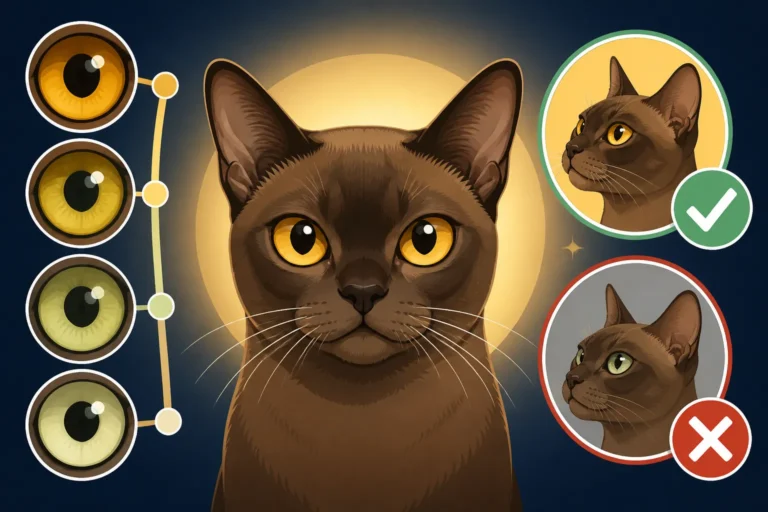
Wong Mau's arrival was more than just a new pet; it was a pivotal moment for the cat fancy. She wasn't simply a brown cat; her coat had a distinct sheen, a warm, rich tone that was different from the solid browns of other breeds. Her eyes were a striking golden-yellow, and her body was surprisingly muscular and compact for her delicate appearance. Dr. Thompson immediately recognized her distinctiveness, sensing he had a truly special animal on his hands. She was a gentle, playful cat, but her physical traits truly set her apart. Many enthusiasts and casual observers alike couldn't quite place her among the known breeds of the time. This initial mystery is precisely why people sometimes wonder Whether Wong Mau Was a Purebred Burmese or a mixture of what we now know as different breeds.
Initial Observations: A Cat Unlike Any Other
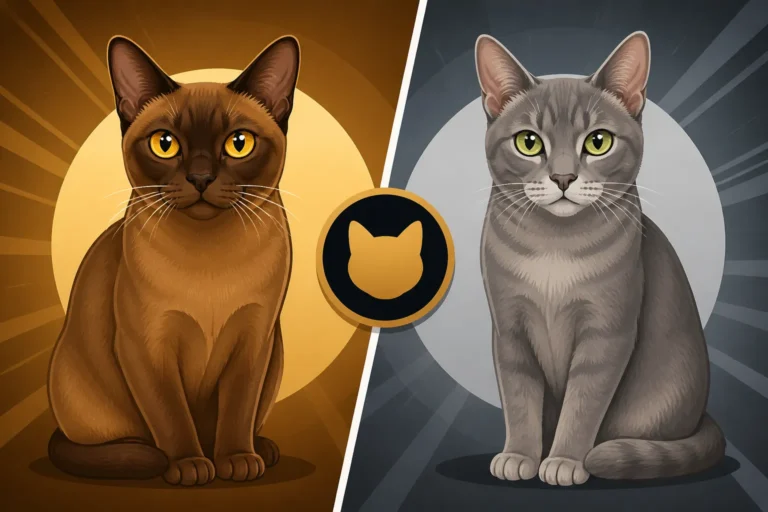
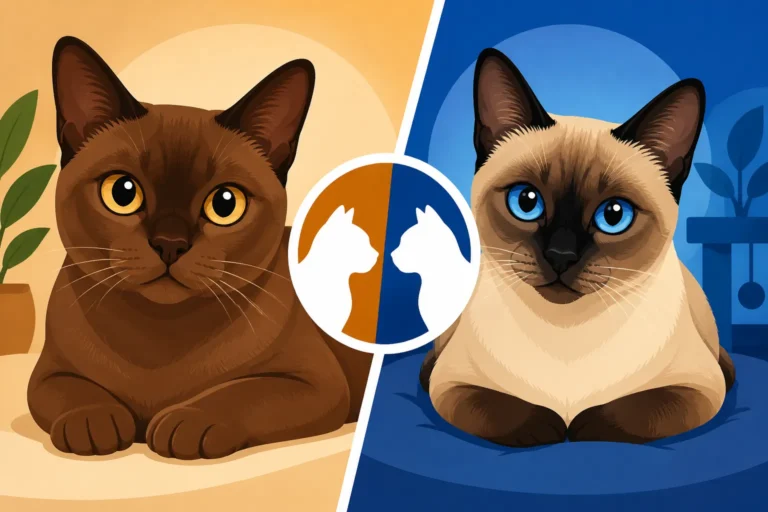
What made Wong Mau so intriguing was her color point pattern, which was subtly different from the Siamese. While Siamese cats have very dark points (ears, face mask, paws, tail) and a much lighter body, Wong Mau’s body was a rich, medium brown, only slightly lighter than her darker brown points. This gradient, rather than a stark contrast, was a key indicator of her unique genetic makeup. Dr. Thompson noted that she felt "like a brick wrapped in silk" – a phrase that perfectly captures the surprising density and musculature beneath her fine, short coat, which is still a hallmark of the Burmese today. She wasn't just another domestic cat; she carried something special in her genes, a secret waiting to be unlocked through careful breeding.
Dr. Thompson's Groundbreaking Breeding Program
Recognizing Wong Mau's unique qualities, Dr. Thompson embarked on a scientific breeding program, a bold step in the early days of cat genetics. His goal was to understand her genetic makeup and establish a new breed. This is where the connection to the Tonkinese truly begins to emerge.
The Strategic Pairing with a Siamese
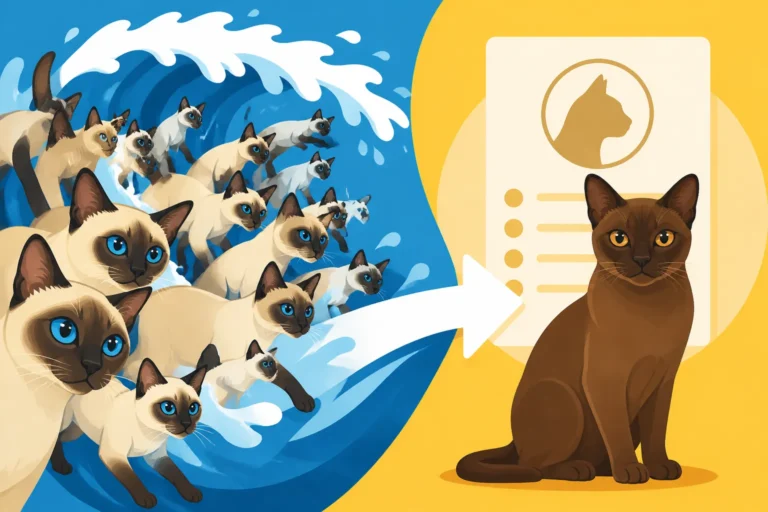
To uncover Wong Mau's genetic secrets, Dr. Thompson made a crucial decision: he bred her to a Siamese cat. This wasn't a random choice; Siamese cats were known for their distinctive colorpoint gene, and he hypothesized that Wong Mau carried a variant of this gene. This strategic pairing was designed to reveal the hidden traits she carried. The idea was to observe the kittens and see how the color patterns expressed themselves across the litter. It was a pioneering effort in understanding feline genetics. For anyone interested in the foundational history, it's worth exploring Why the First Burmese Was Bred to a Siamese.
The Surprising Diversity of the First Litters
The results of Wong Mau's first litters were nothing short of revelatory, and this is where the Tonkinese question gets its footing. When Wong Mau was bred with a Siamese, the kittens weren't all uniform. They produced three distinct color patterns:
- Siamese-pointed kittens: These had the very pale bodies and dark points characteristic of a traditional Siamese.
- Kittens like Wong Mau: These were the medium-brown, subtly pointed cats that matched their mother. These were the true Burmese.
- A third, unexpected type: These kittens had a coat color that was intermediate between the Siamese and Wong Mau. Their bodies were darker than the Siamese but lighter than Wong Mau, and their points were less distinct than the Siamese but more defined than Wong Mau's. This "mink" pattern, as it came to be known, was a beautiful blend of both parents, and it’s precisely these kittens that laid the groundwork for what would eventually be recognized as the Tonkinese breed.
The appearance of these three distinct types of kittens provided clear evidence that Wong Mau herself was not a purebred Siamese, nor was she what we now define as a purebred Burmese or Tonkinese. She was, in fact, genetically equivalent to what we would now call a Tonkinese, carrying one copy of the Burmese color gene and one copy of the Siamese color gene. This incredible diversity in her offspring confirmed Dr. Thompson's hypothesis and revealed the complex interplay of these color genes. What the First Burmese Litter Told Thompson truly reshaped feline genetics.
Unraveling the Genetic Code: Burmese, Siamese, and Tonkinese Traits
To truly understand why those early litters contained what looked like Tonkinese cats, we need to delve a little into the fascinating world of feline genetics, specifically the colorpoint gene. It's a bit like a secret code embedded in every cat's DNA, determining how their beautiful coats express themselves.
Understanding the cb Allele and Its Expression
The key to understanding the Burmese, Siamese, and Tonkinese lies in a specific gene locus called the Tyrosinase (TYR) gene, which controls pigment production. At this locus, there are several alleles, or variants, that dictate color.
- C (Full Color): This is the dominant allele for full color, meaning the cat will have a solid, uniform color without any pointing, like a black cat or a ginger cat.
- cs (Siamese allele): This allele causes temperature-sensitive albinism. Pigment only develops in cooler areas of the body (the "points" – ears, face, paws, tail), resulting in the classic Siamese pattern. The body stays pale.
- cb (Burmese allele): This is the star of our story, The cb Allele Is What Makes a Burmese Brown. This allele also causes temperature-sensitive albinism, but it's less restrictive than the Siamese allele. It allows for more pigment development on the body, resulting in the characteristic sable (brown) body with darker points that defines the Burmese. The overall effect is a richer, warmer, and more uniform color than the Siamese.
The magic happens when these alleles combine. Wong Mau, it turned out, carried one copy of the Burmese allele (cb) and one copy of the Siamese allele (cs). This makes her genotype cb/cs. Cats with this combination express the "mink" pattern, which is the hallmark of the Tonkinese. So, while she looked Burmese to Dr. Thompson initially (her color was much closer to a modern Burmese than a Siamese), her genetics were that of a Tonkinese. She was literally the bridge between the two breeds. This explains Why a Burmese Is Brown and a Siamese Is Pointed in such distinct ways.
The Appearance of Mink-Coated Kittens
When Wong Mau (cb/cs) was bred to a Siamese (cs/cs), the possible genetic combinations for their offspring were:
- cb/cs: These kittens inherited the Burmese allele from Wong Mau and the Siamese allele from the Siamese father. They displayed the "mink" pattern, with a medium body color and distinct, but not dramatically dark, points. These were, genetically, Tonkinese cats.
- cs/cs: These kittens inherited the Siamese allele from both parents. They displayed the classic Siamese pattern, with a very pale body and very dark points.
So, the "mink" kittens from those early litters were indeed genetically Tonkinese. They were the visible proof of Wong Mau’s unique genetic makeup. It highlights the incredible power of genetics to unveil connections between different appearances. When you consider What Happens When Burmese and Siamese Genes Meet, you can see how such diverse outcomes are possible. It's truly fascinating how a single gene can have such a profound impact on a cat's appearance.
The Lasting Legacy: Defining the Burmese and Tonkinese Breeds
After understanding the genetic interplay, Dr. Thompson and other breeders faced the task of selectively breeding to stabilize the desired traits and establish distinct breeds. This was a process of careful observation, record-keeping, and making intentional choices about which cats to breed together.
Separating the Burmese from the Tonkinese
The goal was initially to establish the Burmese breed, focusing on cats that displayed the deep, rich sable brown color with slightly darker points, like Wong Mau herself. These cats needed to be homozygous for the Burmese allele (cb/cb) to consistently produce true Burmese kittens. This meant selectively breeding the "Wong Mau-like" cats from the litters, and potentially back-crossing them to Wong Mau or other Burmese-type cats to increase the presence of the cb allele.
The "mink" patterned kittens, while beautiful, were initially considered intermediate and not what the early breeders were aiming for as the definitive Burmese. It wasn't until much later that the mink pattern was embraced as a distinct and desirable trait in its own right, leading to the formal recognition of the Tonkinese breed. This shows that the original intent was not to create two breeds, but rather to isolate and define the Burmese, with the Tonkinese emerging as a wonderful, recognized consequence of the early genetic exploration. Understanding this distinction is key to comprehending Why the Founding Burmese Produced Two Breeds.
The Scientific Validation of a New Breed
The meticulous records kept by Dr. Thompson and his colleagues were crucial. They weren't just breeding cats; they were conducting a living genetic experiment. The consistent appearance of the three coat patterns – Siamese, Burmese, and mink (Tonkinese) – when Wong Mau was bred to a Siamese, provided irrefutable scientific evidence of her unique genotype. This detailed understanding allowed breeders to intentionally produce Burmese cats that consistently exhibited the desired sable color.
While the Burmese was established relatively quickly, the Tonkinese took a bit longer to gain formal recognition as its own breed. For many years, cats with the mink pattern were seen as "hybrids" or simply not purebred. However, their charm, intelligence, and unique beauty eventually won over the cat fancy. Breeders, often working with cats that descended from those original Burmese-Siamese crossings, began to selectively breed for the mink pattern. Today, the Tonkinese is a well-established and beloved breed, proudly sitting genetically Why the Tonkinese Sits Between Burmese and Siamese. If you're wondering How to Tell a Burmese From a Tonkinese, it often comes down to that distinct coat color depth and eye color.
Caring for a Burmese and its Unique Needs
Whether you choose a Burmese or a Tonkinese, both breeds share many wonderful qualities, including their need for companionship and good nutrition. Their health and happiness are often directly linked to how much attention and care they receive, particularly when it comes to their diet.
The Importance of a Low-Carbohydrate Diet
Burmese cats, and their close relatives like the Tonkinese, are known for their incredibly affectionate and social personalities. They are truly "velcro cats" who thrive on interaction and being part of the family. However, this deep bond comes with a responsibility: their diet. Burmese cats are predisposed to certain health conditions, notably diabetes. This makes feeding a Burmese not just a preference, but a medical decision. A low-carbohydrate, high-protein diet is crucial for these cats to maintain a healthy weight and help mitigate the risk of developing diabetes. This isn't just a recommendation; it's a vital part of their preventative healthcare.
Feeding your Burmese cat a diet that focuses on meat-based protein and minimal carbohydrates can significantly impact their long-term health. Many commercial wet foods, especially those labeled as "grain-free," often fit this profile, but it's essential to check the nutritional analysis. You want to aim for foods with less than 10% carbohydrate content on a dry matter basis. This dietary approach helps manage their insulin levels and keeps their metabolism running smoothly, supporting their active and playful nature well into their senior years. Retailers like Chewy offer a wide selection of cat foods, making it easier to find high-quality, low-carb options specifically formulated for feline health.
Regular Exercise and Mental Stimulation
Both Burmese and Tonkinese cats are incredibly intelligent and energetic. They need plenty of opportunities to play, explore, and engage their minds. A bored Burmese is often a mischievous Burmese! Interactive toys, puzzle feeders, and regular play sessions with their human companions are essential for their physical and mental well-being. Don't underestimate their ability to learn tricks – many Burmese enjoy playing fetch or walking on a leash, much like a dog. This constant interaction is part of A Burmese Is Still Playing at Fifteen.
Providing scratching posts, climbing trees, and safe spaces for them to observe their surroundings will help satisfy their natural instincts. Remember, a cat that feels well-exercised and mentally stimulated is less likely to develop behavioral issues born out of boredom or anxiety. While they are resilient and adaptable, they truly shine in an environment where their unique needs for activity and affection are met. You can find a vast array of engaging toys and scratching solutions on Chewy, which can help keep your Burmese entertained and active.
The Need for Constant Companionship
One of the most defining traits of the Burmese, which is also evident in the Tonkinese, is their profound need for companionship. They are not cats that do well being left alone for long periods. They thrive on interaction with people and other pets. If you work long hours or travel frequently, considering a pair of Burmese cats or ensuring they have another pet companion (even a dog, as they often get along famously) can make a world of difference. Why Burmese Breeders Sell Them in Pairs is not just a suggestion; it's often based on understanding their social needs.
A lonely Burmese can develop separation anxiety, leading to destructive behaviors or even health issues like over-grooming. They will follow you from room to room, insist on being in your lap, and even sleep under the covers with you. This intense bond is part of their charm, but it's also a significant commitment. Before bringing a Burmese into your home, honestly assess if you can provide the consistent attention and companionship they crave. Knowing that you have easy access to a broad range of pet supplies from Chewy, from cozy beds to enrichment toys, can help ensure your Burmese always feels loved and cared for.
Disclaimer
This article is for general informational purposes only and does not constitute professional advice. Laws, prices and regulations vary by location and change over time. Consult a qualified professional for guidance on your specific situation.