Which Eye Color a Burmese Should Have
A Burmese’s eyes should be yellow to gold, with a rich, luminous color that gives the breed its famously alert expression. But lighting, age, and health can make eye color look different from one day to the next, and breed standards are easy to misread. This guide explains what to expect, what may be a warning sign, and when to ask a veterinarian.
The eye color expected in a Burmese
Yellow to gold is the breed’s characteristic color
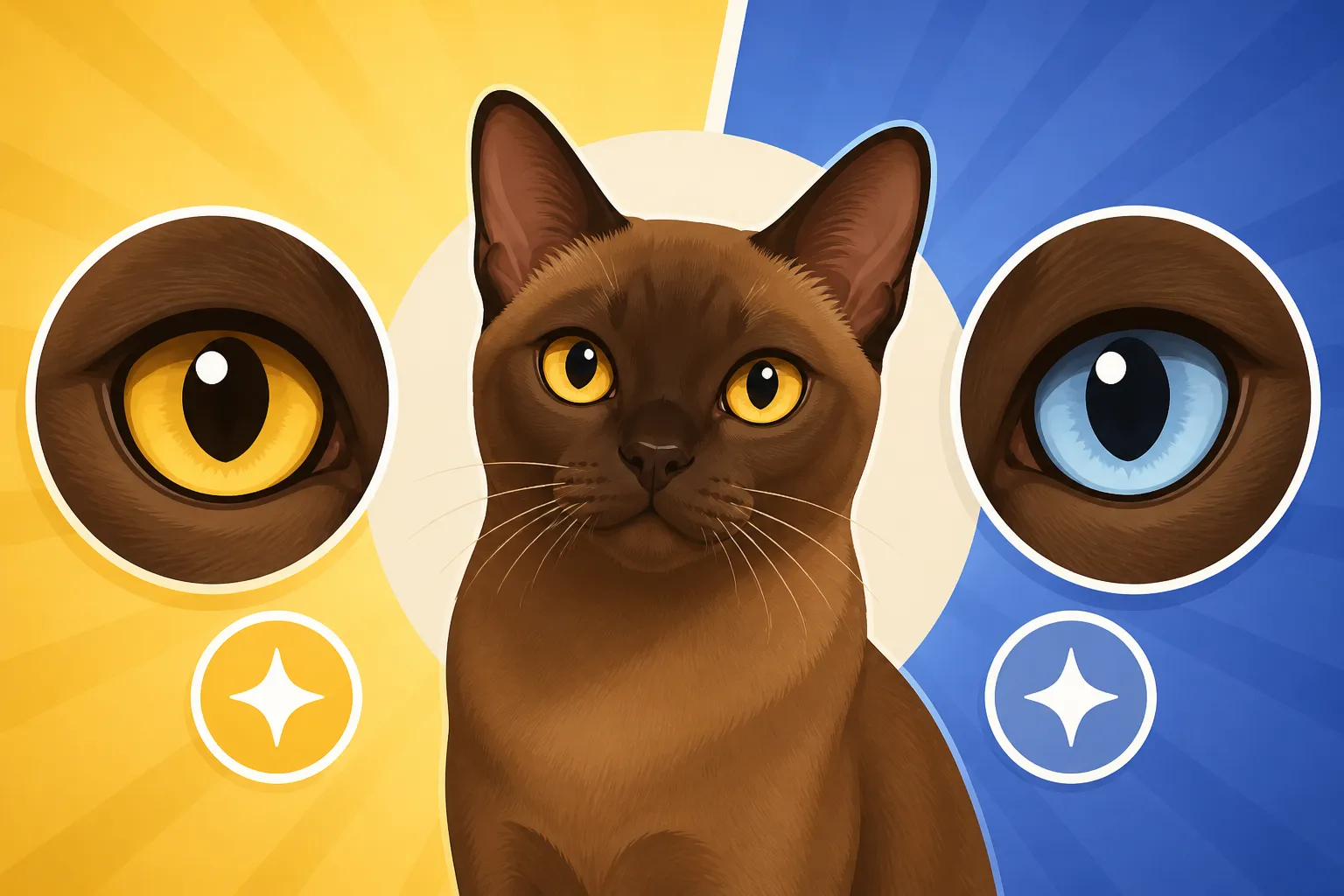
A mature Burmese should have yellow-to-gold eyes. The shade can range from a lighter yellow to a deep, warm gold, and it may appear more vivid in bright natural light than it does in a dim room. The breed is known for expressive eyes, but the key point is that their expected color is in the yellow-and-gold range.
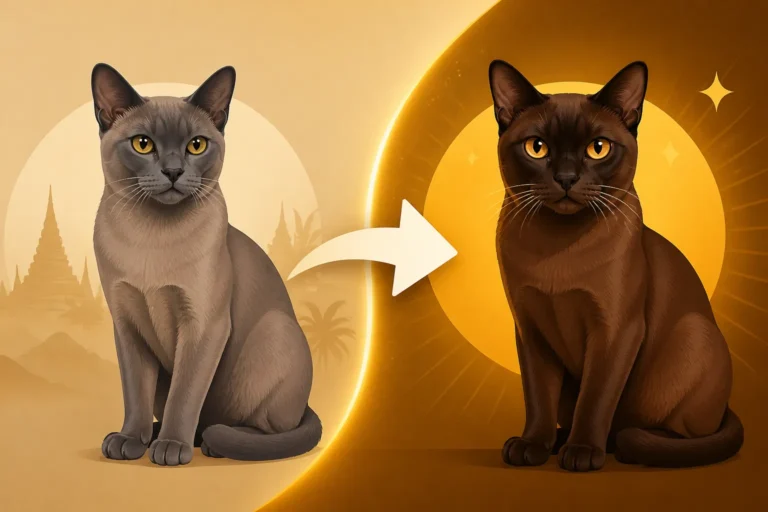
A Burmese’s coat color does not determine its eye color in the way it does for some other cats. A sable Burmese and a blue Burmese can both have the characteristic yellow-to-gold eyes. The coat may change in depth as the cat grows, while the eyes remain a separate feature to assess.
If your cat’s eyes look golden outdoors but pale or greenish indoors, check again in even, indirect daylight. Reflections from a colored wall, a warm lamp, or a camera flash can alter how the iris appears in photographs. For the broader picture of how eye color fits into the breed’s appearance, see What a Burmese Looks Like Against the Standard.
Breed standards and judging are not quite the same thing
Show standards describe the ideal Burmese, but the wording and judging practices can vary among registries and between American and European Burmese types. Gold and yellow are central to the expected range. Some standards or judges may favor a richer, deeper gold, while the exact emphasis can differ.
A show cat may be evaluated not only for eye color but also for shape, size, placement, and expression. A strikingly golden eye does not, by itself, make a cat a strong example of the breed. Likewise, a pet Burmese can be a wonderful, affectionate companion even if its eyes are lighter than a show judge would prefer.
If you are trying to understand a breeder’s claim about a kitten or adult cat, ask which registry’s standard they are referring to and whether the cat is registered as an American or European Burmese. The distinction matters because the types have different histories and standards. How a Burmese's Eye Color Is Judged explains how eye color is considered alongside other features, while How the American and European Burmese Split provides context for the two types.
How eye color relates to the rest of the face
Burmese eyes are typically large and set well apart, contributing to the breed’s open, attentive expression. Their shape and placement can make the eyes appear especially prominent, even when the color is a relatively light yellow. A cat’s expression is the combined effect of the eyes, head shape, and muzzle, rather than eye color alone.
This is why photos can be misleading. A close-up may exaggerate the size of the eyes, and a flash can create shine that obscures the iris color. When assessing a cat, look at both eyes in ordinary daylight and consider the overall face. For more on the shape and appearance expected in the breed, read How Round a Burmese's Eyes Should Be.
How eye color changes with age and appearance
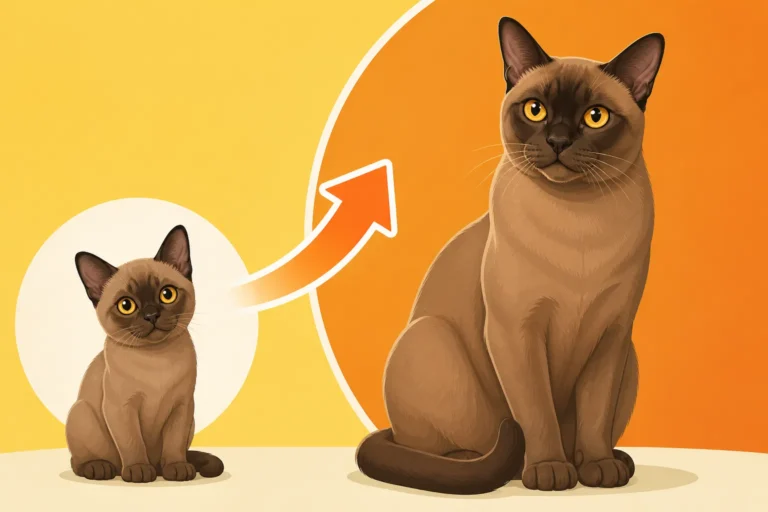
Burmese kittens may not have their adult eye color yet
A kitten’s eyes can look different from an adult Burmese’s eyes, so a very young kitten should not be judged by the same expectation as a mature cat. Like other kittens, Burmese kittens are born with immature eyes, and the color develops as they grow. The final shade may become clearer over time.
This can make early photographs confusing. A breeder may describe the kitten’s eyes as developing, while a new owner may expect to see a finished gold color immediately. Ask the breeder how old the kitten is, whether the eye color has begun to settle, and what they observe in the parents and other adult cats in the line.
Color development is not a reason to ignore a sudden change in an individual kitten. Normal maturation happens gradually. An eye that becomes cloudy, red, swollen, painful, or markedly different from the other eye needs veterinary attention rather than a wait-and-see approach.
Coat shade and lighting can create false impressions
Burmese coats are often described as satin-like, and their colors can shift in appearance with lighting and temperature. The eye color can seem to shift too, even when the iris itself has not changed. Warm indoor bulbs can make yellow eyes look more amber, while cool daylight may make them seem paler.
When you want to compare eye color over time, take photographs in similar natural light and from a similar angle. Avoid using flash, which can produce reflections and make the pupils look unusually bright. Look at the iris around the pupil rather than the reflective glow that appears in the center of the eye.
If you are comparing a cat with a breed standard, use the same approach: consistent light, a clear view of both eyes, and a calm setting. Registries may differ in their descriptions of accepted colors, so a color label from one breeder or listing is not always enough to determine how a cat would be assessed in a show context. Which Colors CFA Accepts in a Burmese is useful background when you are trying to understand how coat and type are handled in that registry.
Adult eye color can vary within the expected range
Not every Burmese has an identical shade. One adult may have soft yellow eyes, while another has a richer gold. Both can fall within the broad expected range. The important distinction is between normal variation in shade and an unusual color or a change that appears suddenly.
A greenish cast can be difficult to judge in a photograph, particularly if the image has a strong color tint. If the eyes consistently appear green in person, ask the breeder or a knowledgeable breed professional how that compares with the relevant standard. The issue is primarily one of breed type and conformation, not proof that the cat is unhealthy. You can read more in Why a Green Eyed Burmese Is Faulted.
| What you notice | What it may mean | A sensible next step |
|---|---|---|
| Yellow or gold eyes in an adult | Typical Burmese eye color | Compare in natural daylight if the shade is unclear |
| A lighter yellow in one setting and deeper gold in another | Lighting or camera effects | Check without flash in even daylight |
| A kitten’s color is still developing | The adult shade may not be settled | Ask the breeder about the kitten’s age and family line |
| A consistent greenish appearance | May differ from the expected breed standard | Confirm the cat’s type and registry standard |
| Sudden cloudiness, redness, or a change in one eye | Possible eye or general health problem | Contact a veterinarian promptly |
When a change in eye color needs attention
A color difference is not always just a breed question
Breed standards help describe appearance; they are not a health assessment. A Burmese with an unusual-looking eye color may simply differ from the show ideal. But a sudden change in the iris, a cloudy surface, or one eye that looks different from the other can indicate a problem that deserves professional assessment.
Pay attention to changes in behavior as well as appearance. Squinting, repeated blinking, rubbing at the face, light sensitivity, discharge, or keeping one eye partly closed are all reasons to contact a veterinarian. Cats can hide discomfort, and a Burmese’s affectionate, social behavior does not guarantee that it is feeling well.
If you notice a change, write down when it began and whether it affects one or both eyes. Take a clear photograph in ordinary light if you can do so without delaying care. That record may help the veterinarian compare the appearance over time, but it cannot replace an examination.
Eye color is different from eye shine and pupil size
People often describe an eye as changing color when what they are seeing is actually a change in pupil size, reflection, or the surface of the eye. Pupils naturally widen in dim light and narrow in brighter conditions. That can make the visible iris look different in size or intensity.
A reflected flash can also create a bright glow in a photograph. This is not the same as the iris color changing. Cloudiness, a white or bluish film, or a persistent difference in pupil size is more concerning than a temporary change in how the eyes look under different lighting.
When in doubt, observe both eyes in the same setting and compare them with your cat’s usual appearance. If the difference persists or comes with discomfort, seek veterinary advice rather than trying to diagnose the cause at home.
Keep eye care gentle and avoid unapproved products
Most Burmese do not need special care simply because their eyes are gold. If there is a small amount of dried material at the corner, gently wipe the surrounding fur with a clean, damp, soft cloth. Use a separate clean area of the cloth for each eye, and do not rub the eyeball or try to remove anything stuck to its surface.
Avoid putting human eye drops, medicated products, or household remedies into a cat’s eyes unless a veterinarian specifically instructs you to do so. If a veterinarian recommends a particular cleaning product, follow their directions and check that the product is intended for cats. Chewy listings can help owners compare pet-care supplies, but a product page or customer review is not a substitute for veterinary guidance. If you are shopping through Chewy, confirm the product’s intended use and ingredients with your veterinarian before using anything near the eye. For persistent discharge or irritation, a veterinarian may recommend a specific option; do not assume that a general-purpose wipe is appropriate just because it is marketed for pets. Chewy’s product information may assist with comparing available items, but the clinical advice should come from the veterinary team.
Choosing or assessing a Burmese with confidence
Look beyond eye color when considering a kitten
Eye color is one visible part of a Burmese’s appearance, not a reliable shortcut for deciding whether a kitten is healthy, well bred, or a good match for your home. Ask about the kitten’s veterinary care, socialization, parentage, and any health screening relevant to the line. A responsible breeder should be comfortable explaining the cat’s registration and the standard they are working toward.
It is also reasonable to ask to see the kitten in person or in unfiltered video, where possible. Check the eyes in natural light, then look at the kitten’s general condition: alertness, clean eyes and nose, normal movement, and relaxed interaction with people. A single carefully edited photo cannot answer all those questions.
If you are unsure whether a cat is an American or European Burmese, do not rely on eye color alone. Ask to see the pedigree or registration details and clarify which standard applies. The difference between types involves more than a single facial feature. What an American Burmese's Head Should Look Like and What a European Burmese's Head Should Look Like can help explain the broader distinctions.
Treat show preferences and pet suitability as separate questions
A judge may prefer a particular depth of gold, but that preference should not be confused with a cat’s value as a companion. If you are adopting or buying a pet Burmese, temperament, health, and a good fit with your household matter far more than whether its eyes have the richest possible shade.
For someone considering the breed, it helps to think about the Burmese as a whole: its social needs, activity level, health care, and daily routine. Eye color can be a lovely characteristic, but it does not tell you whether the breed suits your lifestyle. Whether a Burmese Is the Right Cat for You is a useful next read if you are still deciding.
The practical takeaway is straightforward: expect yellow-to-gold eyes in a mature Burmese, allow for development and lighting effects, and treat sudden physical changes as a health question rather than a breed-standard question. If an eye looks painful, cloudy, or newly different, arrange a veterinary check instead of waiting for the color to settle.
Disclaimer
This article is for general informational purposes only and does not constitute professional advice. Laws, prices and regulations vary by location and change over time. Consult a qualified professional for guidance on your specific situation.