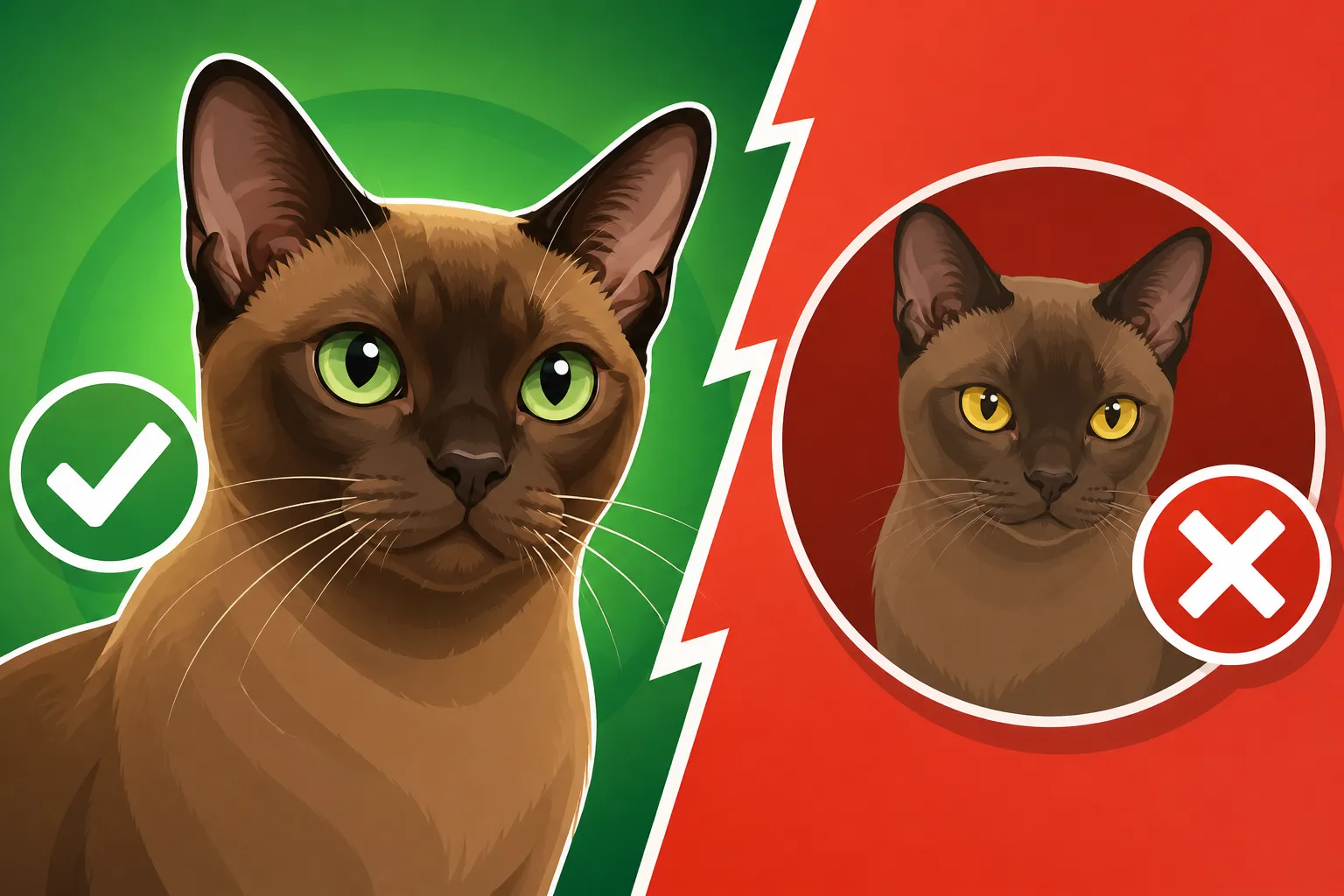
Why a Green Eyed Burmese Is Faulted
A Burmese’s eyes can look green in a photograph or under certain indoor lighting, even though green is not the eye color favored by the breed standard. That can leave owners wondering whether their cat is unhealthy, mixed, or simply being judged by a show rule. This guide explains what the standard asks for, why eye color matters in the show ring, and when a color change deserves veterinary attention.
What eye color is expected in a Burmese
The breed standard favors yellow through gold
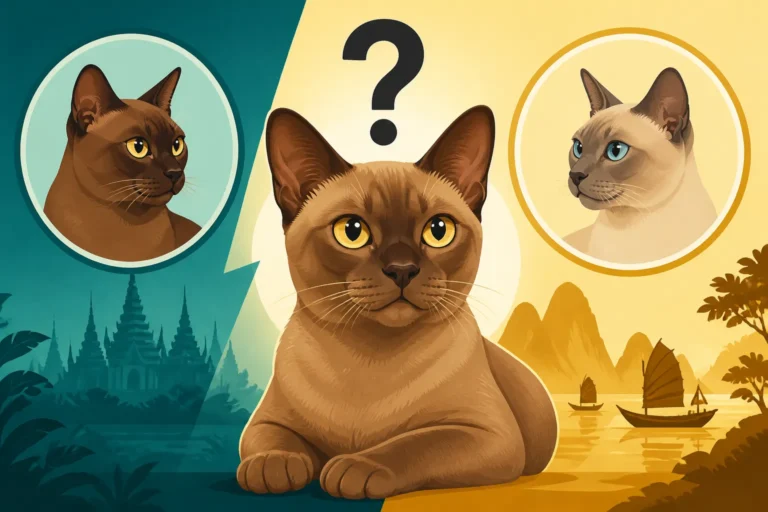
Burmese standards generally call for eyes in the yellow-to-gold range, with rich, clear color preferred. The exact wording can vary between registries and between American and European Burmese standards, so there isn’t one universal phrase that applies everywhere. But green is not normally the ideal color for a Burmese in the show ring.
The expected color is part of the breed’s overall appearance, not a health requirement. A pet Burmese with greenish eyes can still be a much-loved companion; the color may simply fall outside the preference used to evaluate cats against a written standard. That distinction matters. “Faulted” usually describes how a trait compares with a show standard, not whether a cat is sick or has been poorly cared for.
If you are trying to assess a cat, look at the iris in natural, indirect daylight rather than relying on a phone photo. Warm indoor bulbs can make yellow eyes look coppery, while reflected light can bring out a greenish cast. A camera’s white balance, flash, and nearby colored surfaces can also shift the apparent shade.
For a closer look at the preferred range, see Which Eye Color a Burmese Should Have. Eye color is one part of a larger picture: a judge considers it alongside the head, coat, body, and other features described in the relevant registry’s standard.
Burmese eye color is not the same as Siamese blue
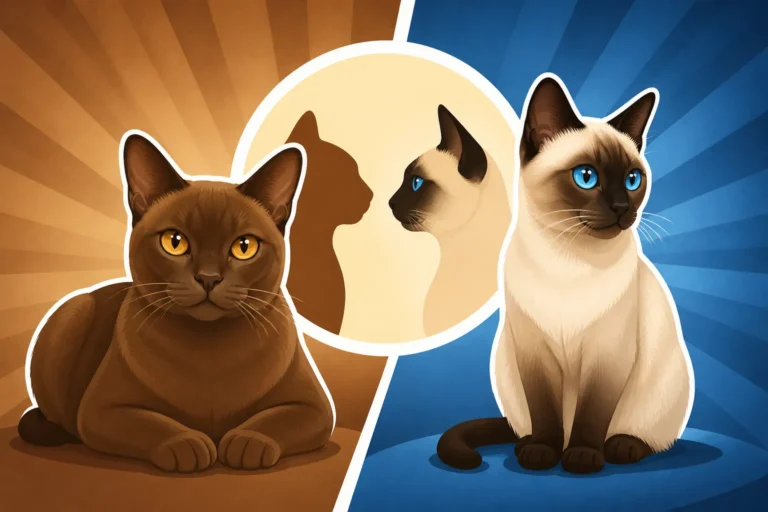
Burmese cats are known for their rounded, expressive eyes, but the breed is not expected to have the vivid blue eyes associated with Siamese cats. Burmese coat color is shaped by a temperature-sensitive pigment pattern, while eye color is judged as a separate feature. A Burmese can have a warm brown coat and yellow-to-gold eyes without being a solid-colored cat in the genetic sense.
This is one reason people sometimes make mistaken comparisons between breeds. A blue-eyed, pointed cat may remind someone of a Siamese, while a Burmese’s warm coat and golden eyes create a different look. The differences are not just cosmetic; breed histories and standards describe different combinations of traits. Why a Burmese Is Not a Solid Colored Cat explains how the Burmese color pattern works.
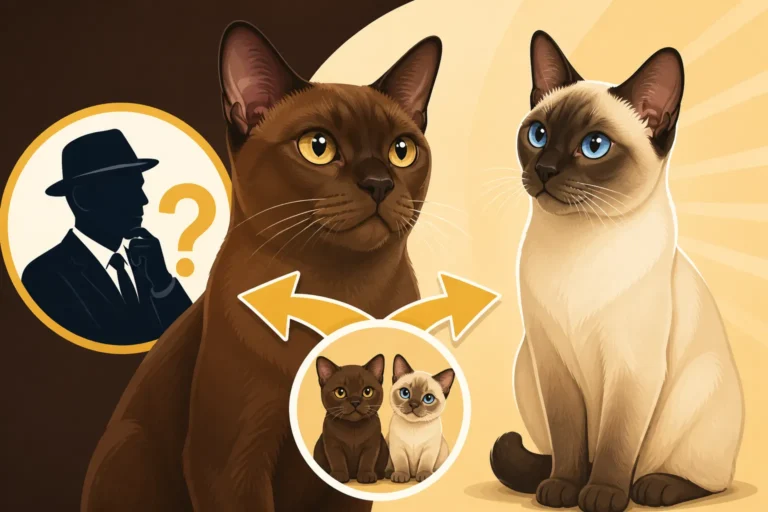
A Burmese with green eyes is not automatically a Tonkinese, a Siamese cross, or a mixed-breed cat. Eye color alone cannot establish ancestry. If pedigree or registration matters to you, rely on documented breeding records rather than trying to identify a cat from one feature in a photo. You can also compare the broader breed characteristics in How a Burmese Differs From a Tonkinese.
Why green eyes are faulted in the show ring
A fault means a departure from the standard
Cat-show judging is based on a breed standard: a written description of the features a particular breed is meant to display. Eye color is one of those features. If a Burmese has clearly green eyes, a judge may mark that as a departure from the preferred eye-color range, which can affect its evaluation against other Burmese entered in the class.
That does not mean the cat is defective. Show language can sound harsher than it is in everyday life. A “fault” is a judging term, not a diagnosis and not a judgment about a cat’s value as a pet. A cat may have a non-ideal eye shade and still be affectionate, healthy, playful, and unmistakably part of the family.
Standards also exist within particular registries and show systems. If someone is assessing a cat for showing or breeding, they should check the rules used by the organization where the cat will be registered or exhibited. Which Colors CFA Accepts in a Burmese gives useful context about how formal breed criteria can differ from what people casually call a Burmese color.
Judges assess the whole cat, not one detail in isolation
A show judge considers the cat as a whole. Eye color is evaluated alongside features such as head shape, eye shape, coat, body structure, and condition. The Burmese head itself is an important part of the breed’s appearance, and expectations can differ between American and European types. For more on that, see How a Burmese's Head Is Judged, What an American Burmese's Head Should Look Like, and What a European Burmese's Head Should Look Like.
This whole-cat approach is useful for owners, too. A green-looking iris in a single snapshot should not be treated as proof that a cat is not Burmese. Consider whether the color appears consistently in daylight, whether the cat has reliable pedigree documentation, and whether its other traits fit the type being claimed. Even then, appearance can suggest possibilities, not confirm ancestry.
| What you notice | What it may mean | What to do |
|---|---|---|
| Eyes look green in one indoor photo | Lighting, camera settings, or reflection may be changing the apparent shade | Recheck in natural, indirect daylight |
| Eyes look green in different settings | The iris may genuinely be outside the preferred show range | Treat this as a standards question, not a health diagnosis |
| A pedigree cat has greenish eyes | Eye color alone does not invalidate documented ancestry | Ask the breeder or registry about the applicable standard |
| Eye color changes suddenly | This may be a medical issue rather than a breed-standard issue | Contact a veterinarian promptly |
How to tell a stable eye shade from a health change
Lighting can make golden eyes look green
Light is a frequent source of confusion. A yellow or gold iris can look cooler in a room with blue-toned lighting, near green walls, or beside a bright window. Phone cameras may exaggerate those effects, especially when the image is edited or the flash creates a strong reflection. Compare the eyes in a few different settings before deciding that the cat has a particular shade.
Try looking when the cat is relaxed near a window, out of direct sunlight. Avoid shining a bright light directly into the eyes. If the eyes still appear green, that may simply be the cat’s natural iris color. A stable, long-standing shade is different from a new color change that develops over days or weeks.
Kittens’ appearances also change as they grow, and coat color can deepen with age. That does not mean eye color necessarily follows the same pattern. If you are watching a kitten develop, take occasional photos in similar lighting and ask the breeder or veterinarian about anything that seems unusual. For coat changes specifically, see Why a Burmese's Color Deepens Where It Is Cool and How a Burmese Kitten Darkens as It Grows.
A sudden change deserves a veterinary check
Breed standards are not a reason to ignore eye symptoms. Contact a veterinarian if an eye becomes cloudy, red, painful, swollen, or unusually watery; if the cat squints or rubs at it; or if the iris seems to change color suddenly. Changes in the pupil, visible haze, or a difference between the two eyes also deserve professional attention.
Do not try to correct a green-looking iris with drops, supplements, or cosmetic products. Eye color is not something that should be treated at home, and products meant for cleaning around the eye cannot change the iris. If there is discharge, use the approach your veterinarian recommends rather than experimenting with human eye drops or household remedies.
Chewy and other pet retailers may offer eye-cleaning supplies, but product listings are not a substitute for an eye examination. Chewy reviews can describe how a product worked for another household, but they cannot determine why your cat’s eye looks different. If you are considering a wipe or cleanser from Chewy, ask your veterinarian whether that type of product is suitable, especially if the eye itself looks irritated.
What to do if your Burmese has green eyes
If your cat is a pet, focus on health and comfort
For a companion cat, green eyes are usually a question of appearance rather than a problem to solve. If the shade has been stable and there are no signs of discomfort, there is no need to try to alter it. Keep up with routine veterinary care and take note of any new eye symptoms, just as you would for any cat.
It is understandable to worry when a breed description says one thing and your cat seems to show another. But a single feature cannot tell the whole story. A cat may have documented Burmese ancestry while showing an eye shade that is less typical or not preferred in the show ring. Conversely, a golden-eyed cat is not necessarily a Burmese. Appearance, health, and pedigree are related questions, but they are not interchangeable.
Chewy’s breed-related shopping pages or customer discussions may be useful for general browsing, but they should not be used to verify breed identity or interpret a standard. For those questions, ask the breeder for registration paperwork or consult the relevant cat registry. For an eye that has changed or appears uncomfortable, ask a veterinarian rather than relying on a retailer’s product information.
If you are buying or showing a Burmese, ask specific questions
If you are choosing a kitten from a breeder, ask which registry the litter is registered with and what eye-color wording applies to that standard. Request to see the parents, pedigree documents, and any registration records. A careful breeder should be able to explain the distinction between a pet-quality kitten and one considered suitable for showing without suggesting that a less typical eye shade makes the cat unhealthy.
For a show prospect, have the cat assessed in person by someone familiar with the appropriate standard. Photographs can be misleading, and a judge’s decision depends on more than eye color. Ask whether the evaluation concerns the shade itself, the eye shape, or a separate health concern; those are different matters.
If you already have a Burmese and want supplies for routine care, Chewy can be one place to compare basic products, but choose eye-care items only with veterinary guidance when there is irritation or discharge. No retailer, breeder, or online photo can diagnose an eye problem. The sensible dividing line is straightforward: a stable greenish shade may be a show-standard issue, while a sudden change or painful-looking eye is a veterinary issue.
Disclaimer
This article is for general informational purposes only and does not constitute professional advice. Laws, prices and regulations vary by location and change over time. Consult a qualified professional for guidance on your specific situation.