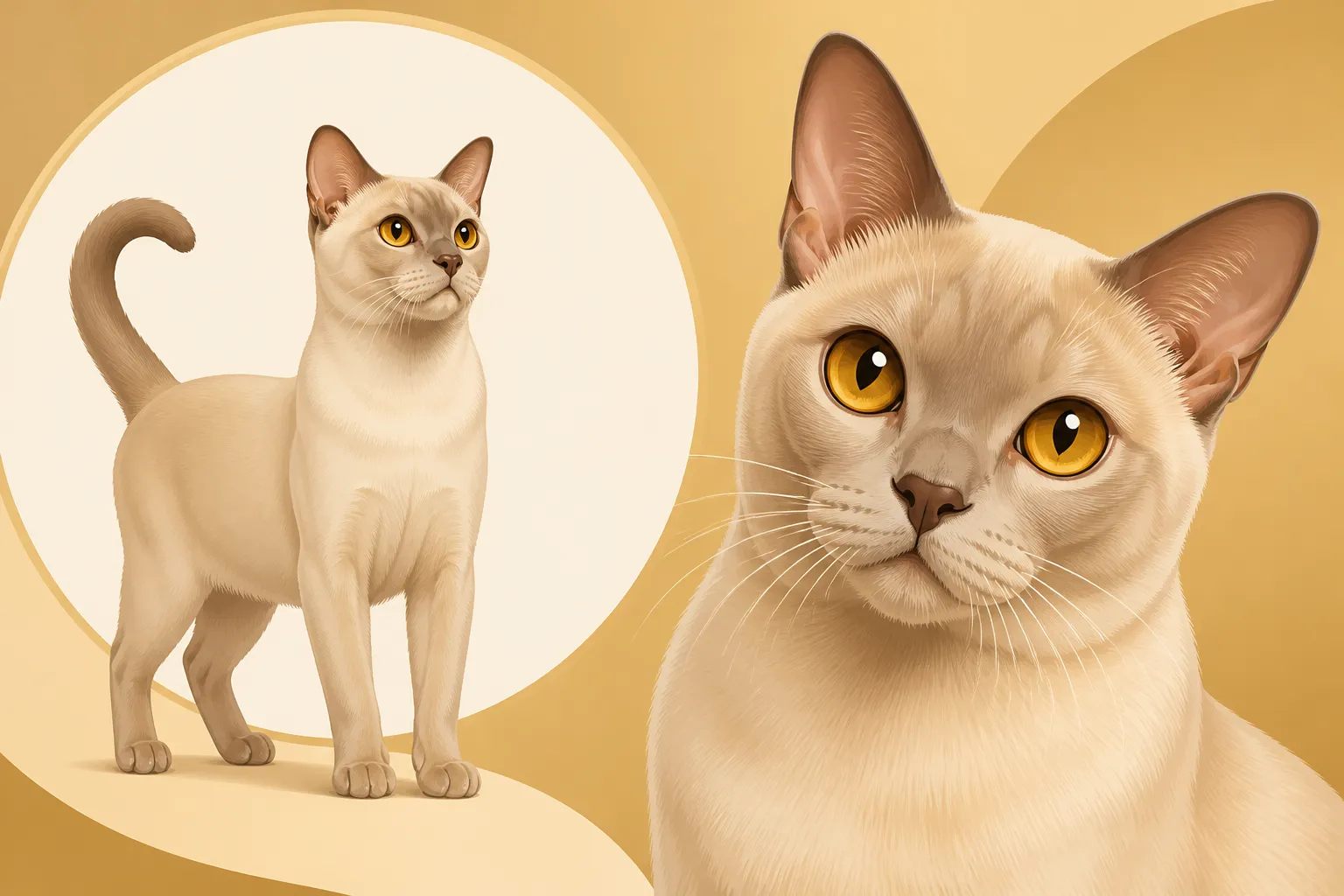
What a Champagne Burmese Looks Like
A champagne Burmese is not simply a pale brown cat: its coat is a warm beige with subtle darker shading, set off by round gold-toned eyes and a compact, muscular build. The color can look different in sunlight, indoor lighting, and kittenhood, so it is easy to mistake a champagne Burmese for another shade. This guide explains what to look for and what can change its appearance.
The champagne Burmese coat color
A warm beige rather than a flat cream
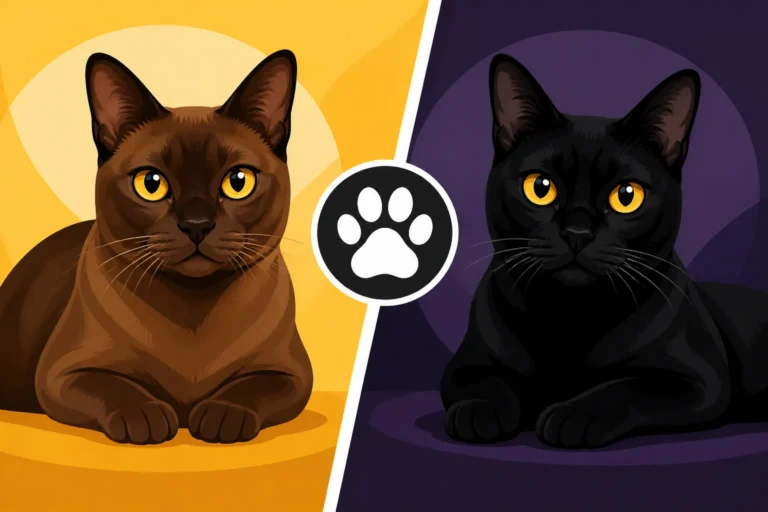
The champagne Burmese coat is usually described as warm beige or honey beige. It is lighter than sable, the deep brown shade many people picture when they think of a Burmese, but it is not usually a uniform, pale cream from nose to tail. The coat can show gentle shading, with the ears, face, legs, and tail appearing a little deeper in color than the body.
That contrast is often soft rather than sharply defined. A champagne Burmese should still look like one smoothly shaded cat, not a pointed cat with dark “socks” or a mask. If a photo makes the face look dramatically darker, check it in natural light if possible: strong shadows, indoor bulbs, and phone-camera processing can all exaggerate the difference.
The coat lies close to the body and has a glossy, satin-like look. A healthy coat catches light as the cat moves, which can make the beige appear warmer or cooler from one moment to the next. For a broader comparison with the other recognized Burmese shades, see The Four Colors a Burmese Comes In.
Nose leather and paw pads
The coat is only one part of the color picture. Champagne Burmese cats commonly have warm-toned nose leather and paw pads that complement the beige coat. Their exact appearance can vary, so these details are best considered alongside the whole cat rather than used alone to identify a color.
Look for a coordinated appearance: warm coat, warm-toned facial features, and no sharp, unrelated patches of color. If you are choosing a kitten from photos, ask the breeder for clear pictures of the face, paws, and body taken in ordinary daylight. It is also reasonable to ask what color is recorded in the kitten’s pedigree or registration paperwork.
A color name on an advertisement is not proof of a cat’s breed or registration. If you are comparing a kitten with the breed standard, What a Burmese Looks Like Against the Standard offers useful context about the Burmese’s overall appearance beyond coat shade.
Why lighting can make the color hard to judge
A champagne coat may look more golden in warm indoor light and cooler or paler near a window. Bright sunlight can also bring out shine and make the coat seem lighter, while shadows deepen the face and tail. Photos taken with different phone settings can make two cats of the same color appear surprisingly unlike one another.
For a fair comparison, look at several unfiltered images taken in similar lighting. A photo of the cat standing beside a neutral-colored object can help your eye judge the beige more reliably than a close-up with a bright background. Avoid treating one image as definitive, especially if it has a strong color filter or dramatic contrast.
If a kitten’s color seems to change as it grows, that does not automatically mean the original description was wrong. Burmese coats develop over time, and the kitten’s appearance can shift as its adult color settles.
How a champagne Burmese looks as it grows
Kittens often begin paler
Burmese kittens are generally born lighter than their adult coats will become. A young champagne kitten may look very pale, with its warm beige tone becoming easier to see as the coat matures. The change is gradual, so a single early photograph may not show the color the cat will have later.
This can catch new owners off guard. Someone might bring home a kitten expecting a particular honey-beige shade, then wonder why it appears almost cream in the first weeks. That early paleness is part of why age matters when identifying a Burmese color. For more detail, read Why a Burmese Kitten Is Born Paler Than It Ends Up and When a Burmese Kitten's Color Settles.
Color can also vary subtly from cat to cat, even among littermates. One champagne kitten may look more golden, while another appears lighter or has more visible shading. These differences do not necessarily indicate a problem or a different breed; they can be part of normal individual variation.
Shading can deepen in cooler areas
Burmese coat color is influenced by temperature-sensitive pigmentation. In practical terms, cooler parts of the body may develop deeper color than warmer areas. The ears, muzzle, feet, and tail can therefore look darker than the trunk, although the degree of contrast varies.
This pattern may become more noticeable with age or after changes in coat condition. It is not the same as the sharply defined points seen in some other color patterns. A Burmese should still have a softly blended overall appearance, rather than a pale body separated from dark extremities by a clear boundary. The related guide How a Burmese's Color Deepens Where It Is Cool explains this shading in more depth.
Do not try to judge a cat’s color from a winter photo against a summer photo without accounting for lighting, coat condition, and camera settings. If you are unsure whether the shade is champagne, ask a knowledgeable breeder or a cat-show judge to assess the cat in person.
Appearance changes do not mean the cat is dirty
A darker muzzle or a few marks around the chin can be mistaken for a coat-color issue. Sometimes the change is simply shading; sometimes the fur has picked up food residue or the skin has developed blackheads, which cats can get around the chin. Gentle cleaning may help with surface grime, but persistent spots, redness, swelling, or discomfort are reasons to ask a veterinarian.
A champagne coat can also show loose hairs or dust differently depending on the light. The short coat is relatively easy to maintain, and most cats do not need frequent bathing. A soft grooming glove or cloth can help lift loose hair without roughing up the coat. If you are browsing grooming supplies at Chewy, look for a gentle tool intended for short-haired cats rather than a harsh deshedding blade.
The coat is only part of the Burmese look
A compact, muscular body
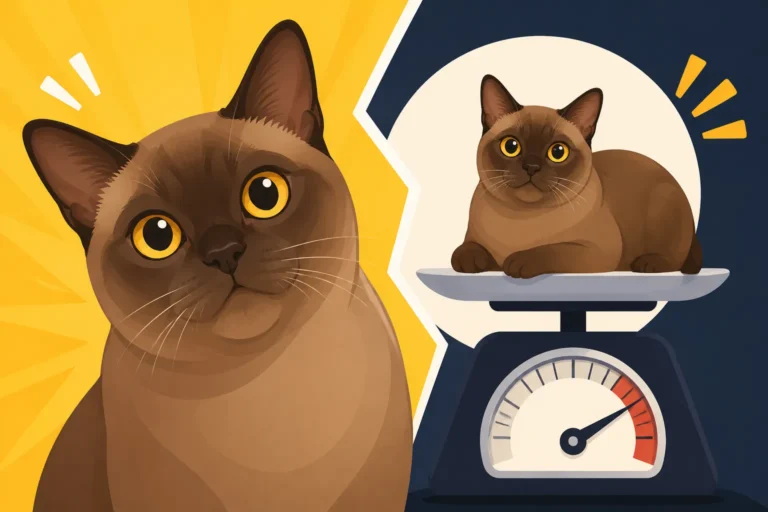
Burmese cats are often described as feeling heavier than they look. Their bodies are compact and muscular, with a solid feel when lifted. A champagne Burmese should not look delicate simply because its coat is a lighter shade. The color does not change the breed’s characteristic build.
This can be confusing in photographs, where a cat’s body shape depends on pose, camera angle, and whether the coat is catching the light. A side-on view can show the body more clearly than a close-up portrait. When comparing cats, look at the overall proportions rather than focusing on coat color alone.
The head shape differs somewhat between American and European Burmese types. Their standards are not identical, so a cat’s face may look rounder or more moderate depending on its type and pedigree. The champagne color itself does not tell you which type a cat belongs to.
Round eyes and an expressive face
Burmese cats are known for large, expressive eyes, typically in yellow-to-gold shades. The contrast between golden eyes and a warm champagne coat is a major part of the breed’s distinctive look. Eye color can appear different in photos depending on lighting, so one image should not be the only basis for assessing it.
A cat’s eyes should look clear and comfortable. Coat color does not explain persistent tearing, crusting, redness, or squinting. Those signs deserve attention on their own, rather than being written off as part of a particular appearance. For a closer look at the breed’s eye-color expectations, see Which Eye Color a Burmese Should Have.
People sometimes confuse Burmese cats with Tonkinese cats, especially when they are looking at photographs rather than pedigrees. Coat shade alone may not settle the question. Head shape, body type, eye color, and registration information all help. How to Tell a Burmese From a Tonkinese is a useful comparison if you are trying to distinguish the breeds.
Grooming that preserves the satin look
A champagne Burmese does not need elaborate coat styling to look its best. Regular gentle handling and occasional brushing or wiping can remove loose hair and help keep the coat neat. Because the coat lies close to the body, heavy brushes and aggressive grooming tools are usually unnecessary for routine care.
Start with a soft cloth or grooming mitt and let the cat get used to the sensation. A short session while the cat is relaxed on a lap is often easier than trying to hold it still for a long grooming routine. If you decide to shop at Chewy, check the tool’s description and choose one made for short coats; avoid assuming that a product marketed for heavy shedding is automatically suitable.
A glossy coat is not a substitute for overall health. A sudden dull appearance, unusual hair loss, persistent itching, or a change in grooming habits can have causes that color and breed type do not explain. If you notice a change that continues, speak with your veterinarian rather than trying several grooming products in succession.
How to identify a champagne Burmese with confidence
Use more than one clue
The most reliable identification comes from looking at the whole picture: the warm beige coat, its subtle shading, the Burmese body type, the eye color, and the cat’s documentation. A single feature can be misleading. A beige cat is not necessarily a champagne Burmese, and a dark muzzle alone does not establish a particular Burmese color.
| Feature | What you may see in a champagne Burmese | What to keep in mind |
|---|---|---|
| Main coat | Warm beige or honey beige | Lighting can make it look lighter, cooler, or more golden |
| Shading | Slightly deeper color on the face, ears, legs, or tail | Usually blended rather than sharply pointed |
| Coat texture | Short, close-lying, glossy coat | Shine changes with angle and light |
| Eyes | Yellow-to-gold tones are typical | Photos can distort the apparent shade |
| Build | Compact and muscular | Pose and camera angle can hide the cat’s proportions |
| Documentation | Color and breed details in pedigree or registration records | Ask the breeder to explain the recorded terms |
If you are buying a kitten, request photos taken in daylight and ask to see the kitten with its littermates. Ask how the breeder identifies the color and what appears in the paperwork. A responsible breeder should be able to explain the kitten’s type and color without relying only on a sales listing or a single edited photo.
For show-related questions, keep in mind that judges assess more than shade. Coat quality, body, head, and other features matter under the applicable standard. What a Burmese's Coat Is Judged in the Ring provides more background on how coat presentation is considered.
Treat online color labels carefully
Online listings sometimes use color names loosely, especially when the seller has only a few photos or the kitten is very young. A kitten described as champagne may look almost cream in one image and noticeably warmer in another. Rather than arguing over a single photograph, ask for the kitten’s age, pedigree details, and a few unfiltered pictures in natural light.
If you are comparing listings, write down the details that matter: the registered breed, Burmese type, color description, and whether the seller can show supporting paperwork. A listing that uses a color name without explaining the cat’s background may leave you with more questions than answers. It is perfectly reasonable to ask for clarification before placing a deposit.
Do not choose a cat based on shade alone. Temperament, health history, socialization, and the fit with your household matter far more over the years than whether the coat reads as beige or honey in a particular room. A reputable breeder should welcome thoughtful questions about both appearance and care.
Keeping the color in perspective
The champagne Burmese is recognizable for its warm, softly shaded coat, but no two cats will look identical in every setting. Age, lighting, coat condition, temperature, and individual variation all affect what you see. A young kitten may start out pale, then develop a richer beige tone and more noticeable shading as it matures.
If you have found a cat through a rescue or inherited one without paperwork, you can still appreciate its appearance without needing to settle every label. A veterinarian can help assess health, while a knowledgeable breed professional can offer an opinion on type and color. The cat’s well-being matters more than a perfect color classification.
For routine coat care, gentle handling and a soft grooming tool are usually enough. Chewy is one place to compare basic grooming options, but the simplest suitable tool is often the best choice. Once you know what champagne coloring looks like, it becomes easier to enjoy the details without expecting every cat—or every photograph—to match one exact shade.
Disclaimer
This article is for general informational purposes only and does not constitute professional advice. Laws, prices and regulations vary by location and change over time. Consult a qualified professional for guidance on your specific situation.