Which Other Breeds the Burmese Founded
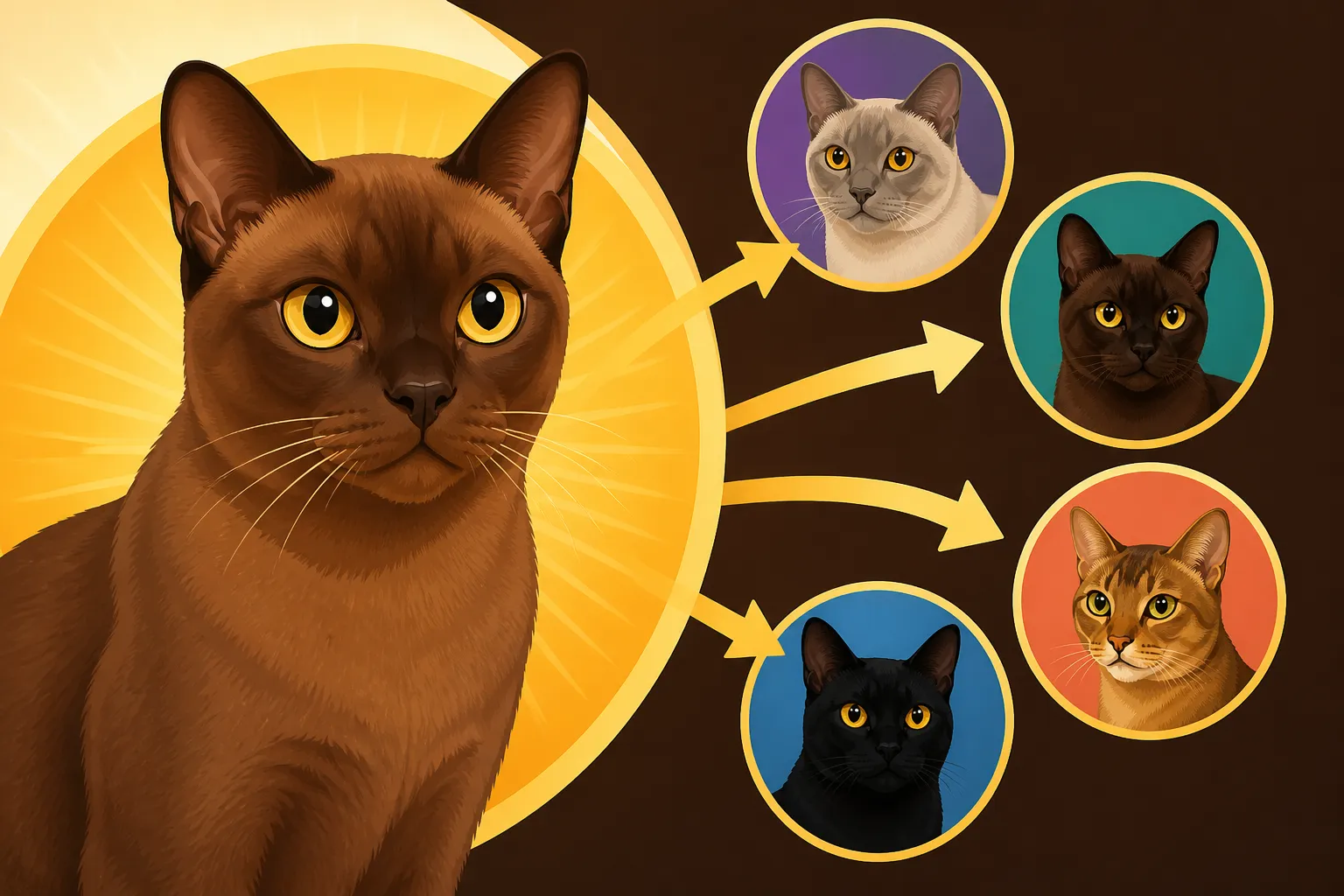
A Burmese cat’s influence reaches well beyond its own breed: its distinctive color, compact build, and engaging temperament helped shape several others. The clearest examples are the Bombay, Tonkinese, and Burmilla. Here’s how each breed developed, what the Burmese contributed, and why “founded” doesn’t always mean a breed came from Burmese cats alone.
What it means for the Burmese to found another breed
A foundation breed is part of the origin story
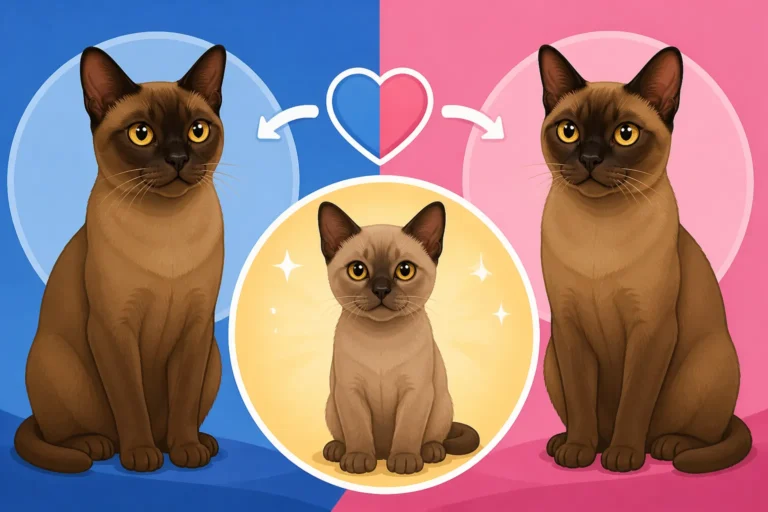
When people say the Burmese “founded” another breed, they usually mean Burmese cats were deliberately used in that breed’s development. That doesn’t necessarily mean the Burmese was the only ancestor, or that the new breed is simply a Burmese with a different coat. Breeders may combine cats from different backgrounds to develop a particular appearance or temperament, then work over generations to make those traits more consistent.
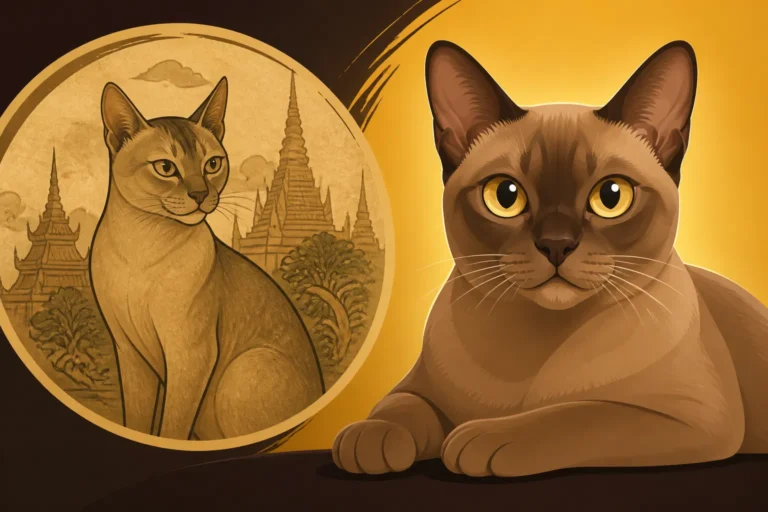
The Burmese was especially useful in breeding programs because it brought a distinctive combination of traits. The breed is known for a compact, muscular body, a close-lying coat, and a warm, people-focused personality. Its color genetics also played a role in the development of breeds with Burmese-style coloring or Burmese ancestry. For a closer look at the breed’s early history, see The Burmese Began With One Cat Called Wong Mau.
A breed’s origin story can also become more complicated over time. Breeders select cats for different goals, registries set their own standards, and different populations may develop in separate directions. So when tracing the Burmese’s influence, it helps to distinguish between a breed that was created using Burmese cats and one that was simply inspired by the Burmese look.
The three best-known breeds with Burmese ancestry
The best-known breeds connected to Burmese breeding programs are the Bombay, the Tonkinese, and the Burmilla. Their origins are quite different. The Bombay was created to produce a black cat with a panther-like appearance; the Tonkinese developed through Burmese and Siamese ancestry; and the Burmilla began with an unexpected mating between a Burmese and a Chinchilla Persian.
| Breed | Burmese connection | Other important ancestry | What breeders set out to develop |
|---|---|---|---|
| Bombay | Burmese cats were used in its development | Black American Shorthairs | A sleek, black cat with a rounded, panther-like appearance |
| Tonkinese | Burmese cats contributed to its foundation | Siamese cats | A cat with a middle-ground look and traits between Burmese and Siamese |
| Burmilla | A Burmese was one parent in the original pairing | Chinchilla Persian | A silver-shaded coat combined with a short coat and companionable temperament |
These are not interchangeable stories. The Bombay’s origin involved a specific appearance goal, while the Tonkinese reflects a blend of Burmese and Siamese ancestry. The Burmilla’s creation began by chance, but its development into a recognized breed required deliberate breeding afterward.
If you’re comparing the Burmese with one of its descendants, the similarities can be striking—but they don’t make the breeds identical. The Bombay and the Tonkinese Came Out of the Burmese looks at two of the most direct connections.
How the Burmese helped create the Bombay
Breeders wanted a black cat with a panther-like look
The Bombay was developed with a clear visual goal: to create a domestic cat with a sleek black coat and a rounded, panther-like appearance. Burmese cats were crossed with black American Shorthairs as breeders worked toward that look. The Burmese contributed to the Bombay’s compact, muscular build and close-lying coat, while the American Shorthair provided important ancestry for the breeding program.
The result is not simply a black Burmese. Bombay cats have their own breed identity and standard, including expectations for coat color and appearance. Their ancestry reflects a deliberate combination of cats rather than a color variation that appeared within Burmese litters. That distinction matters if you’re trying to identify a cat by appearance alone: a black cat with a shiny coat is not automatically a Bombay.
The Bombay’s history is also a good example of how breeders can use an existing breed’s qualities as building blocks. They may want to retain some physical or behavioral features while establishing a new look. The process takes selection across generations; one cross does not instantly create a stable breed.
What Bombay cats share with Burmese cats
Burmese and Bombay cats may both have a compact, muscular feel and a close, glossy coat. Both can also be highly social companions. But breed standards and ancestry matter: a Bombay is not just a Burmese that happens to be black, and a Burmese does not become a Bombay because its coat is especially dark.
This resemblance sometimes leads to confusion in shelters or online listings. Coat color alone is not enough to confirm a breed, particularly for cats without pedigree records. A cat’s body shape, head, coat, and known family history all offer clues, but they may not settle the question. If you’re considering a particular cat, it’s more useful to ask about its documented background and individual needs than to rely on a visual guess.
Regardless of breed, a short coat still benefits from basic care and regular interaction. If you’re preparing for a social, playful cat, everyday supplies such as a scratching surface, a carrier, and interactive toys can help make the home feel welcoming. Chewy is one place owners may use to find routine supplies, but the most important choice is selecting items that suit the individual cat and household.
For more on their similarities and differences, see How a Bombay Differs From a Black Burmese and How to Tell a Burmese From a Bombay.
How Burmese and Siamese ancestry shaped the Tonkinese
The Tonkinese developed from two distinct breed backgrounds
The Tonkinese is connected to both the Burmese and the Siamese. Breeders drew on cats from these backgrounds to develop a breed with a look that sits between the two: not quite the compact, solidly colored Burmese type, and not quite the pointed Siamese type. Its development reflects the idea that combining two breeds can produce a distinct third type rather than merely an in-between individual.
The details of Tonkinese history include more than one breeding effort and changing recognition over time. It’s best understood as a breed developed from Burmese and Siamese ancestry, rather than as a simple one-time cross. Breeding programs aim for predictable traits across generations, and those traits become part of a breed’s identity through selection and shared standards.
Color is one of the most visible ways the ancestry comes through. Burmese coloring is associated with a temperature-sensitive color gene, while Siamese cats are known for pointed coloring. The Tonkinese is often recognized for a pattern that differs from both, which is part of why its appearance is so distinctive. To understand the Burmese side of that story, see The cb Allele Is What Makes a Burmese Brown.
A related origin does not guarantee the same personality
It’s tempting to assume that a Tonkinese will behave exactly like a Burmese or Siamese because of its ancestry. In real life, individual temperament depends on more than breed history. Early socialization, environment, health, and the cat’s own personality all matter. Breed tendencies can help set expectations, but they can’t tell you precisely how a particular cat will behave at home.
If you’re choosing between a Burmese and a Tonkinese, consider your household and the kind of companionship you’re hoping for. Spend time with the cat where possible, ask about its upbringing, and talk with the breeder or rescue about its behavior. A breed description is a starting point, not a guarantee that every cat will be equally vocal, energetic, or affectionate.
A busy, interactive cat may need more than a food bowl and a sunny windowsill. Short play sessions, climbing options, and puzzle toys can provide stimulation, especially in a home where people are out for part of the day. Some owners source toys and other everyday items through retailers such as Chewy; whichever shop you use, rotate toys and watch what your cat actually enjoys rather than buying a large collection all at once.
For a fuller look at the relationship, read How the Tonkinese Was Made From a Burmese and How a Burmese Differs From a Tonkinese.
How an accidental pairing led to the Burmilla
The Burmilla began with a Burmese and a Chinchilla Persian
Unlike the Bombay and Tonkinese, the Burmilla’s origin began with an unplanned mating between a Burmese and a Chinchilla Persian. The kittens drew attention for their attractive silver-shaded coats and appealing appearance. That chance beginning became the foundation for a deliberate breeding program designed to develop a consistent type.
The Persian ancestry helps explain the Burmilla’s distinctive coat pattern, while the Burmese was part of the breed’s founding background. As with any developing breed, early kittens alone were not enough to establish a stable population. Breeders had to make careful decisions about later matings, preserving desired traits while building consistency from one generation to the next.
This history shows why “founded by the Burmese” is a useful shorthand but not a complete family tree. The Burmilla is not a Burmese variety, and its identity comes from a combination of ancestry and a developing breed standard. The same principle applies to other breeds: a founding cross is the beginning of a story, not the whole story.
What the Burmilla shares—and what it does not
Burmillas may share some qualities with Burmese cats, including a companionable nature and a smooth, close-lying coat. But the silver-shaded appearance associated with the Burmilla reflects its Persian ancestry and its own breeding history. A Burmese may be influential in the origin without defining every feature of the resulting breed.
That’s useful context if you’re researching a cat or trying to understand a breeder’s description. Ask what the cat’s pedigree says, what standard the breeder follows, and how the individual has been raised. Terms such as “Burmese-type” can describe appearance or ancestry loosely, so they shouldn’t be treated as proof of registered breed identity.
Whichever breed you bring home, practical care matters more than the historical label. Cats need a stable feeding routine, appropriate enrichment, safe spaces, and regular veterinary care. Chewy may be convenient for replenishing basics like litter or toys, but your veterinarian is the person to consult about nutrition or health concerns specific to your cat.
The Burmese also influenced the cat fancy in ways beyond these three breeds, but the Bombay, Tonkinese, and Burmilla are the clearest examples of its role in breed development. For a broader comparison of its descendants, see Which Other Breeds the Burmese Founded and Which Other Breeds the Burmese Founded.
Disclaimer
This article is for general informational purposes only and does not constitute professional advice. Laws, prices and regulations vary by location and change over time. Consult a qualified professional for guidance on your specific situation.