Which Registry Calls It a European Burmese
It's incredibly frustrating when you're trying to understand something as seemingly straightforward as a cat breed, only to discover there are different "types" and that various organizations can't even agree on what to call them! If you're looking into getting a Burmese, or just trying to make sense of the pedigree papers you already have, navigating the world of cat registries and their specific classifications for the European Burmese can feel like a maze. This guide is here to clear up that confusion, explaining which major registries recognize the European Burmese and why these distinctions exist in the first place.
Understanding the Two Burmese Types
To truly grasp why some registries specifically call out a "European Burmese" and others simply refer to a "Burmese," we need to understand a bit of history. The Burmese breed, as we know it today, began with one cat named Wong Mau, brought from Burma (now Myanmar) to the United States in 1930. Dr. Joseph Thompson, a U.S. Navy doctor, was instrumental in developing the breed from this single cat, initially breeding her with a Siamese. This foundational work led to the establishment of the American Burmese type, known for its compact, rounded body and short, broad muzzle.
The American vs. European Distinction
As the breed gained popularity and spread to other parts of the world, particularly the UK in the mid-1940s, breeders across the Atlantic began to develop the Burmese along slightly different lines. While sharing a common ancestry, the British (and later, European) breeders favored a more moderate look: a slightly longer, more elegant body, a wedge-shaped head, and almond-shaped eyes, compared to the rounder features of their American counterparts. This divergence was quite organic, driven by differing aesthetic preferences and breeding goals. It was a gradual split, rather than an intentional creation of two separate breeds, but over decades, the physical characteristics became distinct enough that they were essentially two different "looks" of the same foundational breed. You can dive deeper into How the American and European Burmese Split if you're curious about the full historical journey.
Why Registry Recognition Matters
For both breeders and owners, the registry an individual cat is registered with holds significant importance. It's not just about getting a fancy piece of paper; it's about validating the cat's lineage, ensuring adherence to specific breed standards, and determining eligibility for showing. A registry provides the official framework for a breed, defining what makes a cat truly a "Burmese" or a "European Burmese" in its eyes. Without registration, proving a cat's heritage or entering it into a recognized cat show becomes impossible. For breeders, adhering to a specific registry's standards ensures they are contributing to the breed's integrity and preserving the desired characteristics of their chosen type. It's why Why a Burmese's Pedigree Should Show Its Type Throughout is such vital advice for prospective owners.
Registries that Recognize the European Burmese
When it comes to the "European Burmese," there are a few key registries that specifically acknowledge and register this type, often differentiating it from the American standard.
The Governing Council of the Cat Fancy (GCCF)
The Governing Council of the Cat Fancy (GCCF) is the primary feline registering body in the United Kingdom, and it plays a huge role in the European Burmese world. In the UK, the Burmese breed developed its own distinct type, which is what we now commonly refer to as the European Burmese. The GCCF recognizes this type as the standard Burmese, meaning that when you hear "Burmese" in the UK, they are almost exclusively referring to the European type. They do not recognize the American Burmese as a separate breed or even as an acceptable variation of their own Burmese standard. Their standard describes the more elegant, less rounded features that define the European look. For anyone breeding or showing a Burmese in the UK, understanding How GCCF Registers the Burmese is absolutely critical.
The Fédération Internationale Féline (FiFe)
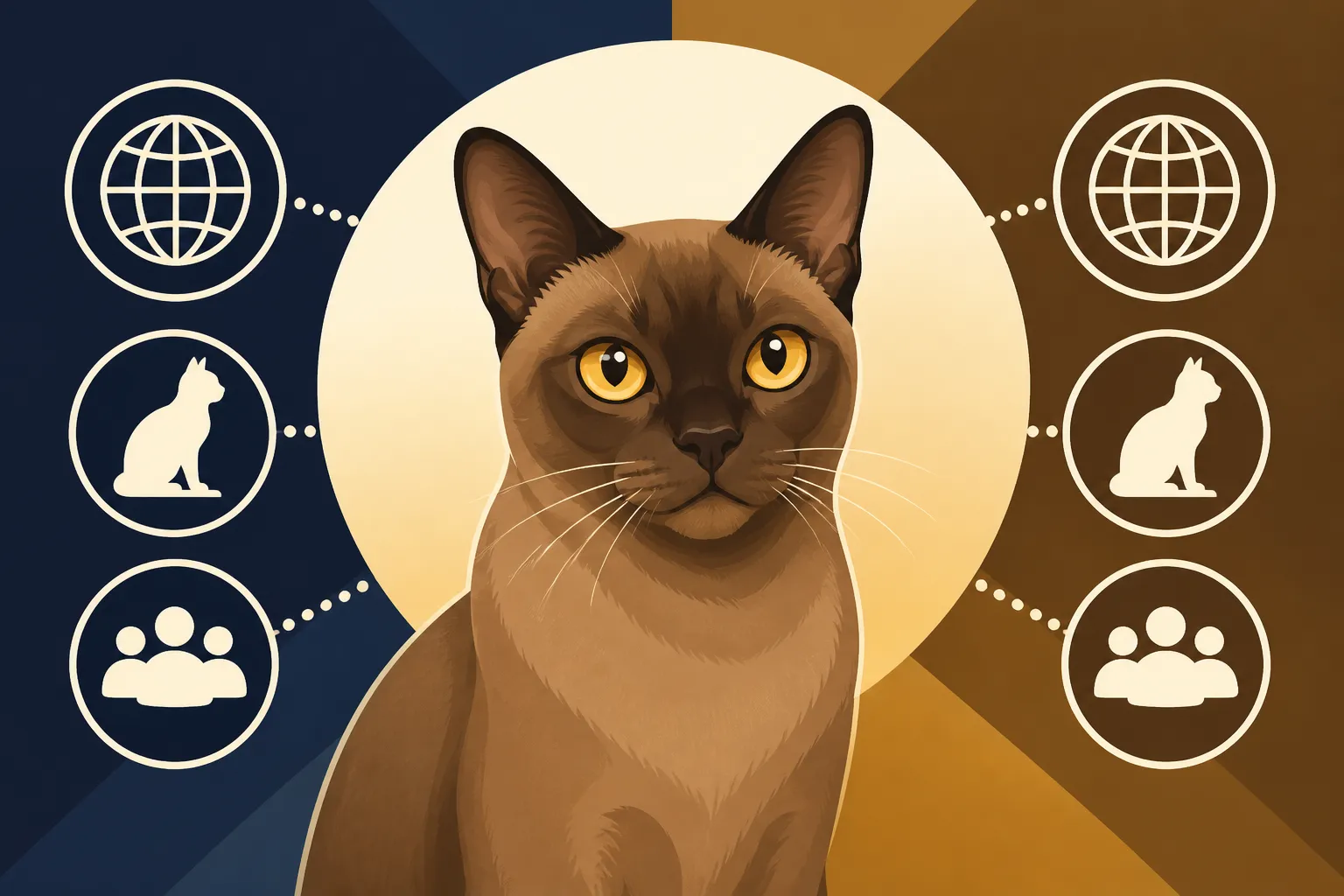
The Fédération Internationale Féline (FiFe) is an international organization that unites numerous national cat federations across Europe, Asia, and South America. As such, FiFe adopted standards that reflect the preferences common in many of its member countries, where the European Burmese type is predominant. FiFe explicitly recognizes and registers the "Burmese" with a standard that aligns with the European type, emphasizing the moderate body, wedge-shaped head, and overall elegant appearance. This makes FiFe an important registry for European Burmese breeders and owners outside of the UK but within the broader European sphere of influence, ensuring their cats can be shown and bred under a consistent international standard. This is indeed one of the key registries that explicitly calls it a European Burmese, as explored further in Which Registry Calls It a European Burmese.
The International Cat Association (TICA)
The International Cat Association (TICA) is a global registry that often takes a more inclusive approach to breed variations. Unlike some registries that are very strict about a single standard, TICA often recognizes both the American Burmese and the European Burmese as distinct types or breeds, sometimes even allowing for their registration under separate classifications. This means that if you have a European Burmese and are in a region where TICA has a strong presence, you can usually register and show your cat under its specific European standard. TICA's flexibility makes it a popular choice for breeders who might be working with diverse bloodlines or who appreciate the recognition of both established types. You'll find more details on How TICA Registers the Two Burmese Types and their specific rules if you're considering this option.
Registries that Primarily Recognize the American Burmese
While the European Burmese has strong recognition in its home territories and through international federations, there are also major registries that primarily recognize the American Burmese standard, often simply calling it "Burmese" without further distinction.
The Cat Fanciers' Association (CFA)
The Cat Fanciers' Association (CFA) is the largest registry of pedigreed cats in North America and holds significant influence globally, especially concerning breeds developed in the United States. For CFA, the "Burmese" breed adheres to the American standard: a compact, muscular cat with a distinctly rounded head, full cheeks, and large, round, expressive eyes. CFA does not formally recognize a "European Burmese" as a separate breed or even as a distinct type within their Burmese standard. Cats that fit the European aesthetic would not typically fare well in CFA shows, as they would be judged against the American standard and considered "out of type." This singular focus means that if your goal is to show a cat within the CFA system, you'll need an American Burmese. Understanding Whether CFA Judges Both Burmese Types is crucial for anyone involved in the North American show circuit.
Implications for Cross-Type Breeding and Registration
The existence of these two distinct types and the varying approaches of registries can create complex situations, particularly for breeders. Most ethical breeders of either type are very clear about which standard they are working towards and registered under, and they generally do not cross-breed American and European lines. The reasoning is simple: interbreeding these types can result in offspring that don't conform well to either standard, making them difficult to register, show, or sell as purebreds of a recognized type. It dilutes the carefully cultivated characteristics that define each type, making it harder to predict traits and maintain the health lines specific to each. This avoidance of cross-breeding is a core tenet for preserving the integrity of both types, which is why Why the Two Burmese Types Are Not Crossed is a common understanding among dedicated breeders. If such a cross did occur, registering the kittens would be a bureaucratic headache, often requiring special dispensation or resulting in "experimental" classifications, which defeats the purpose for many breeders.
What This Means for Owners and Breeders
Navigating the world of Burmese cats, with its American and European types and varied registry recognition, can seem daunting. However, armed with the right information, both prospective owners and breeders can make informed decisions.
Ensuring Your Kitten's Lineage and Health
For anyone looking to bring a Burmese into their home, it is absolutely paramount to understand which type of Burmese you are buying and which registry the breeder is using. A reputable breeder will be transparent about their lines, the type they breed, and the specific registry their kittens are registered with. Always ask to see the pedigree papers and genetic test results for the parents. This is not just about aesthetics; it's also about health. Both American and European Burmese lines have specific genetic predispositions, such as diabetes and hypokalemia, that breeders should be actively testing for. For example, some studies suggest that certain European lines might show a higher incidence of diabetes. A comprehensive Which Tests Belong on a Burmese DNA Panel will give you peace of mind and help ensure you're bringing home a healthy companion. Don't be shy about asking questions and verifying claims.
Navigating the Show Ring and Breed Standards
If your aspiration is to show your Burmese, your choice of registry will dictate almost everything about your journey. If you live in Europe or the UK and prefer the elegant, moderate look, you'll likely be registering with GCCF or FiFe and showing under their European Burmese standard. If you're in North America and prefer the compact, rounded appearance, then CFA is typically where you'll want your cat registered. The judging standards differ significantly between these organizations, and a cat that excels in a GCCF show might be completely out of place in a CFA ring. It's a vivid demonstration of What a Burmese Looks Like Against the Standard depending on where that standard was written and by whom. Being aware of these differences from the outset will save you a lot of potential frustration and ensure your cat is being judged fairly according to its type.
| Registry Abbreviation | Full Name | Primary Recognition | Key Characteristics Recognized (Burmese) | Region of Influence |
|---|---|---|---|---|
| GCCF | Governing Council of the Cat Fancy | European Burmese | More elegant, moderate body; wedge-shaped head; almond eyes. | United Kingdom |
| FiFe | Fédération Internationale Féline | European Burmese | Moderate body; wedge-shaped head; green/yellow eyes. | Europe, Asia, South America |
| TICA | The International Cat Association | Both | Recognizes both American (compact, rounded) and European (moderate, wedge). | Global |
| CFA | Cat Fanciers' Association | American Burmese | Compact, rounded body; rounded head; full cheeks; round eyes. | North America (and globally) |
Disclaimer
This article is for general informational purposes only and does not constitute professional advice. Laws, prices and regulations vary by location and change over time. Consult a qualified professional for guidance on your specific situation.