Why a Burmese Budget Needs a Line for Receding Gums
As a Burmese cat owner, you probably already know how special these intelligent, affectionate "Velcro cats" are. But beneath that stunning satin coat and those soulful eyes, there's a lesser-talked-about health concern that can quietly become a significant financial drain: receding gums. This guide is all about understanding why your beloved Burmese might face this issue, how to spot it, and most importantly, how to proactively budget for the care it needs, potentially saving you a lot of heartache and expense down the road.
The Unseen Costs of Receding Gums in Burmese Cats
It’s easy to think of dental care as a secondary concern, especially when your cat seems otherwise healthy and happy. But for Burmese cats, dental issues, particularly receding gums and the periodontal disease that often follows, aren't just an inconvenience; they are a serious health matter that can lead to pain, infection, and significantly impact their overall well-being. And, yes, they absolutely come with a price tag.
Understanding Why Burmese Gums Recede Early
Burmese cats, bless their chatty little hearts, can be predisposed to certain dental problems, and receding gums are high on that list. It's often linked to their unique head shape and jaw structure. While they have a strong, muscular build, their brachycephalic (shorter-nosed) ancestry, even subtly, can sometimes lead to dental crowding. This crowding means teeth might not align perfectly, creating little nooks and crannies where plaque and tartar can build up more easily than in cats with longer muzzles. Imagine trying to clean between tightly packed books on a shelf – it's tough! That's what your Burmese's mouth might be up against.
Beyond the physical structure, genetics can also play a role. Some lines might simply have a genetic predisposition to weaker gum tissue or a more aggressive immune response to plaque bacteria, leading to faster progression of gingivitis to periodontitis. This isn't something you can easily see just by looking at a kitten, which is why understanding the breed's general vulnerabilities is so crucial. Early gingivitis is inflammation of the gums, and if left unchecked, it progresses to periodontitis, where the inflammation spreads to the deeper supporting structures of the teeth, leading to bone loss, tooth mobility, and eventually, teeth falling out. Owners often notice the early signs as a bit of bad breath, or perhaps some redness along the gumline when their cat yawns or grooms nearby. If you want to dive deeper into this, you can read more about Why a Burmese's Gums Recede Early.
How Gum Disease Progresses and What It Means for Your Budget
The progression of gum disease isn't a sudden event; it's a slow creep that, if ignored, snowballs into significant problems. It starts with plaque, a sticky film of bacteria, food particles, and saliva. If this isn't removed daily, it hardens into tartar. Tartar then irritates the gums, causing gingivitis – inflammation and redness, often accompanied by bad breath. This stage is usually reversible with professional cleaning and good home care.
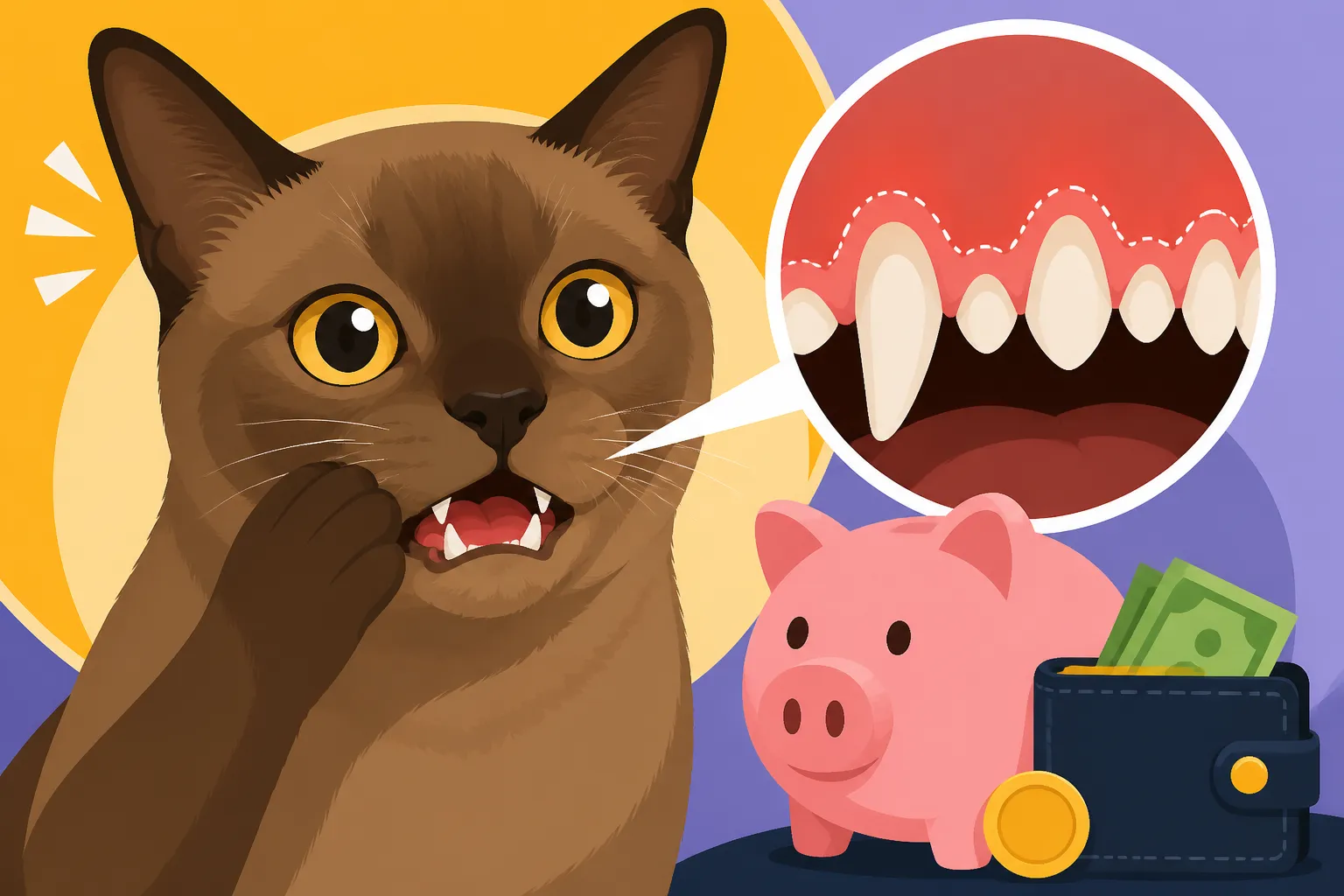
However, if gingivitis isn't addressed, it deepens into periodontitis. This is where the gums start to pull away from the teeth, forming pockets that become breeding grounds for more bacteria. Infection sets in, destroying the bone and tissue that support the teeth. At this point, you might notice your Burmese starting to eat less, drooling, pawing at their mouth, or showing discomfort. What began as a simple cleaning can now require extractions, root canals, or even more complex oral surgery. Each escalating stage means significantly higher vet bills, more invasive procedures, and a longer, more uncomfortable recovery for your cat. Understanding How Gum Disease Progresses in a Burmese can help you recognize the signs and act sooner rather than later.
Budgeting for Preventative Care and Early Intervention
When it comes to dental health, prevention truly is worth a pound of cure, especially for a breed like the Burmese. Investing time and a little money into preventative care early on can dramatically reduce the likelihood of expensive and painful problems down the line. Think of it as health insurance you pay in daily habits, rather than monthly premiums.
The Importance of Regular Vet Checks and Dental Screenings
Your Burmese should be seeing the vet for a general check-up at least once a year, and from about age seven, maybe twice a year. During these visits, your vet will perform a thorough oral examination. They're looking for signs of gingivitis, tartar buildup, crowded teeth, and any abnormalities like lesions or resorptive lesions, which are painful erosions on the tooth surface. These routine examinations are your first line of defense. A vet might suggest a professional dental cleaning under anesthesia if they spot significant tartar or early signs of gum recession. Catching these issues early means the procedure is usually less complex and therefore less costly. It's a proactive investment in your cat's long-term comfort and your peace of mind.
While a general check-up might feel like a minor line item in your budget, missing it can mean missing early indicators that escalate to major expenses. For instance, a basic annual exam and perhaps a preliminary dental check might cost a certain amount, but ignoring it until your cat is in pain and needs multiple extractions could run into many times that figure. It's truly a no-brainer to keep up with these vital appointments, especially since How Often a Burmese Needs a Dental is often more frequent than you might think.
Daily Home Care: Brushing and Diet as Budget Savers
This is where you, the dedicated Burmese owner, can make the biggest difference for your cat's gum health and your wallet. Daily tooth brushing is the gold standard for preventing plaque and tartar buildup. I know, I know, "brushing a cat's teeth" sounds like a recipe for scratched arms, but Burmese cats, being so amenable and people-oriented, can actually be trained to accept it! Start early, with gentle positive reinforcement. You can use a finger brush or a soft cat toothbrush and cat-specific toothpaste (never human toothpaste). Consistency is key. Even a few times a week is better than nothing, but daily is ideal. Learning how to get started with Introducing a Toothbrush to a Burmese at Twelve Weeks can set you up for success.
Beyond brushing, diet plays a huge role. Crunchy kibble was once thought to "clean" teeth, but many vets now agree that its effect is minimal. Instead, focus on high-quality, low-carbohydrate wet food. This type of diet reduces inflammation and generally promotes better overall health, which in turn supports gum health. Brands available on platforms like Chewy offer a wide selection of cat-specific toothbrushes, enzyme toothpastes that your Burmese might actually like (check out Which Toothpaste a Burmese Will Actually Accept for tips), and high-quality wet foods. While a good quality diet might seem pricier upfront, it’s an investment that can reduce future vet bills related to both dental and other health issues, such as diabetes. Remember, Why Low Carbohydrate Food Matters for a Burmese extends beyond just dental health to overall metabolic well-being.
When Professional Dental Work Becomes Necessary: The Financial Reality
Sometimes, despite our best efforts, professional intervention becomes unavoidable. Receding gums, once they've progressed, often require more than just brushing. This is where your budget needs to be prepared for the reality of advanced dental care. It's not just the procedure itself, but everything that goes along with it.
The Cost of Anesthesia and Dental Procedures
A professional dental cleaning for a cat always requires anesthesia. This is non-negotiable for safety and thoroughness. The cost of anesthesia alone can be significant, as it involves pre-anesthetic blood work to ensure your cat is healthy enough, monitoring equipment during the procedure, and recovery care. The actual dental procedure can range from a routine scaling and polishing to more complex work like extractions of painful, loose, or infected teeth. If your Burmese has advanced periodontal disease, they might need multiple extractions. Each extraction adds to the time under anesthesia and the complexity of the procedure, naturally increasing the overall cost. For example, a single extraction is one thing, but if your vet discovers two or three teeth that are beyond saving, the bill can quickly multiply.
Your vet will typically provide an estimate before any work is done, breaking down costs for anesthesia, dental X-rays (which are crucial for seeing what's happening under the gumline), scaling, polishing, pain medication, antibiotics, and any extractions. It's important to understand that what appears to be a small problem on the surface can be much more extensive once your cat is under anesthesia and X-rays are taken. This unexpected scope is often where budgets get stretched, and why having a contingency fund or pet insurance is so vital. It’s a sobering reality, but catching these issues when your Burmese starts showing signs like Why a Burmese That Drops Food Needs Its Mouth Checked is crucial for mitigating the most expensive interventions.
Considering Pet Insurance for Dental Issues
This is a big one that many pet owners overlook until it's too late. Pet insurance can be a lifesaver when dealing with unexpected medical costs, and dental issues are no exception. Policies vary widely, but many comprehensive plans will cover a percentage of the costs associated with treating periodontal disease, including professional cleanings (sometimes with a wellness add-on), extractions, and medications. However, it's absolutely critical to understand the fine print. Most policies will not cover pre-existing conditions. This means if your Burmese already has signs of receding gums or gum disease before you enroll, those specific issues might be excluded from coverage.
Brands like Healthy Paws are known for their comprehensive accident and illness plans. While they generally don't cover routine dental cleanings (unless part of an optional wellness package), they often cover the costs associated with dental disease treatment, like extractions. The key is to enroll your Burmese before any dental problems manifest, ideally when they are a kitten or young adult. Trying to get coverage once your cat is diagnosed with significant dental issues is often futile, as it will be considered pre-existing. It's a similar principle to how Whether a Burmese Policy Is Worth It Once Diabetes Is Excluded might apply to other breed-specific conditions – prevention or early enrollment is paramount. A good comparison of what pet insurance often covers for dental care is shown below:
| Feature/Condition | Typically Covered (with Illness Plan) | Often Excluded (without Wellness Add-on) | Might Be Excluded (Pre-existing) |
|---|---|---|---|
| Dental Extractions | Yes | No | Yes (if prior diagnosis) |
| Oral Surgery (e.g., fractures) | Yes | No | Yes (if prior diagnosis) |
| Anesthesia for Dental Work | Yes | No | Yes (if prior diagnosis) |
| Dental X-rays | Yes | No | Yes (if prior diagnosis) |
| Medications (antibiotics, pain) | Yes | No | Yes (if prior diagnosis) |
| Routine Dental Cleanings | No | Yes (with specific add-on) | N/A |
| Preventative Brushing Supplies | No | No | N/A |
| Cosmetic Procedures | No | No | N/A |
Long-Term Financial Planning for a Burmese with Receding Gums
Even after a successful professional dental procedure, the journey for a Burmese with a predisposition to receding gums isn't over. It shifts to long-term management, which also has its ongoing financial considerations. This isn't just about one-off costs but rather a continuous commitment to their oral health.
Ongoing Care and Medication Costs
Post-dental procedure, your Burmese might need a course of antibiotics to clear any lingering infection, and pain medication to keep them comfortable during recovery, especially if extractions were performed. These medications, while often not exorbitantly expensive individually, add up over time, particularly if there are recurring issues. Beyond medication, you might be advised to switch to a specific dental-friendly diet or supplement regimen. While some dental diets might be available through regular pet retailers, others could be prescription-only, incurring a slightly higher cost.
Moreover, if your Burmese had significant extractions, their eating habits might change, requiring softer foods indefinitely. Fresh, gently cooked food can be an excellent option for cats needing a softer, highly palatable diet to protect their gums or manage tooth loss, though these premium options carry a higher price point than traditional kibble or canned food. It’s all part of the continuous care package to ensure your Burmese remains comfortable and healthy, especially as they get older and may require What an Old Burmese Needs Once Its Gums Recede.
The Lifetime Cost: A Cumulative Perspective
When we talk about budgeting for receding gums, it’s not just about one emergency visit. It’s about the cumulative costs over your Burmese's entire lifespan. From kittenhood, with regular vet check-ups and the initial investment in toothbrushes and special toothpastes, to potential professional cleanings every few years, to managing advanced periodontal disease in their senior years with multiple extractions, the numbers can add up significantly. A single professional dental cleaning can range widely, and if your cat needs one every two or three years for its entire life, that's a recurring expense. If complications arise, such as a fractured jaw from a difficult extraction (rare, but possible), or chronic pain that requires ongoing management, those costs climb even higher.
Considering that a healthy Burmese can live for The Sixteen to Eighteen Years a Well Bred Burmese Gets, the lifetime financial commitment to dental health can be substantial. It's not uncommon for a Burmese to need How Many Dentals a Burmese Needs in a Lifetime that significantly contributes to their overall cost of care. Therefore, it's wise to set aside a specific fund for dental care, even if you have insurance. This fund can cover deductibles, co-pays, and items not covered by your policy. Budgeting an annual amount for dental savings, much like you would for annual vaccines or food, provides a cushion for inevitable expenses. Being realistic about these potential costs upfront means you can provide the best possible care for your cherished companion without facing sudden, insurmountable financial strain.
Disclaimer
This article is for general informational purposes only and does not constitute professional advice. Laws, prices and regulations vary by location and change over time. Consult a qualified professional for guidance on your specific situation.