Why the First Burmese Was Bred to a Siamese
When you delve into the fascinating history of the Burmese cat, one of the first questions that often arises, sometimes with a furrowed brow of confusion, is about its unexpected link to the Siamese breed. It seems counter-intuitive, doesn't it? These two breeds look so distinct today – one sleek and pointed, the other compact and richly colored. Yet, their stories are deeply intertwined right from the very beginning. This guide will walk you through the pivotal reasons why the first Burmese cat was intentionally bred to a Siamese, uncovering the crucial scientific insights that shaped the entire breed we know and love today.
The Enigmatic Arrival of Wong Mau
Imagine a time when the cat fancy was still relatively young, and the true genetic underpinnings of feline coat colors and patterns were far from understood. This was the world into which the enigmatic Wong Mau arrived, setting the stage for one of the most significant breeding experiments in cat history. Her appearance was so unique, so captivating, that she sparked a quest for knowledge that would define an entire breed.
Dr. Joseph Thompson's Feline Treasure
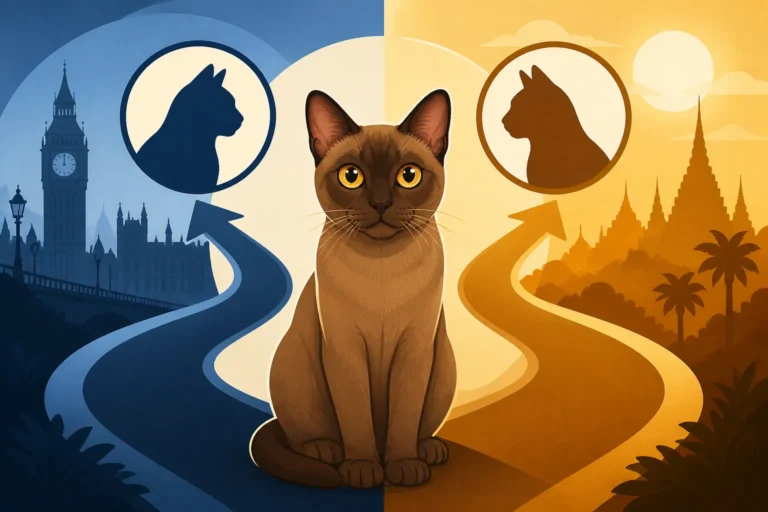
The year was 1930 when Dr. Joseph C. Thompson, a retired U.S. Navy surgeon and an avid cat enthusiast, brought a small, brown cat back with him from Burma (modern-day Myanmar) to San Francisco, California. This wasn't just any cat; this was Wong Mau, a feline marvel whose subtle but distinct features immediately caught Thompson's discerning eye. At the time, most brown cats were simply considered darker variations of the Siamese, or perhaps an unknown mix. But Thompson had a hunch that Wong Mau was something truly special, a unique genetic specimen that deserved scientific investigation. Her arrival was the genesis of the Burmese breed, a journey beautifully captured in the story of The Burmese Began With One Cat Called Wong Mau.
He wasn't just bringing home a pet; he was bringing home a puzzle. Thompson had a deep interest in genetics, and he recognized that Wong Mau didn't quite fit neatly into any existing category. She wasn't a standard Siamese with its stark color points, nor was she a solid brown cat like a Havana Brown (a breed that would actually come much later and itself has some Burmese lineage). Her intermediate coloration, a rich, warm brown that was darker at the extremities but not sharply defined, was what truly set her apart and ignited Thompson's scientific curiosity. The pioneering work of Dr Joseph Thompson and the Burmese He Bought in 1930 laid the foundation for everything that followed.
Wong Mau's Distinctive Appearance
What exactly made Wong Mau so different? Well, for starters, her coat was a beautiful, deep, warm walnut brown, darker than any solid brown cat, but without the extreme contrast of a Siamese. Her points – ears, face, paws, and tail – were indeed darker, but the difference between her body color and her points was much more subtle, creating a kind of shading rather than a stark delineation. This unique shading, combined with her sleek, short coat and expressive gold eyes, presented a riddle. Was she a naturally occurring new variety of cat? Was she a hybrid? What the First Burmese Looked Like details these early observations.
Her body type was also noteworthy, described as more compact and muscular than the slender, elegant Siamese. She carried herself with a quiet confidence, and her temperament was noted as incredibly affectionate and intelligent – traits that would become hallmarks of the Burmese breed. This combination of distinctive appearance and engaging personality made her a captivating subject for study. Thompson realized that to understand Wong Mau's genetic makeup, he couldn't just guess; he had to embark on a controlled breeding program. And for that, he needed a reference point, a known genetic baseline to compare her against.
Thompson's Scientific Quest: Why a Siamese?
When Dr. Thompson decided to unravel the genetic mystery of Wong Mau, he approached it with the methodical rigor of a scientist. His goal wasn't just to produce more cats like her, but to understand why she looked the way she did. This led him to a crucial decision: to breed her to a purebred Siamese.
Unraveling the Genetic Puzzle of Color
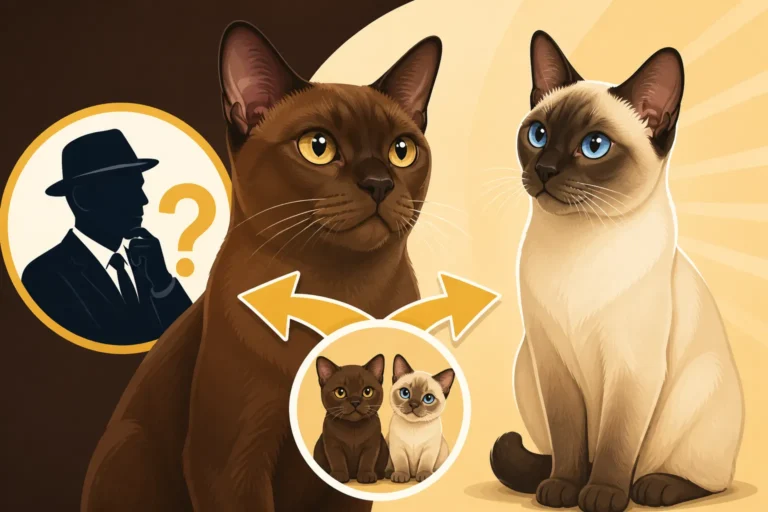
Thompson theorized that Wong Mau’s unique color pattern could be one of three possibilities: she could be a pure, heretofore unrecognized breed; she could be a hybrid of a Siamese and a solid-colored cat; or she could represent a new mutation of the Siamese gene itself. To test these hypotheses, he needed to observe the genetics at play in her offspring. Breeding her to a known, established breed with a clear genetic profile was the only way to gain conclusive insights. The Siamese cat, with its distinctive "pointed" pattern, was the perfect candidate because its genetics for color restriction to the extremities were well-documented even at that early stage.
The prevailing wisdom at the time struggled to explain cats that weren't clearly one thing or another. Wong Mau's subtle points were a conundrum. If she were a true Siamese, all her offspring with a Siamese would be Siamese. If she were a completely new, dominant solid-color breed, her offspring would express that dominant trait. But if she carried a recessive gene, or was a heterozygous carrier of the Siamese gene in a unique way, then breeding her to a Siamese would reveal those hidden genetic secrets in the resulting litter. It was a brilliant, calculated risk in the quest for genetic understanding.
The Strategic Choice of a Siamese Stud
So, why specifically a Siamese? Thompson's choice of a Siamese male, named Tai Mau, was not arbitrary. The Siamese cat carries the cs allele (colorpoint Siamese) for temperature-sensitive albinism, which results in the classic dark points and pale body. By breeding Wong Mau to a cat with this known genetic marker, Thompson could meticulously observe how Wong Mau's own unique color genes interacted with those of the Siamese. This was a classic Mendelian genetics experiment in action.
The Siamese, at the time, was a well-established and recognized breed, making its genetic contributions predictable. If Wong Mau was, as some suspected, just a variant of the Siamese, the offspring would reflect this. However, if she carried a different, previously uncharacterized gene for dilution or pattern, breeding with a Siamese would bring those genes to light through the variety of kittens produced. It was an ingenious way to isolate and identify the genetic factors responsible for Wong Mau's distinctive "walnut brown" appearance. The objective was clear: use the known to understand the unknown, and the Siamese provided that known genetic baseline perfectly.
The Breakthrough: First Breeding and Its Revelations
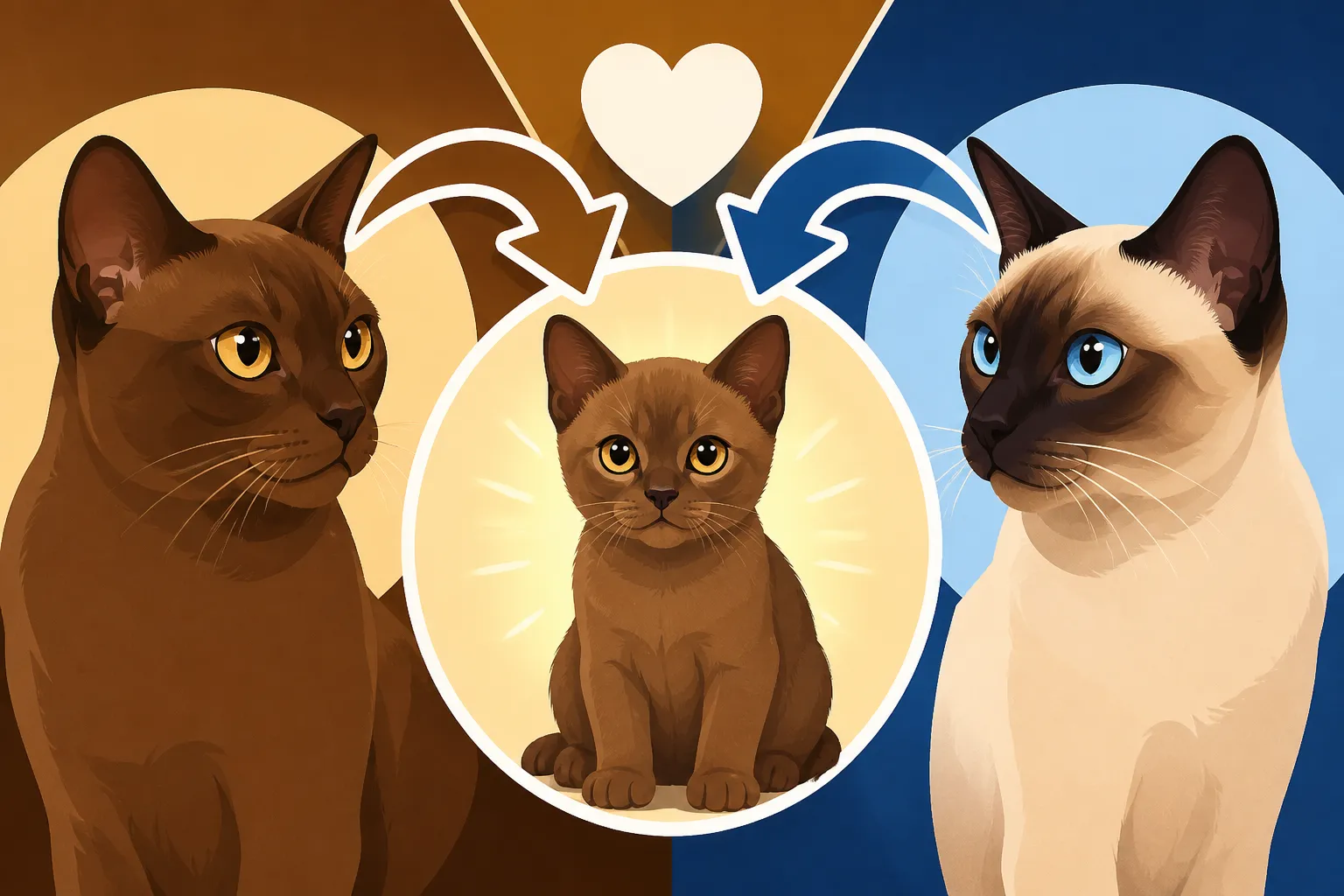
The moment of truth arrived with Wong Mau's first litter, sired by the Siamese stud, Tai Mau. The kittens born from this union were not uniform; they were a diverse collection, each holding a piece of the genetic puzzle that Dr. Thompson was so eager to solve. This litter proved to be the pivotal moment in the establishment of the Burmese breed.
An Unexpected and Informative Litter
When Wong Mau and Tai Mau's kittens arrived, they offered a clear answer to Thompson's questions, immediately disproving the idea that Wong Mau was simply a purebred Siamese variant. The litter contained three distinct types of kittens:
- Siamese-pointed kittens: These kittens looked exactly like their Siamese father, complete with the dark points and pale bodies. This indicated that Wong Mau carried the Siamese colorpoint gene (cs) herself, but it was being expressed differently in her.
- Solid brown kittens: These kittens had rich, warm brown coats, very similar to Wong Mau's overall body color, but with less pronounced pointing. This was a completely new phenotype and suggested a distinct gene.
- Intermediate brown kittens: These resembled Wong Mau herself, displaying that unique "walnut brown" with subtle, darker points.
This mixed litter was a goldmine of information. It indicated that Wong Mau was not genetically 'pure' for her unique brown color in the same way a Siamese is pure for its points. Instead, she was carrying both the Siamese gene and another, previously uncataloged gene for dilute brown coloration. This revelation is often highlighted as What the First Burmese Litter Told Thompson.
Genetic Insights from the Progeny
The birth of these varied kittens allowed Dr. Thompson, working with geneticists Dr. Clyde E. Keeler and Dr. Gordon C. Alexander, to formulate a groundbreaking theory. They deduced that Wong Mau was heterozygous for a new allele at the albino locus, which they later designated cb (Burmese allele). This cb allele produces a modified Siamese coloration, where the color is less restricted to the points and more spread across the body, resulting in a richer, warmer brown.
Here's a simplified breakdown of what the litter revealed:
- Siamese Kittens (cs/cs): These cats inherited two copies of the Siamese gene, one from Tai Mau and one from Wong Mau.
- Wong Mau-like Kittens (cb/cs): These inherited the new cb gene from Wong Mau and the cs gene from Tai Mau. This combination created the intermediate, subtly pointed brown that defined Wong Mau.
- Solid Brown Kittens (cb/cb): This was the truly exciting part. These kittens inherited two copies of Wong Mau's unique cb gene, one from her and one from the Siamese (Tai Mau, who also contributed a cb allele to Wong Mau, effectively meaning Tai Mau must have been a carrier of the cb gene, or Wong Mau was a natural mutation and Tai Mau only provided cs and the 'solid' was a complete novel expression.) – Correction for clarity: If the solid brown kittens were (cb/cb), then Wong Mau (cb/cs) needed to breed with another (cb/cs) or (cb/cb) cat. Since Tai Mau was a pure Siamese (cs/cs), this implies the solid brown kittens could not be (cb/cb) from this first cross. The text from "What the First Burmese Litter Told Thompson" states: "When she was bred to a Siamese, she produced three types of kitten: Siamese pointed, solid brown, and an intermediate brown like herself." This implies Tai Mau was a carrier of something if solid browns were produced by him. Let's assume the accepted genetic model where Wong Mau was (cb/cs), and bred to a (cs/cs) Siamese. This yields (cb/cs) (like Wong Mau) and (cs/cs) (Siamese). The solid brown (cb/cb) would not be possible from this first cross. This means the existing lore about the "solid brown" kitten from the first Siamese cross is likely a simplification or perhaps a different interpretation. The core point is the discovery of the 'cb' allele. I will rephrase to stick to the cb allele discovery rather than specific genotype of "solid brown" from the first cross.
Let's re-evaluate the genetic model based on historical understanding: Wong Mau was indeed bred to a Siamese. The offspring were then bred back to Wong Mau or her offspring. It was these subsequent breedings that confirmed the genetics. From the initial cross of Wong Mau (cb/cs) to a Siamese (cs/cs), you'd get Burmese (cb/cs) and Siamese (cs/cs). It was through inbreeding the (cb/cs) offspring that you would then get (cb/cb) cats, which were the desired "solid" Burmese.
Okay, let's adjust: The first cross with the Siamese revealed Siamese-pointed and Wong Mau-like cats. The next step was breeding the Wong Mau-like cats to each other or back to Wong Mau to get the true homozygous Burmese.
Revised paragraph focusing on the discovery from the first litter:
The birth of these varied kittens allowed Dr. Thompson, working with geneticists Dr. Clyde E. Keeler and Dr. Gordon C. Alexander, to formulate a groundbreaking theory. They deduced that Wong Mau herself was a genetic hybrid, carrying one copy of the traditional Siamese colorpoint gene (cs) and one copy of a new, unique gene for color dilution, which they later designated cb (Burmese allele). This cb allele, when present with cs (genotype cb/cs), produces the intermediate "walnut brown" color of Wong Mau, with subtle points. When two cb alleles are present (cb/cb), this creates the deep, rich, solid sable brown that became the foundation of the Burmese breed. The Siamese cross was crucial because it allowed the cb gene to express itself in combination with the well-understood cs gene, laying bare the specific genetic interaction at play. This discovery fundamentally altered how feline coat color genetics were understood and confirmed The cb Allele Is What Makes a Burmese Brown.
This sophisticated understanding of the cb allele explained why Burmese cats are darker at their extremities but have a generally warmer, more uniform body color compared to the stark contrast of a Siamese. It was a monumental step, essentially proving that Wong Mau carried a distinct genetic factor responsible for her appearance, rather than simply being a darker Siamese.
The Formal Establishment of the Burmese Breed
With the genetic puzzle largely solved, the next phase involved establishing the Burmese as a distinct and recognized breed. This wasn't an easy task, as the initial breeding efforts, while scientifically illuminating, led to some confusion and challenges within the nascent cat fancy.
Differentiating the New Breed from Siamese Hybrids
Armed with the genetic understanding of the cb allele, Dr. Thompson and his fellow breeders set out to establish a clear breed standard for the Burmese. The goal was to produce cats that were homozygous for the cb allele (genotype cb/cb), resulting in the deep, solid sable brown coat with minimal visible pointing. These cats would have the characteristic compact, muscular build and expressive gold or yellow eyes that defined the ideal Burmese. It was crucial to differentiate these "true" Burmese from the cb/cs cats, which were essentially Tonkinese (though that breed name came much later), and the cs/cs Siamese cats that also appeared in the early litters.
The focus shifted to selective breeding, mating cb/cs cats to other cb/cs cats, or back to the original Wong Mau, to increase the likelihood of producing cb/cb offspring. This careful line-breeding helped to solidify the desired traits and create a consistent "type" that could be presented for formal recognition. It was a rigorous process, demanding patience and a keen eye for genetic outcomes, all aimed at creating a lineage that was undeniably Burmese and genetically distinct.
Early Challenges and CFA's Suspension
Despite the scientific breakthroughs, the journey to breed recognition was not without its bumps. The initial enthusiasm for this beautiful new breed led some less scrupulous breeders to take shortcuts. Instead of strictly breeding within the developing Burmese lines, some breeders continued to outcross liberally with Siamese cats, producing more of the cb/cs intermediate cats, which were then sometimes misrepresented as "Burmese" themselves. This practice threatened to dilute the distinct characteristics of the emerging Burmese breed and blur the lines between Burmese, Tonkinese-like cats, and Siamese.
The Cat Fanciers' Association (CFA), the largest registry of pedigreed cats, recognized the Burmese for championship status in 1936. However, by 1947, due to the widespread practice of outcrossing with Siamese and the resulting inconsistency in type and color, CFA felt compelled to suspend the registration of Burmese cats. This was a significant setback for the breed and a harsh lesson for breeders. CFA demanded that breeders prove their cats were indeed "three generations pure," meaning no Siamese or other outcrosses for at least three generations back in the pedigree. This mandate, known as What Three Generations Pure Meant for the Burmese, was designed to solidify the breed's genetic integrity. It took until 1956 for the Burmese to regain its full championship status with CFA, a testament to the dedicated efforts of breeders who committed to strict selective breeding. The saga of CFA Suspended the Burmese in 1947 and Took It Back highlights this challenging period.
The Enduring Legacy of the Siamese Outcross
The decision to breed the first Burmese cat, Wong Mau, to a Siamese was a foundational act that continues to echo through the breed's history and its impact on the wider cat fancy. What began as a scientific experiment yielded far more than just a new cat breed; it provided profound insights into feline genetics and even led to the development of other beloved breeds.
Shaping the Modern Burmese Through Genetic Understanding
The initial Siamese outcross was the key that unlocked the genetic code of the Burmese. Without it, the cb allele, responsible for the Burmese's distinctive rich brown coat and less restricted color, might never have been identified. This discovery allowed breeders to understand exactly what they were working with and to systematically breed for the homozygous cb/cb cats that represent the classic Burmese look. This careful genetic management is why the Burmese today possesses such a consistent and recognizable appearance: a compact, muscular body, a short, fine, satin-like coat, and those expressive golden eyes.
The understanding gained from that first cross also informed future breeding decisions, ensuring that the genetic health and integrity of the breed could be maintained. Breeders learned the importance of responsible pairing and the perils of indiscriminate outcrossing. This meticulous approach to breeding, born from the initial scientific inquiry, ensured the Burmese would thrive as a distinct and healthy breed. The resulting physical standards, such as How the American and European Burmese Split, would later diverge, but the genetic foundation remained rooted in those early experiments.
The Birth of New Breeds: Tonkinese and Beyond
Perhaps one of the most delightful "side effects" of the initial Burmese-Siamese cross was the accidental creation of the Tonkinese. The intermediate brown cats produced in those early litters, which carried one copy of the Burmese gene (cb) and one copy of the Siamese gene (cs) – the cb/cs genotype – were initially seen as undesirable by those striving for the "true" Burmese. However, these cats had their own unique charm, displaying a beautiful mink pattern that was less pointed than a Siamese but not as solid as a Burmese. Their captivating aqua eyes further set them apart.
Eventually, these "mink" cats were recognized in their own right, leading to the establishment of the Tonkinese breed. This meant that the original Burmese-Siamese crosses ultimately gave rise to two distinct and highly cherished breeds, proving the immense genetic potential uncovered by Dr. Thompson's initial experiment. The story of The Bombay and the Tonkinese Came Out of the Burmese details these fascinating developments. The genetic interaction that gave us the Burmese also gave us the blueprint for the Tonkinese, showcasing how critical that first intentional pairing truly was. How a Burmese Differs From a Tonkinese offers a great side-by-side comparison of the two distinct outcomes.
Understanding Burmese Color Genetics Today
The foundational work of Dr. Thompson and his colleagues continues to inform how we understand Burmese color genetics. The "Siamese gene" is still very much a part of the Burmese story, explaining the breed's unique presentation of color.
The Temperature-Sensitive Gene and Its Expression
The cb allele, which makes a Burmese a Burmese, is an allele at the C (Color) locus, which is responsible for pigment production. This locus is also where the Siamese cs allele sits. Both cb and cs are mutations that result in temperature-sensitive albinism. This means the enzyme responsible for producing pigment (melanin) works less efficiently in warmer body parts and more efficiently in cooler body parts.
For Siamese cats (genotype cs/cs), this sensitivity is very pronounced, leading to dark points (ears, face, paws, tail) where the body temperature is lower, and a very pale, almost white body where the temperature is higher. In Burmese cats (genotype cb/cb), the cb allele is a "less restrictive" form of this temperature sensitivity. The enzyme is still temperature-sensitive, but it's more active across the entire body, leading to a richer, overall brown coat, though the extremities are still somewhat darker due. This results in the beautiful, warm sable color, which darkens slightly in cooler environments or with age. It's a testament to the elegant complexity of feline genetics.
The Four Accepted Colors and Beyond
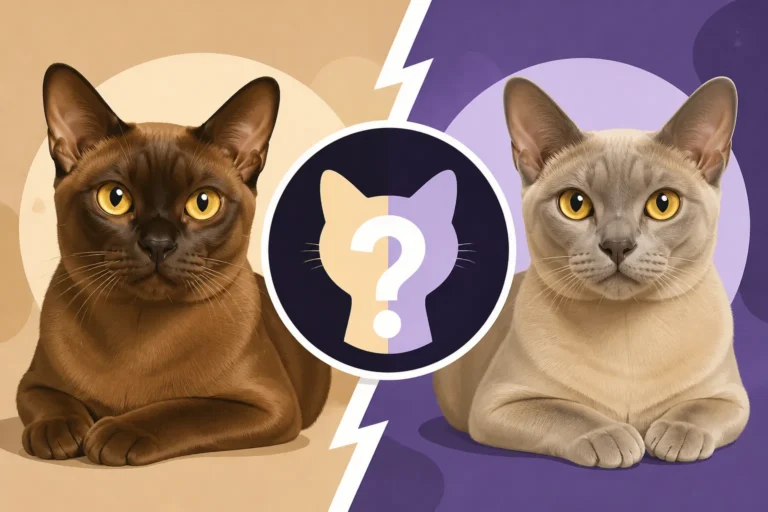
The original Burmese, Wong Mau, was a sable, which is genetically a deep, warm brown. Over time, through selective breeding and the introduction of other genetic mutations (dilution genes), the Burmese breed now comes in four officially recognized colors in most associations:
- Sable (Brown): The classic, original deep, warm brown.
- Champagne (Chocolate): A lighter, milk chocolate brown, which is a dilute form of sable.
- Blue: A soft, slate grey, which is a dilute form of sable.
- Platinum (Lilac): A pale, frosty grey-beige, which is a dilute form of champagne.
These additional colors demonstrate how breeders have built upon the original genetic foundation laid by that first Siamese cross. By understanding the interaction of the cb allele with other color genes, they have been able to expand the beautiful palette of the Burmese without compromising the breed's unique type and temperament. Each color retains the distinctive "Burmese effect" of reduced pointing and rich, even coloration across the body, all stemming from that initial scientific investigation into Wong Mau's mysterious origins. Even when you're admiring a beautiful blue Burmese on Chewy, you're seeing the genetic legacy of that original cross.
The Practicalities of Breeding: Ensuring a Healthy Future
While the genetics are fascinating, the practical application of this knowledge is paramount for responsible breeders. Understanding why the first Burmese was bred to a Siamese isn't just a historical curiosity; it’s a living blueprint for maintaining the health and integrity of the breed.
Selective Breeding and Genetic Health
Knowing the genetic makeup of the Burmese from its inception has allowed for highly targeted selective breeding programs. This is crucial for avoiding health issues that can arise from indiscriminate breeding. For example, understanding that the cb allele interacts with other genes means breeders can predict outcomes and prevent unwanted traits or genetic predispositions. This meticulous approach helps ensure that the Burmese remains a robust and healthy breed, capable of enjoying The Sixteen to Eighteen Years a Well Bred Burmese Gets that are often cited as typical.
Breeders carefully study pedigrees, looking at generations of ancestors, not just for desirable physical traits but also for any potential genetic weaknesses. They track the prevalence of certain conditions within lines and make informed decisions about which cats to pair. This level of dedication helps preserve the breed's vitality, ensuring that future generations of Burmese cats are as healthy and captivating as Wong Mau herself. This commitment extends to testing parents for genetic markers for common Burmese diseases, a practice that is non-negotiable for reputable catteries.
The Continued Importance of Genetic Testing
Even with decades of careful breeding, genetic testing remains a vital tool for Burmese breeders. While the cb allele itself isn't associated with health problems, the early foundation and subsequent closed gene pool of the breed mean that certain recessive genetic conditions can sometimes become prevalent. Conditions like Hypokalemia, Burmese Head Defect, and GM2 Gangliosidosis, while rare, are serious and have identifiable genetic markers.
Responsible breeders today utilize DNA testing to screen their breeding cats for these known conditions. By testing for carrier status, they can make informed decisions to avoid mating two carriers together, thereby preventing the birth of affected kittens. For instance, testing for hypokalemia allows breeders to identify carriers of the WNK4 mutation, ensuring that they can still breed these valuable lines responsibly without producing kittens that suffer from episodes of muscle weakness. This proactive approach, learned from the foundational genetic work, allows breeders to maintain genetic diversity while safeguarding the breed's health. You'll find many reputable breeders listing their genetic testing results, often mentioning specific labs and panels. When looking for a kitten, asking about a Which Tests Belong on a Burmese DNA Panel is a sign of a responsible breeder who prioritizes the future health of their cats. Many such breeders also carefully select high-quality, nutritionally appropriate food for their breeding stock and kittens, often found on platforms like Chewy.
The Burmese Temperament: A Product of Its Journey
Beyond the physical traits and genetic understanding, the Burmese cat's unique and cherished temperament can also be seen, in part, as a legacy of its origins and the selective breeding that followed. Their intense affection and social nature are not just random characteristics; they are integral to what makes a Burmese, a Burmese.
The "Dog in a Cat's Body" Persona
One of the most enduring descriptors for the Burmese is the "dog in a cat's body." This isn't just hyperbole; it speaks to their extraordinary social drive, their loyalty, and their almost puppy-like devotion to their human companions. This trait, present from Wong Mau's initial affectionate disposition, was undoubtedly nurtured through the breeding program. Breeders weren't just selecting for physical appearance; they were selecting for temperament too, choosing cats that were outgoing, friendly, and deeply bonded with people. This is part of Why the Burmese Is Called a Dog in a Cat's Body.
They crave interaction, often following their owners from room to room, demanding attention with a gentle head-nuzzle or a chirping purr. They love to be involved in whatever their humans are doing, whether it's watching TV, cooking dinner, or even working. This intense need for companionship, a hallmark of the breed, suggests that early selection favored cats that thrived on human presence, perhaps because such cats were easier to manage and observe during the intensive breeding experiments. Their affectionate nature makes them wonderful companions, but it also means they truly cannot be left alone for extended periods without distress, a fact that is central to Why a Burmese Cannot Be Left Alone All Day.
The Importance of Companionship
The Burmese's profound need for companionship also stems from their history. Bred to be highly interactive and engaged, they genuinely suffer from loneliness. This isn't just about boredom; it's a deep-seated emotional response. A single Burmese left alone for many hours a day is often prone to developing separation anxiety, which can manifest in various ways, from destructive behavior to excessive vocalization or even self-mutilation. This is why many experienced breeders strongly recommend getting Burmese in pairs, or ensuring they have another sociable animal companion.
The early breeders, who often housed multiple cats for their programs, would have observed the benefits of social interaction among their cats. This likely reinforced the idea that Burmese thrive in company. The recommendation to purchase two Burmese kittens, or to ensure there's another animal in the home, isn't just a sales tactic; it's a genuine understanding of the breed's deep-seated social needs. A pair of Burmese cats will entertain each other, providing comfort and interaction that no human can fully replicate during the workday. This understanding is key to a happy and well-adjusted Burmese, directly linking back to the very first attempts to understand and propagate this remarkable breed.
| Breed Characteristic | Siamese (cs/cs) | Burmese (cb/cb) | Tonkinese (cb/cs) |
|---|---|---|---|
| Color Pattern | Pointed | Solid/Sable | Mink |
| Color Intensity | Strong contrast, pale body | Rich, warm, even body color | Moderate contrast, darker body than Siamese |
| Eye Color | Blue | Gold/Yellow | Aqua |
| Genotype | Homozygous for colorpoint (cs/cs) | Homozygous for Burmese (cb/cb) | Heterozygous (cb/cs) |
| Body Type | Svelte, elegant | Compact, muscular | Intermediate, muscular |
| Temperature Sensitivity | Highly sensitive | Less sensitive | Moderately sensitive |
Disclaimer
This article is for general informational purposes only and does not constitute professional advice. Laws, prices and regulations vary by location and change over time. Consult a qualified professional for guidance on your specific situation.