Which Coat Faults Cost a Burmese Points
A Burmese can have a beautiful, glossy coat and still lose points in the show ring for details that are easy to miss at home. Color unevenness, visible tabby markings, white hairs, or a coat that looks dull or untidy may affect the judge’s assessment. This guide explains the coat qualities Burmese standards look for, common faults, and why the exact rules depend on the registry and color variety.
What a Burmese coat should look like
Short, close-lying, and glossy
The Burmese coat is short and lies close to the body. It should feel fine and sleek, with a noticeable shine rather than a fluffy or woolly texture. That smooth finish is part of the breed’s distinctive look, and it helps show the cat’s muscular outline.
A coat that looks rough, greasy, dusty, or uneven may distract from the overall impression. These conditions don’t necessarily mean the cat has a permanent coat fault: ordinary shedding, a recent bath, dry indoor air, stress, or a health issue can all affect appearance. A judge will assess what they see on the day, while a breeder or owner should also consider whether the coat change is temporary.
A Burmese generally needs little coat maintenance compared with a longhaired cat. Gentle grooming can lift loose hair and help distribute natural oils, but aggressive brushing or frequent bathing may leave the coat looking less smooth. For more on the breed’s characteristic texture, see What Makes a Burmese's Coat Satin Rather Than Silky.
Even color with natural shading
Burmese coat color is not always completely uniform from nose to tail. The body may be a little lighter than the points, and color can vary with age, temperature, and the cat’s individual coat. Judges look for an attractive, recognizable color that fits the relevant standard, not an artificial, painted-on appearance.
The amount and pattern of acceptable shading depend on the registry and variety. A slight difference between the body and extremities is not automatically a fault. Strong, patchy contrast or a coat that looks markedly uneven may be less desirable, especially if it obscures the expected color.
A kitten’s coat can change as it matures, so a young Burmese may not yet show the full depth or consistency of adult color. The shade can also shift over time. When a Burmese Kitten's Color Settles explains why judging a kitten’s eventual adult color can take patience.
The standard depends on type and registry
“Burmese” does not mean exactly the same show standard everywhere. American and European Burmese types have developed along different lines, and registries may differ in which colors they recognize and how they describe coat characteristics.
That means a feature that is outside the accepted color range in one show system may be recognized in another. Before entering a cat, check the standard for the registry and class involved. Don’t rely only on a general breed description or an online photo: the official wording is what the judge will use.
If you are unsure which standard applies, look at the cat’s registration paperwork and ask the show organizer or breed club. How the American and European Burmese Split gives useful background on why the two types are treated differently.
Coat faults that may cost a Burmese points
White hairs, lockets, and spots
Unwanted white hairs or a distinct white patch can be a concern in a Burmese show coat. A small white mark on the chest is often called a locket; white patches elsewhere may also be noted. How seriously a judge treats a marking depends on the applicable standard and the class.
A single stray white hair can be difficult to distinguish from a patch, and loose hairs may cling to the coat after grooming or contact with bedding. Avoid plucking or dyeing hairs to disguise a marking. That can irritate the skin, damage the coat, and create a bigger problem than the original stray hair. If you spot a persistent patch, ask an experienced breeder or show mentor whether it is a coat marking, a temporary loose hair, or something that should be checked by a veterinarian.
Markings are different from ordinary light reflection on a glossy coat. Examine the coat in good, natural light and part it gently rather than judging from a flash photo. Photos can exaggerate or hide small differences.
Tabby markings, barring, and uneven shading
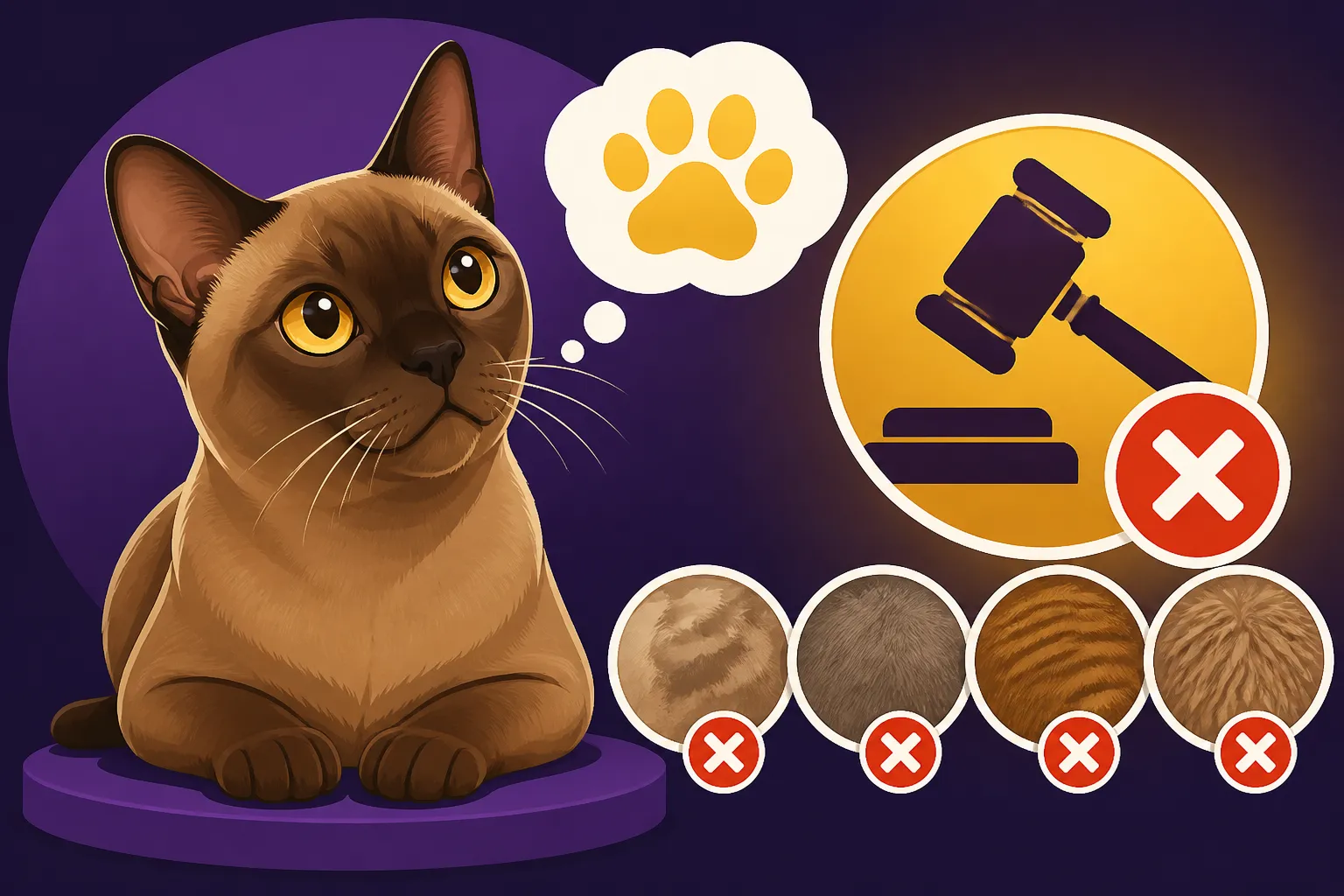
Visible stripes, spots, or bars may be considered undesirable when they are not part of the accepted coat appearance for the cat’s variety. Burmese kittens can show faint “ghost” markings that become less noticeable as they mature, but persistent or conspicuous patterning may affect a judge’s impression.
Check the coat across the shoulders, sides, legs, and tail. A cat may look evenly colored from across the room while showing distinct barring up close. On the other hand, subtle changes in tone caused by lighting or the natural coat may not be a true pattern fault.
Do not assume every shadow or stripe is a disqualifying fault. Judges assess the whole cat under the standard, and standards vary. The breed’s color genetics help explain why Burmese shades and patterns can be more complex than they first appear; The cb Allele Is What Makes a Burmese Brown offers background on the color gene.
Poor texture or coat condition
A coat that is long, fluffy, coarse, or visibly unkempt may not show the close, sleek Burmese texture to its best advantage. Likewise, a dull or greasy coat can make even a correctly colored cat appear less polished. These are not always inherited faults: coat condition can be affected by nutrition, health, grooming, and the stress of travel or a show environment.
Pay attention to what changed. If the coat has become dull suddenly, or the skin looks irritated, flaky, or sore, focus on the cat’s wellbeing rather than preparing for a show. A veterinarian can help investigate persistent changes. If the coat is simply carrying loose hair, a soft grooming glove or chamois may be enough; retailers such as Chewy carry a range of basic cat grooming items, but the tool should suit the short, flat-lying coat.
| Coat feature | What judges may notice | Practical response |
|---|---|---|
| White hairs or patches | A locket, distinct white hairs, or a visible patch | Check in natural light and ask an experienced Burmese exhibitor about the standard |
| Tabby markings or barring | Stripes, spots, or noticeable patterning | Reassess as the cat matures; don’t try to conceal markings |
| Uneven color | Strong patchiness or contrast beyond typical shading | Compare with the standard for the cat’s registry and variety |
| Coat texture | A coat that appears long, coarse, fluffy, or untidy | Use gentle grooming and avoid over-brushing |
| Dull or greasy appearance | Reduced shine or a coat that looks unclean | Consider grooming, stress, diet, and health rather than using products to mask it |
Preparing the coat without creating new problems
Keep grooming gentle and familiar
For show preparation, consistency is usually more helpful than a last-minute grooming overhaul. A Burmese that already accepts gentle handling is less likely to become stressed when you smooth the coat, inspect the ears, and check the paws. A soft cloth or suitable grooming tool can remove loose hair without pulling at the coat.
If you shop for grooming supplies at Chewy or another retailer, choose a tool designed for short-haired cats and use it lightly. A harsh deshedding tool can irritate the skin or make a sleek coat look rough. The goal is not to strip the coat or force an extreme shine; it is to present the cat cleanly and comfortably.
Do a quick coat check before travel and again after arrival. Cats can pick up loose fibers from blankets or carriers, and show lighting can reveal marks that were hard to see at home. Use clean bedding and handle the cat calmly. Avoid unfamiliar sprays or topical products right before the show, since they can cause irritation or leave residue.
Don’t try to hide a fault
Clipping, dyeing, bleaching, or plucking coat markings to improve a show result can harm the cat and may violate show rules. If you are considering any product, treatment, or major grooming change, ask the show authority or a qualified professional first. A healthy coat and a relaxed cat matter more than a temporary cosmetic improvement.
This is especially important when an apparent coat issue might actually be a skin or health concern. Redness, scabs, persistent hair loss, or unusual greasiness should not be treated as a show-prep problem. A veterinarian can help determine whether the cat needs medical attention.
For routine grooming, a chamois can be a gentle option when the cat enjoys being handled. If you are looking for examples of tools and care routines, Why a Chamois Beats a Comb on a Burmese and Which Chamois Brings Up a Burmese's Satin Shine discuss why light grooming is often enough. Chewy may be one place to compare basic grooming tools, but the cat’s comfort and coat response should guide your choice.
Make the coat check part of a broader health check
A coat that changes over weeks deserves more attention than one that looks temporarily tousled after a nap. Record when you noticed the change, whether it is spreading, and whether your cat is scratching, licking, eating, or behaving differently. This information can help a veterinarian distinguish a simple grooming issue from a problem that needs care.
The skin and coat can also be affected by diet and overall health. Don’t switch foods or add supplements solely to improve show appearance without discussing the change with a veterinary professional. If your Burmese has recurring coat or skin concerns, keep notes and raise them at a routine appointment. The same practical approach applies to other areas of care, including How Little a Satin Coated Burmese Sheds and How to Bring Up the Shine on a Burmese's Coat.
How to interpret a show result
A point deduction is not the same as a disqualification
A judge may note a coat issue as one part of an overall assessment, but a fault does not automatically mean a cat cannot compete. The effect depends on the registry’s written standard, the class, and the severity of the feature. Some traits may be penalized; others may be considered serious faults or grounds for disqualification under a particular set of rules.
Ask for clarification respectfully after judging, when permitted. A specific comment such as “visible barring on the flank” is more useful than a vague impression that the coat “wasn’t right.” Record the judge’s observation and compare it with the official standard rather than trying to interpret a result from memory.
Ask whether the issue is temporary or structural
A coat that looks dull after a long journey may be a temporary presentation issue. A consistent pattern of white hairs or a coat texture that differs from the standard may be more inherent. One show result cannot always tell you which is true, particularly if the cat is young, shedding, or stressed.
If you are deciding whether to show the cat again, ask a Burmese breeder or experienced exhibitor to examine the coat in person. A knowledgeable second opinion can help you separate lighting, grooming, and maturity from a recurring feature. For a broader sense of the traits judges assess, see What a Burmese Looks Like Against the Standard and How a Burmese's Coat Is Judged in the Ring.
Use feedback to plan, not to pressure the cat
Some cats enjoy the routine of grooming and showing; others find travel, handling, and unfamiliar surroundings stressful. If your Burmese is uncomfortable, you do not need to keep entering shows to prove a point about its coat. A show result is feedback about how the cat matched a particular standard on a particular day, not a verdict on its health or value as a companion.
When you do prepare for another show, make a small plan: confirm the standard, check the coat in natural light, keep grooming familiar, and ask for advice about any specific concern. That approach is more useful—and kinder—than trying to correct every minor variation in a naturally living coat.
Disclaimer
This article is for general informational purposes only and does not constitute professional advice. Laws, prices and regulations vary by location and change over time. Consult a qualified professional for guidance on your specific situation.