Why a Burmese Should Never Be Boarded Alone
Many Burmese cat owners find themselves facing a heart-wrenching dilemma when travel plans arise: how to ensure their intensely social and affectionate feline companion remains happy and well-adjusted while they're away. The truth is, leaving a Burmese cat alone in a traditional boarding kennel can lead to significant distress and even health issues due to their profound need for constant companionship, which is why this guide will delve into the unique challenges of boarding a Burmese alone and explore more compassionate alternatives.
Why Burmese Cats Crave Constant Company
Burmese cats are truly unique in the feline world, often described as "dogs in cat suits" due to their extraordinary devotion and insatiable need for human (or even canine) interaction. They aren't just pets; they're family members who integrate themselves deeply into your daily life, and any disruption to that bond can hit them harder than it would a more independent breed.
The Velcro Cat Phenomenon
If you've ever owned a Burmese, you know exactly what I mean by "Velcro cat." They stick to you, following you from room to room, perching on your shoulder as you work, or burrowing under the duvet at night. This isn't just a cute quirk; it's a fundamental aspect of their personality. They thrive on physical closeness and constant interaction, seeing themselves as an integral part of your personal space and daily routine. When you leave, even for a short time, they don't just miss you a little; they feel a profound sense of abandonment that can be truly distressing for them. Imagine going from constant, loving presence to sudden, utter solitude – that's the world of a Burmese left alone. It's a fundamental reason why The Burmese Is the Velcro Cat of the Cat Fancy.
Emotional Impact of Solitude
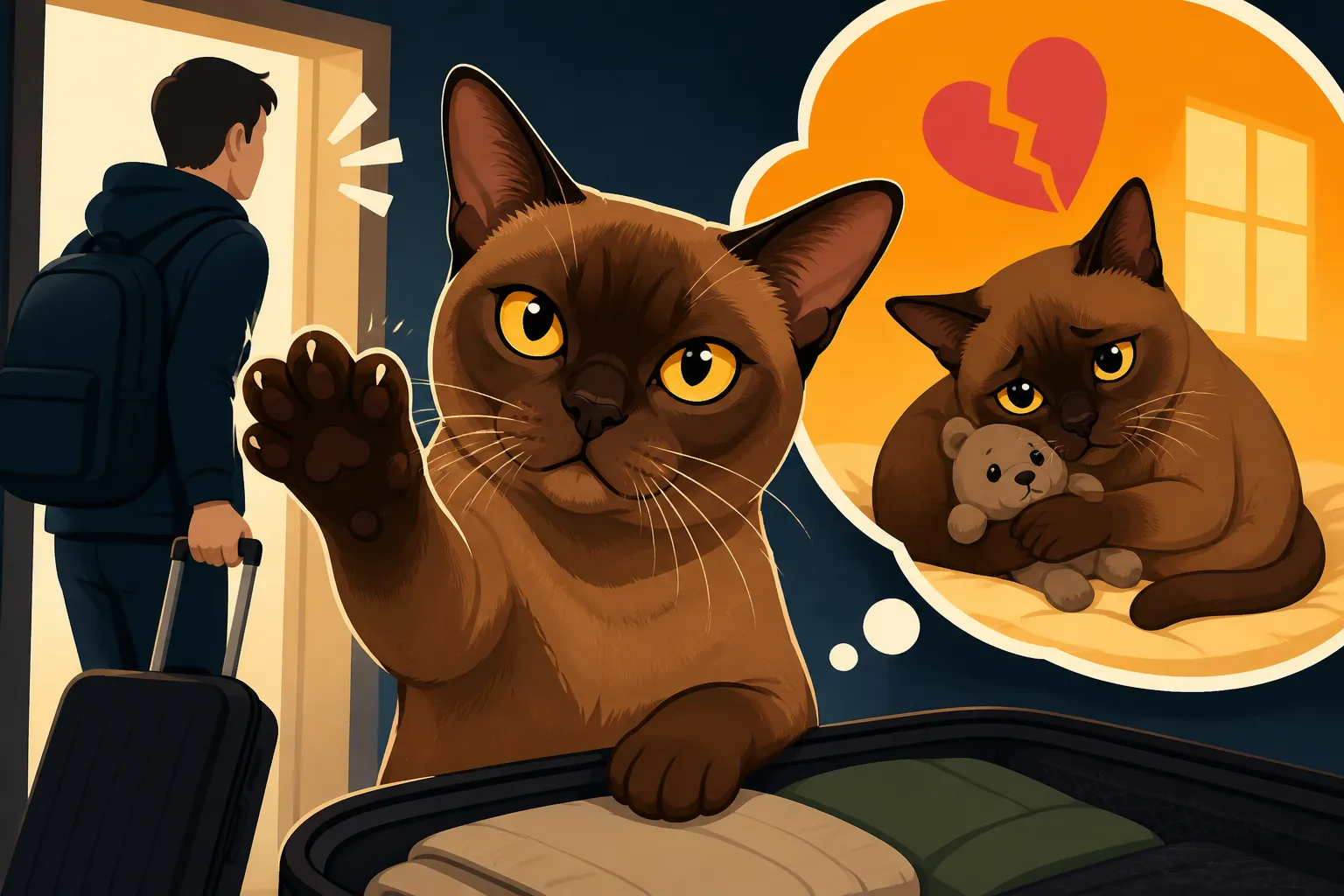
For a Burmese, solitude isn't peace; it's a void. They don't just tolerate company; they actively seek it out, demand it, and even crave it. When their primary source of affection and interaction vanishes, they can experience profound emotional distress. This isn't just a brief bout of sadness; it can manifest as genuine anxiety and a feeling of insecurity. They might pace, yowl excessively, or simply shut down, waiting for your return. The silence of an empty house, devoid of their beloved human, can be deafening for them, a stark contrast to the busy, interactive environment they thrive in. Their normally bright, inquisitive eyes can become dull, and their characteristic purr might be conspicuously absent.
The Role of Routine in a Burmese's Life
Burmese cats, like many intelligent and sensitive animals, also thrive on routine. They know when you wake up, when you feed them, when you sit down for your evening show, and when it's time for bed. These predictable patterns provide them with a sense of security and control over their environment. When you go away, especially if they are placed in an unfamiliar environment like a boarding facility, their entire routine is thrown into disarray. New smells, new sounds, new feeding schedules, and entirely new people caring for them can be incredibly disorienting. This disruption, combined with the absence of their beloved owner, can amplify their stress levels, leading to a cascade of negative behaviors and even health problems. This is especially true if their mealtimes are disrupted, as Why a Burmese's Feeding Times Have to Stay Fixed is crucial for their well-being.
The Physical Manifestations of Separation Anxiety
When a Burmese experiences the intense emotional distress of being left alone, especially in an unfamiliar place, it often manifests in very real, physical ways. Their psychological pain can quickly translate into observable changes in behavior and even health.
Behavioral Changes in a Lonely Burmese
One of the most immediate indicators of distress in a Burmese left alone is a change in behavior. This can range from excessive vocalization, where their usual rasping rumble turns into a continuous, mournful yowl, to destructive behaviors they would never exhibit normally. They might chew on furniture, scratch carpets or doors, or even try to "escape" their confinement, leading to injuries. Some Burmese, particularly those with a history of anxiety, might begin house-soiling outside the litter box as a protest or a sign of extreme stress. This isn't spite; it's a desperate cry for help, an unmistakable signal that their emotional needs are not being met. You might come home to find that What a Burmese Does to a House It Is Left In is far more than mere mischief.
Impact on Appetite and Hydration
A deeply unhappy Burmese will often refuse to eat or drink. This isn't just a minor inconvenience; prolonged fasting in cats, particularly those who are already prone to certain health conditions, can rapidly lead to serious medical complications like hepatic lipidosis (fatty liver disease). Imagine a cat, usually a ravenous eater, turning its nose up at its favorite meal. It's a stark indicator of profound stress. They might also reduce their water intake, leading to dehydration, which can put a strain on their kidneys and other organs. A good cat sitter or boarding facility should be meticulously tracking food and water consumption, but even then, a cat who refuses to eat out of stress is incredibly difficult to manage. This critical aspect of their care highlights why Why a Burmese's Appetite Goes When It Is Unhappy is such a serious concern.
Stress-Induced Illnesses and Self-Harm
The chronic stress of loneliness and an unfamiliar environment can also trigger or exacerbate underlying health issues in a Burmese. Their immune system can become compromised, making them more susceptible to infections. Some highly anxious Burmese might even resort to self-mutilation, such as over-grooming to the point of bald patches or skin lesions. Why an Anxious Burmese Pulls Its Own Fur Out is a painful demonstration of their internal turmoil. If your Burmese is already predisposed to conditions like diabetes, the stress can also throw their system out of whack. It's a sad reality that while we intend to keep them safe, certain forms of care can ironically lead to them falling ill. Owners often don't realize that Why a Withdrawn Burmese Should See a Vet That Day applies even more urgently when the cat has been boarded alone.
Traditional Boarding: A Mismatch for the Burmese Temperament
While many cat boarding facilities offer excellent care for more independent feline residents, the standard kennel environment is fundamentally ill-suited to the unique temperament and social needs of a Burmese cat.
The Impersonal Nature of Kennels
Most boarding kennels are designed for efficiency and cleanliness, often featuring individual cages or runs. While these might be perfectly adequate for a cat that prefers solitude, they can be a nightmare for a Burmese. They are used to being in the heart of the home, surrounded by familiar sights, sounds, and smells. A kennel, no matter how clean, presents a sterile, unfamiliar, and often noisy environment filled with the scents and sounds of other distressed animals. This impersonal setting, devoid of the constant human interaction and familiar comforts they crave, can be incredibly isolating and frightening for them. They literally cannot fathom why they have been placed in such a stark, isolated situation, separated from their beloved people.
Lack of Individual Attention
Even the best boarding facilities often operate on a schedule that allows for minimal individual attention per cat. Staff might clean, feed, and check on them, but they rarely have the time to provide the dedicated lap-time, shoulder-rides, or interactive play sessions that a Burmese absolutely thrives on. Your Burmese, who expects to be the center of attention, will find this lack of focused interaction deeply unsettling. They won't understand why the friendly human isn't sitting down to give them cuddles or engaging them in a game of chase the wand. This deficit of personalized affection can rapidly escalate their feelings of loneliness and anxiety. It goes back to why Why a Burmese Cannot Be Left Alone All Day is such a crucial understanding for owners.
The Stress of Other Animals
While a Burmese might be perfectly happy curling up with a dog or another cat they know and trust, a kennel environment introduces them to a cacophony of unfamiliar animals. The barks of dogs, the meows of other cats, and the general hubbub can be incredibly overwhelming and frightening. They might perceive these other animals as threats, or simply as an additional source of stress in an already distressing situation. This can lead to them retreating into themselves, hiding, or becoming aggressive out of fear, none of which is healthy for their emotional or physical well-being. Even if they are generally good with other animals, the sheer volume and unfamiliarity in a kennel setting can be too much.
Better Alternatives: Keeping Your Burmese Happy While You're Away
Recognizing the Burmese's exceptional social needs, it becomes clear that traditional boarding should be a last resort. Fortunately, there are far more compassionate and effective ways to ensure your Burmese remains happy and healthy while you're traveling.
In-Home Cat Sitting
By far the best option for a Burmese is to have a trusted cat sitter come to your home. This allows your cat to remain in their familiar territory, surrounded by their usual scents, sounds, and comforts. The disruption to their routine is minimized, and they maintain a sense of security that is impossible in an unfamiliar environment. A good cat sitter will not only feed and clean up after your Burmese but will also spend quality time with them, providing the essential companionship and play that they need. They can maintain their feeding schedule, administer medications if necessary, and offer plenty of cuddles and interaction. This consistency is vital for preventing the stress and anxiety that often plague boarded Burmese cats. Consider having the sitter use an automated feeder like those available from Chewy to ensure consistent portioning if you have a particularly greedy Burmese, and to keep their schedule on track even between visits.
Benefits of In-Home Cat Sitting for Burmese:
| Feature | Traditional Boarding Kennel | Professional In-Home Cat Sitter |
|---|---|---|
| Environment | Unfamiliar, confined, noisy, stressful | Familiar home, secure, quiet |
| Routine | Completely disrupted, new feeding times | Maintained, feeding & play on schedule |
| Social Interaction | Minimal, basic checks, no dedicated play | Dedicated play, cuddles, human interaction |
| Stress Level | High risk of separation anxiety & illness | Low risk, comfort from familiar surroundings |
| Health Monitoring | General observations, harder to spot subtle changes | Detailed, observant of habits, easier to spot issues |
| Other Pets | Isolated or exposed to unfamiliar animals | Can stay with existing bonded housemates |
The Power of a Pair
Many Burmese breeders will recommend, or even require, that kittens are adopted in pairs. There's a very good reason for this: two Burmese are often happier and healthier than one. If you have two Burmese who are already bonded, they will provide immense comfort and companionship to each other in your absence, significantly reducing the impact of your departure. A cat sitter would still be essential, but having a feline companion to curl up with, chase, and groom makes a world of difference. They still miss you, of course, but the profound loneliness is often mitigated by having a trusted friend. This is why Why Burmese Breeders Sell Them in Pairs is such common advice, and it pays off immensely when you travel. Why Two Burmese Settle Each Other is evident in their shared play and quiet cuddles.
Specialized In-Home Boarding or Pet Hotels
While still an unfamiliar environment, a highly specialized, small-scale pet hotel that caters specifically to cats, offering private, spacious rooms with plenty of human interaction, can be an option for some Burmese. These are very different from traditional kennels. The key is a low staff-to-cat ratio and a focus on providing personalized attention and a home-like atmosphere. Some cat sitters also offer in-home boarding where your Burmese would stay at their house, often as the only guest or with their own well-socialized, cat-friendly pets. While not ideal due to the change of environment, the constant human presence and individualized care can be a better fit than a large, impersonal kennel. For diets, a sitter can ensure your Burmese continues with their usual fare.
Preparing Your Burmese for Any Time Apart
Even with the best care arrangements, preparing your Burmese for your absence is crucial to minimizing their stress. Thoughtful planning can make a world of difference.
Acclimatizing to a Cat Sitter
If you opt for an in-home cat sitter, introduce them to your Burmese well in advance of your departure. Have the sitter visit a few times while you are home, perhaps even having them feed your cat or engage in a play session. This helps your Burmese associate the sitter with positive experiences and familiarizes them with a new face in a comforting way. The more comfortable your Burmese is with the sitter before you leave, the smoother the transition will be. Show the sitter your routine, where everything is, and how your Burmese likes to play and be petted. Emphasize their deep need for attention, as Why a Burmese Cannot Let You Leave the Room illustrates their attachment.
Creating a Comforting Environment
Before you leave, make sure your home is as comfortable and stimulating as possible. Leave out familiar blankets, toys, and perhaps even an item of your clothing with your scent on it. Ensure their favorite sleeping spots are accessible and warm, especially if they are a short-coated breed prone to feeling the cold. Puzzle feeders, such as those found on Chewy, can provide mental stimulation and slow down eating, which is beneficial for a breed prone to diabetes, and can also offer a distraction. If your Burmese suffers from severe anxiety, discuss pheromone diffusers with your vet – these can sometimes help create a more calming atmosphere.
Health Checks Before Departure
Always ensure your Burmese is up-to-date on their vaccinations and has had a recent vet check-up before you leave, especially if they are going to a boarding facility or having a new person care for them. Provide your cat sitter with clear instructions for their food, any medications, and your vet's contact information. If your Burmese has a history of stress-induced illness, talk to your vet about any preventative measures you can take. It's also wise to have a pet insurance policy from a provider like Healthy Paws in place, just in case any unexpected vet visits are needed due to stress or illness while you're away. Having coverage can provide immense peace of mind. Remember, Which Blood Panel a Burmese Should Have Yearly is a good way to monitor their overall health, and especially important before a stressful period.
The Financial Aspect of Quality Burmese Care While Away
It's a realistic truth that providing optimal care for a Burmese while you're away will likely involve a higher cost than simply dropping a more independent cat off at a standard kennel. However, viewing this as an investment in your Burmese's health and happiness rather than an expense can shift your perspective.
Understanding the Cost Difference
Traditional boarding kennels typically charge a per-night fee, which can seem appealingly low at first glance. However, these fees rarely account for the extensive one-on-one time and emotional support a Burmese requires. In-home cat sitters, especially those who offer multiple visits a day or even overnight stays, will naturally charge more. This is because you're paying for personalized, dedicated attention in your home environment. While the initial quote for a cat sitter might seem higher, consider the potential indirect costs of cheaper, less suitable care: vet bills for stress-induced illnesses, damage to your home from anxious behaviors, or the emotional toll on a beloved pet. What Diabetes Costs a Burmese Owner a Year can be significant, and stress can impact their glucose levels.
Investing in Peace of Mind and Health
The expense of a quality cat sitter or specialized in-home boarding is an investment in your Burmese's well-being. It minimizes their stress, maintains their routine, and ensures they receive the affection they need. For a breed already prone to certain health issues like diabetes, minimizing stress is a form of preventative care. Imagine the relief of returning home to a happy, healthy cat, rather than one who is withdrawn, ill, or has wreaked havoc in your absence. This peace of mind for you, and continued comfort for your cat, often outweighs the perceived higher cost. Plus, you’re often also paying for someone to keep an eye on your home, collect mail, and water plants – added value that standard boarding doesn't offer.
Insurance Considerations for Travel
Before any travel, especially if your Burmese is entering an unfamiliar care situation, review your pet insurance policy. Providers like Healthy Paws offer coverage for unexpected illnesses and accidents. However, it's crucial to understand what is covered regarding stress-related conditions or pre-existing issues. While prevention is key, having insurance can cushion the financial blow if your Burmese does fall ill due to the stress of your absence or a change in environment. It's always wise to ensure your policy is active and you understand its terms before you're away, especially if you have an older Burmese, as Why to Insure a Burmese Before It Turns Seven can make a big difference in coverage availability and cost.
Conclusion
The decision of how to care for your Burmese cat while you're away is not one to take lightly. Their deeply social nature and propensity for forming strong bonds mean that traditional solitary boarding is rarely a good fit. The emotional and physical toll of being left alone in an unfamiliar, impersonal environment can be profound, leading to anxiety, behavioral problems, and even illness.
Prioritizing in-home cat sitting, ideally with a trusted individual who can provide ample companionship and maintain their routine, is the most compassionate and effective solution. For those with bonded pairs, the comfort they draw from each other significantly helps mitigate the stress of your absence. While these options may carry a higher price tag, the investment in your Burmese's happiness and health is invaluable. By understanding their unique needs and planning proactively, you can ensure your beloved "Velcro cat" remains happy, healthy, and eagerly awaiting your return, rather than suffering in lonely isolation.
Disclaimer
This article is for general informational purposes only and does not constitute professional advice. Laws, prices and regulations vary by location and change over time. Consult a qualified professional for guidance on your specific situation.