Why a Burmese Kitten Is Born Paler Than It Ends Up
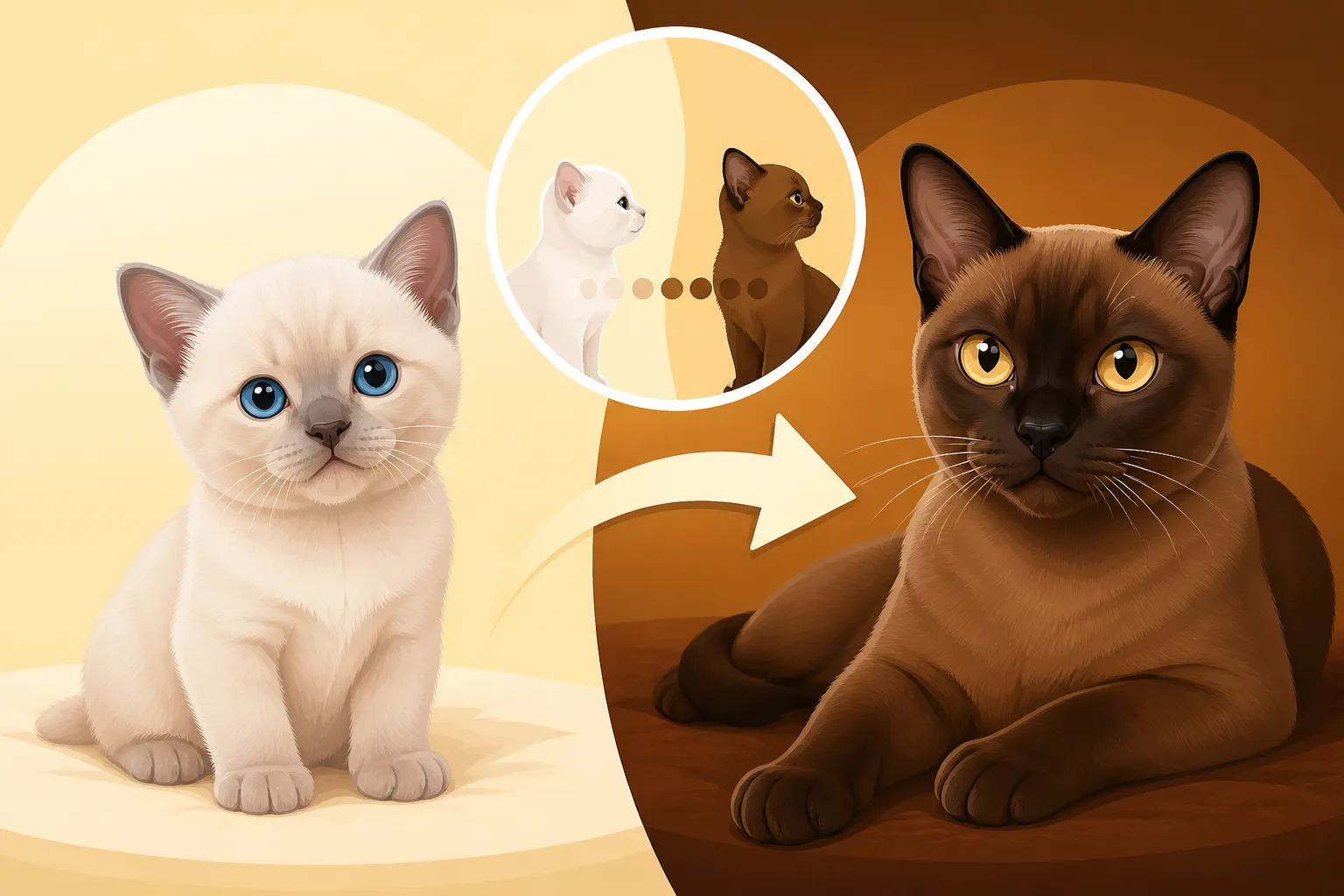
It's always a delightful surprise, and sometimes a little bit of a head-scratcher, for new Burmese owners to see their precious kittens arrive looking like pale, almost ethereal versions of the rich, deep-colored adults they will become. You pick up this tiny, seemingly light-colored furball, and you might even wonder if you got the right cat! But rest assured, this isn't a mistake or an anomaly; it's a completely normal, fascinating genetic dance that every Burmese kitten goes through. This guide will dive deep into the science and charm behind why your Burmese kitten is born much paler than their adult coat will ever be.
The Remarkable Genetics Behind the Burmese's Changing Coat
The transformation of a Burmese kitten's coat from a pale, almost uniform shade at birth to the deep, luxurious color of adulthood is one of the breed's most distinctive and beautiful traits. It’s not just a random occurrence but a precise genetic marvel, rooted in their unique ancestry. Understanding this process demystifies the initial pale appearance and lets you appreciate the intricate biology at play.
The Temperature-Sensitive 'cb' Allele: A Master of Disguise
At the heart of the Burmese's color story is a specific gene allele known as cb. This allele is responsible for what's called 'Burmese dilution' or 'Burmese restriction' of color. Essentially, it causes a partial reduction in the production of melanin, the pigment responsible for coat color. Think of it like a dimmer switch for pigment; it doesn't turn it off completely, but it certainly controls its intensity. What makes this cb allele truly fascinating, however, is its sensitivity to temperature.
The enzyme responsible for producing melanin works most efficiently in cooler temperatures and is largely inhibited by warmth. This means that in warmer parts of the cat's body, less pigment is produced, resulting in a lighter color. In cooler areas, more pigment can develop, leading to darker shades. This isn't a defect; it’s a specific genetic mutation that has been deliberately selected and bred for in the Burmese cat, giving them their characteristic deep, rich body color with slightly darker points, but without the stark contrast seen in a Siamese. It's a truly remarkable genetic fingerprint that makes each Burmese cat uniquely beautiful. What the cb Allele Does to a Burmese's Color goes into more detail about how this allele functions within the cat's genetic makeup.
The Womb's Warm Embrace: Why Kittens Start Pale
Now, consider the environment where a kitten first develops: inside the mother's womb. This space is a wonderfully stable, consistently warm haven. For a Burmese kitten, this internal warmth is key to their initial pale appearance. Because the cb allele's pigment-producing enzyme is so sensitive to heat, the continuous high temperature within the uterus effectively puts the brakes on melanin production.
Consequently, Burmese kittens are born with very little pigment expressed, often appearing as a uniform cream, off-white, or very light beige. This isn't because they lack the genes for their adult color; it's because the warm environment actively prevents those genes from fully expressing themselves. It's a temporary suppression, a beautiful illusion of paleness that lasts only until they enter the cooler outside world. Breeders accustomed to the Burmese know to expect these nearly colorless bundles, understanding that their true, deep shades are just waiting for the right environmental cues to emerge.
Witnessing the Transformation: A Kitten's Journey to Full Color
Bringing a Burmese kitten home is like getting a front-row seat to a slow, magical unveiling. Over the first few weeks and months, you'll observe a steady, unmistakable deepening of their coat color, proving that their genetic destiny was just biding its time.
The Cool Down Effect: Pigment Production Kicks In
The moment a Burmese kitten is born, its world shifts from the consistent warmth of the womb to the variable, and generally much cooler, ambient temperature of its new surroundings. This cooling down is the trigger the cb allele needs. As the kitten's body temperature adjusts to the outside world, the pigment-producing enzymes, no longer inhibited by extreme warmth, begin to function more efficiently. This isn't an instant flick of a switch; it's a gradual process.
You'll notice subtle changes first, perhaps a slight darkening around the nose or ears. Over days and weeks, the pale, almost uniform baby fluff starts to give way to hints of their true sable, champagne, blue, or platinum coat. The longer they are exposed to cooler temperatures, the more melanin their bodies produce, leading to a visible deepening of color across their entire body. It's truly incredible to watch nature unfold in such a deliberate, beautiful way. This slow development is why Why a Burmese Kitten Darkens as It Grows is such an important topic for new owners.
The Distinctive Darkening of Extremities and Body Core
As the pigment production kicks into gear, you'll quickly realize that the darkening doesn't happen uniformly. The ears, nose leather, paw pads, and tail will start to show color much earlier and more intensely than the rest of the body. There's a perfectly logical, temperature-related reason for this: these 'extremities' are naturally cooler than the cat's core body temperature.
Because these areas have a lower temperature, the melanin-producing enzymes can work more effectively there, leading to a stronger and quicker development of pigment. This is why you'll see tiny, distinct "points" emerging on your Burmese kitten long before their body coat has reached its full richness. Over time, this color will spread and deepen, eventually creating the relatively uniform, yet still slightly pointed, rich color that is the hallmark of the Burmese breed. It's a fascinating visual cue that confirms their unique genetic heritage, setting them apart from other breeds. You can really see this phenomenon illustrated in Why a Burmese Is Darker at the Extremities.
Here's a rough guide to how a Burmese kitten's color typically develops:
| Age | General Appearance | Extremities (Ears, Paws, Tail) | Body Color |
|---|---|---|---|
| Birth | Very pale, often cream or off-white | Almost indistinguishable from body | Uniformly light, barely any discernible hue |
| 2-4 Weeks | First hints of color emerge | Very faint darkening, subtle tinges | Still very pale, perhaps a slightly warmer tone |
| 2-3 Months | Color becoming more obvious | Clearer points visible, still developing | Body coat starting to show genetic color |
| 6 Months | Significant color development | Points well-defined, deepening | Body coat much richer, approaching adult shade |
| 12-18 Months | Nearing full adult color | Points very deep and rich | Body color deep, lustrous, characteristic |
| 2+ Years | Full, mature color achieved | Points and body in harmony | Rich, even tone, may continue to deepen subtly |
Understanding What Shapes a Burmese's Lifelong Hue
While the initial darkening is largely complete by their first birthday, a Burmese cat's coat color isn't entirely static throughout its life. There are a few subtle factors that can influence the depth and vibrancy of their beautiful satin coat, making their color journey a continuous one.
Environmental Factors Beyond Kittenhood
Even after reaching their adult color, environmental temperatures can continue to play a subtle role in a Burmese's coat shade. Cats living in consistently cooler climates might develop a slightly deeper, richer body color than those in perpetually warm environments. Think of it: if a cat spends a lot of time snuggled under blankets or in heated beds, those warmer areas might remain ever-so-slightly paler than parts of their body exposed to cooler air. Conversely, a cat who loves to sprawl out on a cool tile floor might see a minor deepening of color in those areas.
These aren't drastic changes, mind you, but rather nuanced shifts that might only be noticeable to a very observant owner or an experienced breeder. The cb allele's temperature sensitivity is always at play, even if only in subtle ways. It's also why a Burmese seeks out warm spots to sleep, not just for comfort but because their short, silky coat offers less insulation than some other breeds. Why a Short Coated Burmese Feels the Cold really explains this instinct. This ongoing interaction between genetics and environment is a prime example of How a Burmese's Color Gene Reacts to Temperature.
Nutrition, Health, and Coat Vibrancy
While diet won't fundamentally alter the genetic color your Burmese is destined to be, it absolutely plays a crucial role in the quality and vibrancy of that color. A cat fed a high-quality, balanced diet will typically display a much richer, more lustrous coat than one whose nutrition is lacking. Essential fatty acids, vitamins, and a high-protein content are vital for skin health and a glossy, healthy coat that truly shines.
If your Burmese isn't getting adequate nutrition, their coat might appear dull, dry, or even patchy, masking the inherent beauty of their genetically determined color. It's not about making a blue Burmese look sable, but about ensuring that their blue is as deep and clear as it can possibly be. Always prioritize a diet tailored to feline needs, focusing on high meat content and appropriate calorie control, especially for a breed prone to weight gain. Choosing quality food isn't just about feeling good; Why a Burmese's Food Bill Is a Health Decision for this breed.
Common Questions and the Beauty of Burmese Color Development
It's natural to have questions about your Burmese kitten's changing colors, especially if you're new to the breed. Understanding the nuances of their coat development will help you appreciate their unique beauty even more.
Setting Expectations: Not a "Solid" Color Cat
One common misconception is that an adult Burmese should have a completely solid, uniform color with no variations whatsoever. While their body color is indeed much richer and more uniform than that of a Siamese or a Tonkinese, the temperature-sensitive nature of the cb allele means that they will always retain some degree of "pointing." Their extremities – ears, mask, paws, and tail – will typically remain a shade or two darker than their main body. This subtle contrast is part of their breed standard and is considered a desirable trait.
It’s what gives the Burmese their signature depth and dimension, distinguishing them from truly solid-colored cats. So, if you notice your adult Burmese has slightly darker points, there's no need to worry; it's simply their genetics shining through. For a deeper understanding of how their color stands out, you might want to read Why a Burmese Is Not a Solid Colored Cat. If you're comparing them to similar breeds, understanding How to Tell a Burmese From a Tonkinese can also be quite insightful.
When Does the Final Color Truly Settle?
While the most dramatic color changes happen within the first few months of a Burmese kitten's life, the journey to their full, magnificent adult hue is a marathon, not a sprint. You'll see significant deepening by 3 to 6 months of age, and by their first birthday, they'll be a fairly good representation of their mature color. However, many Burmese cats continue to develop and deepen their color subtly up until they are two, three, or even four years old.
Sable Burmese, in particular, can become incredibly rich and lustrous over time, their chocolate brown deepening into a truly luxurious shade. Blue and platinum Burmese will also achieve a clearer, more defined tone as they mature. This slow maturation means you get to enjoy watching their beauty evolve for quite some time. To keep an eye on their overall health and ensure they're thriving, regular weight checks with reliable kitchen scales (easily found on Amazon) can be a good habit. This ensures that their growth and development, including coat condition, are on track. If you're curious about the specifics of this timeline, When a Burmese Kitten's Adult Color Settles provides more details. Furthermore, How a Burmese's Sable Darkens or Lightens With Age and What a Sable Burmese Looks Like offer specific insights into the most common color variation.
Disclaimer
This article is for general informational purposes only and does not constitute professional advice. Laws, prices and regulations vary by location and change over time. Consult a qualified professional for guidance on your specific situation.