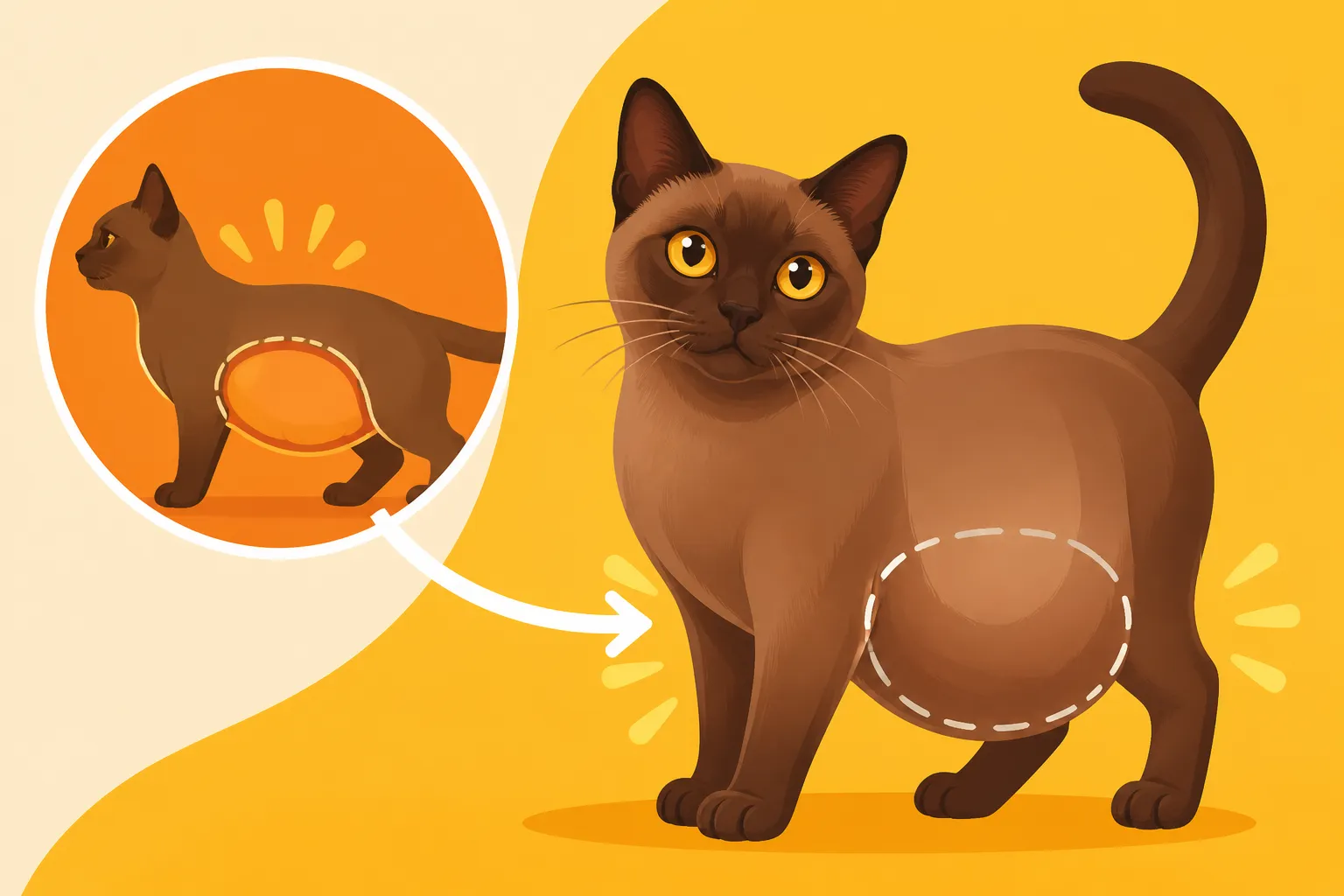
Why a Burmese Carries Weight in Its Belly First
It’s a common frustration for Burmese cat owners: you look at your beloved furball, and despite feeling like you're managing their diet, you suddenly notice a little pouch or a distinct roundness around their middle. You might even wonder if you’re imagining it, especially when their sleek, satin coat still feels so firm and muscular everywhere else. This guide is here to shed light on why the Burmese, in particular, tends to carry weight in its belly first, what this means for their health, and how you can proactively manage it to keep your companion vibrant and healthy.
The Unique Burmese Physique: A "Brick Wrapped in Silk"
The Burmese cat is renowned for its compact, muscular build, often affectionately described as a "brick wrapped in silk." This isn't just a cute nickname; it’s a fundamental aspect of their physiology that significantly impacts how they gain and display weight. Unlike some lighter-boned or fluffier breeds, a Burmese possesses a surprising density and heft for its size, which can make early weight gain incredibly tricky to spot.
Muscularity That Hides Early Weight Gain
Their strong, well-developed musculature means that a Burmese can put on a few extra pounds before it becomes obvious across their entire frame. When you run your hands over their back and sides, you might still feel firm muscle, giving a false sense of security that everything is fine. The ribs, which are a primary indicator in many other cats, can remain somewhat palpable even with a slight increase in fat, simply because the underlying muscle is so substantial. This dense musculature can easily lead to a misunderstanding of their true body condition, making it easy to mistake a muscular Burmese for a fat one if you're not paying close attention.
Imagine trying to spot weight gain on a tiny bodybuilder; it’s not always immediately apparent until it starts to accumulate in areas less supported by dense muscle. For the Burmese, their deep chest and solid bone structure can effectively camouflage subtle fat deposits in other areas, meaning that the belly often becomes the "canary in the coal mine" for emerging weight issues. Why a Burmese is heavier than it looks is a constant refrain among owners, and it's a critical point to remember.
Why the Belly Is the First Visible Sign of Weight Gain
Given their impressive muscle mass and sleek, close-lying coat, the abdominal area often becomes the most noticeable place for fat to accumulate first. This isn't unique to Burmese cats, but it's exacerbated by their body type. The belly, especially the area behind the ribs and towards the hind legs, has less underlying bone or dense muscle structure to disguise fat. As a result, even a modest increase in caloric intake coupled with insufficient activity will often manifest as a slight paunch or a more pronounced "primordial pouch" that feels softer and more substantial than it should.
This ventral fat pad can start as a barely perceptible softening of the abdomen, progressing to a more visible sag or roundness. It’s a physical manifestation that the body is storing excess energy, and because other areas are still appearing trim due to muscle, the belly quickly becomes the most honest indicator of your cat's changing body composition. It's particularly important to monitor this closely, especially as Why a neutered male Burmese is highest risk for weight gain, and consequently, for diseases linked to obesity.
Understanding Burmese Body Condition Scoring for Accurate Assessment
Relying solely on visual cues can be misleading for a Burmese. That’s why understanding and regularly performing a body condition score (BCS) is absolutely vital. This isn't just a fancy vet term; it's a hands-on tool that empowers you to accurately assess your cat's physique, catching those early signs of weight gain before they become a significant health concern.
The Importance of Hands-On Assessment
The "feel" test is paramount for a Burmese. Their satin-smooth, short coat means there's no fluff to hide anything, yet their muscle can still deceive the eye. A BCS involves both looking and feeling your cat, usually on a scale of 1 to 9, where 5 is ideal. When assessing your Burmese, you're looking for three key areas:
- Ribs: Can you easily feel their ribs without pressing hard? They should feel like running your fingers over your knuckles. If you have to press firmly to feel them, or if you can't feel them at all, your cat is likely overweight.
- Waist: Does your cat have an hourglass shape when viewed from above? There should be a noticeable tuck behind their ribs. For a Burmese, this can be subtle due to their compact build, but a straight line or bulging sides are red flags.
- Abdominal Tuck: When viewed from the side, does their belly gently slope upwards from the chest to the hind legs? If the belly hangs down or appears rounded, that's a sign of excess fat.
This hands-on approach helps you get past the visual deception of their muscular frame. A cat that looks lean might actually be developing that tell-tale belly fat that needs addressing. How to feel a Burmese's ribs under a satin coat is a skill every Burmese owner should master, allowing you to differentiate between solid muscle and accumulating fat.
Distinguishing Muscle from Fat Around the Belly
This is where many owners get tripped up with Burmese cats. Because they are naturally heavier and more muscular than many other breeds, it’s easy to dismiss a developing paunch as "just their build" or "part of their natural weight." However, there's a distinct difference between dense muscle and soft, jiggly fat.
A healthy, muscular Burmese will have a firm abdomen, even if it feels substantial. The muscle tone should be palpable, and there shouldn't be excessive loose skin or a soft, pendulous feel. When fat accumulates, particularly in the lower abdomen, it feels distinctly softer, less firm, and often has a greater degree of movement when your cat walks or runs. This is the difference between feeling a tight, well-exercised core and a cushion of stored energy. Regularly How to weigh a Burmese accurately at home is also crucial, as even small weight increases can be significant for their compact frame. Tracking their weight monthly alongside your BCS will provide the clearest picture.
Burmese Body Condition Score (BCS) Guide
| BCS | Description | Ribs (Feel) | Waist (Top View) | Abdominal Tuck (Side View) | Belly (Feel) | Action Required |
|---|---|---|---|---|---|---|
| 1 | Emaciated | Easily visible, no fat cover | Extreme hourglass | Severe tuck-up | Severe abdominal tuck | Urgent vet intervention |
| 2 | Very Thin | Easily palpable, minimal fat cover | Prominent hourglass | Distinct tuck-up | Very little fat, almost concave | Increase food intake under vet guidance |
| 3 | Thin | Easily palpable, slight fat cover | Noticeable hourglass | Good tuck-up | Thin, slight tuck | Monitor, ensure adequate nutrition |
| 4 | Underweight (but acceptable for some) | Palpable with minimal fat cover | Slight hourglass | Slight tuck-up | Lean, subtle tuck | Maintain, possibly slight increase in food |
| 5 | Ideal | Easily palpable, thin fat cover | Well-proportioned hourglass | Moderate tuck-up | Flat, firm | Maintain current diet and exercise |
| 6 | Overweight | Palpable, slight excess fat | Barely noticeable hourglass | Minimal tuck-up | Slightly rounded, softer | Adjust diet, increase exercise |
| 7 | Heavy | Difficult to feel, moderate fat | No hourglass, straight sides | Flat or slight sag | Rounded, soft, prominent | Significant dietary changes, increased activity |
| 8 | Obese | Difficult to feel, significant fat | Broadened, bulging sides | Obvious sag, no tuck | Large, pendulous | Vet consultation, structured weight loss plan |
| 9 | Severely Obese | Very difficult/impossible to feel | Markedly distended abdomen | Pronounced sag, no tuck | Very large, distended, heavy | Urgent vet consultation, strict weight loss plan |
Note: This table is a general guide. Always consult your veterinarian for an accurate BCS assessment and personalized advice.
Why a Protruding Belly Is a Red Flag for Burmese Health
That roundness around your Burmese's middle isn't just an aesthetic concern; it's a significant indicator of potential underlying health risks. For a breed already predisposed to certain conditions, a noticeable belly is a giant red flag that demands immediate attention. Overweight Burmese cats face a much higher risk of developing serious, life-altering diseases.
Connecting Belly Fat to Diabetes Risk in Burmese Cats
The most critical health concern directly linked to excess weight in Burmese cats is diabetes mellitus. The Burmese breed has a notoriously high predisposition to diabetes, significantly more so than many other cat breeds. The Burmese has the highest diabetes rate of any cat breed is a stark reality that owners must confront. This genetic vulnerability, when combined with obesity, creates a perfect storm for the onset of the disease.
When a cat carries too much body fat, particularly around the abdominal area, it can lead to insulin resistance. The body's cells become less responsive to insulin, the hormone responsible for regulating blood sugar. To compensate, the pancreas works harder, producing more insulin. Eventually, the pancreas can become exhausted, leading to a deficiency in insulin production and the development of full-blown diabetes. That soft, round belly is essentially a visible manifestation of increased metabolic stress on your Burmese's system, drastically increasing How much weight raises a Burmese's diabetes risk. It's not just a statistic; it's a daily battle for many Burmese owners, and early intervention is key.
The Broader Impact of Excess Weight on Overall Health
Beyond diabetes, excess belly fat and generalized obesity put a tremendous strain on almost every system in your Burmese's body. These are not minor inconveniences; they are serious health deterrents that can drastically reduce both the quality and length of your cat's life.
- Joint Issues: Burmese cats are active and playful, often well into their senior years. Extra weight puts undue stress on their joints, potentially leading to or exacerbating conditions like arthritis. Even if your Burmese is still playing at fifteen, carrying extra weight will make them more uncomfortable and less mobile over time.
- Heart Disease: Obesity can contribute to high blood pressure and an increased workload for the heart, potentially leading to or worsening existing heart conditions.
- Liver Disease: Rapid weight loss, sometimes attempted in overweight cats without veterinary supervision, can lead to hepatic lipidosis (fatty liver disease), which is a life-threatening condition.
- Reduced Quality of Life: An overweight Burmese may be less active, less inclined to play, and generally less comfortable. This impacts their mental well-being and their strong bond with you, as their ability to engage in their characteristic "velcro cat" behavior might be hindered by discomfort. Why a withdrawn Burmese should see a vet that day applies to sudden behavioral changes linked to discomfort from weight.
- Anesthetic Risk: Should your Burmese need surgery for any reason, being overweight significantly increases anesthetic risk, making procedures more complicated and recovery potentially longer.
Understanding these risks underscores why actively managing your Burmese's weight, especially that developing belly fat, is not just about keeping them looking good, but fundamentally about safeguarding their long-term health and happiness.
Practical Steps to Manage and Prevent Burmese Belly Fat
Successfully managing your Burmese's weight and preventing that tell-tale belly fat is a commitment, but it’s one of the most important things you can do for their long-term health. It requires a holistic approach, focusing on diet, exercise, and consistent monitoring. This proactive care ensures your beloved companion can live their best, healthiest life.
Tailoring Their Diet: Low Carbohydrate and Portion Control
When it comes to feeding a Burmese, it’s truly a medical decision, not just a preference. Their predisposition to diabetes means that what you put in their bowl has profound implications. The cornerstone of preventing and managing belly fat in a Burmese is a diet that is low in carbohydrates and strictly portion-controlled.
- Go Low-Carb, High-Protein: Cats are obligate carnivores, designed to thrive on a diet rich in animal protein and fat, with very minimal carbohydrates. Many commercial dry kibbles are unfortunately high in carbohydrates, which can lead to rapid weight gain and contribute to insulin resistance. Transitioning to a high-quality wet food that is explicitly low in carbohydrates (ideally under 10% dry matter basis) is paramount. Brands found on platforms like Chewy or Amazon often list their nutritional content, allowing you to compare options. Look for ingredients where meat is the first and primary component. Why low carbohydrate food matters for a Burmese cannot be stressed enough; it's a foundational element of their preventative care.
- Strict Portion Control: Free-feeding a Burmese is an absolute no-go. They are incredibly food-motivated and will overeat if given the chance, turning a bowl left down into a direct path towards diabetes. Why a Burmese should never be free fed is a lesson learned by many owners the hard way. Each meal should be carefully weighed, not scooped, according to your cat's ideal weight, activity level, and age. Your veterinarian can help you determine the appropriate daily caloric intake. Divide this into two to three smaller meals throughout the day. Consistency is key here. Pre-portioned, high-quality meals can also make this easier.
- Limit Treats: Treats can quickly undo all your hard work. If you must give treats, ensure they are low-calorie and factor them into your cat's daily caloric allowance. Small pieces of cooked chicken or freeze-dried meat treats are often better choices than carb-laden commercial cat treats.
Regular Exercise and Mental Stimulation
While diet is hugely important, physical activity plays a crucial role in maintaining a healthy weight and preventing belly fat. Burmese cats are known for their playful, kittenish nature, which they often retain well into old age. Harness this natural energy!
- Interactive Play Sessions: Dedicate at least two sessions of 10-15 minutes each day to interactive play. Wand toys, laser pointers (used responsibly, always ending with a tangible reward), and chase games are excellent ways to get them moving. These cats love to retrieve, so throwing small, soft toys can turn into a great workout. A Burmese is still playing at fifteen, so never assume they're "too old" for a good romp.
- Puzzle Feeders: To slow down their eating and provide mental enrichment, incorporate puzzle feeders. These require your Burmese to "work" for their food, burning a few extra calories and engaging their intelligent minds. This also helps with portion control by making them eat more slowly.
- Vertical Space and Exploration: Encourage climbing and exploration. Cat trees, shelves, and window perches can turn your home into an exciting playground, prompting them to jump, stretch, and move more throughout the day.
Consistent Monitoring and Veterinary Partnership
Your relationship with your veterinarian is your strongest ally in fighting Burmese obesity. Regular check-ups are essential for monitoring weight and overall health.
- Weekly Weight Checks: Invest in a small digital kitchen scale and weigh your Burmese weekly. A slight increase of a few ounces can be a significant indicator for their compact size. Why a Burmese's weight should be recorded monthly (or even weekly) is vital for early detection. Don't wait until the belly is undeniable; catch those subtle changes early.
- Annual Vet Visits (and More if Needed): Beyond vaccines, these visits are crucial for a professional body condition assessment, discussing diet, and performing necessary blood work, especially a glucose check from around seven years of age. Your vet can provide tailored advice on What an adult Burmese should weigh and help you create a specific weight management plan if needed. They can also provide guidance on How slowly an overweight Burmese should lose weight to prevent fatty liver disease.
- Be Proactive: If you notice that round belly developing, don't ignore it. It’s a sign that adjustments are needed. Being proactive now can save your Burmese from developing serious, chronic conditions later. A little extra care in managing their weight can lead to many more years of joyful companionship with your "velcro cat."
Disclaimer
This article is for general informational purposes only and does not constitute professional advice. Laws, prices and regulations vary by location and change over time. Consult a qualified professional for guidance on your specific situation.