The Four Colors a Burmese Comes In
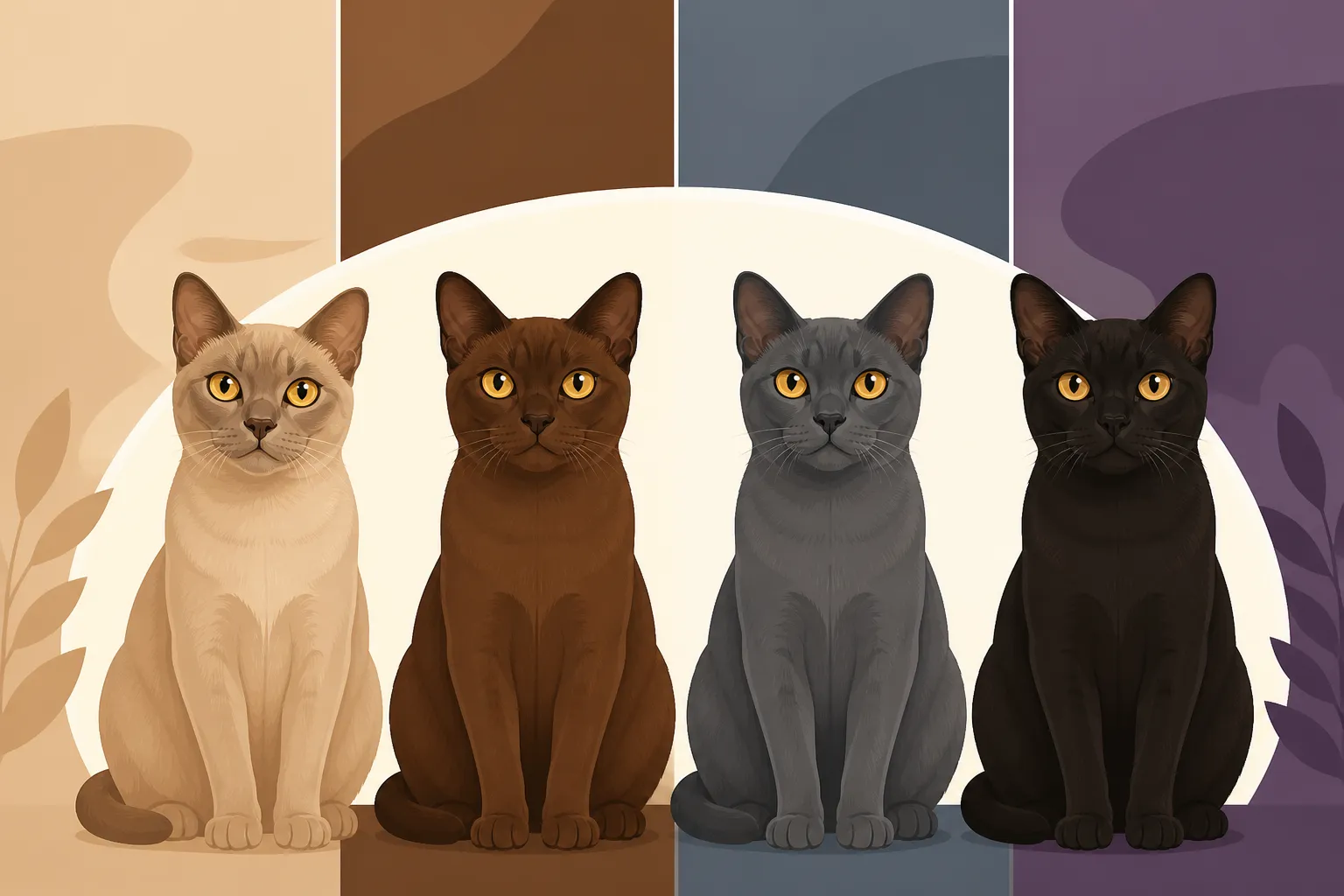
It’s easy to look at a Burmese cat and think they all come in one gorgeous, deep brown color, especially if you’ve mostly seen Sables. Many people mistakenly believe that any cat with a pointed pattern is a Siamese, or that a truly solid brown cat might be a Havana Brown, leading to a lot of confusion about what makes a Burmese so unique. But trust me, as someone who’s spent years appreciating these incredible felines, the Burmese actually comes in a stunning array of four distinct, officially recognized colors, each with its own subtle beauty. This guide will take you on a journey through the delightful spectrum of the Burmese palette, helping you understand the genetics, the appearance, and the fascinating nuances of Sable, Champagne, Blue, and Platinum.
The Genetic Canvas: Understanding Burmese Coloration
The captivating colors of the Burmese aren't just random; they're the result of a very specific genetic blueprint, unique to this breed. Understanding the underlying science really helps you appreciate why these cats look the way they do and why their colors sometimes seem to "change" with age or temperature. It’s all part of the magic that makes a Burmese so special.
The cb Allele: The Heart of the Burmese Palette
At the very core of the Burmese's distinctive appearance is a special gene called the cb allele. This isn't just any color gene; it's a specific mutation of the gene that determines coat color, and it’s what gives the Burmese its unique depth and shading. Most cats have either a full-color gene (C) or the Siamese pointed gene (cs), but the Burmese carries two copies of this cb allele. This double dose is the secret ingredient, creating what's known as the Burmese Restriction Factor. It essentially "restricts" the amount of pigment that develops in the hair shaft, especially in warmer areas of the body, leading to the characteristic shading that is so beloved. The cb Allele Is What Makes a Burmese Brown This restriction is less extreme than in a Siamese, which is why a Burmese isn't quite as pale on its body as a Siamese is.
Think of it like a dimmer switch for color. The cb allele turns the color down slightly across the entire body, but it's not a complete blackout, nor is it a stark spotlight. It creates a soft, warm glow where the color gathers more intensely at the "cooler" points of the cat's body – the face, ears, tail, and paws. This is a crucial distinction that sets the Burmese apart from fully pigmented solid cats and the more dramatically pointed Siamese. Without cb, you wouldn't have that signature richness.
The presence of two copies of the cb allele is also why breeding a Burmese with a Siamese can result in a Tonkinese, a beautiful cat that sits perfectly in the middle, displaying a "mink" pattern. It's a fascinating example of how subtle genetic variations can lead to entirely different, yet equally stunning, feline appearances. This genetic heritage is a testament to the scientific curiosity that surrounded the breed from its earliest days, with researchers like Dr. Joseph Thompson carefully studying its unique traits.
Temperature-Sensitive Expression: Why Extremities Darken
One of the most charming and often discussed aspects of Burmese coloration is how it responds to temperature. You'll notice that the "points"—the ears, muzzle, paws, and tail—are always darker than the main body. This isn't just a coincidence; it's a direct result of that cb allele we just talked about. The pigment-producing enzymes in Burmese cats are heat-sensitive. This means that in the warmer core areas of the cat's body, these enzymes are less active, leading to less pigment production and thus a lighter coat.
Conversely, in the cooler extremities, these enzymes can work at full capacity, depositing more pigment and creating that darker, richer color. This is why a Burmese kitten is often born quite pale and gradually darkens as it matures and spends more time outside the womb. Why a Burmese Is Darker at the Extremities It’s also why, sometimes, if a Burmese has been ill or had a patch of fur shaved for surgery, the new hair that grows back can appear darker for a while before blending in. The cooler skin where the fur was removed allows for more pigment expression.
This temperature sensitivity is a delightful quirk of the Burmese, giving each cat a unique canvas that subtly shifts throughout its life. It also explains why a cat that enjoys sunbathing might have a slightly lighter back, while one that snuggles under blankets constantly might appear a touch darker overall. It’s a living, breathing example of genetics in action, making every Burmese a little marvel of nature. How a Burmese's Color Gene Reacts to Temperature
Unpacking the "Dilution" Genes
Beyond the cb allele, the other key players in the Burmese color game are the "dilution" genes. These genes don't introduce new colors, but rather act on the primary black and red pigments, essentially lightening or "diluting" them to create entirely new shades. Think of it as adding white paint to a primary color – you still have the base color, but it's softer, paler, and has a different character.
The two main pigments cats carry are black and red. The cb allele restricts these. Now, introduce a dilution gene, and it takes those restricted pigments and further softens them. For example, the "dilute" gene (d) takes black pigment and turns it into blue (a greyish hue), and red pigment into cream. The specific combination of the cb allele with these dilution genes is what gives us the full range of the four recognized Burmese colors. It's a wonderfully intricate system, allowing for a variety of beautiful coats without introducing entirely new pigments, just modifying the ones that are already there.
Understanding dilution helps explain why, for instance, a Champagne Burmese isn't just a "lighter Sable" but a distinctly different color. It’s because the underlying black pigment has been diluted to chocolate, and then the cb allele restricts that chocolate. This interplay of genes is what breeders meticulously work with to achieve the desired colors, ensuring health and conformation while celebrating the beauty of each shade.
Sable: The Classic "Brown" Burmese
Ah, Sable! This is perhaps the most iconic and widely recognized color for the Burmese cat. When most people think of a Burmese, they picture that rich, warm brown that seems to glow from within. It’s the original color, the one that started it all, and it remains a firm favorite for good reason. But there's more to Sable than just "brown"; it's a symphony of subtle tones and textures.
What Makes a Sable Truly Sable
A Sable Burmese is genetically a black cat, but with two copies of the cb allele. This combination transforms what would otherwise be a solid black coat into that deep, luxurious sable brown. The cb gene restricts the full expression of the black pigment, allowing for the warm, sepia tones to shine through. The ideal Sable is a rich, warm, seal brown, with slightly darker points. The color should be even, but you'll notice that delightful darkening on the ears, mask, paws, and tail that is characteristic of the breed.
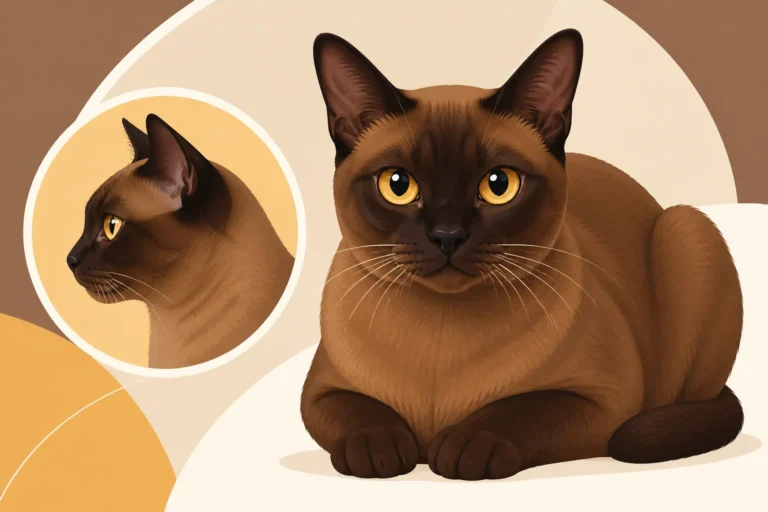
When you look closely at a Sable, you won't see any tabby markings or ticking; the color should be uniform and unblemished. This solid, unbroken expanse of rich brown is part of its elegance. The depth of color can vary slightly, from a dark chocolate brown to a lighter, almost fawn-like shade, but the defining characteristic is always that underlying warmth and richness, a far cry from a plain black or even a seal point Siamese. What a Sable Burmese Looks Like It truly is a unique brown, often described as like mink or a perfectly aged leather.
This depth isn't just about the surface color; it’s about the very quality of the pigment distribution along each hair shaft, affected by the cb allele. It’s a sophisticated brown, not just a simple one, and it's the result of specific genetic interaction, not merely a lighter shade of black. This is why even among browns, the Sable stands out as truly distinct in the cat fancy.
From Kitten to Classic: Sable's Color Progression
One of the most enchanting things about a Sable Burmese is watching its color develop. They aren't born with that deep, uniform brown. Instead, Sable kittens typically arrive into the world looking much lighter, often a pale fawn or even cream color. This can sometimes surprise new owners, who might expect the rich brown from day one. However, this paleness is entirely normal and part of the temperature-sensitive gene expression at play. When a Burmese Kitten's Adult Color Settles
As the kitten grows, the cooler temperatures outside the womb allow the pigment to develop more fully. Over the first few weeks and months, you'll start to see that beautiful seal brown deepen, particularly on the points first, and then gradually across the body. By the time they are around six to twelve months old, their adult color has largely set, though some cats will continue to deepen in shade well into their second year. Factors like climate (cats living in cooler environments might develop a darker coat overall) and even sun exposure (too much sun can lighten the coat) can subtly influence the final hue.
It’s a truly magical transformation to witness. That initial pale fluff slowly gives way to the velvety richness that is the hallmark of the Sable Burmese. This process also highlights the inherent health and vitality of a well-bred kitten, indicating robust genetic expression rather than any underlying issue.
The Richness and Depth of the Sable Coat
The Sable coat is renowned not just for its color, but for its incredible texture and sheen. It's often described as feeling like "satin" or "silk," and it has a distinctive gloss that catches the light beautifully. The short, close-lying hairs contribute to this, with very little undercoat, making the fur incredibly smooth and tactile. This is the "brick wrapped in silk" description often applied to the Burmese, a nod to their surprising muscularity combined with their soft, luxurious fur.
This richness isn't just visual; it’s an experience. Running your hand over a Sable Burmese's coat is a delight, and the color itself exudes warmth and luxury. The deep brown absorbs and reflects light in a way that truly makes it glow. It’s this combination of rich color, satin texture, and an almost weightiness in their build that makes the Sable Burmese so captivating. It’s a color that speaks of heritage, elegance, and the timeless appeal of the breed.
While grooming needs are minimal for a Burmese, a soft chamois cloth rubbed over the coat can really bring out that magnificent shine, accentuating the depth of the Sable. Even a simple stroke can reveal the interplay of light and shadow on their beautifully sculpted bodies.
Champagne: The Warm Chocolate Hue
Stepping away from the classic Sable, we encounter Champagne, a color that often causes a little head-scratching for those unfamiliar with the Burmese palette. Is it just a lighter brown? Is it chocolate? The answer is yes to the latter, but with its own distinct charm that sets it apart from its Sable cousin. Champagne is a truly beautiful and warm color that deserves its own spotlight.
The Gene Behind the Golden Brown
Champagne Burmese cats are genetically brown (chocolate) rather than black. In most other cat breeds, a cat with two copies of the chocolate gene would appear solid chocolate. However, in the Burmese, this chocolate base interacts with the cb allele, resulting in the Champagne coloration. Think of it as the chocolate version of Sable. Instead of restricting black pigment to create sable, the cb allele restricts chocolate pigment to create Champagne.
The result is a warm, honey-beige to light brown color. The points—ears, face, tail, and paws—will be a richer, deeper shade of chocolate, but still distinctly lighter than the dark seal brown of a Sable. It’s a gentler, softer hue, yet still carries that unmistakable Burmese depth and glow. It's often compared to warm milk chocolate or a lighter caramel. The lack of any red tones is also key; it’s a pure, diluted brown that has a sophisticated, understated elegance.
This is a beautiful example of how one gene (the chocolate gene) combined with the unique cb allele creates an entirely new expression in the Burmese. It's not just a dilution of black, but an entirely separate base color that has been modified. What a Champagne Burmese Looks Like This genetic subtlety is why breeders often speak of "color lines" within their catteries, carefully managing the genes to produce these distinct, desirable shades.
Champagne's Subtleties: Not Just a Lighter Brown
It’s easy to look at a Champagne Burmese and dismiss it as merely a "lighter version" of Sable. But that would be missing the point entirely! Champagne has its own unique character and a subtle range of tones that make it distinct. While Sable has a deep, rich seal-brown intensity, Champagne offers a softer, warmer, almost golden glow. The warmth of the chocolate base, coupled with the Burmese restriction, creates an effect that can range from a light, almost fawn beige to a deeper, more pronounced milk chocolate.
The key is the underlying brown pigment. Where Sable is genetically black diluted by the cb allele, Champagne is genetically chocolate diluted by cb. This means Champagne never has that deep, dark, almost black undertone that Sable can exhibit. Instead, it maintains a consistent warmth, even in its darker points. It’s a color that exudes softness and gentle warmth, making it particularly striking against its bright golden or yellow eyes.
When observing a Champagne Burmese, pay attention to the way light plays on its coat. You’ll notice golden undertones that are simply not present in a Sable. It's this unique interplay of warmth and restriction that defines Champagne, making it a truly exquisite and sought-after color in the Burmese world.
The Softness and Sheen of a Champagne Coat
Just like its Sable counterpart, the Champagne Burmese boasts that signature satin coat, but the effect of the color on the sheen is slightly different. The lighter hue of Champagne can sometimes make its satin texture appear even more pronounced, as the light has more opportunity to reflect off the shorter, denser fur. The coat gleams with a soft, almost iridescent quality, making it incredibly appealing to the eye and touch.
The lack of heavy pigmentation contributes to a feeling of incredible softness and lightness in the fur. It's a coat that invites petting and tactile interaction, which is perfect for such an affectionate breed. The subtle interplay of light and shadow on a Champagne coat is particularly beautiful, highlighting their muscular contours and elegant form.
Caring for a Champagne Burmese coat is as straightforward as for any other Burmese color. Minimal grooming is needed thanks to their short, low-shedding fur. A weekly wipe with a soft cloth or grooming mitt is usually all it takes to keep that lustrous sheen. You can find excellent quality grooming gloves and chamois cloths on sites like Chewy, perfect for maintaining that signature Burmese glow with minimal effort.
Blue: The Elegant Grey-Blue Burmese
Moving into the world of diluted colors, we encounter the striking Blue Burmese. This is a color that often surprises those who only associate the breed with shades of brown. Blue is sophisticated, elegant, and possesses a unique beauty that stands out in any setting. It’s not a stark, vibrant blue, but rather a soft, gentle grey-blue that evokes a sense of calm and grace.
The Dilution of Black: How Blue Emerges
The Blue Burmese is genetically a black cat that carries not only the cb allele but also the dilute gene (d). This dilute gene takes the black pigment that would have become Sable, and effectively "washes" it out, turning it into a soft, powdery grey-blue. So, in essence, a Blue Burmese is a diluted Sable. The cb allele still plays its role in restricting the color, meaning the blue isn't a solid, uniform charcoal, but rather a lighter, more delicate shade on the body, deepening to a rich slate grey-blue on the points.
Imagine taking a deep, inky black and adding a generous splash of cream to it, then blending it all together until you get a muted, smoky shade. That's essentially what the dilute gene does to the black pigment in a Burmese. The resulting blue is truly exquisite, a far cry from the vibrant blues seen in some other breeds. It’s a color that whispers rather than shouts, embodying understated elegance.
The genetic combination is vital here: two copies of cb and two copies of d. This precise genetic makeup is what ensures the soft, clear blue rather than a muddy or dull grey. Breeders work diligently to ensure these genes are expressed correctly, aiming for clarity and depth in the blue without any brownish or ruddy tones. What a Blue Burmese Looks Like
Blue's Range: From Slate to Silver
While "blue" might sound like a single, uniform color, the Blue Burmese actually exhibits a beautiful range of shades, from a deeper, slate grey-blue to a lighter, almost silvery hue. The ideal Blue Burmese is a medium blue with a slight silvery sheen, clearly defined points, and a lighter body that still shows that lovely Burmese warmth rather than a cold grey.
Some Blue Burmese will lean towards a darker, almost denim blue on their points, while their bodies remain a lighter dove grey. Others might have a softer, almost powdery blue tone throughout, giving them a delicate, ethereal appearance. Just like Sable, the depth of blue can be influenced by age, genetics, and even environmental factors. Kittens are typically born quite light and gradually deepen to their adult blue as they mature.
The key to a beautiful Blue Burmese is the clarity of the color. It should be a true blue-grey, without any hints of rust or brown, which would indicate a less desirable shade. The contrast between the darker points and the lighter body should be soft and flowing, not stark or abrupt, showcasing the elegant gradient characteristic of the Burmese restriction factor. This creates a mesmerizing depth, like looking into a still, deep pool.
The Silken Texture of the Blue Burmese
The coat of a Blue Burmese shares the same magnificent satin texture as its Sable and Champagne relatives, but the blue coloration somehow seems to amplify its silken quality. The fine, close-lying hairs, combined with the dilute pigment, give the coat an incredibly soft, almost plush feel. When you stroke a Blue Burmese, your hand glides effortlessly over its body, testament to its unique coat structure.
The light-reflecting properties of the blue pigment, coupled with the satin texture, create a beautiful luminosity. The coat often appears to shimmer, particularly in natural light, making the subtle variations in its blue tones even more apparent. It's a coat that looks and feels luxurious, complementing the breed's graceful movements and affectionate nature.
Despite its delicate appearance, the Blue Burmese coat is remarkably easy to maintain. Its short length means minimal shedding, a huge plus for many cat owners. Regular gentle petting and the occasional wipe down are all that’s typically needed to keep it looking pristine and feeling incredibly soft. This low-maintenance beauty is one of the many reasons why the Burmese, in any color, makes such a wonderful companion.
Platinum: The Rare and Refined Lilac
If Blue is elegant, then Platinum is truly refined and rare. This is the fourth and often most difficult color to correctly identify for newcomers to the breed, sometimes confused with blue or even a very light champagne. Platinum Burmese are a testament to the intricate dance of feline genetics, resulting in a color of unparalleled delicacy and ethereal beauty.
Double Dilution: The Creation of Platinum
Platinum Burmese are genetically chocolate (like Champagne) that also carry the dilute gene (d). So, if you recall, Champagne is a chocolate cat restricted by cb. Platinum takes that chocolate base, dilutes it with the 'd' gene, and then restricts it with cb. The result is a stunning, pale, frosty grey with a pinkish or mushroom undertone. This is often referred to as "lilac" in other breeds, but for the Burmese, the term Platinum perfectly captures its precious and delicate nature.
The interplay of these genes creates a color that is truly unique. It’s not just a diluted chocolate; it's a specific expression that results in a soft, shimmering, almost pearlescent grey. The points will be a slightly deeper shade of this same frosty grey, again with that subtle pinkish cast. It’s a color that can be challenging to capture accurately in photographs because its nuances are so subtle and depend heavily on lighting.
Platinum is the result of both the chocolate gene and the dilute gene being present alongside the cb allele. This makes it a "double diluted" color, which inherently means it's less common than Sable or Champagne. Achieving a clear, beautiful Platinum requires careful breeding and a deep understanding of the genetic lines. What a Platinum Burmese Looks Like
Platinum's Unique Pearl-Grey Tones
The most distinctive feature of a Platinum Burmese is its unique pearl-grey or "frosted" tone. Unlike the cool, steely blues, Platinum carries a warm, almost pinkish or mushroom undertone that prevents it from looking stark or cold. This warmth is what makes it so special and truly differentiates it from a very pale blue. Imagine the soft glow of a cultured pearl, and you're getting close to the essence of Platinum.
The body color is a pale, delicate grey, often described as a soft dove grey or even a shimmering silver-beige. The points, while darker, maintain that same subtle warmth, appearing as a slightly deeper mushroom-grey. The clarity of the color is paramount; it should be clean and unblemished, without any muddiness or brownish patches, which can sometimes appear in poorly bred lines.
Observing a Platinum Burmese in different lights can be a revelation. In bright sunlight, the silvery sheen can be breathtaking. In softer indoor light, the pinkish undertones might become more pronounced, giving the cat an ethereal, almost otherworldly appearance. It’s a color that constantly fascinates and delights, always revealing new nuances.
Why Platinum Can Be Hard to Distinguish
Because of its paleness and subtle warm undertones, Platinum can sometimes be tricky to distinguish from other colors, especially for the untrained eye. It’s not uncommon for a very light Blue Burmese to be mistaken for Platinum, or vice-versa. The key lies in that specific warm, pinkish or mushroom cast that is present in Platinum and absent in Blue. Blue is a true grey-blue, while Platinum has that distinct beige-lilac warmth.
Another common point of confusion can be with very light Champagne Burmese, especially if the Champagne has a cool undertone. However, Champagne will always retain more of a golden-brown hue, whereas Platinum leans firmly into the grey-lilac spectrum. The definitive identification often requires an experienced eye or, in cases of uncertainty, looking at the cat's pedigree, which will clearly state the genetic colors of its parents.
The rarity of Platinum also means fewer people have direct experience seeing them, adding to the mystique and potential for misidentification. However, once you learn to recognize that soft, pearlescent glow and the delicate warm-grey tones, you'll find Platinum to be one of the most beautiful and captivating colors in the entire feline world. It's truly a connoisseur's color.
Beyond the Four: Unrecognized Colors and Misconceptions
While Sable, Champagne, Blue, and Platinum are the four officially recognized colors for the Burmese cat, the world of feline genetics is vast and sometimes leads to other coat variations. It’s important to understand these to appreciate the breed standard and to avoid common misconceptions. Knowing what truly makes a Burmese helps clarify why certain colors are, and are not, part of the standard.
Red, Cream, and Tortoiseshell: Not Your Standard Burmese
You might occasionally encounter claims of "Red Burmese," "Cream Burmese," or "Tortoiseshell Burmese." While cats carrying these genetic colors exist, they are not recognized within the purebred Burmese standard. Genetically, red and cream are sex-linked colors, and tortoiseshell is a combination of red/cream and black/dilute. For these colors to appear in a cat that otherwise looks Burmese, it usually indicates either outcrossing to another breed (like a Siamese, which can carry red), or a very specific and rare mutation that falls outside the established genetic lines of the breed.
The purebred Burmese, as defined by its unique cb allele and standard colors, does not naturally express red, cream, or tortoiseshell patterns within its officially recognized lineage. If you see a cat advertised as a "Red Burmese," it’s crucial to question its pedigree and breeding history. It might be a cross-breed (like a Tonkinese, which can certainly come in tortie point, red point, or cream point), or a variant not recognized by major cat registries.
Reputable breeders will only produce the four standard colors and will be transparent about the genetic makeup of their lines. Deviations from these standard colors, while sometimes beautiful in their own right, simply mean the cat isn't a "true" Burmese according to the breed's established genetic and phenotypic standards.
Distinguishing Burmese Colors from Other Breeds
One of the biggest areas of confusion, especially for new cat enthusiasts, is distinguishing Burmese colors from similar shades in other breeds. The most common mix-up is between a Burmese and a Siamese, or even a Tonkinese. Both Siamese and Tonkinese carry the same base color genes (black, chocolate, dilute, red) but express them differently due to different forms of the colorpoint gene.
A Siamese will have much more dramatic contrast, with very dark points and a much paler, almost white or cream body, due to the cs allele causing much stronger temperature restriction. A Tonkinese, as mentioned, sits in the middle, having a "mink" pattern with noticeable points but a more colored body than a Siamese, and less restriction than a Burmese. How to Tell a Burmese From a Tonkinese It’s all about the degree of restriction on the pigment.
Then there are breeds like the Havana Brown, which is a solid chocolate cat. While a Sable Burmese can appear very dark brown, a Havana Brown will be a uniform, non-pointed solid chocolate from nose to tail, lacking the cb allele that gives the Burmese its subtle shading and point contrast. Similarly, a Bombay is a solid black cat. Once you learn to look for the subtle shading, the slightly darker points, and the unique satin texture of the coat, you'll be able to tell a Burmese from its look-alikes.
The Importance of Pedigree and Breeder Transparency
Given the nuances of Burmese colors and the potential for confusion with other breeds or unrecognized variations, the importance of pedigree and breeder transparency cannot be overstated. A reputable breeder will always provide you with a full pedigree that clearly shows the genetic lineage and registered colors of the cat's ancestors. This document is your assurance that you are indeed acquiring a purebred Burmese of a recognized color.
They should also be able to explain the genetics behind the colors they breed, discussing the cb allele and the dilute genes with confidence. If a breeder is vague about lineage, offers "rare" or unrecognized colors, or cannot provide clear health and genetic testing documentation (including for diseases like hypokalemia or diabetes predisposition), it should raise a red flag. Which Diseases a Burmese Breeder Must Declare Transparency about a cat’s genetics, including its color, is a hallmark of ethical breeding practices.
Don't hesitate to ask questions, view the parents if possible, and verify registrations with cat fancy associations like CFA or TICA. These organizations uphold breed standards, including color, and registration ensures the integrity of the breed. Ultimately, a well-informed buyer is the best defense against misrepresentation, allowing you to bring home a healthy, true-to-type Burmese in one of its four magnificent, officially recognized colors.
Living with a Burmese of Any Color: General Coat Care
Regardless of whether your Burmese is Sable, Champagne, Blue, or Platinum, one thing remains constant: their magnificent coat. That signature satin feel and lustrous sheen are universal traits of the breed. While their grooming needs are remarkably low, understanding how to best care for their unique fur will ensure they always look and feel their best.
Maintaining That Signature Satin Sheen
The Burmese is famous for its "satin" coat, which is incredibly short, fine, and lies very close to the body, with minimal undercoat. This unique texture is what gives it that characteristic sheen and velvety feel. Maintaining this beautiful luster is surprisingly easy, making the Burmese one of the lowest-maintenance breeds when it comes to grooming. You won't need expensive brushes or frequent trips to a professional groomer.
The best tool for enhancing that satin sheen isn't a traditional brush at all – it's often just a soft chamois cloth or a silk scarf. Gently rubbing the coat with a chamois will remove any loose hairs, distribute natural oils, and polish the fur to a brilliant shine. Think of it like buffing fine furniture; the smoother the surface, the better it reflects light. This simple routine, perhaps once a week, is often all a Burmese needs to look picture-perfect.
For a bit more, a rubber grooming mitt or a damp cloth can also work wonders, providing a gentle massage while collecting any stray hairs. You can find excellent quality chamois and grooming mitts on platforms like Chewy, making it easy to keep your Burmese's coat looking its absolute best without any fuss. The goal is simply to highlight the natural beauty that's already there, not to drastically alter it.
Minimal Shedding, Maximum Connection
One of the delightful benefits of the Burmese's short, close-lying coat is its minimal shedding. Compared to many other breeds, you'll find significantly less fur around your home, on your clothes, and on your furniture. This isn't to say they don't shed at all – all cats do – but the amount is remarkably low, making them a fantastic choice for those who appreciate a clean living space.
This low shedding also means less hairball trouble for your feline friend, which is a win for their comfort and your peace of mind. The simplicity of their coat care allows for more time spent on what a Burmese truly craves: connection and interaction. Instead of spending hours brushing, you can spend those precious moments cuddling, playing, or simply enjoying their warm, affectionate presence. How Little a Satin Coated Burmese Sheds
Their low grooming needs also mean they tend to stay cleaner naturally. A Burmese seldom needs a bath, unless they’ve had an unfortunate run-in with something particularly sticky or messy. Their self-grooming is usually sufficient, and their coat repels dirt quite effectively. So, while their appearance is stunning, the effort required to maintain it is truly minimal, leaving you free to enjoy their "velcro cat" personality to the fullest.
Keeping an Eye on Skin and Coat Health
While the Burmese coat is generally hardy and low-maintenance, keeping an eye on their overall skin and coat health is always a good practice, regardless of color. A healthy coat is a good indicator of overall well-being. Look for a coat that is shiny, smooth, and free of dandruff or excessive oiliness. The skin underneath should be clear and free of redness, bumps, or irritation.
Any sudden changes in coat quality, such as dullness, excessive shedding, or patches of missing fur, could be a sign of an underlying health issue. This could range from nutritional deficiencies to allergies, parasites, or even stress. For instance, a lonely or anxious Burmese might over-groom, leading to bald patches. Regular physical interaction during those gentle "grooming" sessions with a chamois provides an excellent opportunity to check for any abnormalities.
A balanced diet, rich in high-quality protein and essential fatty acids, is crucial for maintaining a healthy coat from the inside out. Ensure your Burmese is eating appropriate, low-carbohydrate food, which is also vital given their predisposition to certain health issues like diabetes. Why Carbohydrate Load Matters More in a Burmese If you notice any persistent skin or coat issues, a visit to your veterinarian is always recommended to rule out any medical conditions and ensure your beloved Burmese remains vibrant and healthy, showing off their beautiful color to the world.
Disclaimer
This article is for general informational purposes only and does not constitute professional advice. Laws, prices and regulations vary by location and change over time. Consult a qualified professional for guidance on your specific situation.