The Bombay and the Tonkinese Came Out of the Burmese
Many people adore the Burmese cat for its stunning good looks and incredibly affectionate nature, but what often goes unappreciated is just how foundational this breed has been to the world of pedigreed cats. It’s easy to admire their unique satin coat and soulful eyes without realizing that the Burmese is essentially a grandparent to several other beloved breeds. If you've ever wondered how certain other popular breeds came to be, you might be surprised to learn that a little bit of Burmese magic is often at their core. This guide will delve into the fascinating history of how two distinct and wonderful breeds, the sleek Bombay and the charming Tonkinese, emerged directly from the Burmese lineage, shaping the cat fancy as we know it.
The Burmese as a Foundational Breed
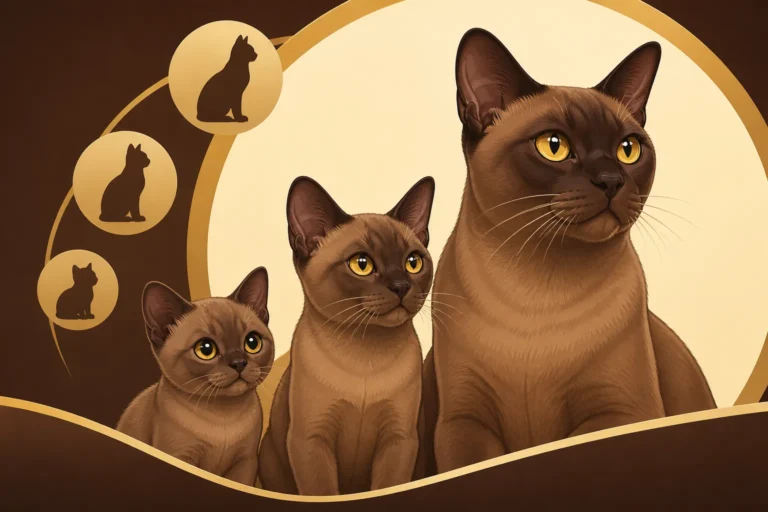
When we talk about foundational breeds, we're discussing cats that served as genetic cornerstones for the development of entirely new breeds. The Burmese cat holds a prominent place in this historical tapestry, not just as a beautiful companion in its own right, but as a crucial building block for others. Its unique genetic makeup and striking characteristics were precisely what captivated early breeders, inspiring them to explore new possibilities and create cats that carried forward some of that special Burmese essence. It’s a testament to the breed's initial impact that its influence continues to ripple through many of today's most recognizable and cherished felines.
Wong Mau: The Genesis of the Burmese
Our story, and indeed the story of the modern Burmese breed itself, begins with a single cat named Wong Mau. Imagine, if you will, the bustling port of San Francisco in the 1930s. A U.S. Navy doctor, Dr. Joseph C. Thompson, brought this captivating brown cat home from Burma. She wasn't just any cat; she possessed a unique, rich, dark brown coat that was distinct from the popular Siamese cats of the era, yet she clearly carried some related genes. This lovely feline, The Burmese Began With One Cat Called Wong Mau, became the very first Burmese cat in the Western world and sparked the curiosity that would lead to decades of careful breeding.
Wong Mau's arrival was pivotal because her appearance immediately suggested something new and exciting in the cat world. She was smaller and more compact than a Siamese, with a notably rounder head and larger, expressive eyes. Her short, fine coat felt like satin to the touch, and her color, a deep, rich sable brown, was unlike anything commonly seen in domestic cats at the time. She quickly became the object of Dr. Thompson's scientific fascination and the muse for what would become a revolutionary breeding program, setting the stage for a lineage of incredible felines.
Dr. Thompson's Vision and Breeding Program
Dr. Thompson wasn't just a pet owner; he was a serious cat enthusiast with a scientific mind. He recognized that Wong Mau represented a distinct genetic type, and he was determined to understand and preserve it. To do this, he embarked on a deliberate breeding program, carefully selecting mates for Wong Mau to analyze her offspring. His choice for her first mate was a Seal Point Siamese, a logical step given Wong Mau's semi-pointed appearance, suggesting a genetic link to the Siamese pattern. This initial pairing was crucial for unraveling the mysteries of her unique brown color.
The litters produced from these pairings were incredibly informative. They contained not only kittens resembling Wong Mau but also classic Siamese kittens, and importantly, kittens that looked like a blend of the two, now known as Tonkinese. This demonstrated that Wong Mau herself was not a purebred "Burmese" as we define it today but rather a hybrid carrying both Burmese and Siamese genes. Dr. Thompson's methodical approach laid the scientific groundwork for understanding cat genetics, proving that the sable color was a distinct, recessive trait, which was a groundbreaking discovery at the time. It’s a true testament to his dedication that Dr Joseph Thompson and the Burmese He Bought in 1930 eventually led to the establishment of an entirely new breed.
The Early Discovery of a Genetic Goldmine
The results of Dr. Thompson’s early breeding experiments confirmed that Wong Mau carried a distinct genetic mutation responsible for her warm, dark brown coat. When bred to a Siamese, the kittens often exhibited a range of colors, including those with classic Siamese points, those with the darker, richer "Burmese" coat, and an intermediate group that showcased traits from both parents. This intermediate group, in hindsight, was the earliest manifestation of what would later be developed into the Tonkinese breed. Why the First Burmese Was Bred to a Siamese was a brilliant scientific choice, inadvertently revealing this "third" color pattern.
This genetic exploration was a true goldmine for future cat breeders. It demonstrated that by carefully selecting breeding partners, specific traits could be isolated, enhanced, and ultimately lead to entirely new breed standards. The Burmese, with its distinctive 'sable' or 'brown' color (as it's often referred to in the UK), became a cornerstone, a wellspring of genetic potential. Without this initial scientific curiosity and careful observation, many of the breeds we cherish today might never have been conceived, let alone developed into the distinct and beautiful animals they are.
Understanding the Burmese Genetic Blueprint
The allure of the Burmese cat isn't just in its charming personality or stunning appearance; it's also deeply rooted in its unique genetic blueprint. This blueprint, specifically relating to its color genes, is what made it such a powerful foundation for other breeds. Unlike a completely solid-colored cat or a dramatically pointed Siamese, the Burmese carries a special allele that creates a beautiful, gradient effect in its coat. Understanding this genetic difference is key to appreciating how new breeds like the Bombay and Tonkinese could emerge, each showcasing a different facet of this remarkable genetic heritage.
The 'cb' Allele and Color Expression
At the heart of the Burmese's distinctive coat color is a specific gene allele, known as 'cb'. This allele is a form of partial albinism, which affects how pigment is expressed in the cat's fur. Unlike the 'cs' allele found in Siamese cats, which results in extreme pointing where only the coolest parts of the body are colored, the 'cb' allele in Burmese cats causes a more subtle, sepia-toned expression. The result is a cat whose body is largely colored, but with a slight darkening at the extremities – the face, ears, legs, and tail. This darkening is much less pronounced than in a Siamese, giving the Burmese its signature warm, rich, all-over hue. This allele is precisely The cb Allele Is What Makes a Burmese Brown.
When a cat inherits two copies of the 'cb' allele (cb/cb), it expresses the full Burmese pattern and color. This genetic arrangement is why Burmese cats have that unique "sable" or "brown" appearance, with their soft, dense, and glossy coat. It's a temperature-sensitive gene, meaning cooler body parts will show a slightly deeper color. This isn't just a fascinating scientific detail; it's the very foundation upon which subsequent breeders would build, exploring how this allele could interact with others to create entirely new visual aesthetics in domestic cats.
The Spectrum of Burmese Colors
While the classic "sable" (often called "brown" outside of North America) is the most iconic Burmese color, the breed actually comes in a beautiful spectrum of hues, all originating from variations of that core genetic expression. Beyond sable, you'll find champagne (a warm, dilute chocolate), blue (a soft, slate gray), and platinum (a pale, delicate lilac or fawn). Each of these colors is a dilute version of the original sable, achieved through additional genetic modifiers. For example, champagne is sable with a dilution gene, blue is sable with a different dilution, and platinum is a combination of both.
These colors, while distinct, all share the characteristic Burmese partial albinism, meaning they exhibit the same subtle darkening at the points that defines the breed's look. What the First Burmese Looked Like was sable, and from that single color, breeders meticulously worked to bring forth these stunning variations. This spectrum of colors adds to the Burmese's appeal and also provided a rich palette for breeders creating new breeds, as these various base colors could be further manipulated or combined with other traits to achieve novel appearances.
How Burmese Genetics Differ from Siamese
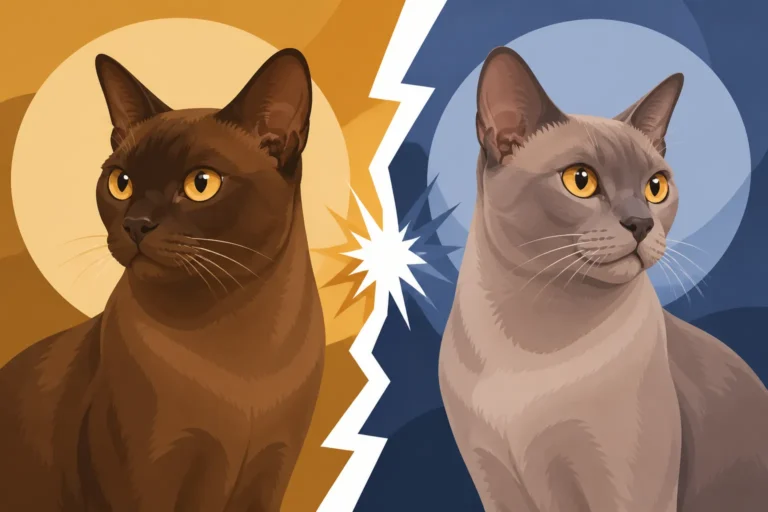
Understanding the genetic difference between Burmese and Siamese cats is paramount, as this distinction directly led to the development of the Tonkinese. Both breeds carry forms of the albino gene, but they are different alleles that manifest distinctly. The Siamese carries the 'cs' allele (full color restriction to points), resulting in high contrast and dramatic color points against a very light body. The Burmese, with its 'cb' allele (partial color restriction), presents a much darker, richer body color with minimal point contrast. So, Why a Burmese Is Brown and a Siamese Is Pointed comes down to these fundamental genetic differences.
When a Burmese and a Siamese are bred together, their offspring are heterozygous for these alleles, carrying one 'cb' and one 'cs' gene. This combination creates a "mink" pattern, which is the hallmark of the Tonkinese cat. The mink pattern is intermediate: more colored than a Siamese, but with more distinct points than a Burmese. This fascinating genetic interplay proved that these two breeds, while distinct, were closely related genetically, allowing for the intentional creation of a 'hybrid' that expressed a beautiful blend of both parents' traits.
The Birth of the Bombay: A Black Panther in Miniature
Imagine wanting to bring the sleek, mysterious elegance of a black panther into your living room, but in miniature. That was the ambitious vision behind the creation of the Bombay cat, a breed that owes its very existence to the Burmese. This wasn't an accidental discovery; it was a deliberate, passionate pursuit by a dedicated breeder to create a cat with a specific, captivating aesthetic. The result is a truly stunning feline, deeply rooted in its Burmese ancestry, but with a dramatically different presentation.
Nikki Horner's Dream: Creating the Black Burmese
The driving force behind the Bombay breed was Nikki Horner, a devoted cat breeder from Kentucky. Her dream was singular and clear: to create a domestic cat that resembled a miniature black panther. She envisioned a cat with a glossy, patent-leather black coat, round copper or gold eyes, and a muscular, medium-sized build. She wanted a cat that exuded wild elegance, yet possessed the sweet, companionable nature of a domestic feline. Her inspiration was so strong that she specifically set out to achieve this "black Burmese" look, even though it meant introducing another breed into the mix.
Horner began her quest in the late 1950s, embarking on a carefully planned breeding program. She understood that simply breeding two black domestic cats wouldn't guarantee the specific sleekness and body type she desired. Instead, she chose to leverage the Burmese's compact, muscular build, short coat, and friendly temperament, combining it with the solid black color of another pedigree cat. Her dedication and clear vision were instrumental in shaping the breed, ensuring that the Bombay would be recognized not just for its color, but for its distinct overall type.
Crossing the Burmese with the American Shorthair
To achieve her vision, Nikki Horner carefully selected a breeding pair: a sable Burmese and a black American Shorthair. The Burmese brought its characteristic body type – the heavy boning, well-rounded head, and short, lustrous coat that felt like silk. The American Shorthair contributed the dense, solid black color and a robust, healthy genetic foundation. The initial crosses resulted in kittens with various colors, but Horner meticulously selected those that carried the desired solid black coat and the Burmese-like conformation. It was a patient process of back-crossing and selective breeding.
Over several generations, through careful pairing of the best examples, Horner was able to consistently produce cats that met her ideal. The goal was to combine the best traits of both parent breeds into a single, cohesive new type. The solid black gene from the American Shorthair was paired with the unique body and head structure of the Burmese, creating a new breed that was truly distinctive. This painstaking process illustrates how How the Bombay Was Made From a Burmese required not just vision, but also a deep understanding of genetics and a steadfast commitment to a breeding goal.
Distinguishing a Bombay from a Black Burmese
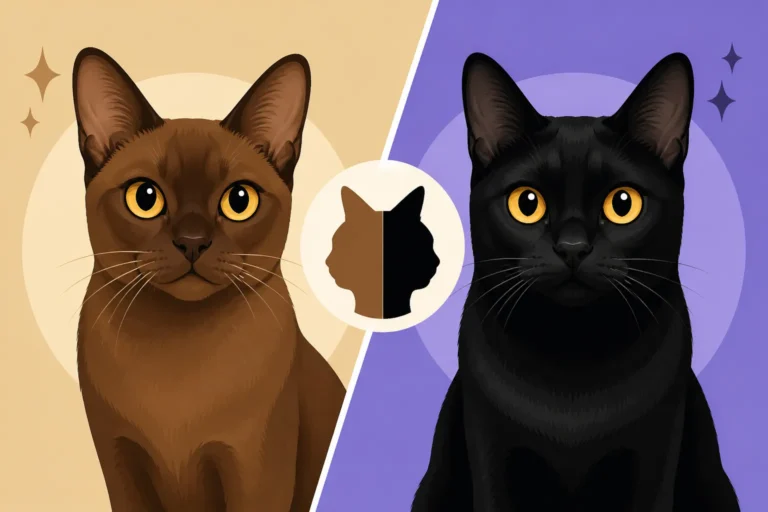
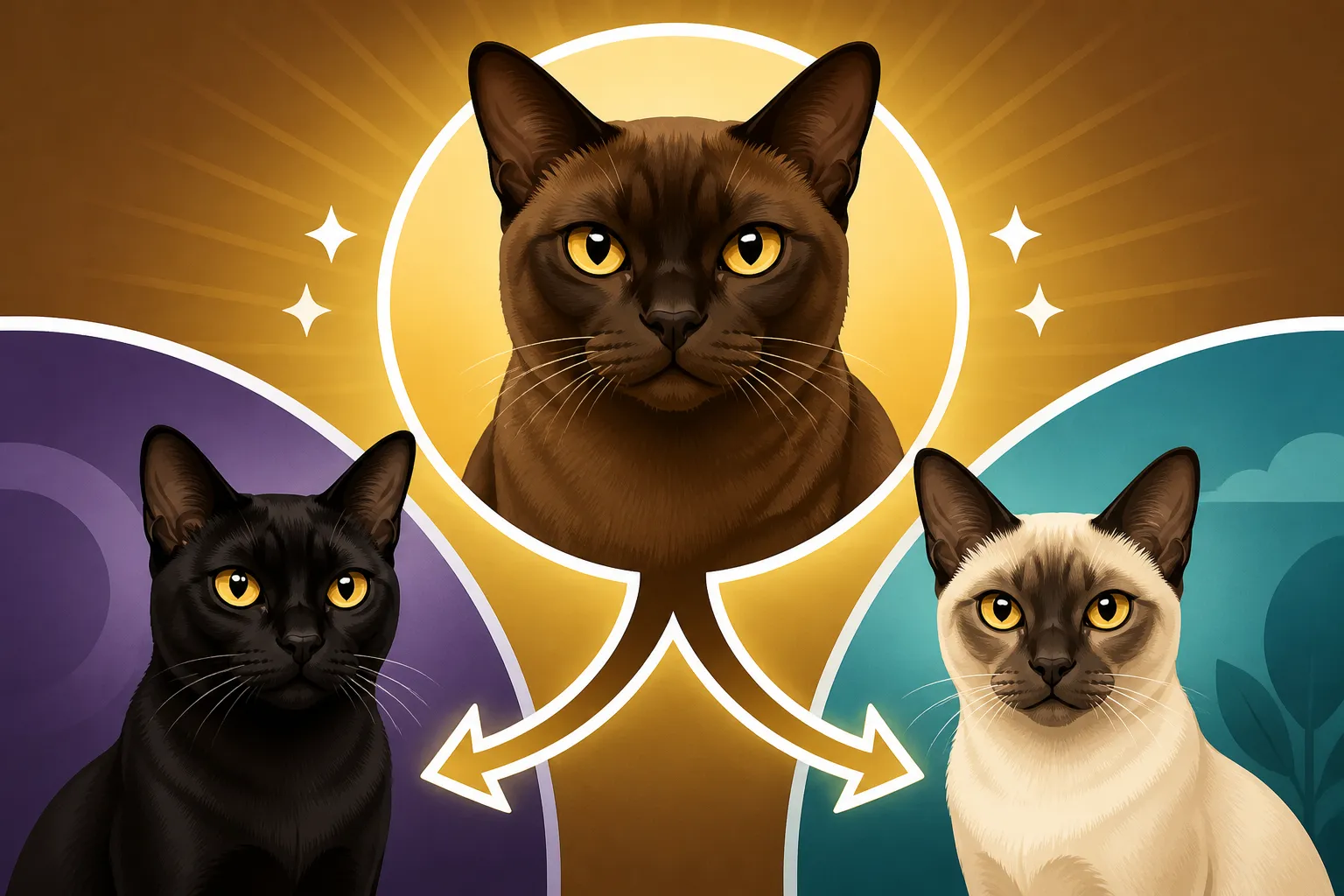
While a Bombay is essentially a "black Burmese" in spirit, there are distinct differences between a true Bombay and a black-colored cat that happens to be purebred Burmese. A Bombay's coat is incredibly dense, short, and lies close to the body, with a patent-leather sheen that is truly unique, without a single stray hair of color. Their eyes are typically a striking copper or gold, which contrasts beautifully with their black fur. They have a medium build, surprisingly heavy for their size, with a round head and full face.
A black Burmese, while rare, would technically exist if a Burmese carried the non-agouti gene, resulting in a solid black color. However, this is not the standard accepted for the Burmese breed, which focuses on the distinct sable, champagne, blue, and platinum colors. The key is in the type: a Bombay has been bred to a specific standard that merges the Burmese conformation with the solid black color and rich eye hue, creating a unique breed. So, while both are black, the Bombay has a specific "look" and heritage that sets it apart, making How a Bombay Differs From a Black Burmese a matter of breed standard and intentional development. Many would say a Bombay's coat feels incredibly soft, almost like velvet, making them wonderful snugglers, and finding their specific food at places like Chewy is usually quite easy.
The Emergence of the Tonkinese: A Perfect Blend
If the Bombay was a deliberate quest for a specific aesthetic, the Tonkinese emerged as a beautiful, serendipitous blend, revealing the intermediate genetic wonder that Dr. Thompson first glimpsed in Wong Mau's early litters. The Tonkinese is quite literally a bridge between the Burmese and the Siamese, embodying the best of both worlds in terms of appearance and temperament. It's a testament to the fascinating interplay of genetics and the keen eye of breeders who recognized the beauty in this natural hybrid.
The Accidental Beauty: Siamese and Burmese Harmony
The concept of a "golden Siamese" or "cinnamon Siamese" had existed informally for decades, referring to cats that were intermediate in appearance between a Siamese and a Burmese. As mentioned earlier, Dr. Thompson's initial breeding experiments with Wong Mau produced such kittens, hinting at a distinct genetic possibility. However, it wasn't until later, with more focused breeding programs, that these accidental beauties were recognized as a potential new breed. Breeders in Canada and the United States, working independently in the mid-20th century, began to intentionally develop these intermediate cats into what we now know as the Tonkinese.
They aimed to create a cat with a body color that was darker than a Siamese but lighter than a Burmese, with points that were distinctly visible but not as sharply contrasted as those of a Siamese. This "mink" pattern was a harmonious blend, offering a softer, more integrated look. The idea was to combine the striking eye color and personality traits of both parent breeds, resulting in a cat that was truly a sum of its best parts. This collaborative and independent recognition of the Tonkinese's unique appeal highlights how a natural genetic outcome can be refined into a celebrated breed.
The 'cbcs' Allele: The Tonkinese Signature
The unique coat pattern of the Tonkinese is directly attributed to its genetic makeup: it carries one copy of the Burmese 'cb' allele and one copy of the Siamese 'cs' allele (cb/cs). This combination creates the distinctive "mink" pattern, which is the signature of the Tonkinese breed. In a mink coat, the body color is a richer shade than a Siamese, but the points (ears, face, legs, and tail) are still clearly darker than the body, though less sharply defined than on a Siamese. Their eye color is also unique, often a captivating aqua – a stunning blue-green hue that is not typically seen in either purebred Burmese or Siamese.
This genetic middle ground gives the Tonkinese its appealing balanced look. The temperature-sensitive nature of both alleles means the mink pattern can vary slightly, with cats in cooler climates sometimes displaying slightly darker body colors. The 'cbcs' genotype is what truly defines the Tonkinese, making it a living bridge between its two ancestral breeds. This intricate genetic dance is why How the Tonkinese Was Made From a Burmese is such a compelling story in the history of cat breeding. It wasn't just about combining two breeds, but about understanding and utilizing their genetic interaction.
Recognizing a Tonkinese: Traits and Temperament
Beyond its distinctive mink coat and aqua eyes, the Tonkinese has a specific set of traits and a wonderfully balanced temperament that sets it apart. Physically, they are often described as being intermediate in type between the more slender Siamese and the more cobby Burmese. They have a sleek, muscular body, often described as "medium foreign" or "moderate." Their head shape is a modified wedge, neither as extreme as some Siamese nor as round as a traditional Burmese. Their ears are medium-sized and set well apart, and their paws are oval.
Temperamentally, Tonkinese cats are known for combining the best personality traits of their ancestors. They possess the playful intelligence and vocal affection of the Siamese, alongside the gentle, demanding lap-cat nature of the Burmese. They are incredibly social, loving to be involved in all household activities, and thrive on interaction with their human families. They are less intensely vocal than some Siamese, and perhaps a touch less "velcro-cat" than the Burmese, offering a delightful middle ground. This makes How to Tell a Burmese From a Tonkinese not just about their looks, but also their behavior and how they interact with their world. If you're looking for a highly interactive and engaging companion, the Tonkinese is often a perfect fit, and finding specific toys or enrichment items for them on Chewy can be a great way to meet their needs.
Other Breeds Influenced by the Burmese
The genetic legacy of the Burmese cat extends beyond just the Bombay and Tonkinese. Its unique characteristics, particularly its distinctive body type, rich coat texture, and affectionate personality, have made it a valuable asset in the development of several other cherished breeds. The Burmese truly is a cornerstone breed, proving invaluable to breeders seeking to introduce specific traits or refine existing ones in their lines. It's a testament to the breed's versatility and genetic strength that its influence continues to be seen in a diverse array of modern felines.
The Burmilla: An Elegant Offshoot
One notable example of the Burmese's influence is the elegant Burmilla. The origin of the Burmilla is a charming story of an accidental mating in the United Kingdom in 1981. A male Chinchilla Persian and a female Burmese, both awaiting mates of their own breeds, found a romantic moment together. The resulting litter produced kittens that were unexpectedly beautiful, with the striking silver tipping of the Chinchilla Persian combined with the gentle conformation and personality of the Burmese. These kittens were so captivating that they sparked immediate interest in developing a new breed.
The Burmilla breed standard seeks to combine the best attributes of both parents: the muscular, moderate body type of the Burmese with the distinctive silver, shaded, or tipped coat pattern of the Chinchilla Persian. They have a sweet, friendly temperament, often described as a perfect blend of the laid-back Persian and the playful Burmese. Their striking green eyes are also a notable feature. The creation of the Burmilla highlights how How the Burmilla Was Made From a Burmese demonstrates the Burmese's ability to lend its robust health and appealing physical structure to entirely new genetic combinations, bringing unexpected beauty to the cat fancy.
Exploring Other Burmese Derivatives
The Burmese has played a role in the development of other breeds as well, some more directly than others. The Burmilla is a clear derivative, but the Burmese's genetics have also contributed to certain color variations or types within existing breeds, or even to breeds that are still in early stages of development. Its strong, healthy genetics, combined with its distinct color and body type, make it an attractive outcross option for breeders looking to introduce specific traits without compromising health or temperament.
For instance, breeds like the Havana Brown, though primarily derived from Siamese lines, have sometimes had Burmese influence in their past to solidify their rich, solid brown coloration and moderate body type. Even some breeds not directly descended may carry a whisper of Burmese ancestry in their lines, a subtle nod to its foundational importance. It’s fascinating to trace these genetic pathways, showing how one special cat breed can become a significant contributor to the diversity and beauty of the entire feline kingdom. When you look at Which Other Breeds the Burmese Founded, you begin to understand just how profoundly influential this beloved cat truly is.
The Lasting Legacy in Modern Cat Fancy
The lasting legacy of the Burmese cat in modern cat fancy is undeniable. It's not merely a popular breed in its own right, but a true patriarch and matriarch of numerous other successful and beloved breeds. From the sleek, wild-at-heart Bombay to the harmonious, aqua-eyed Tonkinese, and even the elegant Burmilla, the Burmese has consistently proven its genetic versatility and charm. Its gentle nature, robustness, and distinctive physical traits have made it a go-to choice for breeders looking to create new lines with specific qualities.
This enduring influence means that even if you don't own a purebred Burmese, there's a good chance that a cat you love, or a breed you admire, carries some of that original Wong Mau magic within its genetic code. The Burmese didn't just introduce a new look; it opened up new avenues for understanding feline genetics and inspired generations of breeders to explore the incredible diversity possible within the domestic cat species. It truly cemented its place as one of the most important and beloved foundation breeds in the history of the cat fancy.
Why This Heritage Matters to Prospective Owners
Understanding the Burmese cat's foundational role isn't just a fascinating historical tidbit; it holds significant implications for anyone considering bringing a cat into their home, especially if they are looking at Burmese, Bombay, or Tonkinese cats. Knowing the lineage and the genetic connections between these breeds can help you make a more informed decision, from understanding potential health considerations to predicting temperament and care needs. It helps you appreciate the depth of character and history behind the feline friend you might welcome into your family.
Genetic Health Considerations from a Shared Ancestry
Because the Bombay and Tonkinese share a direct genetic link with the Burmese, they may also share some genetic predispositions. For the Burmese, certain conditions like a higher propensity for diabetes are known. This means that an owner of a Tonkinese or Bombay might also want to be aware of these historical health markers. While responsible breeding aims to screen out undesirable traits, understanding the ancestral health landscape can inform your discussions with breeders and your veterinarian. For example, knowing that diabetes can be a concern in Burmese lines encourages careful attention to diet and weight in related breeds. Why Portion Control Is Medical Care in a Burmese isn't just true for the Burmese, but can be a relevant consideration for its descendants too.
This shared ancestry also means that DNA tests developed for the Burmese to screen for conditions like Hypokalemia might also be relevant for breeders of Tonkinese cats, ensuring that these breeds continue to be as healthy as possible. Prospective owners should always inquire about the health screening practices of their chosen breeder, especially for conditions known to affect the foundational breeds. This knowledge empowers you to choose a healthy kitten and provide appropriate preventative care throughout its life, with essential nutritional items readily available at retailers like Chewy.
Understanding Temperament in Related Breeds
The Burmese is renowned for its incredibly affectionate, "velcro-cat" personality – often described as a "dog in a cat's body." This intense desire for human companionship and playful intelligence is a hallmark of the breed. When you consider the Bombay and Tonkinese, you'll find that many of these charming personality traits have been inherited and expressed in varying degrees. The Bombay is known for being equally affectionate and people-oriented, often seeking out laps and enjoying interactive play. They maintain the Burmese's love for human company but with their own unique flair.
The Tonkinese, being a blend, often exhibits a wonderful balance, combining the chattiness and mischievousness of the Siamese with the gentle devotion of the Burmese. They are highly social, adaptable, and thrive on interaction. Understanding this shared behavioral heritage means you can anticipate a cat that will likely be very involved in your family life, not a shy or aloof feline. For many people, this outgoing, loving temperament is precisely what they seek in a companion, and it's a direct gift from the Burmese lineage.
Making Informed Choices for Your Family
Ultimately, understanding the origins of these breeds helps you make a more informed and confident choice when selecting a cat. If you're drawn to the friendly, outgoing nature of the Burmese, but perhaps prefer a solid black coat, the Bombay might be your perfect match. If you appreciate the Siamese's vocal charm but desire a softer color and a slightly less demanding personality, the Tonkinese could be ideal. This knowledge isn't just about superficial appearances; it’s about aligning a cat's inherent traits with your lifestyle and expectations.
By appreciating the Burmese's foundational role, you're not just buying a pet; you're becoming part of a rich history of feline development. It allows you to delve deeper into the unique characteristics that make each of these breeds so special and to understand why they behave and look the way they do. This ensures a happier, more harmonious relationship between you and your cherished feline companion, providing them with the best care, from quality food to fun toys, many of which are easily found through reputable suppliers like Chewy.
| Breed | Originating Breed | Key Physical Traits | Key Temperament Traits | Unique Genetic Marker |
|---|---|---|---|---|
| Burmese | Wong Mau (Burma) | Cobby, muscular, short satin coat (sable, blue, champagne, platinum), round head, gold/green eyes | Affectionate, "velcro cat," playful, highly social, vocal | cb/cb allele |
| Bombay | Burmese, American Shorthair | Sleek, muscular, solid patent-leather black coat, round copper/gold eyes, medium-sized | Confident, intelligent, affectionate, outgoing, playful | cb/cb allele + solid black gene |
| Tonkinese | Burmese, Siamese | Moderate body type, "mink" pattern (intermediate between Burmese and Siamese), aqua eyes | Social, playful, intelligent, vocal but less intense than Siamese, affectionate | cb/cs allele |
Disclaimer
This article is for general informational purposes only and does not constitute professional advice. Laws, prices and regulations vary by location and change over time. Consult a qualified professional for guidance on your specific situation.