Why Two Burmese Carriers Must Never Be Bred
There's a unique kind of heartache that comes with discovering a beloved pet has a genetic illness, especially when it could have been prevented. As a Burmese owner, you pour so much love and care into these affectionate, intelligent cats, and the thought of them suffering from something avoidable is truly devastating. This guide is dedicated to explaining why breeding two Burmese cats that carry a specific faulty gene is a path fraught with risk and potential heartbreak, and what responsible breeding and ownership truly mean for the future health of this wonderful breed.
Understanding Genetic Carriers in Burmese Cats
It can feel a bit like stepping into a science classroom when we start talking about genetics, but for the health of our Burmese, it's absolutely crucial to grasp these concepts. Genetic carriers aren't sick themselves, but they hold the potential to pass on serious issues, especially when paired with another carrier.
What Exactly is a Genetic Carrier?
Imagine genes as tiny instruction manuals within every cell of your cat's body. These manuals tell the body how to grow, function, and develop. Most traits, like coat color or eye shape, are controlled by pairs of genes, one inherited from each parent. For many genetic diseases, the faulty gene is recessive. This means a cat needs two copies of the faulty gene – one from each parent – to actually express the disease.
A genetic carrier, then, is a cat that has one normal gene and one faulty, recessive gene. Because they have that one good copy, their body can usually function perfectly fine, and they won't show any symptoms of the disease. They're like a silent partner in a recipe: they have the ingredient, but it's only a problem if another silent partner brings the same ingredient, and together they create something unexpected and unwelcome. They look healthy, act healthy, and often live long, full lives, but they carry the blueprint for potential trouble if bred unwisely.
The Specific Genetic Challenges Facing Burmese
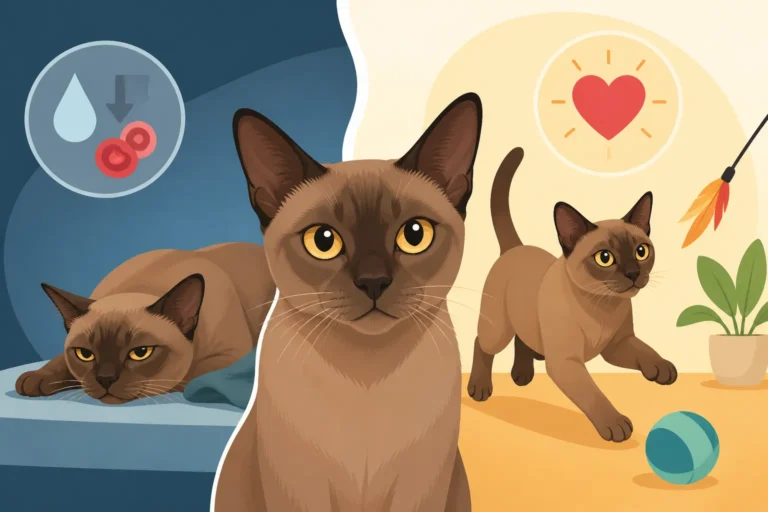
While all breeds can face genetic predispositions, the Burmese cat is known for a few specific hereditary conditions. One of the most significant and well-documented is Feline Hypokalemic Polymyopathy, often simply called Hypokalemia. This condition manifests as episodes of muscle weakness, which can be mild or severe, and in some cases, truly debilitating. Affected kittens might struggle to lift their heads or walk with a stiff, unnatural gait.
This particular condition is linked to a mutation in the WNK4 gene. While we won't dive into the deep science here, just know that this specific gene plays a critical role in regulating potassium levels in the body, which directly impacts muscle function. The recessive nature of this gene means a cat can carry one copy of the mutated gene, be completely healthy, and yet still pass that gene on to its offspring. This is why understanding What the WNK4 Mutation Does in a Burmese is so vital for breeders and owners. Without proper testing and careful breeding, this recessive trait can unfortunately resurface in litters.
How Breeders Identify Carriers
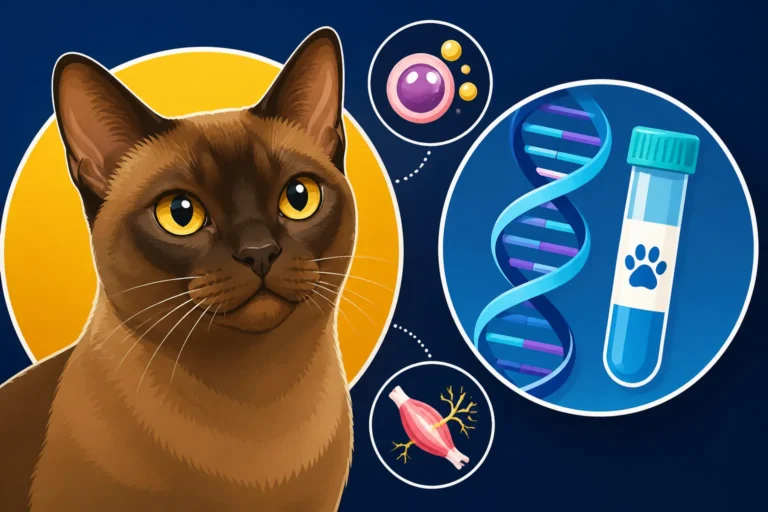
Thankfully, modern veterinary science offers us the tools to identify these genetic carriers long before any breeding even takes place. For conditions like Hypokalemia, DNA testing is the gold standard. This isn't an invasive procedure; it's typically done with a simple cheek swab. The process is straightforward: a veterinarian or breeder gently swabs the inside of the cat's cheek to collect some cells, and this sample is then sent to a specialized genetic testing lab. It's surprisingly reliable, which is fantastic news for preventative health. For more on this, you might find Why a Burmese Cheek Swab Is Enough to be an interesting read.
Reputable breeders understand that genetic testing isn't just a suggestion; it's a fundamental responsibility. It's their ethical duty to test their breeding cats for known genetic diseases to ensure they are not inadvertently producing kittens with severe, lifelong conditions. This commitment to testing ensures that the future of the breed is as healthy as possible, protecting both the kittens and the unsuspecting families who will eventually welcome them into their homes.
The Devastating Consequences of Carrier-to-Carrier Matings
The science of genetics, while complex, allows us to predict the outcomes of different breeding pairs with remarkable accuracy. When it comes to two genetic carriers, the predictions, while clear, are often heartbreaking.
The Punnett Square Explained for Pet Owners
Remember those grid diagrams from high school biology? That's a Punnett square, and it's a powerful tool to visualize genetic inheritance. Let's imagine a scenario where both parent Burmese cats are carriers for a recessive genetic disease like Hypokalemia. We'll use 'N' for the normal, healthy gene and 'h' for the faulty Hypokalemia gene. A carrier cat would have the genetic makeup 'Nh'.
When two 'Nh' carriers are bred, here's what the Punnett square tells us about the kittens:
| N | h | |
|---|---|---|
| N | NN | Nh |
| h | Nh | hh |
What does this breakdown mean for a potential litter?
- 25% chance (NN): These kittens will inherit two normal genes. They are "clear" – they won't have the disease, and they won't be carriers. This is the ideal outcome.
- 50% chance (Nh): These kittens will inherit one normal and one faulty gene. Just like their parents, they will be "carriers." They are typically healthy themselves but could pass the faulty gene on if bred.
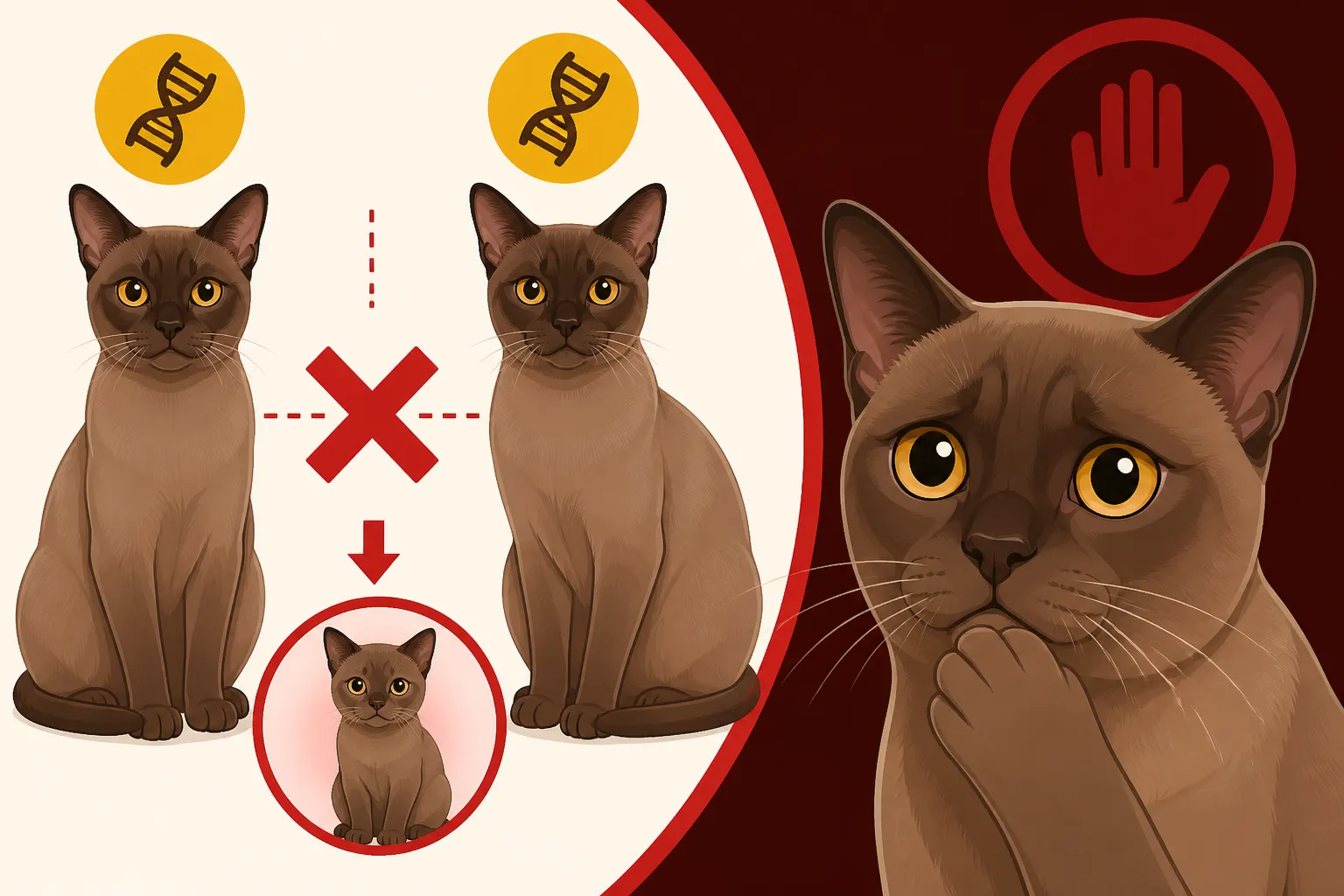
- 25% chance (hh): This is the heartbreaking outcome. These kittens will inherit two copies of the faulty gene. They will be "affected" by the disease, meaning they will develop symptoms of Hypokalemia.
These aren't just abstract percentages; they represent tangible lives. A 25% chance of an affected kitten means, statistically, one out of every four kittens in such a litter could be born with a serious genetic condition. This isn't a gamble any responsible breeder should ever take.
The Heartbreak of Affected Kittens
Imagine the joy of a new litter, only to watch some of those tiny, vulnerable kittens begin to suffer. For a condition like Hypokalemia, affected kittens often show signs early on. Owners might notice their kitten struggling to hold its head up, experiencing tremors, or exhibiting general muscle weakness during play or even just when trying to eat. These episodes can be unpredictable and incredibly distressing to witness. Learning How Hypokalemia First Shows in a Burmese Kitten can prepare you, but experiencing it firsthand is another matter entirely.
The reality of caring for an affected kitten can be emotionally and financially draining. While some affected cats can be managed with medication and supportive care, like potassium supplementation, it's a lifelong commitment. The kitten's quality of life might be compromised, and the emotional toll on the owner, watching their beloved pet struggle, is immense. This is where the financial aspect also hits hard. Regular vet visits, diagnostic tests, medications, and potential emergency care add up quickly. It's in these moments that having pet insurance, like a policy from Healthy Paws, can be an absolute lifesaver, helping to alleviate some of the financial burden of managing a chronic condition. However, it's always better to prevent such suffering if possible.
Perpetuating the Problem: The Next Generation
Even if a breeder were to, regrettably, breed two carriers and only get clear and carrier kittens in a particular litter (by sheer statistical luck, avoiding the 25% affected), the problem isn't truly solved. The 50% of the litter who are carriers will still go on to potentially pass that faulty gene to their offspring. This means that carrier-to-carrier breeding actively helps to perpetuate the faulty gene within the breed's gene pool, making it harder to eradicate or even reduce its prevalence over time.
Instead of slowly breeding out these recessive genes by pairing carriers with clear cats, breeding two carriers doubles down on the risk and ensures that the genetic legacy of the disease continues to thrive in future generations. It’s a step backward for the health of the entire Burmese breed, impacting not just one litter, but potentially many more down the line. It's a critical reason why breed clubs and ethical guidelines strongly advise against such pairings.
Ethical Breeding Practices for Burmese Cats
Responsible breeding isn't just about producing beautiful kittens; it's fundamentally about producing healthy ones. For a breed like the Burmese, with known genetic predispositions, ethical practices are paramount to safeguarding their future.
The Golden Rule: Clear to Carrier or Clear to Clear
The foundation of ethical breeding for recessive genetic conditions is simple: avoid producing affected kittens. This means never breeding two carriers together. The "golden rule" for dealing with a known carrier is to always breed a carrier cat to a genetically clear cat.
Let's revisit our genetic diagram with this safer pairing:
If one parent is Clear (NN) and the other is a Carrier (Nh):
| N | N | |
|---|---|---|
| N | NN | NN |
| h | Nh | Nh |
In this scenario:
- 50% chance (NN): These kittens are clear.
- 50% chance (Nh): These kittens are carriers, just like one of their parents.
Crucially, in this pairing, there is a 0% chance of producing an affected (hh) kitten. Every kitten born will either be clear or a carrier, and critically, none will suffer from the disease. While the carrier gene still exists in the gene pool through the carrier offspring, it is done so in a controlled manner that prevents suffering. The most ideal scenario, of course, is Clear (NN) to Clear (NN), which produces 100% clear (NN) kittens, gradually reducing the presence of the faulty gene in future generations.
This careful selection ensures that the breed maintains its desirable traits while actively working to minimize the incidence of genetic diseases, thereby improving the overall health and well-being of the Burmese population.
The Importance of Transparency and Testing
A reputable Burmese breeder will go above and beyond to ensure the health of their lines. This starts with comprehensive genetic testing for all breeding animals. When you're looking for a kitten, you should expect a breeder to provide you with verifiable DNA test results for both parents. This isn't just for Hypokalemia; it's for a full panel of genetic diseases relevant to the breed. Understanding What a Burmese Breeder Must Test Before Any Mating is crucial for any prospective owner.
Furthermore, a truly transparent breeder will be open about their breeding practices, their cats' pedigrees, and any health concerns within their lines. They should be able to show you results from a reputable lab detailing Which Tests Belong on a Burmese DNA Panel. Beyond just showing the results, they should also be able to explain what those results mean and how they use that information to make responsible breeding decisions.
Look for a breeder whose contract includes health guarantees, specifically addressing genetic conditions like Hypokalemia. It's perfectly reasonable to inquire Whether a Burmese Guarantee Mentions Hypokalemia and what recourse you might have if an unexpected genetic issue arises. This level of transparency and commitment to testing is a hallmark of an ethical breeder who prioritizes the welfare of their cats above all else.
Moving Towards a Healthier Future for the Breed
The collective effort of responsible breeders and informed owners is what will ultimately lead to a healthier future for the Burmese cat. By consistently testing breeding cats and carefully planning matings, breeders can systematically reduce the frequency of disease-causing genes within the population. This isn't a quick fix; it's a long-term commitment that requires dedication and adherence to ethical guidelines.
Breed clubs and registries also play a vital role. Many now encourage or even mandate genetic testing for registered breeding animals, helping to set standards and educate their members. As more breeders participate, and as scientific understanding evolves, we can hope to see a significant decrease in the prevalence of these heartbreaking conditions. Every clear-to-clear or clear-to-carrier pairing contributes to strengthening the gene pool, ensuring that the unique charm and delightful personality of the Burmese cat can be enjoyed for generations to come, free from preventable genetic suffering.
What to Do If You Own a Carrier Burmese
Finding out your beloved Burmese is a carrier for a genetic condition can feel unsettling, even if they're perfectly healthy. It's important to separate the genetic information from the reality of your wonderful companion.
Your Carrier Cat is Still a Wonderful Companion
First and foremost, if your Burmese cat tests as a carrier for a recessive genetic condition, please understand that this typically means your cat is not affected by the disease itself. They carry one copy of the faulty gene but usually have a normal, healthy life, just like any other cat. There's no need to panic or treat them differently because of this genetic status. Their affection, intelligence, and playful spirit remain completely unchanged.
Burmese cats are renowned for their incredibly loving and "velcro" personalities. They thrive on human interaction, often following you from room to room and demanding cuddles. This inherent trait, explored further in The Burmese Is the Velcro Cat of the Cat Fancy, is what makes them such cherished family members. A carrier status doesn't diminish their ability to be an extraordinary, healthy companion. Your carrier cat will still want to snuggle under the covers with you, ride on your shoulder, and engage in all the delightful antics that make the Burmese breed so special. They are healthy individuals, and their genetic status only becomes relevant if breeding is considered.
Responsible Ownership and Spay/Neuter Decisions
For the vast majority of pet owners whose Burmese is a carrier, the most responsible and straightforward action is to spay or neuter your cat. This simple surgical procedure prevents them from reproducing, thereby stopping the potential transmission of the faulty gene to future generations. For pet cats, this is a responsible decision that ensures you aren't inadvertently contributing to the spread of genetic diseases.
Beyond preventing genetic transmission, spaying and neutering offer numerous health and behavioral benefits for your cat. It eliminates the risk of certain cancers, reduces the likelihood of undesirable behaviors like spraying or roaming, and contributes to a longer, healthier life for your feline friend. While Why a Neutered Male Burmese Is Highest Risk specifically discusses diabetes, the broader health benefits of neutering are well-established. Unless you are an experienced, ethical breeder working within a carefully planned program to maintain genetic diversity (and this is a very rare and specialized role for a carrier), spaying or neutering is the kindest and most responsible choice for your carrier Burmese.
Supporting the Health of the Breed
Even if your carrier Burmese is spayed or neutered, you can still be an advocate for breed health. When you acquired your cat, hopefully, you supported a breeder who prioritizes genetic testing. By doing so, you're encouraging ethical practices within the community.
You can also educate other prospective Burmese owners about the importance of genetic testing and buying from reputable breeders. Share your knowledge and encourage others to ask detailed questions about parental health testing. While your cat's specific carrier status might not be directly passed on by them if they are spayed/neutered, your actions and choices as an informed owner can help improve the overall health landscape for the Burmese breed as a whole. Every choice to support responsible breeding practices contributes to the long-term well-being of these magnificent cats.
Beyond Hypokalemia: Other Genetic Concerns
While Hypokalemia is a significant concern for Burmese breeders and owners, it's not the only genetic condition that deserves attention. Responsible breeding and vigilant ownership require an awareness of other potential inherited issues that can affect this beloved breed.
Flat Chested Kitten Syndrome
Flat Chested Kitten Syndrome (FCKS) is another worrying condition that can sometimes affect Burmese litters. As the name suggests, kittens born with this syndrome have an abnormal flattening of their rib cage. This isn't just a cosmetic issue; it can severely impact a kitten's ability to breathe properly, as their lungs don't have enough space to expand fully. In severe cases, it can be fatal.
The exact mode of inheritance for FCKS isn't fully understood for all breeds, but there's a strong suspicion of a genetic component in Burmese cats. This makes careful observation of newborn kittens absolutely critical. Breeders need to know Why a Burmese Kitten's Chest Should Be Checked at Birth as part of their initial health assessment. While some mild cases may spontaneously resolve as the kitten grows, others require intensive veterinary care, and unfortunately, many do not survive. The heartache of watching tiny kittens struggle with breathing difficulties is immense, underscoring the need for further research and careful breeding practices to minimize its occurrence. What Flat Chested Kitten Syndrome Does to a Burmese vividly illustrates the challenges faced by affected kittens and their caretakers.
Burmese Head Defect
Among the most devastating genetic conditions found in the Burmese breed is Burmese Head Defect (BHD), also known as Congenital Corneal Dermoid or Orofacial and Cranial Malformation Syndrome. This is a lethal recessive genetic disorder that affects the development of the kitten's head and face. Kittens born with BHD often have severe facial deformities, including cleft palate, malformed skulls, and eye abnormalities.
The crucial point here is that BHD is a lethal recessive defect. This means kittens who inherit two copies of the faulty gene will develop these severe deformities and typically do not survive beyond a few days or weeks after birth. The prognosis is grim, and humane euthanasia is often the only compassionate option. This horrific condition highlights precisely Why Burmese Head Defect Is Lethal and Recessive and why genetic screening of breeding cats is not just good practice, but an absolute ethical imperative. Reputable breeders will meticulously screen their breeding stock and understand How a Burmese Breeder Avoids the Head Defect by ensuring that carrier cats are never bred to another carrier. The goal is to eliminate the possibility of affected kittens being born and suffering.
Other Health Considerations and Preventative Care
Beyond these acute genetic conditions, Burmese cats also have certain predispositions that owners should be aware of, even if they aren't always directly linked to a single recessive gene. Diabetes mellitus is notably more common in Burmese cats than in many other breeds, with some studies suggesting they are Why a Burmese Is Four Times More Likely to Become Diabetic compared to the general cat population. This heightened risk means diet and weight management become critical lifelong considerations for every Burmese owner. Why Portion Control Is Medical Care in a Burmese is not an exaggeration; it's a fundamental pillar of preventative care.
Another common health issue in the breed is gum disease. Burmese cats are often prone to early onset and progressive periodontal disease, which can lead to tooth loss and other health complications if not managed. This is Why a Burmese Is Prone to Gum Disease and why regular dental check-ups and home dental care are so important.
While these conditions might not always be the result of a single recessive gene in the same way Hypokalemia or BHD are, they still underscore the importance of choosing a healthy kitten from a responsible breeder and providing consistent, high-quality preventative care. And even with the best care, unexpected health issues can arise. This is yet another situation where pet insurance, like the coverage offered by Healthy Paws, can provide a vital financial safety net, allowing you to focus on your cat's health without the added stress of overwhelming vet bills. Being proactive about their health, both genetically and through daily care, is the greatest gift we can give our beloved Burmese companions.
Disclaimer
The information provided in this guide is for general educational purposes only and should not be considered a substitute for professional veterinary advice. Always consult with a qualified veterinarian for any health concerns or before making any decisions related to your pet's health or breeding practices. Genetic science and veterinary medicine are constantly evolving, and individual circumstances can vary greatly.