How a Burmese’s Color Gene Reacts to Temperature
A Burmese cat’s coat can look warmer or darker in some places than others, and it may deepen in color as the kitten grows. That isn’t dirt or a sudden change in breed type: it comes from a temperature-sensitive pigment gene. This guide explains what the gene does, why cooler areas darken, what owners can expect over time, and what ordinary coat changes do not mean.
How temperature affects Burmese coat pigment
The pigment gene works differently in cooler skin
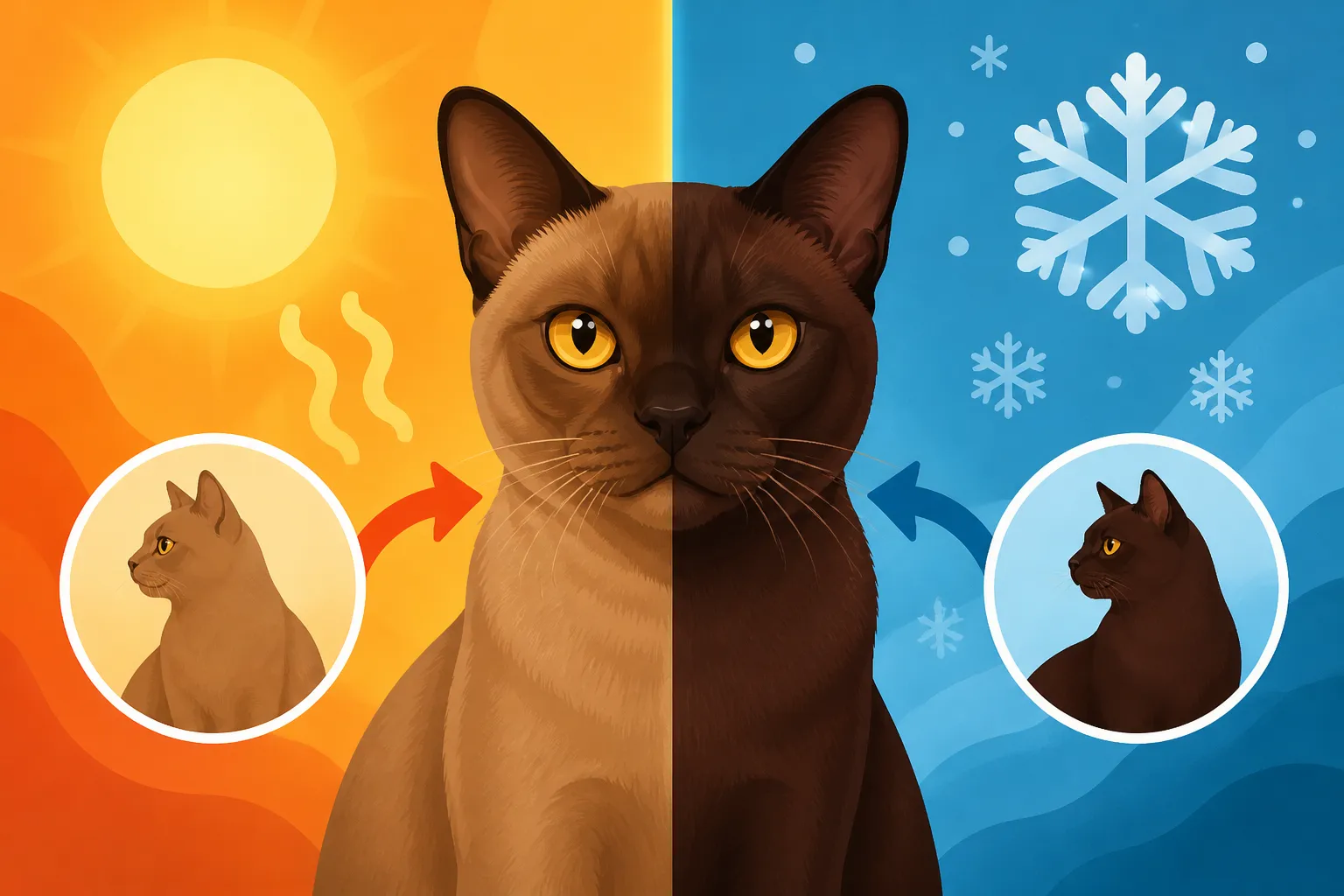
Burmese coat color is shaped by a temperature-sensitive version of the gene involved in producing melanin, the pigment that gives hair its color. The gene affects tyrosinase, an enzyme the body uses in pigment production. In a Burmese, the enzyme works more effectively in cooler areas than in warmer ones, so those cooler areas can develop more pigment.
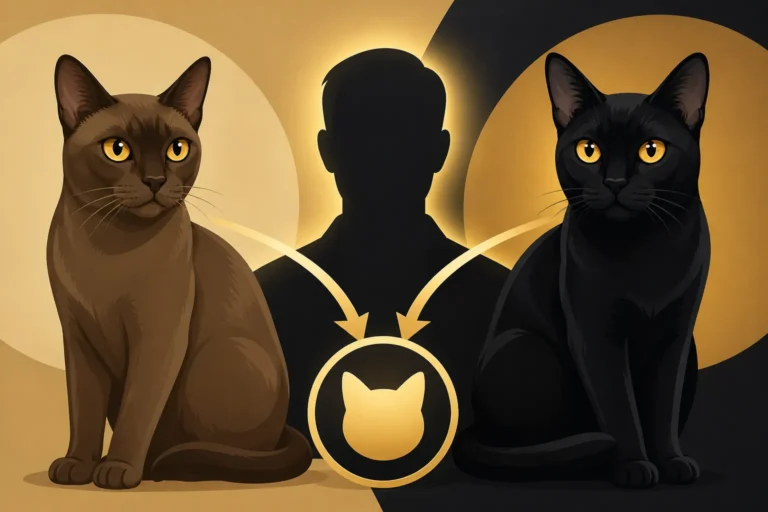
This helps explain why a Burmese may have darker fur over the face, ears, legs, tail, or paws, while the trunk looks lighter. Those areas are often cooler than the cat’s core. The effect is not a separate color painted onto the coat; it is part of how the cat’s inherited pigment system operates. The cb Allele Is What Makes a Burmese Brown article explores the genetic basis of the breed’s distinctive color.
The same principle appears in other temperature-sensitive coat patterns, though the Burmese look is typically more subtly shaded than a sharply pointed pattern. Burmese cats are not simply solid-colored cats with one uniform shade from nose to tail. Their coat can show gradual differences in tone, and these shifts may be more noticeable in some lighting or at certain ages. For more on that distinction, see Why a Burmese Is Not a Solid Colored Cat.
Cooler extremities can look darker than the body
A cool nose, ear tips, paws, and tail may produce hair that appears darker than fur over the warmer torso. The difference is usually gradual, not a hard boundary. A sable Burmese, for example, can look deep brown overall while still showing a slightly darker face or tail. In lighter colors, the contrast may be easier to spot because the shading stands out against the body coat.
Temperature is one influence, but it is not a simple thermostat you can use to set a cat’s color. A chilly room does not instantly turn a Burmese darker, and keeping the home warm will not reliably hold the coat at a particular shade. The gene contributes to pigment as hair grows; existing hairs do not behave like a reversible color-changing surface every time the room temperature shifts.
That is why coat color should be understood as a combination of inherited traits, the cat’s development, and local skin temperature—not as a day-to-day reading of the temperature in your home. The Why a Burmese Is Darker at the Extremities article looks more closely at the pattern owners often notice first.
| What you notice | Why it may happen | What to keep in mind |
|---|---|---|
| Darker face, ears, paws, or tail | Cooler areas can support more pigment production | A gradual contrast is common in Burmese coats |
| A kitten darkens as it grows | Pigment develops after birth as the coat matures | Color change alone is not a reliable health measure |
| Seasonal variation in appearance | Light, temperature, and coat condition can affect how color looks | Compare photos in similar lighting before assuming a major change |
| An uneven or sudden new patch | Many causes are possible, including coat damage or skin problems | Ask a veterinarian if there is hair loss, irritation, or a rapid change |
Why a Burmese kitten’s color changes as it grows
Kittens start paler and develop more pigment
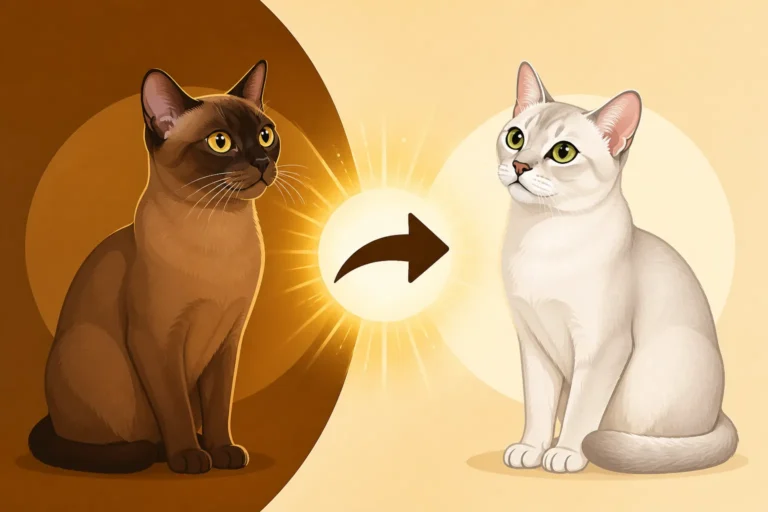
Burmese kittens are often born much paler than they will be as adults. The warm conditions before birth mean their pigment system does not produce the mature color pattern in the same way it will after they are born. As the kitten grows, its coat develops, and areas of cooler skin can show more pigment.
This change can surprise people who chose a kitten based on its early appearance. A pale kitten may gradually deepen into a richer shade, and the final look can take time to emerge. That is a normal part of development for the breed, not evidence that the kitten has been misidentified or that its coat has been dyed or stained. The details are covered further in Why a Burmese Kitten Darkens as It Grows.
Color does not settle on one exact schedule for every cat. Genetics, the cat’s individual development, and its coat’s growth cycle all contribute. A young Burmese may continue to look different from year to year, particularly as its adult coat comes in. Owners can keep a simple photo record, but compare pictures taken in similar daylight: indoor bulbs, shadows, and phone-camera settings can make the same coat look like different shades.
Age and individual genetics affect the final shade
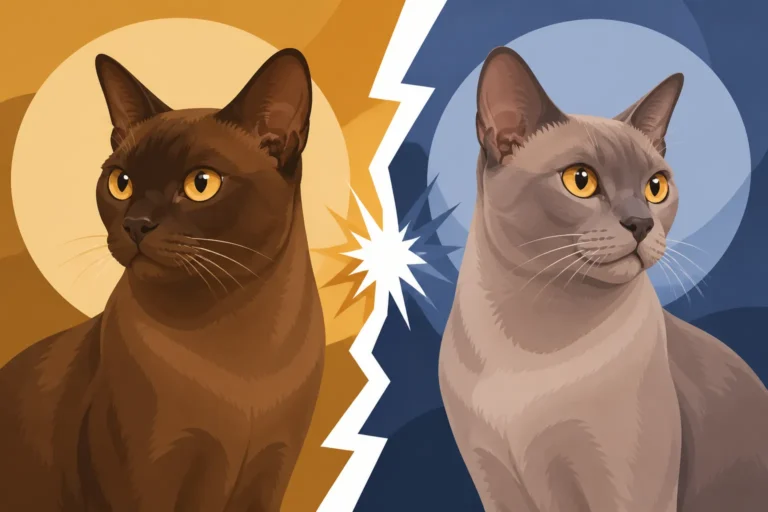
Two Burmese cats from the same litter can mature into noticeably different-looking adults. Their inherited color genes influence the shade they develop, while temperature-sensitive pigment helps shape where that shade appears more strongly. Coat color labels describe broad categories, but they do not mean every cat within a category will have identical depth, shading, or contrast.
Age can also bring gradual changes. A young adult may deepen in color, and an older cat’s coat can look different as its hair texture, grooming habits, or health changes. The change may be subtle enough that a person who sees the cat every day barely notices it, while a family member returning after a long absence comments that the cat looks darker.
For that reason, a coat change should be judged in context. A gradual, even shift in shade is different from a sudden patch of hair loss, a scabbed area, or color change paired with itching. If the skin is inflamed or the cat seems uncomfortable, do not assume the temperature-sensitive gene explains it. A veterinarian can assess the skin and coat. For a closer look at development over time, read When a Burmese Kitten's Color Settles and How a Burmese's Sable Coat Changes With Age.
What temperature does and does not explain
Room temperature is not a coat-color control
It is tempting to think that warmer rooms will make a Burmese’s coat lighter and cooler rooms will make it darker. The gene’s temperature sensitivity is real, but that does not make room temperature a dependable color-control tool. The temperature of the skin where hair grows matters, and pigment is incorporated as new hair develops. A change in household temperature will not quickly recolor the whole coat.
Nor should an owner make a cat uncomfortable in an effort to influence its shade. Burmese cats have a short, close-lying coat and may seek warm places to rest, but comfort should come first. Provide a comfortable indoor environment, a quiet resting place, and the option to move away from heat or drafts. There is no need to chill a cat, overheat a room, or buy special products to manage its natural color.
Light can also change how the coat appears. Sunlight may make a coat seem lighter or alter its appearance over time, while indoor lighting can make brown tones look warmer or cooler. These visual effects are not the same thing as the gene switching off. The Why Sunlight Lightens a Burmese's Coat article offers more detail about that separate influence.
A coat change is not automatically a health warning
A Burmese becoming darker with age is usually a normal color-development question, especially if the change is gradual and the skin looks healthy. But temperature-sensitive pigment should not be used as a catch-all explanation for every change. Hair thinning, bald patches, persistent scratching, redness, sores, or a sudden localized shift in the coat deserve attention because they may point to a skin or health issue rather than ordinary color development.
A practical way to assess a change is to check whether it is gradual, symmetrical, and limited to shade. Take a clear photo in natural light, note the date, and compare it with an earlier picture taken under similar conditions. If the change is sudden or accompanied by other symptoms, contact your veterinarian rather than waiting to see whether it is “just the Burmese gene.”
The same caution applies to overall appearance. A coat that looks dull can be associated with grooming, nutrition, age, or health, and color genetics alone cannot explain every difference. The What the cb Allele Does to a Burmese's Color article explains the gene’s role, while a veterinarian is the right person to assess an individual cat’s skin and coat concerns.
How to understand your Burmese’s shade
Use breed color as a guide, not a promise of one exact look
Burmese color names give owners a useful starting point, but individual coats vary. The inherited color category provides the background shade; temperature-sensitive pigment can add deeper tones in cooler areas; and age and lighting affect how the coat reads to the eye. That is why two cats described by the same color name may not look exactly alike in a photograph or in person.
If you are comparing kittens or looking at a pedigree, remember that a very young kitten’s shade may not show its adult appearance. Ask the breeder what color the parents are registered as and how the kittens’ coats have changed as they mature. A responsible explanation should focus on documented lineage and development, rather than promising that a kitten will remain exactly the shade it appears in a single early photo.
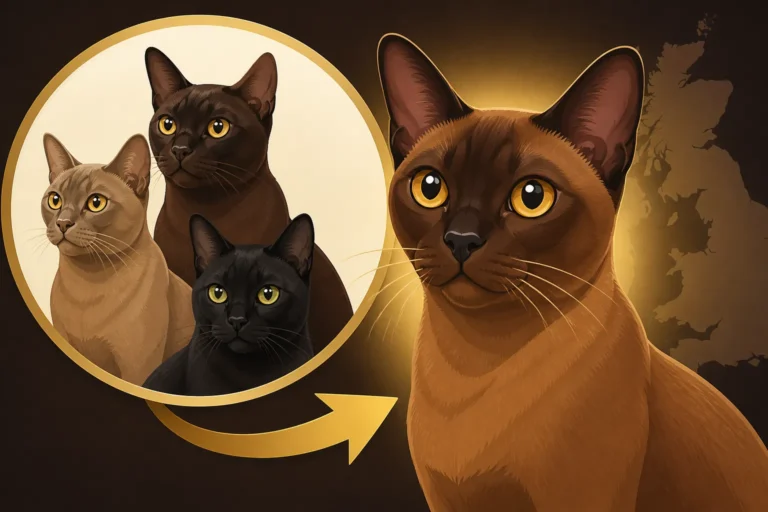
The accepted color descriptions can also vary between breed registries and standards. If you are trying to understand a particular color name, the Which Colors CFA Accepts in a Burmese article is a useful companion. The key point is that color labels describe a category, not a guarantee of identical shading across every cat.
Keep comfort and health separate from color preferences
Owners can enjoy watching their Burmese’s coat deepen and develop without trying to control it. Offer comfortable places to rest, keep up with routine grooming, and notice changes in the skin as well as the hair. A soft cloth or gentle grooming routine may help remove loose hairs, but grooming cannot change the genetic shade.
If you are taking pictures to track color, use the same location and similar natural light each time. Avoid judging the coat from a flash photo or a picture taken under strongly colored indoor bulbs. Those small differences can make a sable coat look nearly black in one image and warmer brown in another.
Most of all, let the cat’s natural coat be its own. A Burmese’s shading is one of the visible clues to an unusual inherited trait, not a flaw that needs correcting. Sudden changes with discomfort merit a veterinary check; slow, even color development is often simply part of growing up as a Burmese.
Disclaimer
This article is for general informational purposes only and does not constitute professional advice. Laws, prices and regulations vary by location and change over time. Consult a qualified professional for guidance on your specific situation.